The automotive world has long waited for a definitive update on Tesla’s most ambitious performance vehicle, and that silence was broken this Saturday. After nearly a decade of anticipation, delays, and mounting speculation, Tesla has officially announced that the next-generation Roadster will be unveiled on October 1. This announcement marks the first concrete timeline provided by the automaker for a model that has become a symbol of both Tesla’s engineering prowess and its tendency to prioritize high-level autonomous technology and robotics over traditional product release cycles.
A Decade of Anticipation: The Chronology of the Roadster
The journey of the second-generation Roadster began in November 2017, when Elon Musk shocked attendees at the Tesla Semi event by driving a prototype out of the back of a trailer. At that time, Tesla promised a vehicle that would redefine the hypercar category, boasting 0–60 mph acceleration in 1.9 seconds, a top speed exceeding 250 mph, and a 620-mile range.
Since that initial reveal, the project has been sidelined multiple times. Tesla’s corporate focus shifted heavily toward scaling the Model 3 and Model Y, developing the Cybertruck, and making significant breakthroughs in Full Self-Driving (FSD) software, AI, and the Optimus humanoid robot project. For years, the Roadster remained a background item, with Musk periodically updating the public on its status—often citing design refinements and the integration of SpaceX-derived technology as reasons for the extended timeline.
The announcement of an October 1 reveal date serves as a strategic pivot for the company. As Tesla looks to maintain its market dominance amidst increasing competition from established legacy automakers and aggressive EV startups in China, the arrival of a "halo" performance car could serve to reinforce the brand’s reputation for cutting-edge innovation.
Engineering the Impossible: SpaceX Thrusters and Aero Performance
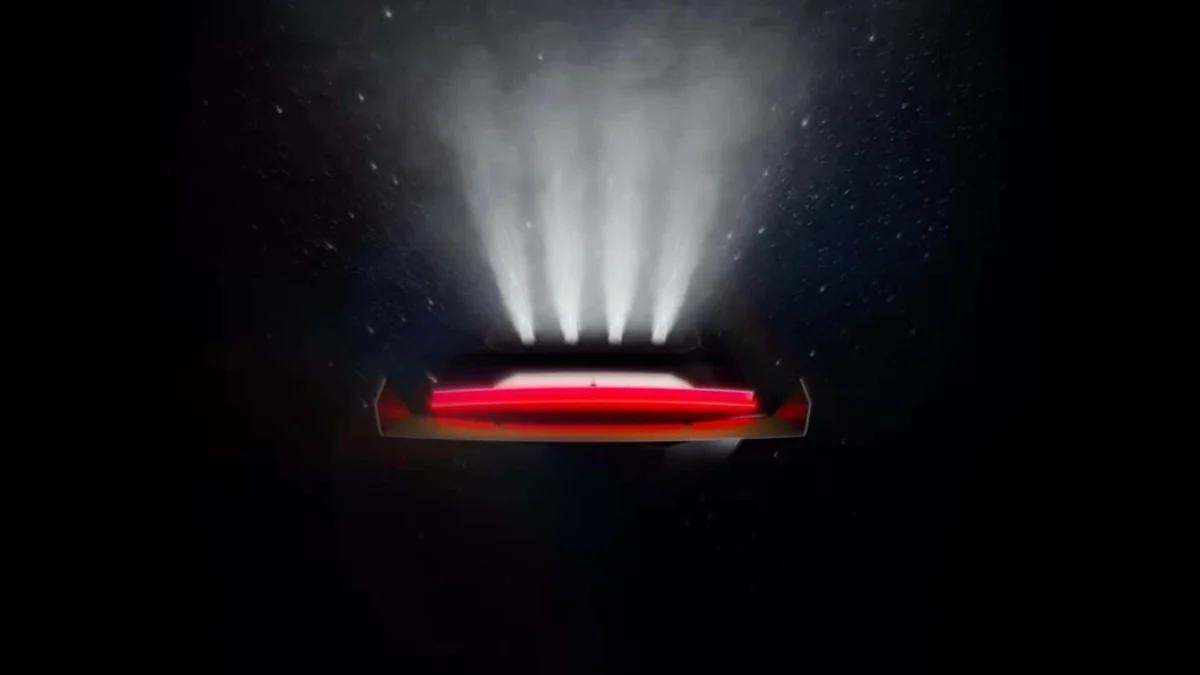
The teaser image released by Tesla alongside the announcement provides minimal visual information, showing only the silhouette of the rear taillamps and four distinct circular elements located on the upper deck of the vehicle. These elements are widely believed to be the housing for the "SpaceX package," which involves the integration of cold gas thrusters.
The inclusion of thrusters is intended to push the vehicle’s performance metrics into uncharted territory. By utilizing high-pressure air, these thrusters could theoretically enhance cornering, braking, and acceleration beyond the physical limitations of tire traction alone. However, the engineering challenges associated with installing rocket-grade technology into a street-legal vehicle are immense.
Recent reports from industry observers, including The Information, suggest that Tesla is considering a bifurcated launch strategy. The company is reportedly planning a limited-edition "flying" variant alongside a more conventional, road-legal model. The flying version would likely serve as a technology demonstrator—a halo product designed to showcase the absolute peak of Tesla’s engineering capabilities. Because of the extreme forces and noise generated by the cold gas thrusters, it is expected that any demonstration of the "flying" capabilities will be remotely operated, rather than manned, to ensure safety and regulatory compliance.
The Financial and Market Implications
The pricing for the next-generation Roadster remains a significant point of interest for analysts and potential buyers. While early pre-order deposits were set at $50,000, the final market price for the performance-heavy, thruster-equipped model is expected to be astronomical. Estimates have ranged from hundreds of thousands of dollars to potentially over a million, placing it in direct competition with hypercars from brands like Bugatti, Rimac, and Koenigsegg.
From a business standpoint, the Roadster is not expected to be a high-volume revenue driver. Instead, its role is to function as a brand anchor. Tesla’s VP of Engineering, Lars Moravy, has previously framed the vehicle as the "last, best driver’s car." His description of the Roadster as a "swan song" suggests that Tesla views this vehicle as the final celebration of the human-piloted automobile before the industry transitions fully into an era defined by autonomous mobility, where the act of driving is secondary to the utility of the transportation service.
Strategic Context and Industry Reaction
Tesla’s move to prioritize the Roadster at this specific juncture is significant. With the company’s stock price subject to the volatility of the broader tech and EV markets, delivering on a long-standing promise provides a much-needed morale boost for investors and loyalists. The vehicle represents the "hero" element of Tesla’s product lineup, potentially overshadowing the utility-focused nature of the Cybertruck and the mass-market appeal of the Model 3 and Y.
However, the industry remains skeptical regarding the feasibility of mass-producing a car that utilizes rocket thrusters. Skeptics point to the regulatory hurdles of putting such a vehicle on public roads and the safety implications of high-pressure air systems. Tesla will likely need to provide clear data on how these systems operate within the confines of existing automotive safety standards.
The October 1 event is expected to be a tightly choreographed reveal, likely focusing on the vehicle’s design, its performance metrics, and a demonstration of the technology that has caused such significant delays. For the automotive community, this event will determine whether the Roadster is a legitimate milestone in vehicle engineering or a highly sophisticated marketing exercise designed to highlight the company’s broader expertise in materials science and propulsion.
Looking Toward the Future of Tesla
As Tesla prepares for the October 1 reveal, the broader implications for the brand are clear. The company is moving toward a future where it is no longer just an electric car manufacturer, but an AI and robotics entity. By releasing the Roadster, Tesla is effectively bridging the gap between its past as a disruptor of the internal combustion engine and its future as a leader in autonomous systems.
Whether the "flying" Roadster remains a demo vehicle or makes it to limited production, its unveiling will serve as a litmus test for Tesla’s ability to execute on long-term, high-complexity projects. As the company faces pressure to prove that its focus on AI and autonomy can produce tangible results, the Roadster stands as a reminder that at its core, Tesla still maintains the engineering ambition to push the boundaries of what is possible on four wheels.
The coming weeks will undoubtedly see an increase in teasers and leaks as the October 1 deadline approaches. Industry experts, automotive journalists, and the public will be watching closely to see if the reality of the next-generation Roadster matches the decade of anticipation that has surrounded its development. If Tesla can successfully bridge the gap between the concept car of 2017 and a functional, production-ready marvel in 2025, it will have succeeded in one of the most difficult engineering feats in modern automotive history.