
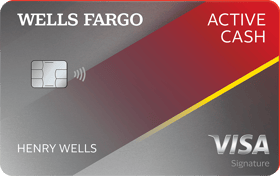
The landscape of personal finance in 2026 has been marked by a tightening of consumer credit standards and an increased demand for simplicity in financial products. Amidst this competitive environment, the Wells Fargo Active Cash Card has emerged as a leader in the credit card industry, earning the designation of Best Credit Card for 2026. Financial experts have pointed to its consistent, no-nonsense rewards structure as a primary driver for its dominance in a market that is increasingly cluttered with complex, category-specific bonus tiers.
For many consumers, the appeal of the Wells Fargo Active Cash Card lies in its predictability. In an era where cardholders are often tasked with rotating categories, quarterly activation requirements, and complex point-redemption formulas, the card offers a straightforward, flat-rate rewards structure. By providing an unlimited 2% cash rewards rate on all purchases, it simplifies the user experience while ensuring that the value remains consistent regardless of the merchant or the nature of the transaction.
Historical Context and Market Evolution
The evolution of the credit card market over the past several years has favored products that offer tangible, immediate value. Following the economic volatility of the early 2020s, many financial institutions pivoted their strategies toward retention-focused products. The Wells Fargo Active Cash Card was designed as a direct response to this trend, aiming to capture the loyalty of the "everyday spender"—a demographic that prioritizes ease of use over the maximization of niche rewards.
When the card was first introduced to the public, it was positioned as a disruption to the standard banking model. Traditional cards often required consumers to maintain high balances or pay annual fees to access premium rewards. The Active Cash Card, however, removed these barriers, establishing a new baseline for what a standard, no-annual-fee card should provide. By the time it was crowned the Best Credit Card for 2026, the industry had witnessed a shift where many competing issuers began to adopt similar flat-rate structures, yet few have matched the comprehensive package of low-interest introductory offers and security features provided by Wells Fargo.
Core Features and Financial Mechanics
The financial mechanics of the card are built upon a foundation of transparency. The 2% cash rewards rate is not merely a promotional figure; it is a permanent fixture of the product that applies to every dollar spent. This removes the "cognitive load" from the consumer, who no longer needs to track which card to use for gas, groceries, or dining.

Beyond the rewards, the card’s introductory offer has played a significant role in its success. New cardholders are currently incentivized with a $100 cash rewards bonus upon meeting a $500 spending threshold within the first three months of account opening. While this may seem modest compared to the high-stakes sign-up bonuses of premium travel cards, its accessibility makes it highly attractive to the average consumer. For a household managing tight monthly budgets, a low spending requirement to earn a bonus is often more beneficial than a high-threshold bonus that may never be reached.
Furthermore, the 0% introductory APR offer on both purchases and qualifying balance transfers for 12 months provides a strategic financial cushion. In a period of elevated interest rates, this feature has proven to be a critical tool for consumers looking to pay down existing high-interest debt or manage major planned purchases without incurring additional finance charges.
Comparative Analysis: The Industry Standard
To understand why the Wells Fargo Active Cash Card maintains its status, it is necessary to examine it against its primary competitors, such as the Capital One Quicksilver and the Citi Double Cash Card.
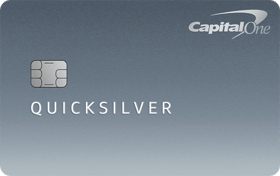
The Capital One Quicksilver, while popular, typically offers a 1.5% base cash-back rate on all purchases, which is objectively lower than the 2% offered by the Wells Fargo product. While the Quicksilver features elevated rewards for travel booked through its own portal, it requires the consumer to prioritize that specific booking experience.
The Citi Double Cash Card offers a unique "double" reward structure: 1% back when you buy, and 1% back when you pay. While this effectively results in a 2% return, it introduces a layer of behavioral dependency—the user must ensure they pay their bill on time to receive the full benefit. For consumers who prefer a "set it and forget it" approach, the Wells Fargo Active Cash Card’s straightforward accumulation of rewards at the time of purchase is often viewed as more user-friendly.
Security and Ancillary Benefits
In addition to its rewards program, the card includes a suite of ancillary benefits that add tangible value. One of the most frequently cited benefits is the built-in cell phone protection. By using the card to pay their monthly wireless bill, cardholders are eligible for up to $600 in coverage against damage or theft, subject to a $25 deductible. This feature addresses a common consumer pain point, as the rising cost of smartphones has made device insurance a standard necessity for most households.
The inclusion of these protections represents a strategic move by Wells Fargo to increase the card’s "stickiness." When a credit card provides services that would otherwise cost the consumer money—such as device insurance or credit monitoring tools—the card becomes a more permanent part of the user’s financial life, reducing the likelihood of churn.
Economic Implications for the Consumer
The designation of the Wells Fargo Active Cash Card as the best of 2026 also speaks to the broader economic climate. As inflation and interest rate fluctuations continue to impact household disposable income, consumers are gravitating toward products that provide immediate, tangible relief.
Financial analysts note that the shift toward flat-rate, no-annual-fee cards reflects a more disciplined approach to personal credit. During periods of economic uncertainty, high-fee travel or luxury cards may lose their appeal if the travel benefits go unused. Conversely, a card that pays 2% cash back on groceries, utilities, and emergency car repairs provides value regardless of the economic cycle.
Accessibility and Credit Requirements
A critical factor in the card’s popularity is its accessibility. While the card is marketed toward individuals with "Good" to "Excellent" credit—typically defined as a score of 670 or higher—it is not positioned as an ultra-exclusive product. This middle-market accessibility allows a broad swath of the American public to qualify, provided they have maintained responsible credit habits.
For those who may fall slightly below this threshold, the card serves as a goal to work toward. The clear, non-predatory terms and the lack of complex, hidden fee structures make it a transparent product that encourages responsible financial behavior.
Expert Analysis and Future Outlook
Industry observers suggest that the success of the Active Cash Card may force other major issuers to reconsider their reward structures. The "2% floor" is becoming the new industry standard, and cards that offer less than this amount are finding it increasingly difficult to compete for new customers.
As we move further into 2026, the challenge for Wells Fargo will be to maintain this momentum without sacrificing the sustainability of the product. The cost of providing 2% cash back on all transactions is significant for the issuer, relying on high interchange volumes and responsible cardholder repayment behavior.
However, the current trajectory suggests that the card will remain a staple in the wallets of millions. By balancing aggressive rewards with a user-friendly interface and meaningful security protections, Wells Fargo has created a financial tool that meets the specific demands of the contemporary consumer: simplicity, value, and reliability.
Conclusion: A Tool for Financial Efficiency
Ultimately, the Wells Fargo Active Cash Card is more than just a piece of plastic; it is an optimized financial instrument. While it may not offer the luxury perks of premium cards, it excels in its primary function: providing the maximum possible return on everyday spending with the minimum amount of effort.
As the Motley Fool Money motto suggests, credit cards are tools to help you get the most out of your spending. The Active Cash Card embodies this philosophy, allowing users to make their money work for them without the need for complex strategies or constant monitoring. For the majority of consumers, this is the hallmark of a superior financial product—one that integrates seamlessly into daily life while providing a measurable, consistent benefit to the bottom line. As 2026 progresses, the card’s dominance serves as a testament to the fact that, in the world of personal finance, simplicity remains the ultimate sophistication.