It is difficult to reconcile the visceral, smoke-choked memories of September 11, 2001, with the polished, glass-and-steel reality of the modern Financial District twenty-five years later. On that Tuesday morning, the terrorist attacks orchestrated by al-Qaida fundamentally altered the geopolitical trajectory of the United States and left the heart of New York City’s commerce in ruins. In the immediate aftermath, the prevailing consensus among urban planners and economic analysts was one of profound uncertainty. The destruction of the Twin Towers and the subsequent collapse of surrounding infrastructure suggested a potential permanent exodus from Lower Manhattan. However, the subsequent two and a half decades have served as a testament to institutional persistence, marked by an unprecedented cycle of demolition, reconstruction, and architectural evolution that has redefined the urban fabric of New York.
The narrative of this recovery is inextricably linked to Larry Silverstein, who acquired the lease for the World Trade Center complex just weeks prior to the attacks. Silverstein’s resolve, articulated on the day of the tragedy to figures such as Mary Ann Tighe, became the catalyst for a long and often contentious rebuilding process. The ensuing years were characterized by a complex interplay between public agencies—most notably the Port Authority of New York and New Jersey—and private stakeholders. This era was defined by architectural debates, budgetary disputes, and the slow, methodical process of clearing the site. Silverstein’s memoir, The Rising, documents these frictions, detailing how the project became a flashpoint for political contention before eventually finding its footing through the development of the new World Trade Center campus.
The Evolution of 2 World Trade Center
The most significant milestone in this twenty-five-year timeline is the long-anticipated development of 2 World Trade Center. For years, the project remained a point of skepticism among industry analysts who questioned whether the site could secure a high-profile anchor tenant in an increasingly volatile office market. That skepticism was formally dispelled earlier this year when Silverstein Properties announced that American Express had signed on as the anchor tenant for the 2 million-square-foot tower. The official groundbreaking, which took place this past summer, signifies the effective completion of the World Trade Center’s master plan.
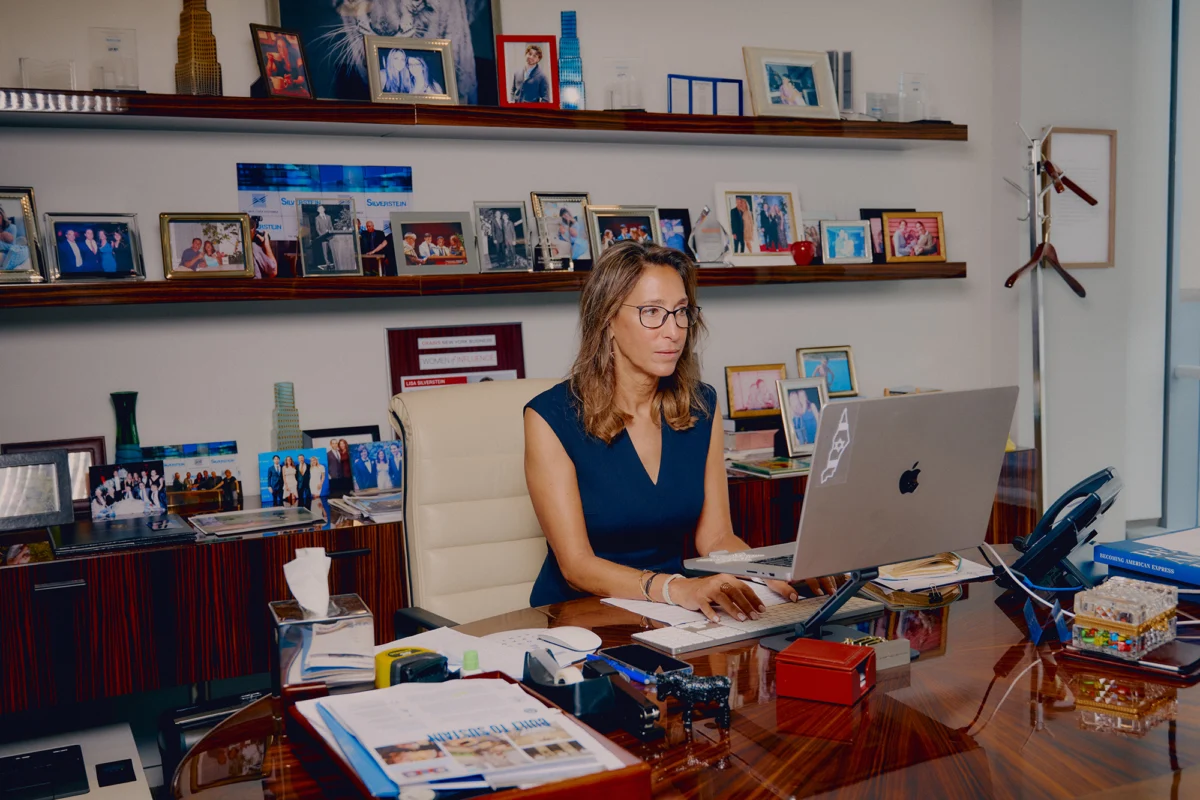
Lisa Silverstein, who assumed the role of CEO of Silverstein Properties in 2023, has played a pivotal role in navigating the complex tri-party negotiations required to finalize the deal. According to industry insiders, the agreement with American Express is not merely a commercial contract; it is a signal of confidence in the long-term viability of the downtown office market. By securing a tenant of such magnitude, Silverstein Properties has ensured that the site will remain a hub of global financial activity, bridging the gap between the pre-2001 era and the needs of modern, enterprise-level corporations.
Demographic Shifts and the Transformation of FiDi
The Lower Manhattan that exists today bears little resemblance to the neighborhood of 2001. In the late 1990s, the Financial District was largely a monoculture defined by a "nine-to-five" office culture. Today, the area has undergone a radical transformation into a dynamic, mixed-use residential and commercial hub. Data from the Alliance for Downtown New York indicates a significant shift in land use: while the total office square footage has decreased from 139 million square feet in 2001 to approximately 115 million square feet today, the residential population has surged. Below Chambers Street, the number of residents has grown from 25,000 in 2001 to over 70,000 in 2026.
This demographic shift has necessitated a re-evaluation of how commercial space is utilized. Aisling Gregory, founder of the Reverdie Group and a former veteran of Silverstein Properties, notes that the district’s resilience is rooted in this diversification. The influx of residents has spurred a parallel boom in retail, hospitality, and service-sector infrastructure, creating a neighborhood that is no longer dependent solely on the daily commute of office workers. With another 3,900 residential units currently in the development pipeline, this trend toward residential density is expected to continue, further insulating the area from the cyclical nature of office demand.
The Return of the Office-Leasing Bidding War
While residential development has dominated the narrative for much of the last decade, the commercial office market is currently undergoing a surprising, yet distinct, resurgence. Despite the prevailing narrative regarding remote and hybrid work, Manhattan has witnessed the re-emergence of bidding wars for prime commercial space. This phenomenon, which seemed improbable as recently as 2024, is now a measurable trend.
Max Koeppel of Koeppel Rosen recently observed a competitive leasing scenario at 151 West 26th Street, where a 17,610-square-foot space—not categorized as premium Class A space—saw its asking price jump from $56 per square foot to upwards of $70 per square foot due to aggressive interest from AI-focused firms. This activity suggests that for many companies, physical office space remains a critical tool for employee recruitment, retention, and corporate culture. As Ryan Kass of Empire State Realty Trust (ESRT) emphasizes, the modern office is increasingly viewed as an extension of the employer’s brand. Amenities, proximity to transit, and high-quality building management have become the primary drivers of lease negotiations, effectively ending the era of the office as a mere balance-sheet expense.
Investment Trends and Capital Markets
The appetite for Manhattan commercial real estate has prompted a wave of activity among major institutional investors. During the summer of 2026, the market saw a flurry of high-value transactions that signaled a stabilization of asset pricing. BXP’s sale of its ground lease at 7 Times Square, ESRT’s divestment of 1359 Broadway for $225 million, and the $800 million valuation of 10 Bryant Park collectively indicate a liquid market for high-quality, well-positioned properties.
Furthermore, the retail sector is seeing continued capital investment. RFR Holding’s $57 million acquisition of the retail condo at 841 Madison Avenue and the strategic investment in the property housing Barney Greengrass on the Upper West Side demonstrate that investors remain confident in the long-term value of prime New York City real estate. These transactions underscore a broader sentiment among institutional buyers: while interest rates and economic conditions have shifted, the fundamental value of New York’s commercial and retail assets remains robust.
Leadership Transitions and Institutional Shifts
The broader real estate sector is currently navigating significant leadership transitions. The unexpected departure of Nadeem Meghji from Blackstone’s global real estate division serves as a reminder of the volatility inherent in top-tier private equity management. The transition to David Levine and Giovanni Cutaia marks a new chapter for the firm’s real estate arm. Simultaneously, firms like Harrison Street and CIM Group are aggressively restructuring their management teams to better align with the evolving demands of infrastructure and investment management.
Paul Vanderslice’s appointment to head the CRE Finance Council further illustrates the professionalization and focus of the industry’s regulatory and financing bodies. As the industry faces new pressures—ranging from sustainability mandates to the complexities of adaptive reuse—this concentration of leadership experience will be critical in shaping the future of commercial real estate financing.
Regional Expansion: The Florida Pivot
While New York remains the primary focus of the industry, many prominent developers are actively diversifying their portfolios by expanding into the Sun Belt. Charles Cohen of Cohen Brothers Realty has announced the development of the 400,000-square-foot Office Center of the Americas in Dania Beach, Florida. Similarly, Joe Sitt’s Thor Equities has completed the $62 million acquisition of the Two Town Center complex in Boca Raton.
This geographic diversification is not necessarily a departure from New York, but rather a hedge against the changing economics of urban office environments. By establishing a footprint in emerging markets like South Florida, these firms are balancing their risk profiles. Simultaneously, high-profile projects in Southern California, such as the rebranding of the former Standard Hotel into the Public Hotel West Hollywood by Ian Schrager and Ed Scheetz, highlight a continued interest in the high-end hospitality and urban lifestyle sectors.
Conclusion: The Path Forward
Twenty-five years after the trauma of 9/11, the resilience of New York City is undeniable. The completion of 2 World Trade Center serves as a final, monumental bookend to a quarter-century of effort to reclaim and revitalize the site. While the challenges of the office market remain, the adaptation of the Financial District into a multi-dimensional, live-work-play neighborhood provides a model for urban renewal that other global cities have sought to emulate. The "phoenix" analogy remains apt; not because the city returned to its previous form, but because it utilized the ashes of the past to build a more flexible, diverse, and robust economic future. As the market enters this new phase of competition and development, the legacy of the last twenty-five years will undoubtedly serve as the foundation for the city’s next evolution.