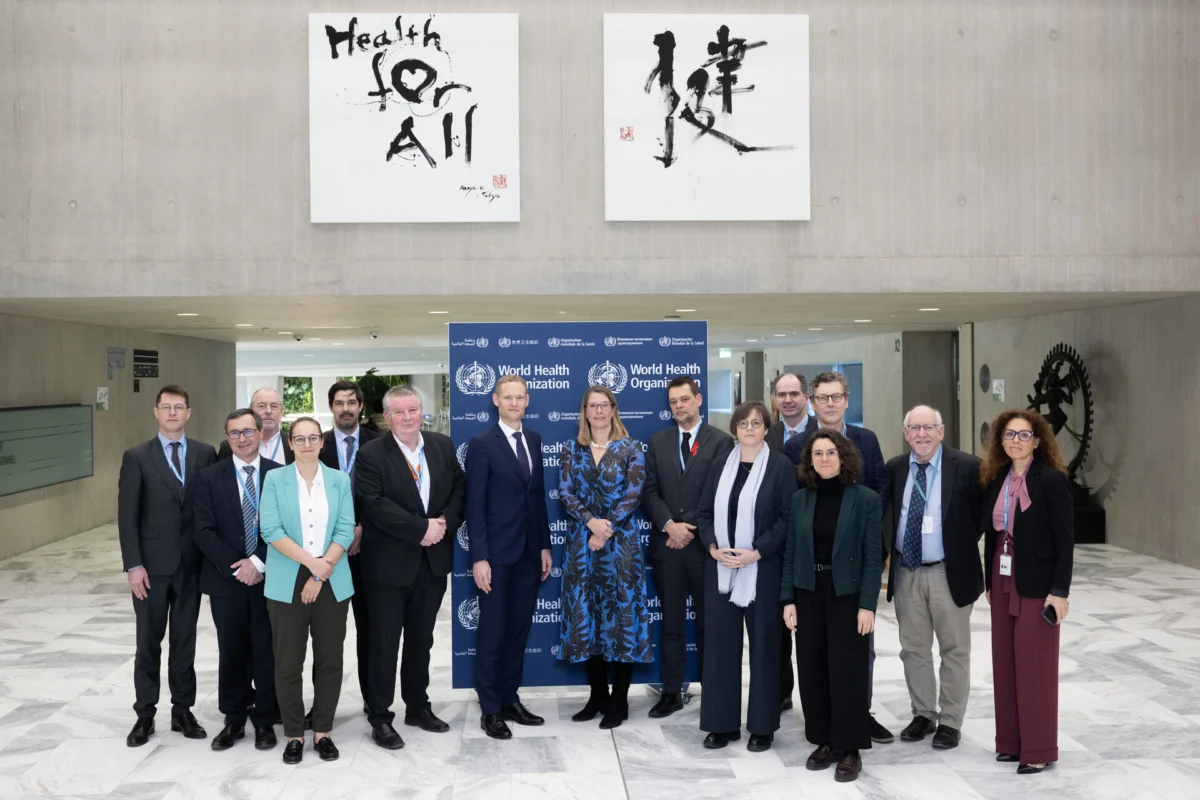
The intricate architecture of international health cooperation recently underwent a comprehensive review as senior officials from the Kingdom of Belgium and the World Health Organization (WHO) concluded a high-level, three-day strategic dialogue in Geneva, Switzerland. Spanning multiple sessions from March 2 to March 5, 2025, the multi-lateral engagement brought together a diverse Belgian delegation representing the federal government as well as the regional authorities of Flanders and Wallonia, alongside WHO leadership and technical experts from headquarters and the regional offices for Africa and Europe.
At its core, the dialogue served as an institutional checkpoint to evaluate the enduring partnership between Belgium and the United Nations health agency. Amid a shifting geopolitical landscape and complex post-pandemic global health challenges, both parties reaffirmed their mutual commitment to advancing universal health coverage (UHC), fortifying national and regional health systems, and ensuring equitable global access to essential vaccines, medicines, and innovative health technologies. By harmonizing Belgium’s strategic development cooperation priorities with the WHO’s overarching global health directives, the consultations established a robust roadmap for future multi-year multilateral collaboration.
Background Context and Institutional Framework
The strategic dialogue takes place against a backdrop of increasing volatility in global public health. Over the past decade, the international community has grappled with the compounding pressures of climate-induced health emergencies, protracted humanitarian crises, antimicrobial resistance, and persistent inequities in the distribution of life-saving medical countermeasures. In this turbulent environment, predictable and flexible funding from reliable donor nations like Belgium has become a cornerstone of the WHO’s operational capacity.
Belgium’s engagement with the WHO is deeply rooted in its broader foreign policy and development cooperation framework, which prioritizes human rights, gender equality, and the strengthening of public health infrastructure in low- and middle-income countries. This commitment was prominently displayed during Belgium’s presidency of the Council of the European Union in 2024, where Brussels championed critical global health priorities, including pandemic preparedness, health workforce protection, and sustainable access to therapeutics. The recent Geneva consultations provided an operational platform to review the tangible outcomes of initiatives launched or amplified during that presidential term, ensuring continuity and long-term impact across multilateral platforms.
Chronology and Delegation Engagement
The three-day intensive dialogue was structured around thematic clusters designed to dissect both successes and operational bottlenecks across various levels of the WHO—from headquarters in Geneva to frontline implementation in resource-constrained settings.
The Belgian delegation was led by H.E. Christophe Payot, Ambassador and Permanent Representative of Belgium to the United Nations and other international organizations in Geneva. The delegation’s composition—featuring policy makers and technical specialists from the federal level as well as the Flemish and Walloon regional governments—underscored a unified, whole-of-country approach to international solidarity and development aid.
Throughout the sessions, participants engaged in candid exchanges with WHO Assistant Director-General for External Relations and Governing Bodies, Dr. Catharina Boehme, alongside directors and technical officers specializing in health emergencies, universal health coverage, maternal and child health, and local manufacturing capacity.
Reflecting on the tone and depth of the discussions, Mr. Koen Van Acoleyen, Minister Counselor at the Permanent Representation of Belgium to the UN, noted the value of direct engagement with frontline experts. "After listening to the leaders and experts of WHO we now better understand how they are navigating these challenging times," Mr. Van Acoleyen stated. "We are honoured that we can walk this road together."
Accelerating Equitable Access to Vaccines, Medicines, and Technologies
A central pillar of the strategic dialogue was the rigorous evaluation of the Access to Medicines programme, a flagship initiative heavily funded by Belgium. As global supply chains face recurrent shocks and market failures continue to price out vulnerable populations, the initiative seeks to reshape pharmaceutical markets to prioritize public health needs over purely commercial interests.
To ground the theoretical frameworks in operational realities, WHO technical staff presented detailed case studies highlighting both the achievements and systemic hurdles encountered during country-level implementation in Senegal. The discussions moved beyond immediate drug distribution to examine the structural prerequisites for sustainable access, notably the promotion of regional manufacturing hubs on the African continent. By fostering local production capabilities for vaccines and essential therapeutics, the partnership aims to insulate developing regions from future global supply hoarding and export restrictions.
Both delegations concurred that market-shaping interventions must be accompanied by robust regulatory strengthening and transparent procurement mechanisms. The review underscored that long-term success hinges on empowering national authorities to manage supply chains autonomously, thereby transitioning from aid dependency to sustainable self-reliance.
Health Emergencies, Pandemic Prevention, and the One Health Approach
The dialogue dedicated substantial time to dissecting the evolving architecture of global health security. In the wake of lessons learned from COVID-19 and ongoing outbreaks of emerging zoonotic diseases, the discussions addressed the WHO’s central role in coordinating international prevention, preparedness, response, and resilience (PPPR).
Participants evaluated the ongoing negotiations surrounding the global pandemic agreement, emphasizing the necessity of binding commitments that guarantee equitable burden-sharing, prompt data transparency, and fair access to countermeasures during global health crises. Central to this discourse was the operationalization of the One Health approach—an integrated, unifying mechanism that balances and optimizes the health of people, animals, and ecosystems.

The human cost of health emergencies was brought into sharp focus through presentations detailing the WHO’s frontline operations in Gaza, illustrating the immense logistical and security challenges of delivering emergency medical care in active conflict zones. Furthermore, the delegations analyzed the rising biological risks posed by the acceleration of zoonotic spillover events, reinforcing the need for enhanced surveillance systems and proactive risk-mitigation strategies at the human-animal-environment interface.
Advancing Universal Health Coverage and Primary Care Integration
Universal health coverage remains the definitive anchor of sustainable development goal three (SDG3), and the strategic dialogue evaluated the concrete milestones achieved through the UHC-Partnership between 2021 and 2024. Funded substantially by Belgium, the partnership has provided critical technical and financial assistance to numerous partner countries striving to build resilient health systems centered on primary healthcare (PHC).
A focal point of this review was the Democratic Republic of Congo (DRC), where Belgian bilateral cooperation and WHO country office programs intersect. Officials analyzed the triumphs and structural bottlenecks of translating national health policies into community-level service delivery, particularly in remote and conflict-affected provinces.
In addition to traditional public health metrics, the discussions expanded to encompass mental health as an integral component of primary healthcare. Recognizing the global burden of mental disorders—often exacerbated by poverty, displacement, and emergencies—the partners reviewed WHO policies aimed at integrating mental health services into routine primary care structures.
The comprehensive review also evaluated other specialized areas of collaboration supported by Belgium, notably the fight against Neglected Tropical Diseases (NTDs) and the protection of Sexual and Reproductive Health and Rights (SRHR). Both parties reiterated that interventions in these sensitive domains must remain strictly evidence-based to withstand political fluctuations and maximize public health impact.
Official Responses and Multilateral Solidarity
The depth of the partnership drew warm praise from WHO leadership, who highlighted the unique value of Belgium’s multi-layered governance model and consistent diplomatic support.
"We thank you for your support, honesty, and strong engagement for global health," remarked Dr. Catharina Boehme during the plenary sessions. "Your efforts in supporting our work in Mozambique and Senegal are clear examples of the crucial work we accomplish together."
This sentiment was mirrored by senior Belgian development officials who emphasized the pragmatic utility of multilateralism in addressing transnational threats that no single nation can confront in isolation.
Mr. Dirk Brems, Director of Thematic and Multilateral Cooperation at the Directorate-General Development Cooperation and Humanitarian Aid, articulated the strategic value of the partnership: "We recognize WHO as a trustworthy partner in global health. We felt proud hearing how crucial our support is to the Organization and how it is having a positive impact at country, regional, and global levels. It’s important we continue these discussions as we tread uncharted territories, and we look forward to working together for strong and sustained multilateralism."
Looking Forward: The 14th General Programme of Work
As the three-day dialogue drew to a close, the delegations turned their attention to the future, establishing strategic priorities for the upcoming multi-year collaboration framework and the ongoing development of a renewed WHO-Belgium Country Cooperation Strategy.
The enhanced framework is explicitly designed to operationalize the ambitious targets outlined in the WHO’s 14th General Programme of Work (GPW14). Both parties share a foundational vision that universal health coverage and health-systems strengthening must occupy the absolute center of the global health agenda. As the WHO navigates ongoing internal prioritization and resource allocation, the predictable partnership with Belgium provides a stable financial and diplomatic anchor.
Fact-Based Analysis of Implications
The outcomes of the Belgium-WHO strategic dialogue carry several significant implications for the broader architecture of global health governance:
- Reinforcement of Multilateral Norms: At a time when traditional multilateral institutions face skepticism and donor fatigue, bilateral reinvestment by nations like Belgium validates the convening power and technical authority of the WHO.
- Operational Localization: By focusing heavily on regional manufacturing hubs and decentralized country-level implementation in nations like Senegal and the DRC, the partnership addresses the systemic vulnerabilities exposed during previous global health emergencies.
- Institutional Resilience: The explicit alignment between Belgium’s regional governments (Flanders and Wallonia) and federal development strategies models an inclusive, coherent approach to foreign aid that maximizes technical expertise from sub-national academic and public health institutions.
Ultimately, the Geneva consultations demonstrated that sustained strategic dialogue between donor states and normative agencies is indispensable for translating high-level global health declarations into measurable, life-saving interventions on the ground. As Belgium and the WHO chart their course toward the objectives of the GPW14, their renewed partnership sets a benchmark for effective, transparent, and impact-driven international cooperation.