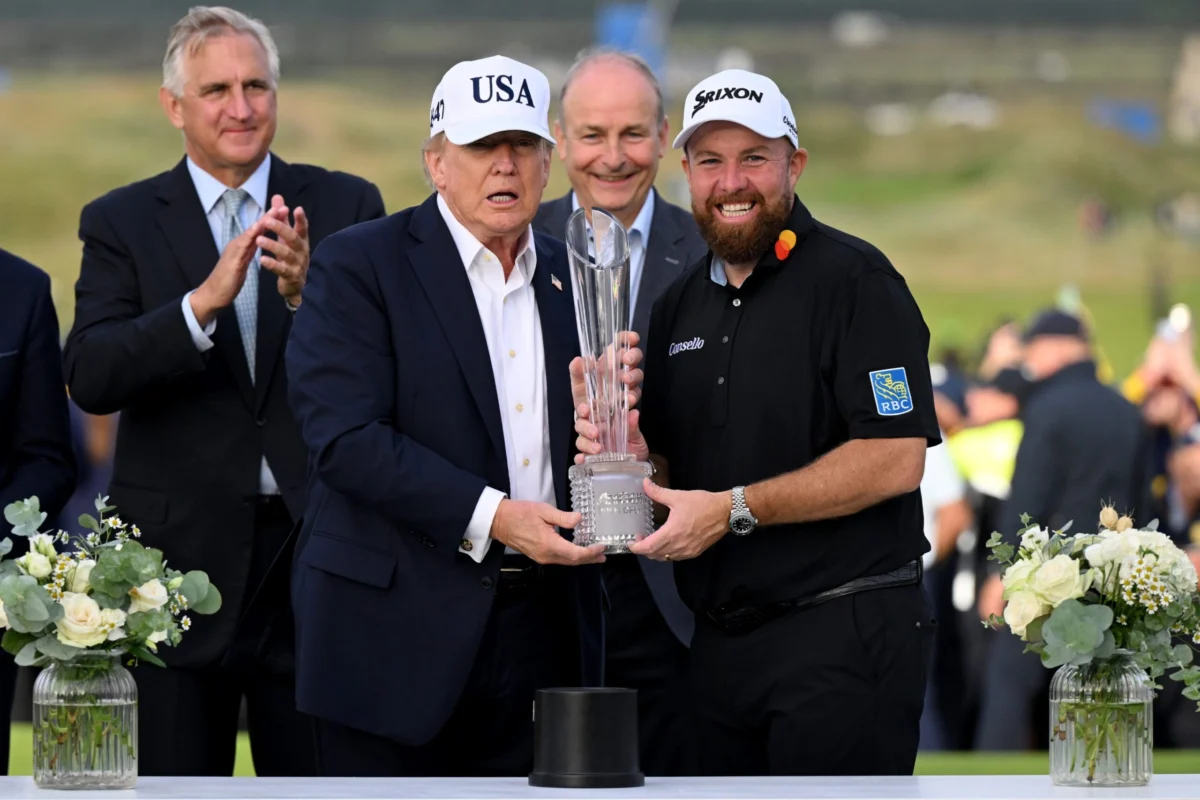
In a move that caught many observers by surprise, U.S. President Donald Trump announced on Sunday at the conclusion of the Irish Open golf tournament that his administration intends to eliminate the 10 percent tariff currently imposed on Irish whiskey. The announcement, delivered during the trophy ceremony, marked a significant policy shift that carries substantial weight for the transatlantic spirits trade and the broader economic relationship between the United States and the Republic of Ireland.
The decision follows months of sustained lobbying by industry stakeholders and marks a departure from the protectionist trade policies that have characterized recent years of U.S.-European Union commercial relations. While the specific timeline for the removal of the tariff remains to be codified through official administrative action, the President’s public commitment has already sent a positive signal to exporters and distributors on both sides of the Atlantic.
A Diplomatic Gesture on the Green
The setting for the announcement was symbolic, taking place amidst the final proceedings of a premier sporting event. According to reports from the venue, the President noted that he had been repeatedly approached by various stakeholders, including professional golfers and industry representatives, regarding the economic burden of the tariffs.
"Everybody’s been bugging me to do it," President Trump remarked to the gathered crowd. "And I said, ‘On behalf of the United States of America, I am going to take the tariffs off’ Irish whiskey."
The announcement was met with enthusiastic applause from the spectators, underscoring the cultural and economic significance of the whiskey industry to the Irish economy. The President’s rhetoric framed the decision as a response to persistent diplomatic and informal pressure, reflecting a broader trend where trade barriers have been negotiated through direct, high-level engagement rather than traditional bureaucratic channels.
Chronology of Tariff Policy
To understand the weight of this announcement, one must look at the fluctuating landscape of U.S. trade policy over the last several years. The 10 percent tariff on Irish whiskey was part of a wider set of duties imposed on European Union imports, which were initially established at higher rates before being adjusted downward in recent negotiations.
- Pre-2019: Irish whiskey enjoyed a relatively stable export environment, forming a cornerstone of Irish agricultural and food exports to the United States, the largest market for the spirit.
- 2019-2023: Trade tensions between the U.S. and the EU led to the implementation of various retaliatory tariffs, affecting products ranging from steel and aluminum to luxury goods and spirits.
- May 2024: The Trump administration announced the lifting of specific tariffs on U.K. spirits, including Scotch whisky and spirits produced in Northern Ireland. This decision followed a diplomatic visit to the White House by King Charles III and Queen Camilla, an event the President later credited with influencing his decision-making process.
- July 2024: The Scotch Whisky Association confirmed that a zero-tariff policy had officially taken effect for U.K.-originated spirits.
- July 2024 (Simultaneous): The tariff on Irish whiskey was reduced from 15 percent to 10 percent, a move intended to provide some relief to importers while maintaining a degree of protectionist leverage.
- Current Date: The President announces the complete removal of the remaining 10 percent tariff on Irish whiskey.
Economic Impact and Market Data
The U.S. market is the primary driver of growth for the Irish whiskey industry. According to data from the Distilled Spirits Council of the United States (DISCUS), Irish whiskey has seen a meteoric rise in popularity over the past decade, with sales volume growing by nearly 15 percent annually in the U.S. prior to the implementation of trade barriers.
The imposition of a 15 percent, and subsequently 10 percent, tariff created significant headwinds for importers. These costs were either passed on to the American consumer—resulting in higher retail prices—or absorbed by distributors, thereby thinning profit margins and limiting marketing budgets for Irish brands attempting to penetrate the U.S. market.
Market analysts suggest that the removal of these tariffs will likely lead to a stabilization of retail pricing, potentially fostering a renewed surge in imports. For smaller, independent distilleries in Ireland that rely heavily on U.S. distribution, the lifting of the 10 percent tariff is expected to provide much-needed breathing room, allowing them to compete more effectively against domestic American craft whiskies and international rivals like Canadian or Japanese blends.
Industry and Stakeholder Reactions
The Irish Whiskey Association (IWA) has been a vocal proponent of this policy change since the onset of the trade dispute. In May, the association issued a formal statement calling for the total removal of tariffs, arguing that the existing duties were counterproductive. The IWA noted that many U.S. companies hold Irish products within their distribution portfolios; thus, the tariffs were effectively taxing American businesses as much as they were taxing foreign entities.
"The removal of these tariffs avoids uncertainty for consumers and provides a clear pathway for sustained growth," said a representative for an industry trade group. "When the trade environment is predictable, investment in supply chains, marketing, and distribution can proceed without the fear of sudden, punitive cost spikes."
While official responses from the U.S. Trade Representative (USTR) office have yet to be released regarding the formal mechanisms of this removal, the political mandate provided by the President is expected to expedite the process.
Broader Implications for U.S.-EU Trade
The decision to lift the Irish whiskey tariff cannot be viewed in isolation. It represents a pivot in the President’s approach to trade with European partners. By decoupling specific spirits from the broader basket of retaliatory tariffs, the administration is demonstrating a preference for "surgical" trade policy, where specific industries are exempted to curry diplomatic favor or alleviate domestic economic pressure.
However, some economists warn that this piecemeal approach creates a complex regulatory environment. When tariffs are lifted for some countries (like the U.K.) and some products (Irish whiskey) but remain for others, it complicates the work of customs agents and legal compliance teams. There is also the potential for friction with other EU member states that may view the exemption of Irish spirits as a form of preferential treatment that undermines the collective bargaining position of the European Union.
Furthermore, the President’s public comments linking tariff relief to diplomatic visits—such as his remarks regarding the British monarchy—suggest that trade policy is increasingly being integrated into a broader strategy of personal diplomacy. Whether this methodology will lead to a comprehensive resolution of all remaining transatlantic trade disputes or merely create a series of idiosyncratic exceptions remains a subject of intense debate among trade policy experts.
Looking Ahead: Regulatory Hurdles
While the President’s announcement is definitive in its intent, the actual implementation of the tariff removal requires formal notification and the publication of an executive order or a USTR directive. Traders and distributors are currently waiting for a date of implementation.
Industry experts caution that while the 10 percent tariff is disappearing, the logistical challenges of international trade—including supply chain delays, increased fuel costs, and potential shifts in consumer preference—will continue to influence the market. Nonetheless, the removal of the 10 percent tariff is widely viewed as a "net positive" for both the Irish economy and the American spirits industry.
As the administration moves to finalize this policy, the focus will likely shift to whether other European goods remain on the tariff list and whether the EU will respond with reciprocal measures or continued trade cooperation. For now, the Irish whiskey sector has achieved a significant victory, marking the end of a contentious chapter in the transatlantic trade relationship. The development serves as a prime example of how high-level political engagement, even in unconventional settings like a sporting tournament, continues to shape the global economic landscape.