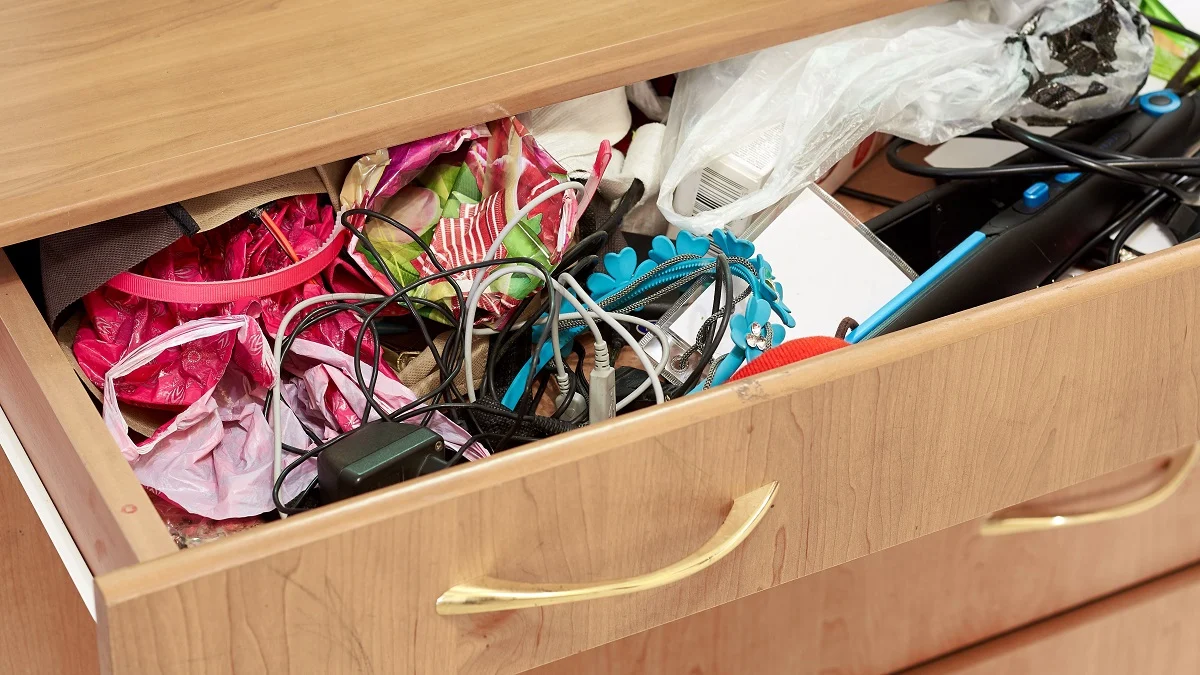
For millions of households across the globe, the catch-all junk drawer remains a quiet repository for forgotten relics of daily life: cracked smartphones, outdated sunglasses, and broken watches gather dust in an invisible economy of discarded utility. While the traditional impulse is to discard these items or shove them deeper into storage, a growing economic and environmental consciousness is shifting consumer behavior. Driven by persistent cost-of-living pressures, electronic waste concerns, and a burgeoning do-it-yourself sustainability movement, individuals are finding innovative ways to repurpose everyday items that were once written off as obsolete.
This shift comes at a critical time for waste management and personal finance. According to recent consumer research, including the Allstate Protection Plans 2025 Mobile Survey, economic realities are fundamentally altering how people buy, own, and manage personal electronics. The survey reveals that 27% of American consumers upgrade their smartphones every two years, 23% hold onto their devices for three to four years, and 21% retain them until a complete mechanical failure occurs. On average, U.S. households maintain roughly 1.8 unused smartphones tucked away in drawers, closets, and garages. When multiplied across millions of homes, this dynamic represents a massive reservoir of untapped technological capability—and a significant environmental footprint if improperly handled.
The Evolving Lifecycle of Mobile Technology
The lifecycle of a smartphone has historically been dictated by planned obsolescence and aggressive carrier upgrades. However, technological milestones have forced consumers to rethink how they handle retired devices. A major turning point occurred when major U.S. wireless carriers officially sunset their legacy 3G networks, rendering devices lacking 4G LTE with Voice over LTE (VoLTE) or 5G capabilities incapable of placing traditional cellular calls.
According to guidelines from the Federal Communications Commission (FCC), modern cellular networks require advanced protocols to process voice data, meaning older legacy handsets can no longer connect to standard cellular towers for voice services. Despite this limitation, these devices are far from completely useless. An unactivated smartphone that lacks a cellular service plan retains critical emergency functionality under federal telecommunications mandates. As long as the device can detect any operational cellular signal from any provider, it can still connect to first responder networks to dial 911. Consequently, safety experts recommend keeping fully charged, older smartphones in disaster-preparedness kits, particularly in regions vulnerable to earthquakes, hurricanes, or severe winter storms.

Beyond emergency preparedness, disconnected smartphones and tablets still function seamlessly over home Wi-Fi networks. Stripped of daily notification anxiety, these devices can be repurposed as dedicated kitchen recipe displays, digital picture frames, or smart-home control panels. Families with young children frequently convert retired handsets into dedicated educational media players or audio streaming devices, sparing primary devices from accidental drops and liquid damage.
Sustainable Eyewear: Beyond the Designer Markup
The consumer electronics sector is not the only domain experiencing a reuse revolution. The market for eyewear—traditionally characterized by steep markups and rapid aesthetic turnover—is also undergoing a paradigm shift. Premium designer frames bearing labels such as Tom Ford, Dolce & Gabbana, Oakley, and Ray-Ban represent significant financial investments, often prompting consumers to discard entire pieces when lenses scratch or frames sustain minor wear.
Rather than replacing expensive frames every time a lens is damaged, a growing segment of consumers is turning to specialized replacement lens providers, such as Revant Optics. By manufacturing custom-cut lenses for dozens of major eyewear brands, these companies allow consumers to retain their preferred frames indefinitely. Furthermore, replacement services offer specialized lens tints optimized for specific recreational activities, such as polarized options for fishing or high-contrast coatings for skiing. This modular approach to eyewear not only preserves capital but also cuts down on the manufacturing demand for new plastic and metal frames.
For those inevitable instances when frames or sunglasses are retired, the accompanying hard-shell protective cases rarely face the same fate. While consumers accumulate surplus cases with every new eyewear purchase, these rigid containers have found a second life as multi-purpose storage vaults. Compact and durable, surplus glasses cases are increasingly utilized to organize fragile charging cables, house sewing kits, store emergency sewing supplies, or safeguard small valuables such as cash and spare keys out of sight from young children.
Reimagining Time: The Restorative Economy of Watches
The traditional wristwatch has similarly transitioned from a single-purpose timepiece into a canvas for creative reuse. As digital smartwatches dominate the modern market, traditional analog watches frequently languish in jewelry boxes due to minor issues such as snapped leather bands, dead batteries, or outdated aesthetic designs.

Rather than discarding mechanical or quartz watches, consumers are utilizing aftermarket accessories to completely transform their appearance. The watch-strap industry now offers an expansive array of materials, ranging from classic leather and breathable cloth to heavy-duty stainless steel and durable silicone rubber. For individuals who struggle with traditional fasteners, innovations such as expandable metal expansion bands and modern butterfly clasps offer enhanced accessibility and comfort.
For watches that have suffered terminal mechanical failure, the limits of utility are bound only by imagination. Crafters and upcyclers have increasingly turned to engraving tools, metallic paints, and etching techniques to convert old watch faces into bespoke fashion statements. Across online creative communities like Pinterest, tutorials demonstrate how vintage watch movements and dials can be repurposed into unique pairs of cufflinks, statement pendants, charm bracelets, earrings, or even miniature metallic sculptures.
Economic and Environmental Implications
The collective momentum behind these reuse and repurposing trends points to a broader transformation in consumer psychology. Financial analysts note that persistent inflation and cost-of-living pressures have made households acutely aware of the hidden value inside their homes. By maximizing the utility of existing possessions, consumers insulate themselves against the rising costs of retail replacement.
Concurrently, environmental scientists emphasize the profound ecological benefits of diverting electronic waste and manufactured goods away from overburdened landfills. The production of smartphones, eyewear, and timepieces requires the extraction of precious metals, rare earth elements, and petroleum-based plastics—processes that generate substantial carbon emissions. Keeping these items in circulation for an additional two, three, or five years directly reduces the demand for new manufacturing output.
As municipalities grapple with the mounting costs of waste management, the humble junk drawer is increasingly viewed not as a graveyard for unwanted goods, but as a local resource depot. Whether transforming a discarded smartphone into an emergency lifeline, swapping out scratched lenses on a favorite pair of sunglasses, or giving a vintage watch a second act, consumers are proving that sustainability and thrift can go hand in hand. The next time you find yourself cleaning out the catch-all drawer in the kitchen or hallway, pausing to reconsider the potential of those forgotten items may yield unexpected dividends for both your wallet and the planet.