The automotive industry is currently navigating a significant design correction as major manufacturers begin to pivot away from the total-touchscreen trend that dominated the last decade. Audi has emerged as a key player in this transition, recently filing a patent for a retractable physical control panel that offers a hybrid solution for the modern cockpit. As drivers and safety regulators alike grow increasingly vocal about the hazards of "menu-diving" on digital displays, Audi’s new mechanical concept represents a potential synthesis of minimalist aesthetics and ergonomic functionality.
The Shift Toward Tactile Ergonomics
For the past fifteen years, the automotive interior has undergone a radical transformation. Driven by the proliferation of smartphones and the subsequent demand for high-tech, screen-heavy dashboards, luxury and mainstream manufacturers alike began stripping vehicles of physical switches, knobs, and buttons. This transition was initially sold as a hallmark of progress and premium design, often replacing tactile inputs with piano-black touch surfaces or complex sub-menus buried within infotainment screens.
However, this design philosophy has faced significant backlash from consumers and automotive journalists. Users have reported that touch-only interfaces require excessive visual attention, taking eyes off the road to perform basic functions such as adjusting the cabin temperature or changing the fan speed. This ergonomic degradation has forced a reconsideration among legacy automakers. Volkswagen, for instance, has already begun reintroducing physical buttons into its ID. series vehicles, following customer feedback regarding its capacitive touch-sensitive steering wheel and dash controls. Mercedes-Benz has similarly acknowledged the industry’s over-correction, with leadership noting that the complete removal of physical buttons may have hindered the user experience rather than enhancing it.
Inside the Audi Patent: A Mechanical Compromise
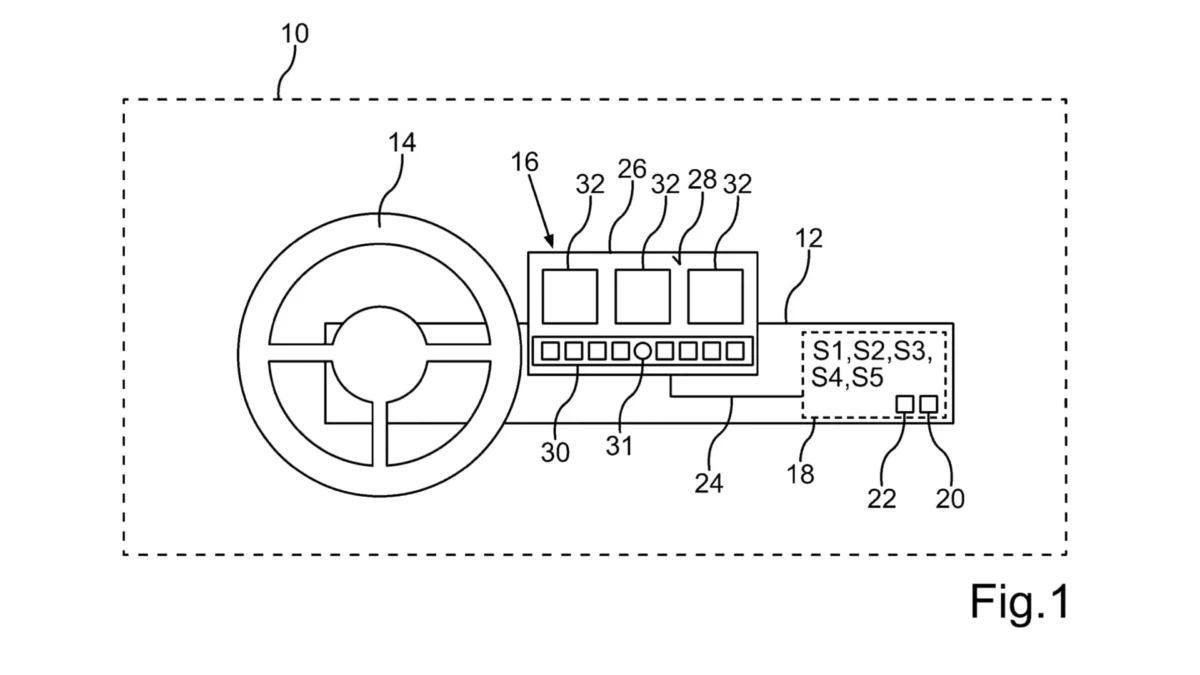
The technology unearthed via a filing with the German Patent and Trade Mark Office (DPMA) reveals a sophisticated approach to the "too many screens" problem. The patent describes a retractable button array—a horizontal strip housing physical switches and at least one central rotary knob—situated directly beneath the primary infotainment touchscreen.
The core innovation lies in the display’s integration with this hardware. Through either a physical command or a voice-activated prompt, the button bar can physically retract behind the bottom portion of the touchscreen. When the buttons are hidden, the screen software automatically reconfigures its interface to project a row of digital icons corresponding to the concealed physical functions. This ensures that functionality is never lost, regardless of whether the driver prefers a sleek, button-free aesthetic or the tactile feedback of physical hardware.
The inclusion of a rotary knob—likely dedicated to volume or climate intensity—suggests that Audi recognizes the inherent superiority of mechanical dials for high-frequency adjustments. By allowing the hardware to disappear, Audi aims to satisfy both the "minimalist" demographic, who desire a clean, digital-forward cabin, and the "traditionalist" demographic, who prioritize tactile feedback and the ability to operate vehicle controls by feel alone.
Chronology of the Touchscreen Era
The timeline of this design evolution provides essential context for why Audi’s patent is a significant development.
- 2005–2012 (The Early Adoption Phase): Vehicles began incorporating larger navigation screens, though these were almost exclusively supplemented by physical "hard keys" and central controller dials like Audi’s MMI (Multi Media Interface).
- 2013–2018 (The Digital Transition): As processing power increased, manufacturers began moving secondary functions—such as seat heating and climate control—from the console to the screen. The industry saw a peak in "piano black" plastic interiors, which prioritized aesthetic uniformity over tactile distinction.
- 2019–2023 (The Backlash): As high-end electric vehicles (EVs) standardized massive "hyperscreens" that spanned the entire dashboard, safety concerns peaked. Organizations like the European New Car Assessment Programme (Euro NCAP) began signaling that future safety ratings would depend on the presence of physical controls for essential functions.
- 2024–Present (The Correction): Major manufacturers have begun reversing course. Volkswagen, Mercedes-Benz, and now Audi are actively investigating or implementing hybrid interfaces that favor tactile inputs for safety-critical systems.
Supporting Data and Industry Implications
The necessity for this change is supported by both user behavior studies and safety data. A study by the Swedish automotive publication Vi Bilägare famously tested the ease of use of various infotainment systems by asking drivers to perform simple tasks—such as activating heated seats or adjusting radio settings—while driving. The study found that vehicles with physical buttons consistently allowed drivers to complete tasks in seconds, whereas vehicles relying solely on touchscreen menus often required multiple, distracting steps that kept the driver’s eyes off the road for significantly longer periods.
Furthermore, the rise of "Menu-Diving"—the process of navigating through multiple layers of software to find a simple control—is now cited as a primary contributor to cognitive load behind the wheel. By reintroducing physical buttons for essential systems, Audi is likely attempting to mitigate this cognitive load, thereby improving both driver comfort and safety.
The Role of Voice and Haptics
While the patent focuses on mechanical movement, it also highlights the increasing importance of multi-modal interaction. By linking the retraction of the button bar to voice commands, Audi is acknowledging that the future of the car interior is not just about buttons versus screens, but about the seamless integration of hardware, software, and AI assistants.
If implemented, this system would likely rely on high-quality haptic feedback. Even when the buttons are hidden, the digital icons that replace them could potentially utilize advanced haptic motors to simulate the "click" of a physical button, bridging the gap between digital and physical input methods.
Broader Impact on Brand Identity
For decades, Audi was lauded for its "interior supremacy." The tactile quality of its switches—often described as having a precise, damped, and expensive-feeling click—was a defining feature of the brand’s luxury status. The recent shift toward touch-only interfaces diluted this brand identity, leading many long-term owners to feel that the interior quality had plummeted despite the inclusion of more expensive display technology.
The return of physical buttons, particularly through a high-tech, motorized solution, could serve as a powerful marketing tool for Audi. It signals a return to the brand’s roots of ergonomic perfection while maintaining its position as a technology leader. If this patent reaches production, it will represent one of the most significant mechanical solutions to a software-driven problem in the modern automotive era.
Official Stance and Future Outlook
While Audi has not issued a formal statement regarding the specific production timeline for this patented technology, the filing itself is a clear indicator of the company’s internal research and development priorities. Industry analysts expect that this type of "dynamic interface" will become increasingly common as luxury brands scramble to differentiate their interiors from the influx of cost-effective, screen-heavy EVs entering the market from newer manufacturers.
Ultimately, the Audi patent represents a pragmatic middle ground. It acknowledges the inevitable dominance of digital screens for navigation, media, and connectivity, while simultaneously validating the physiological need for physical, intuitive controls for the driving experience. As the automotive industry moves toward an increasingly automated future, the ability to interact with the vehicle without needing to look at a screen will remain a hallmark of a well-engineered, driver-centric machine.
Audi’s move to patent this retractable panel suggests that the era of "screens for the sake of screens" is drawing to a close. In its place, we are likely to see a new generation of "smart" interiors that utilize mechanical movement to adapt to the driver’s immediate needs, ensuring that the technology serves the human, rather than forcing the human to adapt to the technology. Whether this specific design hits the assembly line in the next three or five years, it serves as a definitive roadmap for how the industry intends to solve the most pressing ergonomic issue of the modern vehicle cabin.