Understanding Animal Behavior: A Comprehensive Exploration of Category 4
Category 4 of animal behavior encompasses a broad and fascinating spectrum of interactions and motivations, often revolving around social dynamics, territoriality, and resource acquisition. This category delves into the intricate ways animals communicate, cooperate, compete, and establish hierarchies within their groups and environments. Unlike simpler categories focusing on individual survival instincts or basic reflexes, Category 4 behaviors are characterized by their complexity, often involving learned responses, nuanced social cues, and the strategic manipulation of others. At its core, this classification highlights the adaptive strategies animals employ to maximize their reproductive success and survival by navigating the challenges and opportunities presented by their social world and resource landscape.
A fundamental aspect of Category 4 is social behavior. This encompasses a wide array of interactions between individuals of the same species, ranging from solitary animals that interact only for reproduction to highly eusocial insects with complex colony structures. Within social species, cooperation plays a vital role. This can manifest in various forms, such as coordinated hunting in packs of wolves (Canis lupus), where a group effort allows them to bring down prey far larger than any individual could manage. Similarly, cooperative breeding, observed in species like meerkats (Suricata suricatta), involves individuals foregoing their own immediate reproduction to assist in raising the offspring of a dominant pair. This altruistic behavior, while seemingly counterintuitive, can be explained through kin selection theory, where individuals help relatives who share their genes, thus indirectly increasing their own genetic representation in future generations.
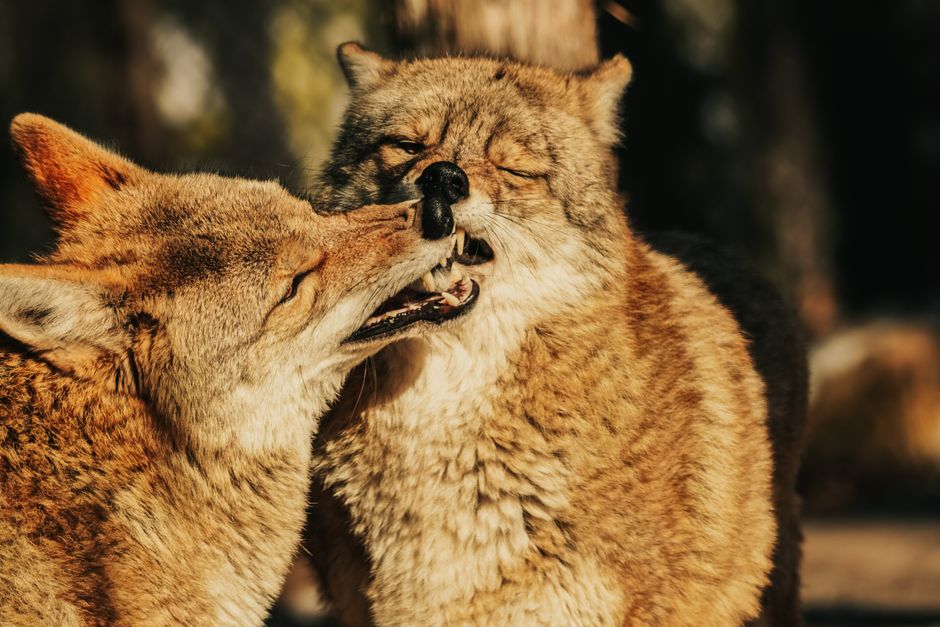
Competition, the flip side of cooperation, is also a crucial element of Category 4. Animals constantly vie for limited resources such as food, water, mates, and shelter. This competition can be direct, involving physical confrontations and aggression, or indirect, through territorial defense and the establishment of dominance hierarchies. Dominance hierarchies, prevalent in many primate species (e.g., chimpanzees, Pan troglodytes) and pack animals, serve to reduce overt conflict by establishing a clear order of access to resources. Higher-ranking individuals typically gain preferential access to food, mating opportunities, and prime resting spots, while lower-ranking individuals must often concede. The establishment and maintenance of these hierarchies involve complex signaling, often through body posture, vocalizations, and facial expressions, communicating an individual’s status and intentions without resorting to constant physical strife.
Territoriality is another significant behavior within Category 4. Many animals defend a specific area, known as a territory, against conspecifics. This defense is typically motivated by the need to secure vital resources for survival and reproduction. For instance, male songbirds will aggressively defend their singing perches and surrounding areas to attract mates and gather sufficient food for their future offspring. Territorial marking, through scent glands, urine, or feces, is a common method of communicating ownership and deterring intruders. The size and defensibility of a territory are often influenced by resource availability and the species’ social structure. In highly social animals, territories might be defended by groups rather than individuals, further blurring the lines between individual and social behavior.
Resource acquisition is intrinsically linked to social dynamics and territoriality. Animals employ a diverse range of strategies to obtain food, and these strategies are often shaped by their social environment. Predatory behaviors, from the ambush tactics of a lion (Panthera leo) to the cooperative stalking of hyenas (Crocuta crocuta), exemplify this. In species where food is scarce or difficult to obtain, social structures can become particularly elaborate. For example, some birds exhibit mobbing behavior, where a group of individuals will harass a predator, driving it away to protect their shared nesting sites and food sources. This collective defense is a prime example of a social behavior that directly contributes to resource security.
The realm of communication is central to all Category 4 behaviors. Animals utilize an astonishing array of signals to convey information about their intentions, status, needs, and environmental conditions. These signals can be auditory, visual, olfactory, or tactile. For instance, the complex vocalizations of whales (Cetacea) are used for communication over vast distances, facilitating social cohesion and navigation. The visual displays of birds during courtship, such as the elaborate plumage and dances of the peacock (Pavo cristatus), are crucial for mate selection. Olfactory communication, through pheromones, plays a vital role in marking territories, attracting mates, and signaling alarm in many insect and mammalian species. Tactile communication, like grooming in primates, not only serves hygienic purposes but also strengthens social bonds and reinforces hierarchies.
Mate selection and reproduction are paramount drivers of Category 4 behaviors. The intense competition for mates often leads to elaborate courtship rituals, sexual dimorphism, and aggressive male-male contests. Polygynous species, where one male mates with multiple females, often exhibit significant differences in size and weaponry between the sexes, with males engaging in fierce battles for access to females. Conversely, monogamous species may develop complex pair bonds and cooperative parenting strategies. The phenomenon of sexual selection, where traits that enhance mating success are favored, even if they are detrimental to survival, is a powerful force shaping the evolution of these behaviors.
Cooperation and altruism, while seemingly complex, are observed across a surprising range of animal groups. Beyond kin selection, reciprocal altruism, where an individual helps another with the expectation of future reciprocation, can also explain cooperative behaviors. Vampire bats (Desmodus rotundus), for example, will share regurgitated blood meals with unrelated individuals who have been unsuccessful in foraging, increasing the overall survival rate of the group. This requires sophisticated recognition of individuals and a memory of past interactions, highlighting the cognitive abilities underlying these advanced social behaviors.
Aggression and conflict resolution are unavoidable aspects of social life. While aggression can be costly, it often serves to establish dominance, defend resources, and protect offspring. However, animals have evolved numerous mechanisms to mitigate the destructive potential of aggression. Ritualized combat, where animals display aggression without inflicting serious harm, is common. Post-conflict reconciliation, where individuals engage in affiliative behaviors after a fight to restore social bonds, is also observed in many species, particularly primates, suggesting an evolved capacity for managing social relationships after conflict.
Understanding Category 4 behaviors provides crucial insights into the evolutionary pressures that shape the animal kingdom. These behaviors are not simply random actions but are finely tuned adaptations that have evolved to maximize an organism’s fitness. The study of these complex interactions allows us to appreciate the intricate social fabric of many species, their sophisticated communication systems, and their strategic approaches to resource management and reproduction. From the intricate social hierarchies of baboons to the cooperative hunting strategies of lions, Category 4 behaviors underscore the profound influence of sociality on survival and evolutionary success, revealing a world of interconnectedness and strategic interaction far beyond simple instinctual responses. The continued exploration of these behaviors is vital for conservation efforts, informing how we manage wildlife populations and their habitats, and for a deeper appreciation of the remarkable diversity and complexity of life on Earth. This category serves as a testament to the power of social intelligence and the adaptive significance of navigating a complex social and ecological landscape.
