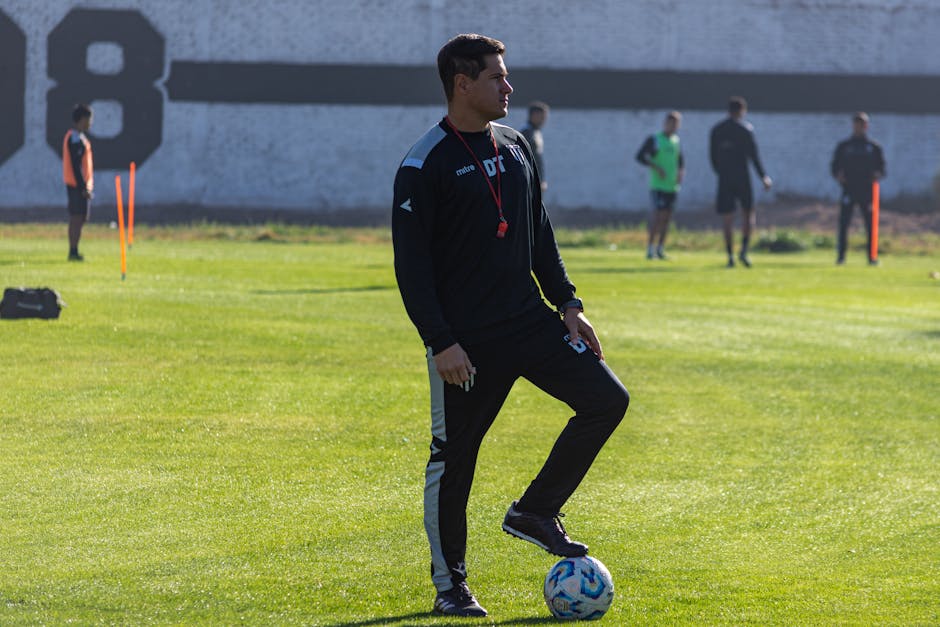
Football Management: Mastering the Art of Tactical Dominance and Player Development
Football management transcends the simple act of picking a starting eleven. It is a multifaceted discipline demanding strategic foresight, meticulous planning, and an innate understanding of human psychology. At its core, football management involves two primary pillars: tactical execution and player development, interwoven to achieve sustained success on the pitch. Tactical execution encompasses the overarching game plan, formation choices, in-game adjustments, and set-piece strategies. Player development, on the other hand, focuses on nurturing individual talent, improving player attributes, fostering team cohesion, and ensuring mental fortitude. A proficient manager must master both, recognizing that a brilliantly conceived tactic can falter with poorly conditioned or unmotivated players, and exceptional talent can be stifled by rigid or ineffective tactical approaches. The modern football landscape is intensely competitive, with margins for error razor-thin. Success hinges on a manager’s ability to analyze opponents, adapt their strategies, and consistently extract the maximum potential from their squad. This requires a deep well of knowledge, encompassing not only the technical and physical aspects of the game but also the psychological nuances that influence performance.
The foundation of any successful football management strategy lies in a deep understanding of tactical principles. This begins with the choice of formation. Formations are not merely numbers on a whiteboard; they represent a fundamental blueprint for how a team will operate on the pitch, dictating player positioning, defensive structures, attacking pathways, and transitional play. A 4-3-3, for instance, offers width and attacking options but can leave space in central midfield if not implemented correctly. A 3-5-2 provides midfield control and can overload wide areas defensively but might lack offensive penetration if the wing-backs are not effective. Managers must select formations that align with their squad’s strengths and weaknesses, as well as the specific demands of the opposition. Beyond the formation, specific tactical instructions are crucial. These involve defining the team’s approach to possession (e.g., patient build-up, direct play, counter-attacking), pressing intensity (high press, mid-block, low block), defensive shape (man-marking, zonal marking, hybrid approaches), and attacking tempo. The ability to communicate these instructions clearly and ensure they are understood and executed by every player is paramount.
In-game management is where tactical prowess truly shines. Football matches are fluid environments, constantly shifting based on the ebb and flow of play, individual brilliance, and unexpected events. A good manager observes these shifts meticulously and makes timely interventions. This can involve tactical substitutions, altering formation on the fly, changing player roles, or issuing specific instructions to key individuals. For example, if a team is struggling to break down a compact defense, a manager might introduce a more creative attacking midfielder or instruct wingers to play infield. Conversely, if conceding too many counter-attacks, a defensive midfielder might be brought on to provide additional cover. Set-piece strategy, often a decisive factor in tight contests, also falls under tactical execution. This includes designing attacking routines for corners and free-kicks, as well as organizing defensive set-piece coverage to nullify opposition threats. The success of these tactical decisions hinges on the manager’s ability to anticipate potential scenarios and have pre-prepared solutions, demonstrating a proactive rather than reactive approach.
Player development is the engine that drives long-term success in football management. It’s about cultivating raw talent into polished professionals, optimizing existing abilities, and fostering a winning mentality. This process begins with scouting and recruitment, identifying players who not only possess the necessary technical and physical attributes but also the right character and potential for growth. Once acquired, players embark on a journey of continuous improvement. This involves meticulously designed training programs that target specific areas of weakness, enhance physical conditioning, and refine technical skills. Training should be varied and engaging, preventing monotony and maximizing player buy-in. For young players, development also involves mentorship, introducing them gradually to senior team football and providing opportunities for them to learn from experienced teammates.
Beyond technical and physical development, player development encompasses mental fortitude and tactical intelligence. Managers must instill resilience, the ability to bounce back from setbacks, and confidence to perform under pressure. This is often achieved through motivational team talks, individual feedback sessions, and fostering a positive and supportive team environment. Tactical intelligence is developed by exposing players to different tactical systems, encouraging them to understand their roles within those systems, and challenging them to make intelligent decisions on the pitch. Video analysis plays a critical role here, allowing players to review their performances, identify mistakes, and understand tactical nuances from both their own team’s and the opposition’s perspective.
Team cohesion and morale are inextricable from player development and tactical success. A team that functions as a unit, where players understand and trust each other, is far more likely to perform at its best. Managers are responsible for building this chemistry, fostering communication, and resolving internal conflicts. Creating a positive team culture, where every player feels valued and respected, is paramount. This involves celebrating successes collectively, supporting individuals through difficult periods, and ensuring that individual ambition aligns with the collective goal. Poor morale can quickly undermine even the most talented squad and the most sophisticated tactical plan. Therefore, effective man-management, understanding individual personalities, and tailoring approaches to motivate different players is a critical skill for any football manager.
Data analysis has become an indispensable tool in modern football management. Gone are the days when intuition alone sufficed. Advanced metrics, statistical modeling, and performance tracking provide invaluable insights into player performance, tactical effectiveness, and opposition weaknesses. Managers and their staff utilize this data to identify trends, inform recruitment decisions, optimize training regimes, and fine-tune tactical approaches. For example, data can reveal a team’s inefficiencies in transition, highlight a specific opponent’s vulnerability to aerial duels, or identify a player who consistently underperforms in certain high-pressure situations. This data-driven approach allows for more objective decision-making, moving beyond anecdotal evidence and gut feelings. It enables managers to pinpoint areas for improvement with precision and measure the impact of their interventions.
The tactical battle extends beyond the 90 minutes of a match. Preparation for an opponent is a crucial element of football management. This involves in-depth analysis of their strengths, weaknesses, preferred formations, key players, and transitional patterns. Scouting reports are vital, providing detailed dossiers on opposition teams and individual players. Managers must then devise a game plan that exploits vulnerabilities and neutralizes threats. This might involve targeting a specific defender known to be weak in one-on-one situations, pressing a midfield that struggles to play out from the back, or denying space to a prolific goalscorer. The ability to adapt this plan based on pre-match intelligence and real-time observations during the game is a hallmark of elite management.
The role of the coaching staff cannot be overstated. A manager is rarely a solitary figure. They are typically supported by a team of specialists, including assistant managers, tactical coaches, fitness coaches, sports scientists, and analysts. The manager’s ability to delegate effectively, harness the expertise of their staff, and ensure a cohesive and unified approach across the coaching team is vital. The assistant manager, for instance, often plays a crucial role in relaying instructions from the dugout during matches and providing an alternative perspective. Fitness coaches ensure players are physically prepared, while sports scientists monitor workload and injury prevention. This collaborative environment allows the manager to focus on the overarching strategic direction while delegating specialized tasks.
The pressure inherent in football management is immense. Managers are constantly under scrutiny from the media, fans, and the board. Performance is measured week in and week out, and results are often paramount. This demands a high degree of mental resilience, the ability to remain calm under pressure, and the capacity to make difficult decisions, even when unpopular. Managers must develop coping mechanisms to deal with criticism and maintain their focus on the long-term objectives. The psychological aspect of management extends to motivating players through challenging periods, such as losing streaks or injuries. A manager’s composure and belief can be infectious, instilling confidence in the squad when it’s most needed.
In conclusion, football management is a dynamic and demanding profession that requires a multifaceted skillset. It is a continuous cycle of strategic planning, tactical innovation, meticulous player development, and effective leadership. Success is not achieved by mastering one element but by seamlessly integrating tactical acumen with a profound understanding of player psychology, physical conditioning, and the ever-evolving landscape of data analytics. The best managers are adaptable, forward-thinking, and possess an unwavering commitment to extracting the utmost potential from their players and their team, ultimately striving for sustained excellence on the competitive stage of professional football.
