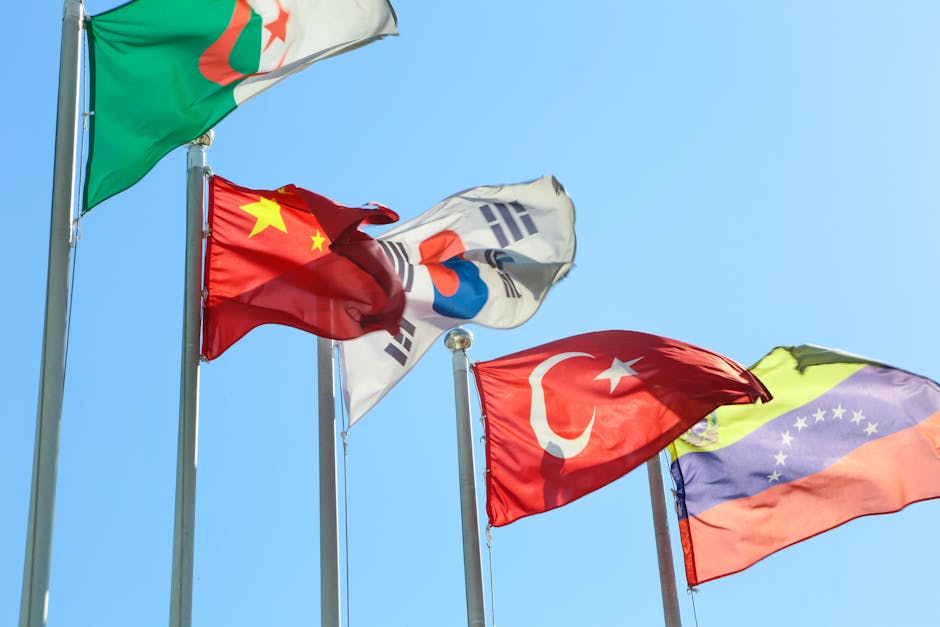
International Relations: Understanding the Dynamics of Global Interaction
International relations (IR) is a complex and multifaceted academic discipline that scrutinizes the interactions between states, international organizations, non-governmental organizations (NGOs), multinational corporations (MNCs), and individuals on a global scale. It seeks to explain the causes of conflict and cooperation, the distribution of power, the formation of alliances, the implementation of international law, and the consequences of globalization. At its core, IR is concerned with how political, economic, and social forces shape the world stage and influence the well-being of humanity. The field grapples with fundamental questions about sovereignty, national interest, security, justice, and the very nature of political community in an interconnected yet often fragmented world. Understanding these dynamics is crucial for navigating the challenges and opportunities presented by an increasingly globalized and interdependent planet.
Theoretical Foundations of International Relations
The study of international relations is underpinned by a variety of theoretical frameworks, each offering a distinct lens through which to analyze global phenomena. Realism, perhaps the most enduring and influential tradition, posits that the international system is anarchic, meaning there is no overarching authority to enforce rules or protect states. In this view, states are the primary actors, driven by a relentless pursuit of power and security. Realists emphasize the importance of self-help and the constant struggle for dominance, with conflict being an inherent feature of international politics. Key thinkers like Hans Morgenthau and Kenneth Waltz have shaped realist thought, highlighting concepts such as the balance of power and the security dilemma. Liberalism, in contrast, offers a more optimistic perspective, emphasizing the potential for cooperation and progress. Liberals believe that international institutions, international law, democratic governance, and economic interdependence can mitigate the effects of anarchy and foster peaceful relations. Prominent liberal thinkers such as Immanuel Kant and Woodrow Wilson have advocated for collective security, free trade, and the spread of democracy as pathways to enduring peace. Constructivism offers a third major approach, challenging the materialist assumptions of realism and liberalism. Constructivists argue that international relations are shaped by ideas, norms, identities, and social interactions. They contend that the world is not simply given but is actively constructed by actors through their shared understandings and beliefs. Alexander Wendt’s assertion that "anarchy is what states make of it" encapsulates this perspective, highlighting the fluidity and contingent nature of international order. Other important theoretical perspectives include Marxism, which focuses on economic exploitation and class struggle as drivers of international conflict, and feminist IR, which critiques traditional theories for their male-centric biases and emphasizes the role of gender in shaping global politics. Each of these theories provides valuable insights, and a comprehensive understanding of international relations often involves drawing upon multiple theoretical traditions.
Key Concepts and Actors in International Relations
Several core concepts are central to the study of international relations. State sovereignty remains a foundational principle, referring to the supreme authority of a state within its own territory and its independence from external control. However, globalization and the rise of non-state actors have increasingly challenged the absolute nature of sovereignty. National interest is another critical concept, representing the goals and objectives that a state seeks to achieve in its foreign policy. These interests are often defined in terms of security, economic prosperity, and ideological advancement. Power is a pervasive theme, encompassing the ability of an actor to influence the behavior of others. Power can be manifest in military strength, economic capacity, diplomatic skill, or cultural appeal. Security is a paramount concern, encompassing not only military defense but also economic, environmental, and human security. The international system refers to the structure of global politics, often characterized by its anarchic nature but also by the presence of institutions and norms that govern interactions.
The actors in international relations are diverse and their influence is constantly evolving. States remain the principal actors, possessing the monopoly on legitimate use of force within their borders and engaging in diplomacy, war, and treaty-making. International organizations (IOs), such as the United Nations (UN), the World Trade Organization (WTO), and the International Monetary Fund (IMF), play increasingly significant roles in setting norms, mediating disputes, and providing forums for cooperation. Non-governmental organizations (NGOs), like Amnesty International and Greenpeace, advocate for specific causes and exert pressure on states and IOs. Multinational corporations (MNCs) wield considerable economic power, influencing global trade, investment, and labor practices. Transnational terrorist groups and international criminal organizations also operate across borders, posing significant security challenges. Finally, individuals, through their advocacy, activism, and consumption patterns, are increasingly recognized as agents of change in the international arena.
Major Issues and Challenges in Contemporary International Relations
The contemporary international landscape is characterized by a multitude of complex and interconnected issues. Global security remains a central concern, with traditional threats such as interstate warfare and nuclear proliferation persisting. However, new threats have emerged, including terrorism, cyber warfare, and the proliferation of weapons of mass destruction. The rise of new powers, particularly China, is reshaping the global balance of power and leading to strategic competition with established powers like the United States. Economic globalization, while fostering growth and interconnectivity, also generates challenges such as rising inequality, financial instability, and trade disputes. Climate change represents an existential threat, demanding unprecedented international cooperation to mitigate its impacts and adapt to its consequences. Humanitarian crises, including widespread poverty, displacement, and pandemics, necessitate coordinated global responses. The spread of democratic ideals continues to be a contested issue, with authoritarianism experiencing a resurgence in some regions. The management of global commons, such as oceans, outer space, and the internet, requires ongoing international negotiation and regulation. The impact of technological advancements, from artificial intelligence to biotechnology, presents both opportunities and ethical dilemmas that require careful consideration. Finally, the maintenance of international law and human rights remains a perpetual struggle, requiring constant vigilance and commitment from the international community.
The Practice of International Relations: Diplomacy, Conflict, and Cooperation
The practice of international relations encompasses a range of activities aimed at managing interactions between actors. Diplomacy is the primary tool for peaceful engagement, involving negotiation, mediation, and the exchange of representatives to build understanding and resolve disputes. Foreign policy refers to a state’s strategy for interacting with other actors, encompassing its goals, interests, and the instruments it employs. International law, a body of rules and principles governing the conduct of states and other international actors, plays a crucial role in regulating behavior and providing a framework for order. However, the enforcement of international law often faces challenges due to the absence of a global sovereign. Conflict resolution mechanisms, ranging from negotiation and arbitration to peacekeeping operations and sanctions, are employed to manage and mitigate international disputes. International cooperation is essential for addressing shared challenges, manifest in multilateral agreements, joint initiatives, and the work of international organizations. The pursuit of national interest often necessitates a delicate balance between competition and cooperation, with states strategically engaging with others to advance their objectives while simultaneously seeking to avoid outright conflict. The development of effective strategies for conflict prevention and the promotion of sustainable development are increasingly recognized as crucial for long-term global stability and prosperity. The ongoing debate between interventionism and non-interventionism in the affairs of other states continues to shape foreign policy decisions and ethical considerations in international affairs.
The Evolution of the International System
The international system has undergone significant transformations throughout history, moving from a system of empires and city-states to the modern nation-state system and beyond. The Peace of Westphalia in 1648 is often cited as a pivotal moment, establishing the principle of state sovereignty and laying the groundwork for the modern state system. The Concert of Europe in the 19th century represented an early attempt at collective security and great power management. The World Wars of the 20th century profoundly reshaped the global order, leading to the establishment of the United Nations and the rise of superpowers during the Cold War. The bipolar world of the Cold War, characterized by ideological and geopolitical rivalry between the United States and the Soviet Union, profoundly influenced global politics. The end of the Cold War ushered in a period of unipolarity with the United States as the sole superpower, but this has gradually given way to a more multipolar and complex global landscape. The rise of globalization has further intensified interdependence, blurring national boundaries and increasing the influence of non-state actors. Understanding these historical trajectories is essential for comprehending the current dynamics of international relations and anticipating future developments. The ongoing debate about the future of the liberal international order and the potential emergence of new hegemonic structures continues to be a central theme in contemporary IR scholarship.
Conclusion
International relations is a vital field of study that seeks to unravel the intricate web of connections, conflicts, and collaborations that define our globalized world. By examining theoretical frameworks, key concepts, and the diverse actors involved, students and practitioners of IR gain a deeper understanding of the forces shaping global events. The contemporary international landscape presents a formidable array of challenges, from security threats and economic disparities to environmental crises and the erosion of democratic norms. Navigating these complexities requires a nuanced appreciation of diplomacy, international law, and the imperative for sustained global cooperation. As the international system continues to evolve, driven by technological advancements, demographic shifts, and the changing distribution of power, the study of international relations remains more critical than ever in fostering a more peaceful, just, and sustainable future for all. The ongoing quest for effective global governance and the pursuit of common solutions to shared problems will undoubtedly continue to define the agenda of international relations in the decades to come.
