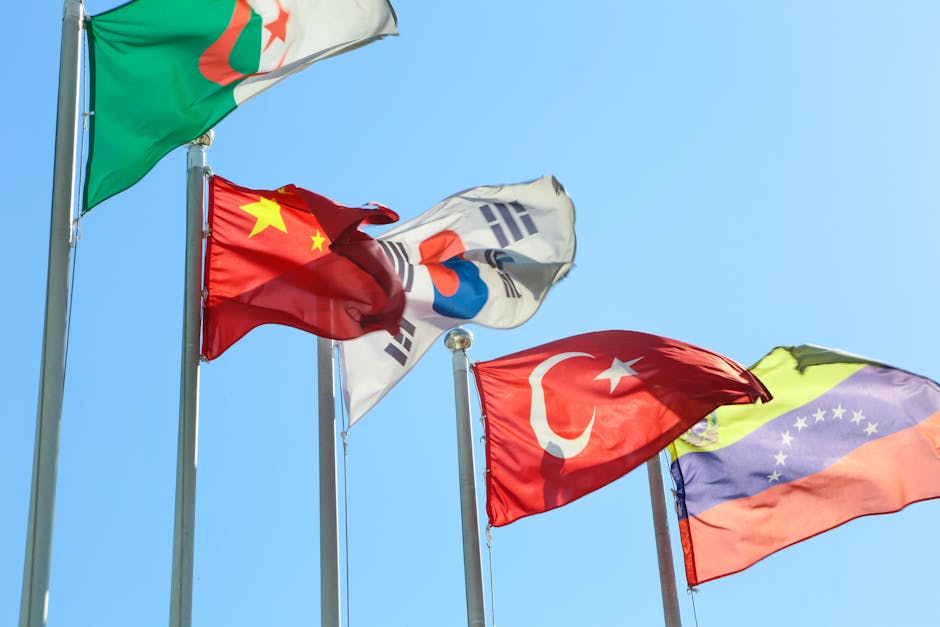
International Relations: Power, Diplomacy, and the Architecture of Global Order
International Relations (IR) as an academic discipline and a practical field of study examines the complex web of interactions between states, international organizations, non-governmental organizations (NGOs), multinational corporations (MNCs), and individuals across national borders. Its core concerns revolve around understanding the causes and consequences of conflict and cooperation, the distribution of power, the nature of global governance, and the evolution of international norms and institutions. At its heart, IR seeks to explain why states behave the way they do on the world stage, how global systems emerge and persist, and what pathways exist towards a more peaceful and prosperous international order. The discipline is inherently interdisciplinary, drawing insights from political science, history, economics, sociology, law, and philosophy to construct a multifaceted understanding of global phenomena.
The theoretical foundations of International Relations are diverse and often contested, providing competing lenses through which to analyze global events. Realism, one of the oldest and most influential theoretical traditions, posits that the international system is anarchic, meaning there is no overarching authority above sovereign states. In this anarchic environment, states are primarily driven by self-interest and the pursuit of power to ensure their survival. Key tenets of realism include the centrality of the state as the primary actor, the importance of military power and national security, and a pessimistic view of human nature and the possibility of lasting peace. Within realism, there are various sub-schools: classical realism emphasizes the role of human aggression, while structural realism (or neorealism) attributes state behavior to the structure of the international system, specifically the distribution of capabilities among states. Offensive realists argue that states should maximize their power to achieve hegemony, while defensive realists contend that states should seek to maintain the existing balance of power.
Liberalism, in contrast, offers a more optimistic perspective on international relations, emphasizing the potential for cooperation and the positive role of international institutions, democracy, and economic interdependence. Liberals argue that while anarchy exists, it can be mitigated through the establishment of rules, norms, and organizations that foster trust and reduce the likelihood of conflict. Key liberal concepts include the democratic peace theory, which suggests that liberal democracies are less likely to go to war with each other; the role of international law and organizations like the United Nations in facilitating cooperation; and the idea that economic interdependence creates shared interests that discourage conflict. Neoliberalism, or complex interdependence, further develops these ideas, highlighting the proliferation of actors beyond states and the growing importance of transnational issues like environmental degradation and global health.
Constructivism offers a third major theoretical approach, challenging the materialist assumptions of realism and liberalism. Constructivists argue that international relations are not simply determined by material factors like power or economic resources, but rather by shared ideas, norms, and identities. They emphasize the social construction of reality, suggesting that states’ interests and behaviors are shaped by their perceptions of themselves and others, and by the prevailing international norms. For example, the concept of sovereignty, while seemingly a material fact, is in essence a social construct that profoundly shapes how states interact. Constructivism highlights the transformative potential of changing ideas and the power of discourse in shaping the international agenda.
Other significant theoretical frameworks within IR include Marxism and Critical Theory, which focus on economic inequalities, class struggles, and the ways in which power is embedded in global economic structures. Dependency theory, for instance, argues that the underdevelopment of some nations is a direct consequence of their exploitation by more developed nations. Critical theorists aim to challenge existing power structures and promote social transformation by uncovering hidden assumptions and power dynamics within the international system. Feminist IR scholars examine how gender shapes international politics, highlighting the marginalization of women’s experiences and advocating for a more inclusive understanding of security and global governance.
The concept of sovereignty is central to understanding the modern international system. Originating with the Peace of Westphalia in 1648, it signifies the supreme authority of a state within its territory and its independence from external interference. In practice, however, sovereignty is a complex and often contested notion. States strive to maintain their autonomy, but they are increasingly constrained by global norms, international law, and the interconnectedness of the global economy. The principle of non-intervention, a corollary of sovereignty, is frequently challenged by humanitarian interventions, the Responsibility to Protect (R2P) doctrine, and the growing influence of non-state actors.
Diplomacy is the primary tool through which states manage their relationships and resolve disputes in the international arena. It involves the art and practice of negotiation, communication, and representation between states, typically conducted by diplomats. Diplomacy can take many forms, from traditional bilateral negotiations to multilateral diplomacy within international organizations. Public diplomacy, which involves engaging foreign publics directly to influence their perceptions and attitudes, has also become increasingly important in the digital age. Diplomacy is not solely about avoiding conflict; it is also about building alliances, fostering cooperation, and promoting national interests through peaceful means.
International law provides a framework of rules and principles governing the behavior of states and other international actors. It is derived from treaties, customary international law, general principles of law, and judicial decisions. While international law lacks a centralized enforcement mechanism akin to domestic legal systems, its influence is profound. International courts and tribunals, such as the International Court of Justice (ICJ) and the International Criminal Court (ICC), play a role in adjudicating disputes and holding individuals accountable for international crimes. The effectiveness of international law is often debated, with its enforcement relying heavily on the willingness of states to comply and the pressure exerted by international norms and public opinion.
International organizations (IOs) are crucial actors in contemporary international relations. They range from universal organizations like the United Nations (UN), with its broad mandate for peace, security, and development, to more specialized bodies like the World Health Organization (WHO) or the International Monetary Fund (IMF). IOs provide platforms for cooperation, facilitate norm diffusion, and contribute to the development and implementation of international law. They can also serve as arenas for power politics, where states vie for influence and shape the agendas of these organizations to their advantage. The effectiveness and legitimacy of IOs are often subjects of debate, with questions raised about their representativeness, accountability, and ability to address pressing global challenges.
Non-governmental organizations (NGOs) have emerged as increasingly significant actors in international relations. These private, non-profit organizations operate across borders, advocating for a wide range of causes, from human rights and environmental protection to humanitarian aid and disaster relief. NGOs can exert influence through advocacy, lobbying governments and international organizations, raising public awareness, and providing direct services. They can also play a crucial role in monitoring state behavior and holding them accountable to international norms. The growing influence of NGOs challenges the traditional state-centric view of international relations, underscoring the complexity and multi-actor nature of the global landscape.
The international political economy (IPE) examines the interplay between politics and economics in the global arena. It analyzes issues such as international trade, finance, development, and globalization, and how political power shapes economic outcomes and vice versa. Key debates in IPE revolve around the benefits and drawbacks of free trade, the role of international financial institutions in shaping global economic development, and the impact of globalization on inequality and national sovereignty. IPE recognizes that economic interdependence can be a source of both cooperation and conflict, and that power dynamics are deeply embedded within global economic systems.
Security is a perennial and evolving concern in international relations. Traditionally, security was understood primarily in military terms, focusing on the threat of interstate war and the defense of national borders. However, the concept of security has broadened considerably to encompass a wider range of threats, including terrorism, cyber warfare, climate change, pandemics, economic instability, and human security issues like poverty and displacement. The study of international security grapples with understanding the causes of conflict, strategies for conflict prevention and resolution, the role of alliances and collective security arrangements, and the challenges posed by non-state actors and emerging technologies.
The international system is not static; it is in constant flux, shaped by shifts in power, the emergence of new technologies, evolving norms, and unforeseen events. The rise and fall of great powers, the development of nuclear weapons, the advent of the internet, and the increasing salience of transnational issues like climate change are all testament to this dynamism. Understanding these transformations is crucial for comprehending the present and anticipating the future of international relations. The ongoing debate between those who see the international system moving towards greater integration and cooperation and those who anticipate increased fragmentation and conflict continues to shape the discourse within the field.
In conclusion, International Relations is a vast and dynamic field that seeks to unravel the intricate workings of the global order. Through its diverse theoretical lenses, it examines the motivations and actions of states and other actors, the mechanisms of diplomacy and international law, the influence of international organizations and NGOs, and the complex interplay of power, economics, and security. The ongoing quest for a more stable, just, and peaceful international system remains the central, albeit perpetually challenging, endeavor of this critical academic discipline and practical pursuit.
