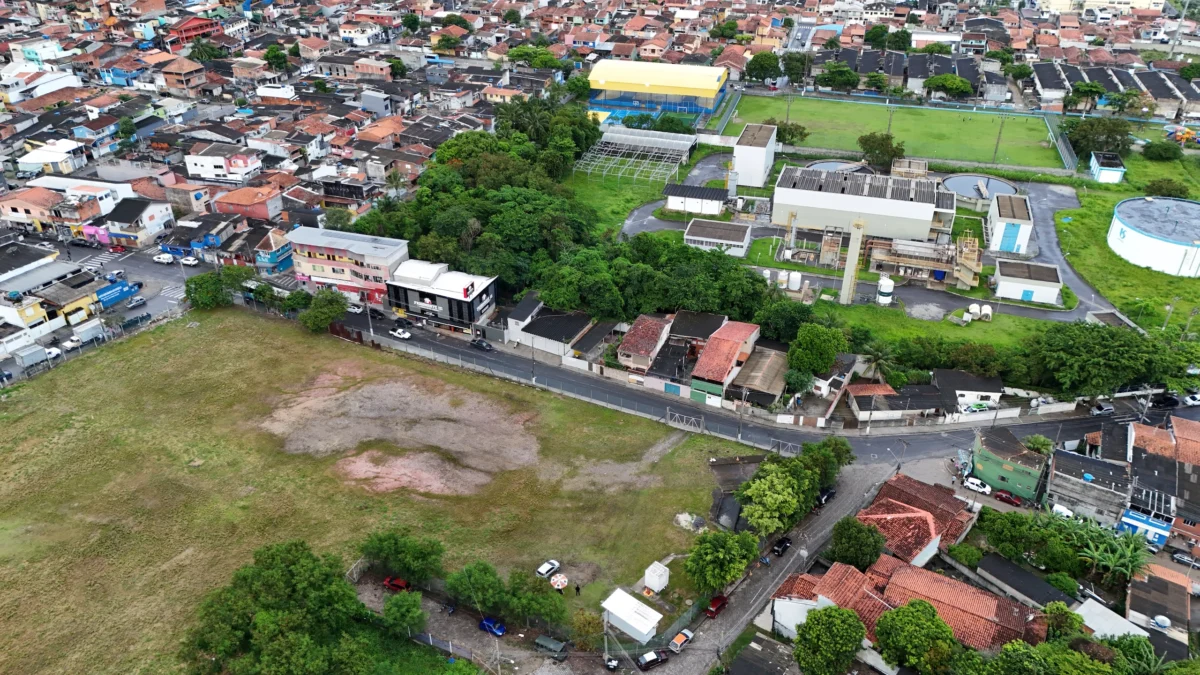
In the coastal city of São Sebastião, Brazil, within the confines of the Itatinga neighborhood, the landscape is defined by more than just its proximity to the Atlantic Ocean and the massive infrastructure of the state-controlled oil giant, Petrobras. For the residents who have lived here for decades, the environment is defined by a persistent and invisible threat. Cosma da Silva, a long-term resident, stands before her home and gestures toward the surrounding buildings, reciting a grim census of her neighbors. She points to one house, then another, and then a third, noting the presence of cancer in each. In her view, the disease has become an inescapable part of the local geography. Her own family has not been spared; her husband, Paulo José da Silva, died at the age of 51 from a brain tumor, and Cosma herself recently underwent surgery to remove a nodule, leaving her with a painful, itching wound—a constant physical reminder of the community’s collective anxiety.
The plight of Itatinga is rooted in an environmental legacy that dates back half a century. From the 1970s through the 1980s, a portion of the land in this area was used as a dumping ground for oily sludge, a hazardous byproduct of oil exploration and processing. As São Sebastião underwent rapid urban expansion in the following decades, the contaminated land was subdivided and sold. Homes were built directly atop the waste, often without the knowledge of the incoming families. Today, while the connection between the neighborhood’s high incidence of illness and this legacy of contamination has been the subject of decades of legal and environmental scrutiny, a definitive health study has never been completed, leaving residents in a state of perpetual uncertainty and perceived abandonment.

The Legacy of Oily Sludge and Urban Expansion
The history of Itatinga is a cautionary tale of industrial negligence intersecting with unregulated urban growth. Before the neighborhood became a densely populated residential area, it was characterized by small-scale agriculture, bamboo groves, and pristine streams. Maria do Carmo Barbosa da Silva, who has resided in the area for over 30 years, recalls a time when the local river was used for fishing, bathing, and washing clothes. However, by the early 2000s, the environment began to change. A dark, viscous substance began to seep into backyards, sidewalks, and vacant lots. Residents described it as a "black sludge" with a pungent, chemical odor resembling burnt oil.
Oily sludge is a complex mixture consisting of oil, water, and solid waste generated during the storage, transportation, and refining of petroleum. It is notorious for containing a variety of hazardous substances, including heavy metals and polycyclic aromatic hydrocarbons (PAHs). Among the most concerning components identified in technical reports by the São Paulo State Environmental Company (CETESB) is benzene. Benzene is classified by the International Agency for Research on Cancer (IARC) and Brazil’s National Cancer Institute (INCA) as a Group 1 carcinogen, meaning there is sufficient evidence of its carcinogenicity in humans. Health experts emphasize that there is no safe level of exposure to benzene, which is known to cause leukemia, bone marrow failure, and significant damage to the immune and respiratory systems.
A Chronology of Institutional Investigation and Inaction
The recognition of Itatinga as a contaminated site did not happen overnight, but rather through a slow accumulation of reports and legal pressures.

- The 1970s–1980s: Petrobras and associated industrial activities utilize the Itatinga area for the disposal of oily waste. The land is later filled and prepared for residential development.
- The Early 2000s: Residents begin reporting the surfacing of oily sludge in their properties. Initial environmental assessments by CETESB confirm the presence of hydrocarbons and benzene in the soil and groundwater.
- 2011: Under pressure from the São Paulo State Prosecution Service (MPSP) and the Federal Prosecution Service (MPF), Petrobras and the municipality of São Sebastião sign a Conduct Adjustment Commitment (TAC). This legal document outlines the responsibilities for remediating the site and addressing the environmental damage.
- 2018: An amendment is added to the TAC, specifically requiring a Cross-Sectional Health Study. This study was intended to be the definitive tool for evaluating the health of the population and determining if the documented contamination was responsible for the local disease clusters.
- 2020–2022: The COVID-19 pandemic provides a justification for delaying the study, as household surveys and in-person medical evaluations become logistically challenging.
- 2025: The commitment to conduct the health study is officially abandoned. In its place, a financial settlement of R$ 2.46 million (approximately $479,000) is proposed to be transferred to the Municipal Land Regularization Fund.
This shift from scientific investigation to financial compensation has sparked outrage among environmental advocates and residents alike. The study, which was supposed to provide the "truth" regarding the impact of the oil waste on human biology, has essentially been traded for a budgetary transfer that may or may not be used for direct community health benefits.
Technical Reports vs. Lived Experience
The discrepancy between official data and the lived experience of residents remains the core of the conflict. The municipality of São Sebastião, citing an Epidemiological Technical Report spanning 2006 to 2026, maintains that there is no "abnormal" incidence of disease in Itatinga. According to the Oncology and Nephrology Support Center (CAON), the neighborhood has seen 25 cancer patients in treatment over the last decade. With a population of over 5,000, officials argue that two to three cases per year is statistically consistent with other regions.
However, critics point out that these figures are broad and may not specifically track the sub-population living directly on the most contaminated plots. Furthermore, the lack of a proactive health study means that many cases of respiratory illness, chronic pain, and early-stage nodules—such as those reported by Maria do Carmo and Cosma da Silva—may not be captured in oncology-specific data. Maria do Carmo, now 58, suffers from chronic respiratory issues, glaucoma, and depression, while her 8-year-old granddaughter experiences recurring breathing difficulties. For these families, the "statistical average" does little to ease the fear that their environment is slowly poisoning them.

CETESB, for its part, considers the area where remediation work was performed to be "safe for its current use," provided it remains fenced off and unoccupied by new buildings. While the agency has stated that groundwater monitoring is no longer strictly necessary, it has called for complementary studies regarding "underground vapor intrusion"—a process where volatile chemicals like benzene evaporate from contaminated soil or water and seep into the air inside buildings. Petrobras is expected to begin fieldwork for this specific analysis later this year.
Analysis: Itatinga as a "Sacrifice Zone"
The situation in Itatinga fits the criteria of what environmental sociologists and legal experts call a "sacrifice zone." Juliano Bueno, director of the environmental litigation organization Arayara and a specialist in environmental risks, argues that the replacement of the health study with a financial transfer is a form of "liability management" rather than a search for justice.
"The transfer turns the fundamental right to health and truth into a bargaining chip," Bueno explains. He notes that without the study, the problem remains unmeasured, which prevents the planning of preventive actions or the provision of specialized medical assistance. In sacrifice zones, socially vulnerable populations are often forced to coexist with persistent environmental risks while institutional responses focus on mitigating legal and financial exposure for the responsible parties rather than the human impacts.

For a solution to be considered just, Bueno suggests it must rest on three pillars: truth, reparation, and guarantees of non-repetition. Truth requires an independent, transparent epidemiological study. Reparation involves not just a lump sum to a municipal fund, but permanent, specialized healthcare for the exposed population. Guarantees of non-repetition would require a permanent environmental health monitoring system to ensure that future generations are not subjected to the same risks.
Official Responses and the Impasse of Responsibility
Petrobras has consistently maintained that there is no scientific evidence linking local illnesses to the contamination. In statements provided to investigators and the media, the company emphasizes that the urban expansion and land-filling of Itatinga occurred decades ago without its direct involvement in the subdivision process. While the company has funded remediation efforts, it characterizes its involvement as an act of "socio-environmental responsibility" rather than an admission of legal guilt for the current health outcomes of the residents.
The municipality of São Sebastião justified the cancellation of the health study by citing "failed bidding processes." According to city officials, no "qualified institutions" submitted proposals to conduct the research, and the methodological complexity—further hindered by the pandemic—made the project untenable.

For the residents of Itatinga, these technical and legal justifications ring hollow. Geraldo Ribeiro, who spends his days caring for his wife as she undergoes cancer treatment, summarizes the community’s demand: "They have studied the land, but we are also here. A study of the area must be a study of the people."
Implications and Future Outlook
The case of Itatinga serves as a stark reminder of the long-term consequences of industrial waste management and the failures of urban planning. As São Sebastião continues to serve as a vital hub for Brazil’s oil industry, the tension between economic interests and public health remains unresolved. The cancellation of the health study sets a concerning precedent for other contaminated sites across Brazil, suggesting that legal obligations to investigate human health impacts can be bypassed through financial settlements.
As 2025 approaches, the focus will shift to how the R$ 2.46 million transfer is utilized. If the funds are absorbed into general land regularization without specific allocations for health monitoring or environmental safeguards, the residents of Itatinga will continue to live in the shadow of the oil industry, their health concerns dismissed as statistically insignificant. For Cosma, Maria, and Geraldo, the battle is not just against a disease, but against an institutional silence that has lasted as long as the sludge beneath their feet. The quest for "environmental truth" in Itatinga remains unfinished, a testament to the enduring legacy of a community built on the waste of an industrial era.