South Korean Politics: A Deep Dive into Power, Policy, and Societal Dynamics
South Korean politics is a dynamic and complex landscape shaped by a unique historical trajectory, persistent geopolitical pressures, and evolving societal demands. As a leading global economy and a vibrant democracy, its political system offers a compelling case study in post-war nation-building, rapid development, and the ongoing struggle to balance tradition with modernity. At its core, South Korean politics revolves around a presidential system with a unicameral legislature, the National Assembly. The President, directly elected for a single five-year term, serves as both head of state and head of government, wielding significant executive power. This concentration of authority, while intended to facilitate decisive leadership, has also been a recurring source of political contention and debate regarding accountability and checks and balances. The National Assembly, composed of elected representatives, plays a crucial role in legislation, oversight, and scrutinizing government actions. However, the influence of partisan politics, often characterized by fierce rivalry and ideological divides, frequently leads to legislative gridlock and prolonged political standoffs.
The historical context is indispensable to understanding contemporary South Korean political dynamics. Emerging from the Korean War (1950-1953) as a divided nation with vastly different political and economic systems north and south, South Korea embarked on a path of rapid industrialization and democratization. The authoritarian regimes of the mid-to-late 20th century, while credited with fostering economic growth through export-oriented policies, were also marked by human rights abuses and suppression of dissent. The pro-democracy movement of the 1980s culminated in the establishment of a truly democratic system, fundamentally altering the political landscape. This transition, however, left a legacy of distrust in institutions and a heightened public sensitivity to issues of fairness, justice, and government transparency. The memory of past struggles for democracy continues to inform public discourse and the demands placed upon political leaders, emphasizing the importance of citizen participation and accountability.
Geopolitical realities, particularly the ongoing threat from North Korea and the complex relationships with regional powers like China, Japan, and the United States, profoundly influence South Korean foreign and security policy, and by extension, domestic politics. The North Korean nuclear program and intermittent provocations necessitate a constant focus on national defense and diplomatic engagement, often shaping electoral platforms and public opinion. The relationship with the United States, a key security ally, involves ongoing discussions on defense burden-sharing and strategic alignment. Simultaneously, South Korea navigates its economic interdependence with China, its historical grievances with Japan, and its aspirations for greater regional influence. These external pressures create a challenging environment for policymakers, requiring delicate balancing acts and often leading to domestic debates on the optimal approach to foreign relations and national security.
The South Korean party system is characterized by a fluid and often competitive landscape, dominated by two major political blocs that tend to alternate in power. Historically, these blocs have coalesced around different ideological orientations, broadly categorized as conservative and liberal or progressive. The conservative bloc, often drawing support from older demographics, more affluent regions, and those prioritizing economic stability and national security, has historically advocated for stronger ties with the United States and a more cautious approach to inter-Korean relations. The liberal/progressive bloc, typically appealing to younger voters, urban populations, and those emphasizing social justice, equality, and reconciliation with North Korea, has often championed welfare programs and efforts to improve inter-Korean dialogue. However, these ideological lines are not always rigid, and the fluidity of voter allegiances, coupled with the emergence of new political movements and single-issue campaigns, adds another layer of complexity to the party system. Factionalism within parties and the constant maneuvering for political advantage are defining features of this dynamic.
Key policy areas in South Korean politics reflect the nation’s developmental stage and its aspirations. Economic policy remains paramount, with a continuous focus on innovation, competitiveness, and addressing income inequality. The chaebol, large family-controlled conglomerates that have been instrumental in South Korea’s economic miracle, remain a significant force, but also a source of debate regarding their market dominance, corporate governance, and social responsibility. Policies aimed at fostering startups, supporting small and medium-sized enterprises, and diversifying the economy are ongoing concerns. Social policy addresses the challenges of an aging population, low birth rates, and the need for robust social safety nets. Issues such as affordable housing, healthcare access, and pension reform are critical and often generate significant political debate. Environmental policy, though gaining traction, faces the challenge of balancing industrial growth with sustainability.
The electoral process in South Korea is a vital component of its democratic framework. The President is elected through a popular vote, and National Assembly members are chosen through a mixed system combining direct constituency elections and proportional representation. Voter turnout, while generally robust, can fluctuate depending on the specific election and the prevailing political climate. The media plays a significant role in shaping public discourse and influencing electoral outcomes, with a diverse range of newspapers, broadcast networks, and online platforms. The increasing reliance on social media for political information and mobilization has also become a notable factor in recent elections. Campaign finance regulations are in place, but concerns about the influence of money in politics persist.
The judiciary in South Korea, particularly the Constitutional Court and the Supreme Court, plays a crucial role in interpreting laws, adjudicating disputes, and ensuring constitutional compliance. The independence of the judiciary is a cornerstone of the democratic system, though political pressures and public scrutiny are inherent. Judicial review powers allow the courts to strike down legislation deemed unconstitutional, serving as a vital check on the legislative and executive branches. Appointments to the judiciary are often a point of political contention, reflecting the significant influence these institutions wield.
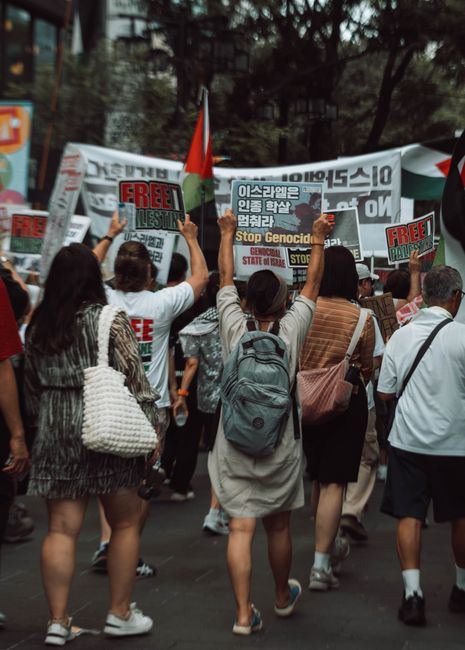
South Korean civil society is vibrant and actively engaged in political discourse and advocacy. A multitude of non-governmental organizations (NGOs), labor unions, and citizen groups actively lobby government, raise public awareness on various issues, and participate in protests and demonstrations. These groups often represent diverse interests, from environmental protection and human rights to women’s rights and consumer advocacy. Their activism serves as a crucial mechanism for holding government accountable and pushing for policy changes. The legacy of the pro-democracy movement continues to inspire and empower these groups, making them an integral part of the political landscape.
Corruption has been a persistent challenge in South Korean politics, leading to high-profile scandals and public outcry. Various administrations have pledged to combat corruption, implementing reforms and strengthening anti-corruption agencies. However, the deeply entrenched nature of some corrupt practices and the influence of powerful vested interests make eradication a difficult and ongoing endeavor. Public demand for transparency and accountability remains high, and any perception of corruption can significantly impact the popularity of political leaders and parties.
Political reform remains a constant theme in South Korean political discourse. Debates often center on improving the electoral system to enhance fairness and representation, strengthening legislative oversight, and curbing the concentration of power in the presidency. Discussions about decentralization and empowering local governments also arise periodically. The desire for a more responsive, transparent, and equitable political system drives these ongoing reform efforts.
In conclusion, South Korean politics is a multifaceted and continuously evolving phenomenon. It is a product of its unique history, its strategic geopolitical position, and the aspirations of its populace. The interplay between the presidential system, the legislature, political parties, civil society, and the judiciary, all operating within a complex web of domestic and international pressures, creates a compelling and often dramatic political environment. Understanding these interconnected elements is crucial for comprehending the trajectory of this influential East Asian nation. The ongoing pursuit of democratic consolidation, economic prosperity, social justice, and national security ensures that South Korean politics will remain a subject of significant global interest and analysis for years to come. The nation’s resilience, its capacity for adaptation, and its unwavering commitment to democratic ideals continue to shape its political future.
