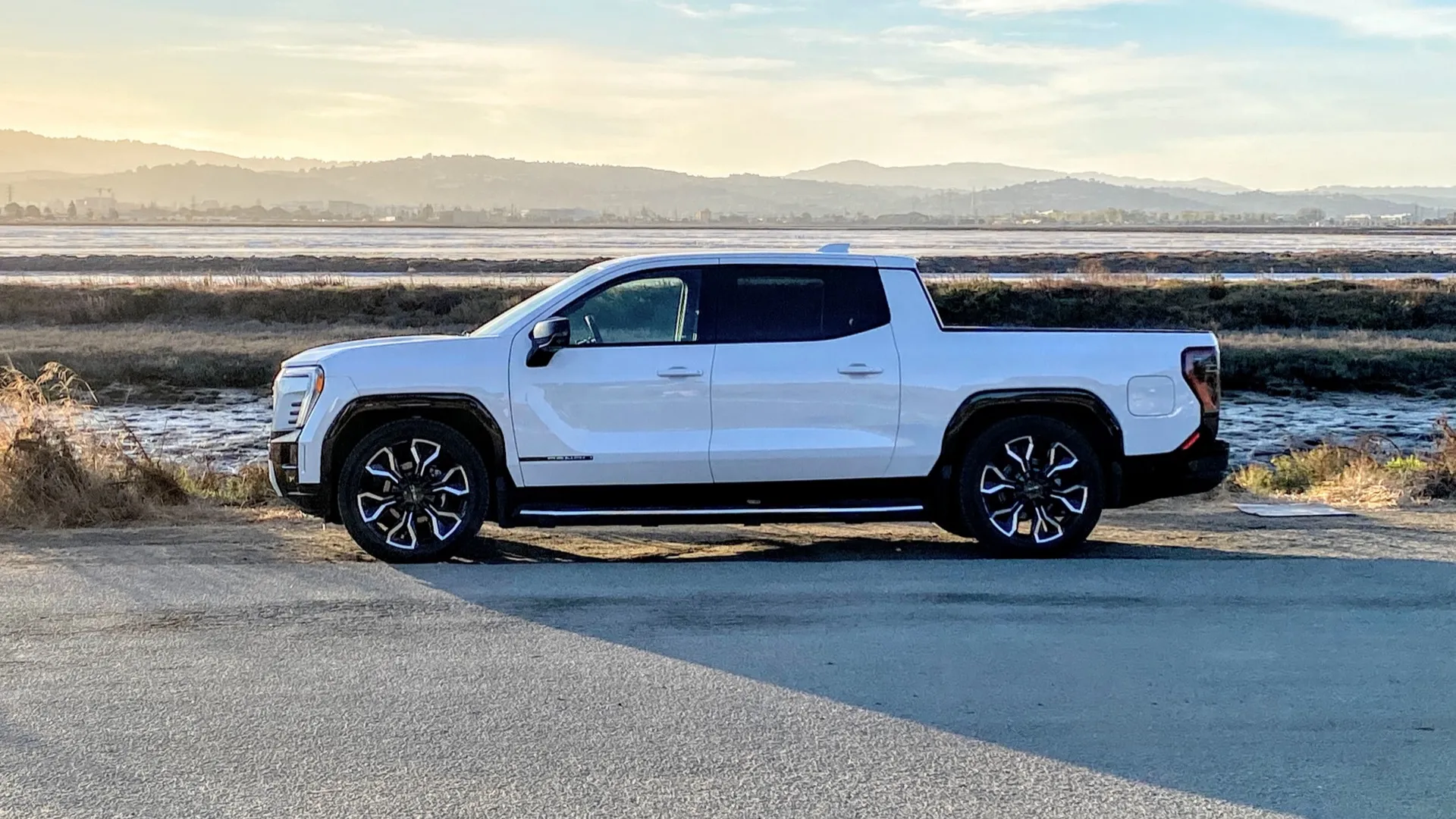
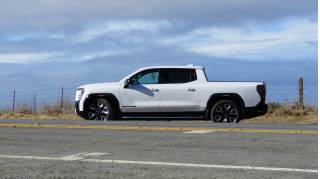
The automotive landscape is currently witnessing a significant transformation as legacy manufacturers transition their most profitable segments—full-size pickups—into the electric era. While early entries into the electric truck market focused on either radical design departures or simple powertrain swaps, the 2025 GMC Sierra EV Denali represents a more calculated, engineering-heavy approach. By prioritizing massive battery capacity, advanced maneuverability through four-wheel steering, and a re-imagining of cargo flexibility, GMC is attempting to prove that an electric vehicle can not only match but exceed the utility of its internal combustion counterparts. Initial evaluations of the vehicle, particularly on the demanding, winding corridors of Northern California’s Skyline Boulevard, suggest that the Sierra EV defies the traditional physics associated with a nearly 9,000-pound pickup.

Engineering the Ultium Platform: Battery and Range Specifications
At the core of the 2025 GMC Sierra EV is General Motors’ Ultium platform, a modular battery and drive unit architecture designed to scale across various vehicle segments. For the Sierra EV, GMC has opted for a "more is more" philosophy regarding energy storage. The truck is offered with two primary battery configurations: the Extended Range and the Max Range. The Max Range variant features a massive 205-kilowatt-hour (kWh) battery pack, which delivers a GM-estimated 460 miles of range on a single charge. The Extended Range version utilizes a 170-kWh pack, providing a still-impressive 390 miles of range.
These figures place the Sierra EV at the top of the current electric truck market for total distance between charges. However, these range numbers are achieved through sheer capacity rather than groundbreaking efficiency. Real-world testing over approximately 90 miles of mixed driving conditions yielded an efficiency of 1.9 miles per kWh. While this figure is typical for a vehicle of this size and aerodynamic profile, the massive pack ensures that even with less-than-optimal efficiency, the total range remains high enough to satisfy long-distance travelers and those who tow frequently.
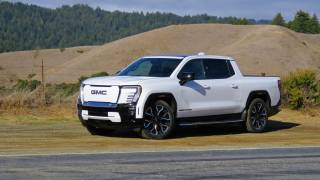
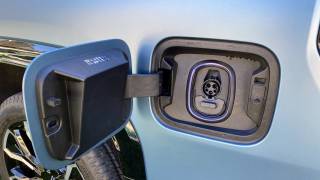
The battery architecture itself is a dual-layer design. This allows the system to operate at 400 volts for standard duties but "stitch" the layers together in series to enable 800-volt DC fast charging. When connected to a 350-kW fast charger, the Max Range model can recover approximately 100 miles of range in just 10 minutes. Charging from 10% to 80% is estimated to take roughly 40 minutes, a competitive figure given the sheer volume of energy being moved into the pack.
Performance Dynamics and Maneuverability Technologies
The 2025 GMC Sierra EV Denali is powered by a dual-motor, all-wheel-drive system consisting of front and rear permanent magnet motors designed and manufactured by General Motors. In its "Max Power" mode, the Max Range version produces a staggering 760 horsepower and 785 lb-ft of torque. This allows the truck to accelerate from 0 to 60 mph in approximately 4.5 seconds. The Extended Range version, while slightly less potent, still produces 645 horsepower and maintains the same 785 lb-ft torque rating.
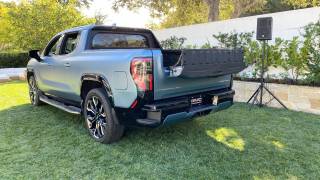
Despite its nearly 233-inch length and 84-inch width, the Sierra EV demonstrates unexpected agility on narrow, winding roads. This is largely attributed to the standard rear-wheel steering system. At low speeds, the rear wheels pivot in the opposite direction of the fronts, significantly reducing the turning radius and allowing the truck to navigate hairpins that would typically require a multi-point turn for a vehicle of this wheelbase. At higher speeds, the wheels can turn in phase with the fronts to improve stability during lane changes.
Furthermore, the Sierra EV includes "CrabWalk," a feature popularized by the GMC Hummer EV. This mode allows the rear wheels to turn at the same angle as the front wheels (up to 10 degrees), enabling the vehicle to move diagonally. While often viewed as a novelty, the feature provides genuine utility in tight off-road environments or when navigating around obstacles in confined job sites. The driving experience is further refined by an adaptive air suspension system that maintains a level ride height regardless of load and mitigates the "porpoising" effect often found in heavy pickups.
Versatility Through Design: The MultiPro Midgate and eTrunk
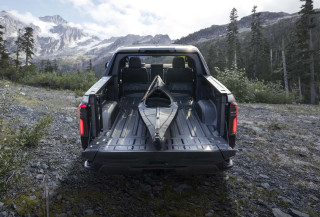
GMC has moved beyond the traditional "box and cab" configuration to maximize the Sierra EV’s utility. The most significant innovation is the return of the Midgate, a feature last seen on the Chevrolet Avalanche. The MultiPro Midgate allows the wall between the passenger cabin and the cargo bed to be folded down. This expands the effective bed length from 5 feet 11 inches to over 9 feet with the tailgate closed. If the MultiPro Tailgate’s load stop is utilized, the truck can carry items up to 10 feet 10 inches long, such as kayaks or lumber, while keeping them secured within the vehicle’s footprint.
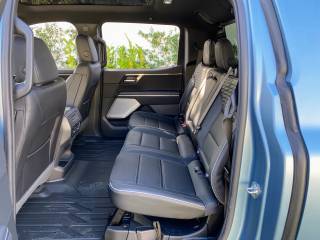
The Midgate is designed for frequent use rather than occasional utility. The rear glass can be removed and stored within the folding section, and the 60/40 split-folding rear seats allow one passenger to remain in the back while the other side is lowered for cargo. While not completely weatherproof when open, it offers a level of flexibility that traditional pickups cannot match.
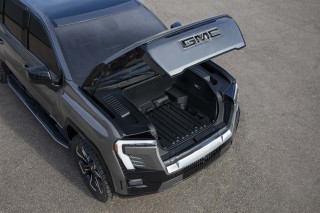
At the front of the vehicle, the absence of an internal combustion engine allows for an 11.0-cubic-foot "eTrunk." This weather-shielded storage area includes a 120-volt power outlet, a drain plug for use as a cooler, and dedicated lighting. This provides a secure location for tools or groceries that would otherwise take up space in the cabin or be exposed in the bed.
Luxury Interior and the Controversy of Digital Integration
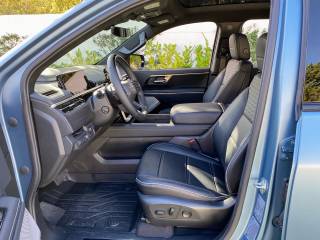
The Denali trim has long been synonymous with luxury in the truck world, and the 2025 Sierra EV continues this trend. The cabin features high-end materials including laser-cut open-pore wood, etched stainless steel speaker grilles for the seven-speaker Bose audio system, and perforated leather upholstery with intricate stitching. Acoustic side glass and active noise cancellation contribute to a cabin environment that rivals premium luxury sedans in terms of NVH (Noise, Vibration, and Harshness) levels.
However, the technology suite represents a point of contention for some users. The dashboard is dominated by a 16.8-inch portrait-oriented infotainment screen. Unlike previous GMC models, the system uses "Google Built-in" architecture, integrating Google Maps, Google Assistant, and the Play Store directly into the vehicle’s OS. Crucially, General Motors has opted to exclude Apple CarPlay and Android Auto compatibility from this system. GM executives argue that a native, integrated system allows for better battery preconditioning and route planning specifically tailored to the vehicle’s state of charge, though the move has met with mixed reactions from consumers accustomed to smartphone mirroring.
The Sierra EV also features the latest version of Super Cruise, GM’s hands-free driver assistance technology. The system now functions on more than 750,000 miles of compatible roads in the U.S. and Canada. Notably, Super Cruise has been calibrated to work while towing, managing speed and lane positioning even with a significant load attached.
Towing Capacity and Real-World Efficiency
Towing remains the ultimate test for electric pickups, and GMC has engineered the Sierra EV to handle substantial loads. The Extended Range model is rated to tow up to 10,500 pounds, while the Max Range model is rated at 10,000 pounds (the slight decrease is due to the added weight of the larger battery pack).
In practical testing with a 5,500-pound trailer, the Sierra EV maintained its composure, with the dual-motor system providing ample torque for effortless highway merging. However, towing significantly impacts efficiency. Observations during towing exercises showed energy consumption dropping to approximately 1.0 mile per kWh. Given the 205-kWh pack in the Max Range model, this still allows for a theoretical towing range of 200 miles—a figure that finally makes electric towing viable for many boat and horse trailer owners who found the 100-mile real-world towing range of earlier electric trucks insufficient.
The truck also serves as a mobile power bank. The "PowerStation" feature allows the Sierra EV to export up to 10.2 kW of AC power through multiple outlets in the bed and cabin. When combined with GM Energy’s home integration hardware, the truck can provide bidirectional charging, potentially powering an average home’s essential circuits for several days during a blackout.
Market Positioning and the Competitive Landscape
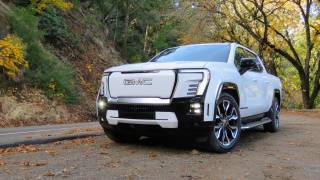
The 2025 GMC Sierra EV Denali enters a increasingly crowded but specialized segment. GMC has positioned the Sierra EV as the "do it" truck, contrasting it with the GMC Hummer EV, which is marketed as a "lifestyle" or "image" vehicle.
When compared to its primary rivals, the Sierra EV occupies a unique niche:
- Tesla Cybertruck: While the Cybertruck offers a radical design and steer-by-wire technology, the Sierra EV offers a more traditional aesthetic and superior cargo flexibility via the Midgate.
- Rivian R1T: The Rivian is smaller and more off-road focused, whereas the Sierra EV offers a full-size cabin with significantly more rear-seat legroom and a larger bed.
- Ford F-150 Lightning: The Lightning is a more direct conversion of an existing gas truck. The Sierra EV’s dedicated Ultium platform allows for a larger battery and more advanced features like four-wheel steering that are not currently available on the Ford.
With a starting price of $100,495 for the Denali Max Range, the Sierra EV is positioned at the premium end of the market. It is aimed at affluent buyers who require the utility of a truck but desire the refinement and operating costs of an electric vehicle.
Production Timelines and Future Trim Availability
Currently, production of the Sierra EV is concentrated at GM’s "Factory ZERO" in Detroit and Hamtramck. While the Denali trim is the first to arrive, GMC has confirmed that more accessible versions are on the horizon. The off-road-oriented AT4 and the more affordable Elevation trims are expected to debut in late 2025 or early 2026.
The long-term success of the Sierra EV will depend on GM’s ability to scale production at its Lake Orion, Michigan, assembly plant. As the infrastructure for 800-volt charging continues to expand and the cost of large-scale battery production stabilizes, the Sierra EV serves as a high-water mark for what is currently possible in the electric truck segment. It successfully bridges the gap between luxury transportation and rugged workhorse, proving that for the modern truck buyer, "electric" does not have to mean "compromise."