A federal advisory council, predominantly staffed by appointees from the Trump administration, is on the cusp of implementing sweeping changes that would significantly diminish a crucial federal review process designed to assess the impact of new projects on historical properties. Sources indicate the proposed amendments would effectively eliminate the mandatory requirement for public comment and reduce the role of state and tribal entities in these reviews, raising alarms among preservationists and Indigenous groups nationwide.
The Advisory Council on Historic Preservation (ACHP), which currently counts 20 of its 24 members as Trump administration appointees, is expected to vote this week on measures to overhaul Section 106 reviews under the National Historic Preservation Act (NHPA). These proposed revisions seek to curtail the involvement of State Historic Preservation Officers (SHPOs), Tribal Historic Preservation Officers (THPOs), and the general public, fundamentally altering a process that has been a cornerstone of federal preservation efforts for six decades. The council is currently operating without a Senate-confirmed chairman, and one appointee reportedly stepped down in June, though three members serve as ex-officio representatives of national preservation organizations.
Understanding Section 106 and the ACHP
Section 106 of the National Historic Preservation Act of 1966 is a landmark piece of legislation that mandates federal agencies consider the effects of their undertakings on historic properties. Enacted during a period of heightened public awareness regarding the destruction of historical sites due to urban renewal and infrastructure development, the NHPA established a national policy for the preservation of historic sites, structures, objects, and cultural landscapes. Section 106 specifically requires that if a project receiving federal funding, requiring a federal permit, or carried out by a federal agency could potentially affect a historic property, a thorough review process must take place.
This review process typically involves several key steps:
- Initiation: The federal agency identifies its undertaking and determines if it is a type of activity that could affect historic properties.
- Identification of Historic Properties: The agency, in consultation with SHPOs/THPOs and other stakeholders, identifies historic properties within the project’s area of potential effect. Historic properties are defined as any prehistoric or historic district, site, building, structure, or object included in, or eligible for inclusion in, the National Register of Historic Places.
- Assessment of Adverse Effects: The agency, again in consultation, assesses whether the undertaking will have an adverse effect on identified historic properties.
- Resolution of Adverse Effects: If adverse effects are found, the agency, SHPO/THPO, and ACHP (if involved) work to resolve these effects through mitigation measures, such as redesign, relocation, or documentation. Public input is a critical component throughout these stages.
The Advisory Council on Historic Preservation plays a vital role in this process. Established by the NHPA, the ACHP is an independent federal agency that advises the President and Congress on national historic preservation policy. It also oversees the Section 106 process, provides guidance, and intervenes in complex cases where federal agencies and other consulting parties cannot agree on how to resolve adverse effects. Its mandate is to promote the preservation, enhancement, and productive use of our nation’s historic resources. The current composition of the council, heavily influenced by recent political appointments, is seen by critics as a direct threat to this mandate.
The Proposed Changes: A Detailed Look
The proposal, which CBS News has reviewed, outlines several significant alterations that critics contend would fundamentally weaken the protective framework of Section 106. Key changes include:
- Redefinition of "Historic Property": The definition of what constitutes a "historic property" would be narrowed. This change could lead to fewer sites qualifying for protection, thereby reducing the scope of projects subject to Section 106 review and potentially exposing a wider range of cultural and historical assets to development without federal oversight.
- Optional State Review: The mandatory review role of State Historic Preservation Officers (SHPOs) would become optional. SHPOs are state-appointed officials responsible for implementing the NHPA at the state level, including identifying historic properties, conducting reviews, and advising on preservation matters. Making their involvement discretionary removes a critical layer of state-level expertise and oversight, shifting more power to federal agencies which may have less incentive or capacity for thorough preservation reviews.
- Elimination of Mandatory Public Comment: Perhaps one of the most contentious changes, the requirement for public comment would be removed. Public participation is a democratic cornerstone of the Section 106 process, allowing local communities, preservation advocates, and interested citizens to voice concerns, provide local knowledge, and contribute to decisions affecting their shared heritage. Its elimination would significantly reduce transparency and accountability.
- Limitations on Tribal and Native Hawaiian Organizations’ Input: The proposed changes would also restrict the ability of Indian tribes and Native Hawaiian organizations to protest projects that may affect their ancestral lands, sacred sites, or cultural resources. This is particularly alarming given the federal government’s trust responsibilities to Native American tribes and the profound cultural significance of many sites to Indigenous peoples.
Experts warn that these changes, once a final rule is passed, would significantly expand the federal government’s power to undertake or permit projects impacting historic sites with substantially less scrutiny and public engagement.
Presidential Interest and Ongoing Projects
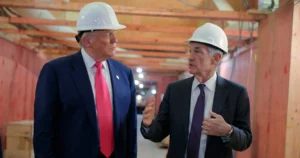
The issue of historic preservation and streamlined development is of particular interest to former President Trump, who has several construction projects either planned or underway that intersect with federal review processes. While his ballroom addition to the East Wing of the White House is exempt from Section 106 due to its location on White House grounds, other high-profile proposals face stricter scrutiny.

Notably, the former president’s plans for a triumphal arch, intended to be built near Arlington National Cemetery, are currently undergoing a Section 106 review. This monumental project, envisioned to dwarf the Lincoln Memorial, has drawn considerable attention and criticism. The National Trust for Historic Preservation, a leading preservation advocacy group, has expressed profound concerns regarding the review process for the arch.
Rob Nieweg, Senior Vice President of the National Trust for Historic Preservation, testified before the National Capital Planning Commission earlier this month, stating, "We are deeply concerned about the limited nature of the consultation, the rushed timeline, the exclusion of many parties (including the National Trust) from the consultation process, and the failure to consider less harmful alternatives." This specific concern regarding a project tied to the former president highlights the very issues that the proposed changes to Section 106 would exacerbate—namely, rushed reviews, limited stakeholder input, and reduced consideration of alternatives.
Widespread Opposition and Legal Threats
The proposed changes have ignited a firestorm of opposition from a broad coalition of preservation organizations, tribal nations, and state historic preservation offices. These groups contend that the revisions would dismantle a critical safeguard for the nation’s cultural heritage.
The National Trust for Historic Preservation has been particularly vocal, obtaining a letter reviewed by CBS News that outlines its strenuous objections. The organization argues that the proposed moves by the ACHP would "eviscerate the preservation of our shared civic and cultural heritage in the United States." Brent Leggs, CEO of the National Trust for Historic Preservation, issued a strong statement: "If implemented, federal agencies will no longer be required to avoid or minimize damage to our nation’s historic sites and landscapes, or seek public input on federal projects that would impact historic places." He further indicated that the group intends to pursue legal action to compel the withdrawal of the proposal, signaling a potentially protracted legal battle if the changes are enacted.
The National Association of Tribal Historic Preservation Officers (NATHPO), which holds a seat on the advisory council, has also condemned the proposal. Ira Matt, the association’s executive director of Indigenous Diplomacy and Federal Relations, characterized the proposed changes as "an affront to Tribal sovereignty." Matt emphasized the profound implications for Indigenous communities: "Any effort to diminish our voice or disregard the places, traditions, and practices we hold sacred is egregious and represents a violation of the federal government’s trust and treaty responsibilities that is neither morally nor ethically defensible." This statement underscores the unique legal and ethical obligations the federal government has to tribal nations, which often center on the protection of ancestral lands and cultural resources.
Similarly, the National Conference of State Historic Preservation Officers (NCSHPO) has voiced strong objections. Erik Hein, the group’s executive director, expressed disbelief: "It is baffling that during our semiquincentennial the very agency charged with overseeing Section 106 appears to be trying to relive that history, deliberately mislead its own members about what it is doing, and making it easier to destroy our historic places." Hein’s reference to the nation’s semiquincentennial (250th anniversary) highlights the irony of weakening historic preservation protections at a time when the nation is reflecting on its history and heritage.
Implications for Historic Preservation and Public Engagement
The potential ramifications of these changes extend far beyond individual projects. Should the proposed revisions be adopted, they would represent a fundamental shift in the landscape of historic preservation in the United States.
- Erosion of Protections: Historic properties, from ancient archaeological sites to significant architectural landmarks, would face increased vulnerability to destruction or irreversible alteration. With less stringent review and reduced consultation, federal agencies might more easily prioritize development and infrastructure projects over the careful consideration of cultural heritage.
- Reduced Transparency and Accountability: The removal of mandatory public comment directly undermines democratic principles by excluding citizens from decisions that impact their communities and shared cultural resources. This could foster public distrust and reduce accountability for federal agencies.
- Undermining Tribal Sovereignty: The proposed limitations on tribal and Native Hawaiian organizations’ input could have devastating consequences for the protection of sacred sites and traditional cultural properties. It would be seen as a retreat from decades of progress in recognizing and respecting tribal sovereignty and the unique relationship between the U.S. government and Indigenous nations.
- Increased Conflict and Litigation: Rather than streamlining processes, the changes could lead to more protracted conflicts. With formal avenues for input curtailed, aggrieved parties—including preservation groups, tribes, and local communities—may increasingly resort to litigation to protect historic sites, potentially delaying projects rather than accelerating them.
- Loss of Local Expertise: SHPOs and THPOs bring invaluable local knowledge and expertise to the Section 106 process. Making their review optional would mean federal agencies might proceed without critical insights into a property’s significance or potential adverse effects, leading to suboptimal or damaging outcomes.
- Precedent for Deregulation: The move could be viewed as part of a broader trend towards deregulation, potentially encouraging similar rollbacks in other environmental and cultural protection laws, setting a dangerous precedent for future administrations.
Looking Ahead
The vote by the Advisory Council on Historic Preservation this week is a critical juncture for the future of historic preservation in the United States. If the measures pass, the path forward is likely to be contentious, involving legal challenges and sustained advocacy efforts from a wide array of stakeholders. The National Trust for Historic Preservation’s explicit threat of legal action indicates that the battle to maintain the integrity of Section 106 may well move from administrative chambers to the courts.
In response to requests for comment regarding the proposed changes, both the White House and the Interior Department declined to offer a statement, further underscoring the political sensitivity and potential implications of the council’s decision. The outcome of this vote and its subsequent implementation will shape how the nation balances development with the protection of its irreplaceable historic and cultural legacy for generations to come.