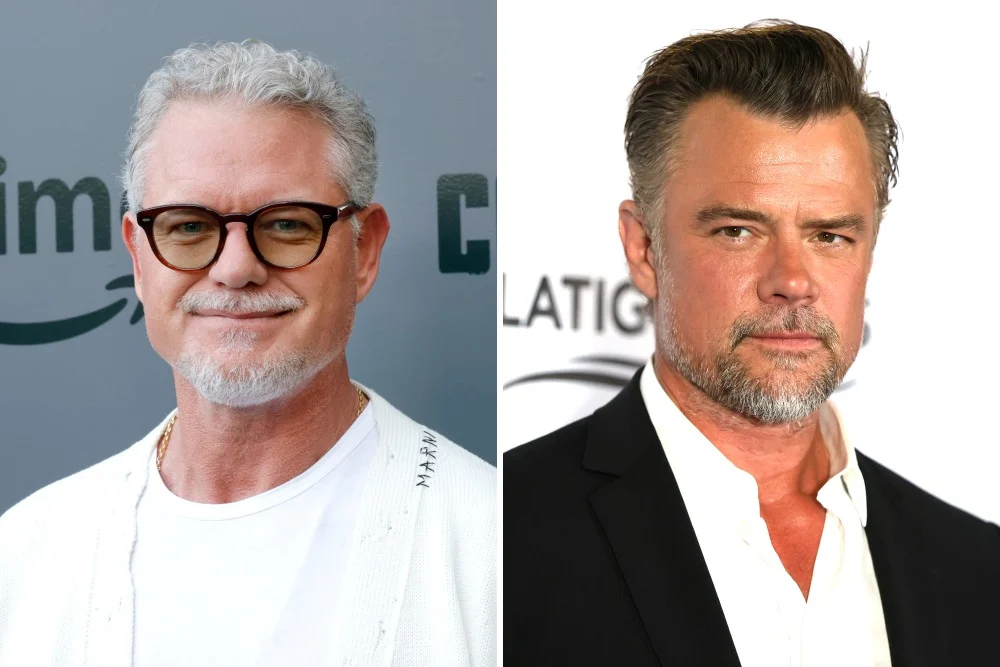
The complexities, pressures, and interpersonal friction of television production are laid bare in the posthumously released memoir by actor Eric Dane, titled My Book of Days: A Memoir in Moments. Within the pages of the newly published book, Dane opens up about a volatile onset altercation with fellow actor Josh Duhamel during the production of the NBC television series Las Vegas. The revelation offers a rare, unfiltered look into the high-stress environment of network television production during the mid-2000s, shedding light on physical vulnerabilities, intense method-acting techniques, and the eventual reconciliation between two prominent Hollywood actors.
Background Context and Production Environment
To fully understand the context of the confrontation, one must examine the operational climate of network television in the mid-2000s. Las Vegas, created by Gary Scott Thompson, aired on NBC for five seasons from September 2003 to February 2008. The series centered on the fictional Montecito Resort and Casino in Las Vegas, Nevada, following a surveillance team that handled security and operations for the luxury establishment. Josh Duhamel starred as Danny McCoy, a former United States Marine turned casino executive, a character burdened by the psychological toll of military service and combat deployments.
By the show’s second season, which aired between 2004 and 2005, Eric Dane was brought on as a guest star for a multi-episode arc. However, Dane entered the production under severe physical duress. At the time of filming, Dane was suffering from a painful herniated disc in his cervical spine—an injury that severely restricted his mobility and caused acute discomfort, particularly during physically demanding scenes. Recognizing his vulnerability, Dane made specific accommodations with the production team and his co-stars regarding a planned physical altercation sequence with Duhamel’s character.
The Escalation on Set: A Play-by-Play Chronology
According to Dane’s candid account in My Book of Days, the incident unfolded over a sequence of repeated takes that disregarded agreed-upon physical boundaries. The actor detailed how the lack of communication and mounting frustration pushed a tense situation to the brink of a physical brawl.
"We’re about to film a fight scene. I ask the lead, Josh Duhamel, to please not grab me by the tie during the scene. He promises me he won’t," Dane writes in the memoir. Given his severe neck injury, a sharp pull to the neckwear was not merely uncomfortable; it posed a genuine risk of exacerbating his herniated disc.
Despite the explicit agreement, the choreography quickly broke down. "The director calls ‘Action,’ and Josh pulls on my tie. Fire rips through my neck. I go, ‘Whoa, whoa, whoa, we have to stop.’ He apologizes, I grunt from the pain, and then, take two. He pulls on my tie again."
Realizing that verbal requests were not being honored, Dane attempted to enlist production management to intervene. After the second take, he turned directly to a member of the production staff, issuing a stark warning: "You better rein in your boy." Duhamel subsequently offered another apology, attributing his actions to becoming "caught up in the moment."
Despite the intervention and renewed warnings, the third take brought the same result. "Fine. Okay. Take three, and son of a bitch, he grabs my fucking tie again," Dane recounts. The repeated violation of his physical boundaries proved to be a breaking point. "I whip off my suit coat and I say, ‘Let’s go, you pussy ass actor.’ I ball my hands into fists and I come at him. Nobody calls ‘Cut,’ the camera keeps rolling, and to the world who sees the whole nasty scene, I’m the aggressor, the hothead, I start the fight."
Duhamel’s Perspective on Method Acting and Onset Isolation
The friction on the Las Vegas set did not occur in a vacuum. Years after the series concluded, Josh Duhamel provided valuable context regarding his own psychological state and working methods during the height of the show’s run. Speaking candidly on the interview program In Depth with Graham Bensinger earlier in the year, Duhamel discussed the intense internal processes he utilized to portray Danny McCoy, particularly during storylines involving post-traumatic stress disorder and military deployment.
"When I got on set, people would be like, ‘Whoa, what the fuck is wrong with this dude?’" Duhamel explained during the interview. Describing his approach to heavy dramatic material, he noted, "I was on the show Las Vegas, and in the second season my character had gotten deployed to Iraq and he came back and he had seen some shit, and he was in a real dark place… That was the only way I knew how to do it, was to get into this place and stay there. [I] didn’t talk to anybody. I was just, sort of, in it."
This total immersion in a dark and volatile character headspace created unintended collateral damage among the cast and crew. Duhamel admitted that his intense focus alienated those around him. "And people didn’t want to be around me. And people would, sort of, avoid me and it scared people a little bit, including me." This insular, highly aggressive characterization likely contributed to the breakdown in communication during the physical sequence with Dane, as Duhamel remained psychologically locked into the combative mindset of a stressed-out former Marine.
Professional Trajectories Following the Incident
While the altercation on the Las Vegas set was undoubtedly a low point for both actors, neither career was derailed by the behind-the-scenes drama. In fact, both men achieved significant career milestones shortly after their paths crossed in 2004.
For Eric Dane, his guest-starring stint on Las Vegas served as a stepping stone toward mainstream television stardom. Just two years after appearing on the NBC drama, Dane landed his iconic, career-defining role as Dr. Mark Sloan—affectionately dubbed "McSteamy"—on the second season of ABC’s runaway medical drama Grey’s Anatomy. Dane’s steady television career prior to Grey’s Anatomy included notable guest appearances on prominent 1990s and early 2000s sitcoms and dramas, such as Roseanne, Married… with Children, Charmed, and Gideon’s Crossing. Following his multi-season tenure on Grey’s Anatomy, Dane continued to command attention in leading roles, most notably starring as Captain Tom Chandler in the TNT post-apocalyptic drama The Last Ship and later as Cal Jacobs in the critically acclaimed HBO series Euphoria.
Josh Duhamel continued his successful run on Las Vegas through its entire five-season run, cementing his status as a leading man in both television and film. Following the conclusion of the series, Duhamel transitioned smoothly to major motion pictures, starring in blockbuster franchises such as Michael Bay’s Transformers series, Safe Haven, and Life as We Know It, while continuing to headline television projects such as The Thing About Pam and Jupiter’s Legacy.
Reconciliation and Broader Industry Implications
Despite the explosive nature of the confrontation captured on rolling cameras, both actors have long since moved past the incident. In his memoir, Dane reflects on the altercation with a mature sense of accountability, acknowledging that his reactive outburst cast him in an unfavorable light despite the provocation.
"Josh and I have seen each other since and we’re cool," Dane writes, extending a gracious and public olive branch. "But I want to say it again. Josh, I was wrong. I should’ve walked away. I’m sorry, dude."
The public airing of this decades-old conflict highlights a broader, ongoing conversation within the entertainment industry regarding physical safety, stunt coordination, and the psychological demands placed upon actors. In contemporary television and film production, the presence of dedicated intimacy coordinators, rigorous stunt safety protocols, and mental health professionals on set has become increasingly standardized. Incidents from the early 2000s, such as the one between Dane and Duhamel, underscore why modern sets have shifted toward stricter communication protocols and enhanced oversight during physically intimate or aggressive sequences.
Ultimately, the revelation in My Book of Days: A Memoir in Moments serves as a reminder of the immense pressures actors face beneath the bright lights of a television set. Through mutual reflection, professional maturity, and the passage of time, an onset clash fueled by physical pain and intense method acting has been reframed not as an enduring feud, but as a shared learning experience between two veterans of the craft.