Cardiovascular disease remains a leading global health crisis, prompting continuous investigation into dietary interventions that can mitigate risk factors before clinical manifestations occur. Recent findings published in the Journal of the American Heart Association offer a promising, food-first approach to cardiovascular wellness. According to a clinical trial conducted by researchers at the Illinois Institute of Technology (Illinois Tech), the daily inclusion of fresh avocados and mangoes can significantly enhance vascular function and blood pressure regulation in adults with prediabetes, all without inducing weight gain or increasing overall caloric intake.
This study carries substantial public health implications, particularly given the scale of prediabetes within the United States. According to data from the Centers for Disease Control and Prevention (CDC), approximately 98 million Americans—representing roughly one in three adults—live with prediabetes. This metabolic condition is characterized by elevated blood sugar levels that do not yet meet the diagnostic threshold for type 2 diabetes. Individuals with prediabetes face a markedly elevated risk of developing full-scale type 2 diabetes, stroke, and cardiovascular disease, making preventative dietary strategies vital for long-term population health.
The Eight-Week Clinical Investigation: Methodology and Framework
To evaluate the physiological impacts of an avocado and mango-rich diet, researchers designed a controlled, eight-week clinical trial involving 82 adult participants. The cohort consisted of individuals aged 25 to 60 who had been clinically diagnosed with prediabetes and classified as overweight or living with obesity, maintaining a body mass index (BMI) ranging between 25 and 35 kg/m².
To ensure the integrity of the data, the study implemented rigorous screening criteria. Eligible participants were non-smokers, generally healthy aside from their prediabetes diagnosis, free of major chronic medical conditions, and not adhering to specialized or restrictive diets prior to the trial.
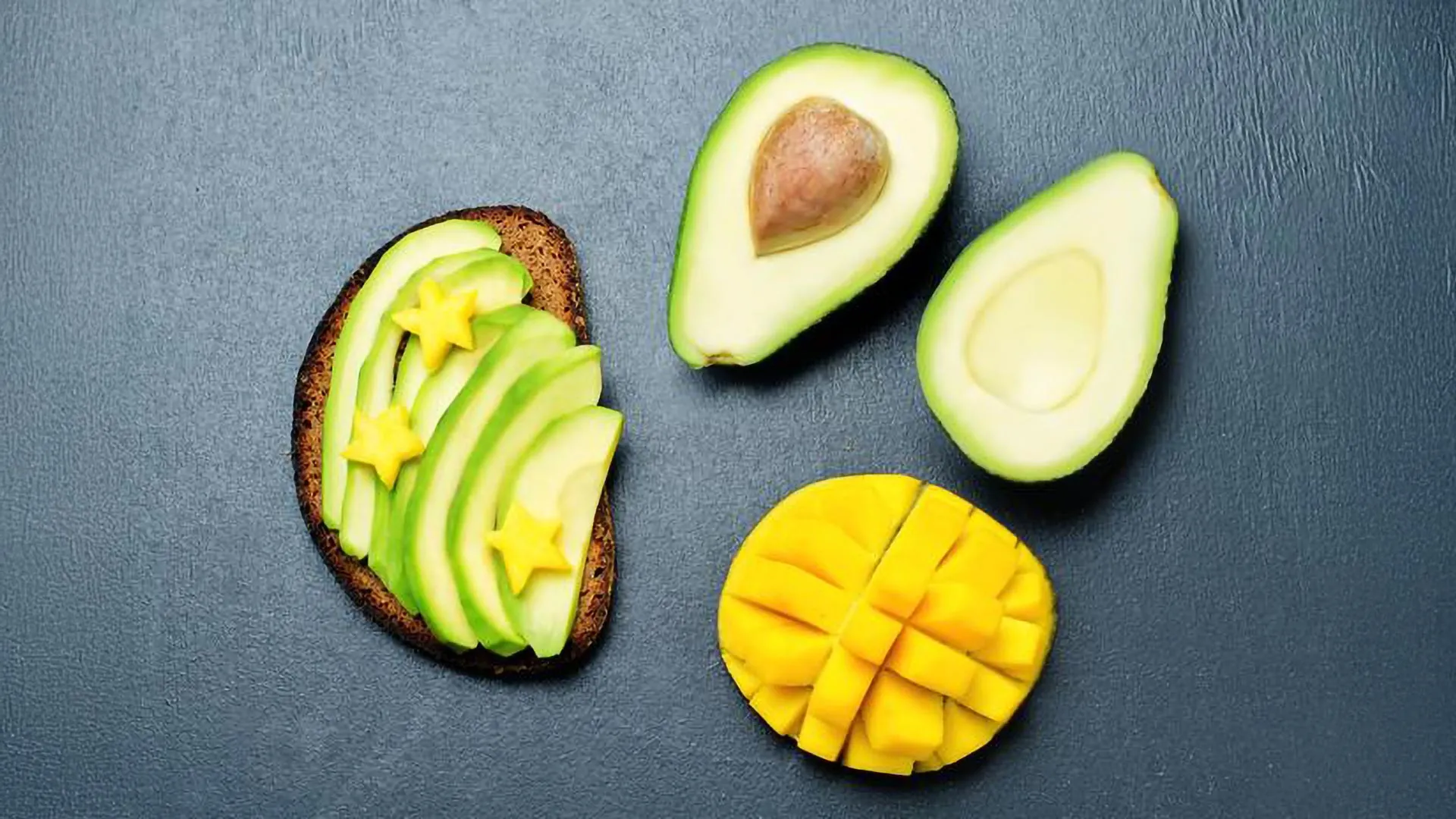
The participants were randomly assigned to one of two dietary protocols modeled closely on typical American eating patterns. The intervention group consumed an Avocado-Mango (AM) diet that incorporated one medium Hass avocado and one cup of fresh mango every day for the duration of the eight-week period. Meanwhile, the control group followed a parallel diet in which those specific fruits were replaced with carbohydrate-based alternative foods matched to provide equivalent caloric values.
A notable strength of the study design was the provision of standardized meals. Researchers prepared and supplied foods accounting for 75 percent of each participant’s estimated daily caloric needs. Participants retained the autonomy to select their remaining 25 percent of daily food intake independently. This controlled-feeding methodology allowed researchers to minimize dietary variance between the two groups while encouraging high compliance throughout the eight-week timeline.
Quantifying Vascular Improvements and Blood Pressure Dynamics
At the conclusion of the eight-week intervention period, researchers observed pronounced differences between the intervention and control groups, specifically concerning endothelial function and blood pressure parameters.
The primary measurement utilized to evaluate cardiovascular health was flow-mediated dilation (FMD), a noninvasive clinical assessment of endothelial function. The endothelium is a specialized, single-cell layer lining the interior surface of blood vessels. It plays a critical role in vascular biology by regulating vascular tone, mediating blood flow, and controlling the widening and narrowing of arteries. Healthy endothelial function allows blood vessels to expand smoothly in response to increased blood flow, serving as a primary indicator of overall cardiovascular health.
In the study, participants adhering to the daily avocado and mango regimen exhibited a statistically significant increase in FMD, rising to an average of 6.7 percent. Conversely, the control group experienced a decline in FMD to 4.6 percent. This divergence underscores the potential of these nutrient-dense fruits to preserve and enhance vascular elasticity and responsiveness over time.
In addition to vascular improvements, researchers noted encouraging modifications in blood pressure readings, particularly among male participants. While men in the control group registered an average increase of 5 millimeters of mercury (mmHg) in central blood pressure over the eight-week span, male participants consuming the avocado and mango diet experienced an approximate reduction of 1.9 mmHg.
Diastolic blood pressure—the lower figure in a standard blood pressure reading—measures the pressure exerted on arterial walls while the heart muscle relaxes between contractions. Maintaining stable and healthy diastolic levels is essential for reducing chronic mechanical strain on the cardiovascular system. Clinical experts suggest that even modest blood pressure reductions, if sustained over the long term, can translate into meaningful decreases in cardiovascular morbidity and mortality.
Nutritional Profiles: The Synergy of Mangoes and Avocados
Although mangoes and avocados possess distinct culinary profiles, flavors, and textural characteristics, their combined nutritional composition offers a diverse array of bioactive compounds that support metabolic and cardiovascular pathways.
Mangoes are recognized for their dietary fiber content, providing approximately 2 grams per three-quarter-cup serving, which accounts for roughly 7 percent of the daily value (DV). Furthermore, mangoes serve as an abundant source of vitamin C, supplying 50 percent of the daily value per serving. As a potent antioxidant, vitamin C helps protect cellular structures from oxidative stress and free radical damage. The fiber content in mangoes also supports gastrointestinal health, assists in postprandial blood glucose regulation, and contributes to overall metabolic wellness.
Avocados complement these nutritional attributes by introducing different, highly beneficial components. A standard 50-gram serving (approximately one-third of a medium avocado) supplies 3 grams of dietary fiber, representing 11 percent of the daily value. Fiber plays a well-documented role in cholesterol management, glycemic control, and weight maintenance.
Crucially, avocados are rich in monounsaturated fats, providing roughly 6 grams of unsaturated fatty acids per serving. Replacing dietary saturated fats with unsaturated fats is a cornerstone of cardiovascular nutrition, as it assists in lowering low-density lipoprotein (LDL) cholesterol, commonly referred to as "bad" cholesterol. Additionally, avocados supply approximately 250 milligrams of potassium—representing 6 percent of the daily value—an essential electrolyte involved in the physiological regulation of blood pressure.
Beyond cardiovascular metrics, researchers identified secondary physiological benefits, including improvements in estimated glomerular filtration rate (eGFR), a clinical biomarker used to evaluate renal function and the efficiency with which the kidneys filter metabolic waste products from the bloodstream.
However, the intervention did not alter all measured health parameters uniformly. Systemic markers of inflammation, standard lipid panel readings (such as total cholesterol), and baseline blood sugar levels remained largely comparable between the intervention and control groups throughout the eight-week timeframe.
Weight Stability Amidst Increased Calorie Intake
A critical observation from the clinical trial was the absence of significant changes in body weight or total daily caloric intake among participants in the avocado and mango group. Despite the introduction of two energy-containing fruits into their daily diets, participants did not experience weight gain.
This finding challenges common dietary assumptions regarding caloric density and weight management. It indicates that incorporating nutrient-dense, whole foods into a balanced nutritional framework can enhance cardiovascular parameters without adversely affecting body composition. The physiological mechanisms driving this stability are attributed to the high satiety value of dietary fiber and healthy fats, which naturally regulate appetite and prevent compensatory overeating.
Expert Perspectives and Public Health Implications
The empirical findings have drawn positive commentary from the scientific community regarding the viability of food-based preventive health interventions.
"This research reinforces the power of food-first strategies to help reduce cardiovascular disease risk, particularly in vulnerable populations like those with prediabetes," stated Dr. Britt Burton-Freeman, Principal Investigator and Professor at Illinois Institute of Technology. "It’s an encouraging message: small, nutrient-dense additions—like incorporating avocado and mango into meals and snacks—may support heart health without the need for strict rules or major dietary overhauls."
Public health analysts emphasize that dietary interventions focusing on accessible, whole foods often achieve higher long-term compliance rates compared to restrictive medical diets. By integrating foods that require minimal preparation into standard dietary patterns, patients can sustainably improve their metabolic profiles. Culinary integration is straightforward; the contrasting textures and flavors of mangoes and avocados lend themselves readily to salads, grain bowls, smoothies, and savory dishes such as seafood ceviche or grain toppings.
Acknowledging Limitations and Directing Future Research
While the results of the Illinois Tech study present a compelling case for the cardiovascular benefits of avocados and mangoes, the research team emphasized several methodological limitations that warrant careful consideration.
First, the duration of the trial was restricted to eight weeks. Consequently, it remains undetermined whether the observed improvements in vascular reactivity and blood pressure would endure over extended periods, such as months or years. Longitudinal studies are required to establish whether short-term biomarker improvements translate into sustained clinical protection against major adverse cardiac events, including myocardial infarctions and cerebrovascular accidents.
Second, the study population was deliberately focused on adults aged 25 to 60 with prediabetes and overweight or obesity. This narrow demographic scope means the findings cannot be automatically generalized to healthier populations, pediatric cohorts, or individuals with established type 2 diabetes or advanced cardiovascular disease. Furthermore, the trial design did not isolate whether consuming the two fruits simultaneously yielded synergistic effects superior to consuming either avocado or mango independently.
Despite these limitations, the study offers valuable insights into nutritional cardiology. The funding for the investigation was provided through an unrestricted research grant from the National Mango Board (NMB) and the Hass Avocado Board (HAB). In accordance with rigorous scientific standards, the funding organizations had no operational or editorial role in the study design, data collection, analytical processing, or reporting of the final findings.
As healthcare systems increasingly pivot toward preventative medicine and lifestyle medicine, studies examining the specific vascular mechanisms of whole foods provide a foundational step toward reducing the global burden of metabolic and cardiovascular disorders.