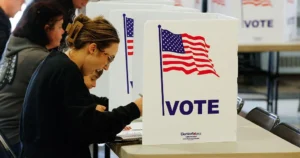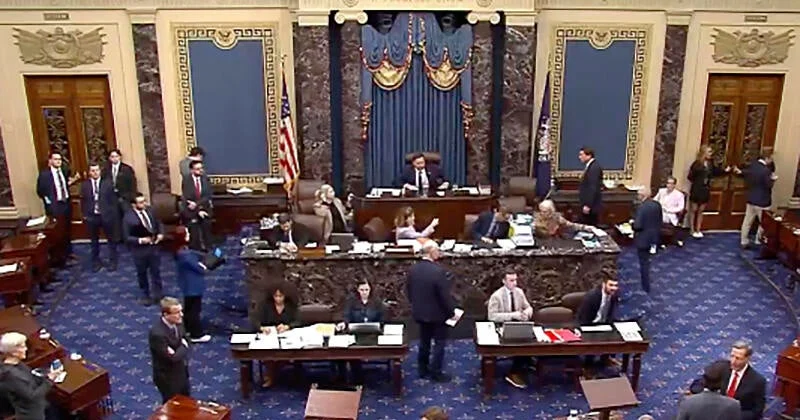
As voters across the United States head to the polls for the 2026 midterm elections, the battle for control of the United States Senate has reached a critical crescendo. Early exit polling data indicates a challenging political environment for the incumbent administration, with President Donald Trump facing underwater job approval ratings across nearly every major Senate battleground state. These figures include several regions that delivered double-digit margins of victory for the president during the 2026 general election cycle.
The political landscape of these midterms is defined by fierce competition, economic anxiety, high-stakes legal battles, and a deeply polarized electorate. With the balance of power in Washington resting on a razor-thin margin, both major political parties have poured unprecedented resources into the final weeks of the campaign. The results of these races will dictate the legislative trajectory for the final two years of the presidential term, impacting judicial appointments, executive nominations, and key policy initiatives.
Economic Anxiety and Voter Sentiment in Battleground States
Underpinning the early exit poll numbers is a pervasive sense of economic unease among the American electorate. Across all surveyed Senate battlegrounds, a majority of voters reported that their personal financial situations are worse today than they were in previous years. Persistent cost-of-living concerns, fluctuating inflation rates, and broader anxieties about the national economy have heavily influenced voter behavior.
Historically, the political party holding the White House faces headwinds during midterm elections, a cyclical phenomenon driven by voter fatigue and the referendum-like nature of the contest. However, the current economic climate has amplified these historical trends, complicating the path forward for Republican incumbents and vulnerable candidates alike.
Despite localized issues and distinct state-level dynamics, nationalized factors have permeated the contests. Majorities of voters casting ballots for both Republican and Democratic candidates explicitly stated that which party ultimately controls the upper chamber of Congress was a primary factor in their decision-making process. This high degree of motivation underscores how nationalized and hyper-partisan the 2026 midterms have become.
The 2026 Senate Map: A High-Stakes Battleground Breakdown
The map for the 2026 Senate elections features 11 primary battleground states that will ultimately decide which party commands the majority. Out of these pivotal contests, eight are currently held by Republican incumbents, while three are defended by Democrats.
The distribution of these competitive seats presents a complex puzzle for political strategists:
- Democratic-Held Seats: Of the three seats currently in Democratic hands, Georgia and New Hampshire are currently categorized as leaning Democratic. Meanwhile, Michigan stands as a critical toss-up, serving as a vital defensive firewall for the party.
- Republican-Held Seats: Among the eight GOP-held battlegrounds, South Carolina, Kansas, and Iowa lean in favor of the incumbent party. However, four states are locked in absolute toss-up statuses: Maine, Ohio, Texas, and Alaska. An eighth state, North Carolina, currently leans toward the Democrats.
To secure control of the Senate, the Democratic party needs to achieve a net gain of four seats—or three seats if they successfully retain the White House tie-breaking vote, though the dynamics of the executive branch add layers of complexity. Conversely, Republicans are fighting to defend their narrow advantages and expand their footprint in traditionally competitive or shifting states.
The Alaska Showdown: Legal Battles and Campaign Controvèrsies
No race encapsulates the fierce, unpredictable nature of the 2026 midterms quite like the Senate contest in Alaska, where Democratic candidate Mary Peltola is challenging incumbent Republican Senator Dan S. Sullivan. The race has drawn national attention not only for its ideological battle lines but also for an extraordinary series of legal challenges and political controversies.
In the final stretch of the campaign, the Trump administration filed a federal lawsuit in an attempt to block the certification of election results should the incumbent senator trail Peltola. However, a federal judge swiftly dismissed the lawsuit, ruling against the administration’s intervention.
The drama was further compounded by investigative reporting from The New York Times, which revealed allegations of a secret effort by political operatives aligned with Peltola’s campaign to recruit another individual named Daniel J. Sullivan to run and potentially siphon votes away from the incumbent. Peltola has consistently denied any personal involvement or knowledge regarding the alleged ballot-muddling scheme.
Speaking to reporters, Peltola addressed the aggressive tactics and accusations of fraud leveled by her opponent and allied Republican groups. She argued that these attacks ultimately backfired on the incumbent campaign.
"Alaskans across the state know that Dan Sullivan voted for this war in Iran 14 times," Peltola told the press. "You cannot hide from that, no matter how much mudslinging and name calling you do. So, I honestly think that to some extent it backfired, and our supporters have said, ‘no, we are not falling for these dirty tricks.’"
When pressed on whether she anticipated further legal challenges as votes continue to be tallied, Peltola expressed confidence in the judicial system. "I believe in the rule of law. I believe in justice. I believe in our courts, and I have every faith that things will turn out the way they should," she stated.
On the ground in Anchorage, Alaska, voters expressed mixed reactions to the controversy. Michael Hanson, a 66-year-old registered Republican who cast his ballot for the incumbent senator, voiced frustration that the election disputes were being brought before the courts rather than being left purely to the electorate. Conversely, Barbara Konrad, a moderate voter who also supported Sullivan, expressed dismay over the sheer volume and negative tone of political advertisements, remarking that she felt the political environment had grown excessively combative.
Chronology of Key Events Leading to the Midterms
- Late 2025 – Early 2026: Both political parties ramp up fundraising and candidate recruitment, identifying the 11 key battleground states that will dictate the balance of power in the Senate.
- September 2026: Economic indicators and persistent cost-of-living concerns dominate voter sentiment, creating a challenging environment for incumbent candidates associated with the administration.
- October 2026: Investigative reports emerge regarding political recruitment strategies in Alaska, sparking fierce debate over third-party candidates and election integrity.
- Late October 2026: The Trump administration files a federal lawsuit seeking to block potential certification of unfavorable election results in Alaska, drawing immediate scrutiny from legal experts and voting rights advocates.
- November 3, 2026 (Days Prior to Decision): A federal judge officially dismisses the administration’s election lawsuit in Alaska. Early exit polls across national battlegrounds reveal widespread voter dissatisfaction with presidential job approval and personal finances.
- Election Day (November 3, 2026): Millions of Americans cast their ballots in high-turnout midterm elections, with control of the Senate hanging in the balance.
Implications for the Remainder of the Presidential Term
The outcome of these Senate races carries monumental consequences for the American political system. For the past several years, control of the upper chamber has provided a legislative check and a pathway for judicial and administrative confirmations.
As President Trump eyes the final two years of his current term, the composition of the Senate will directly influence his ability to execute domestic policy priorities, pass legislative packages, and secure confirmations for federal judges and executive branch nominees. A shift in congressional power could lead to intensified legislative gridlock, increased congressional oversight and investigations, and a fundamental realignment of political leverage in Washington.
As election night progresses and final tallies are reported from key battlegrounds like Ohio, Texas, North Carolina, and Alaska, both parties await the definitive verdict of an electorate that has clearly signaled its desire for change—though the exact direction of that change remains to be seen.