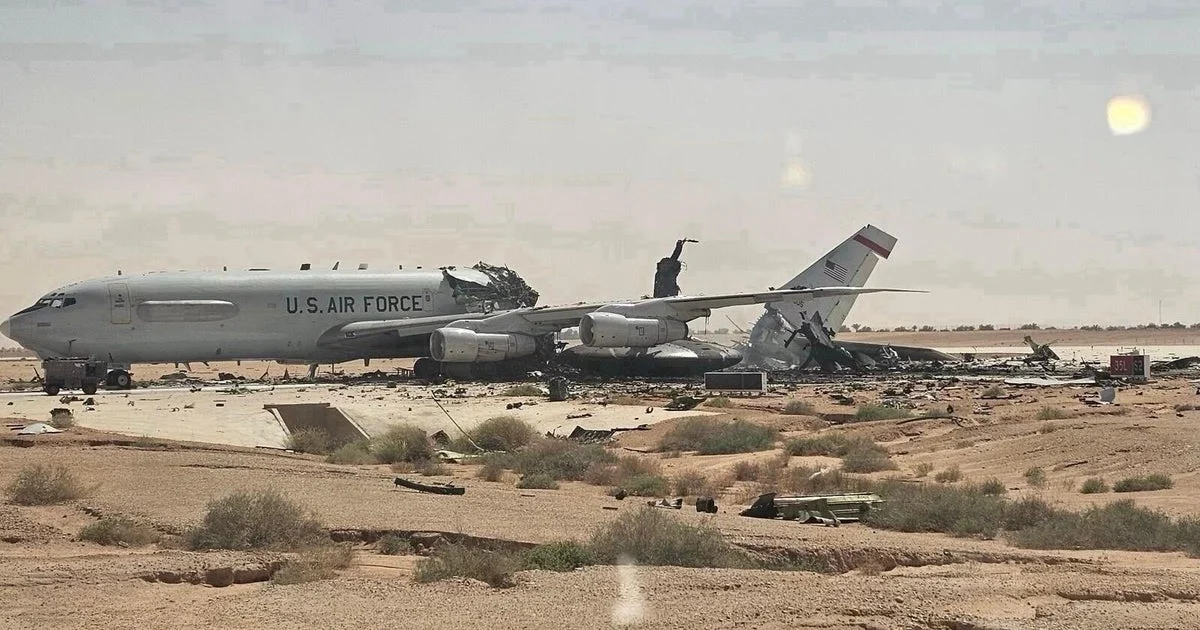
Leaked visual evidence and a newly released Department of Defense Inspector General report have laid bare the profound destruction inflicted by Iranian missile and drone attacks on United States military installations across the Middle East. The exclusive photographs, provided by active-duty service members speaking on the condition of anonymity, depict severe structural devastation, ruined high-value aviation assets, and obliterated living quarters at multiple strategically vital command posts.
The disclosures challenge official public narratives regarding the efficacy of regional base defenses and highlight a severe vulnerability to asymmetric aerial saturation assaults. According to the federal watchdog data, cumulative equipment losses associated with the ongoing conflict have soared to an estimated $3.7 billion, encompassing the destruction of nearly 60 fixed-wing and rotary aircraft.
Unprecedented Visual Evidence From the Front Lines
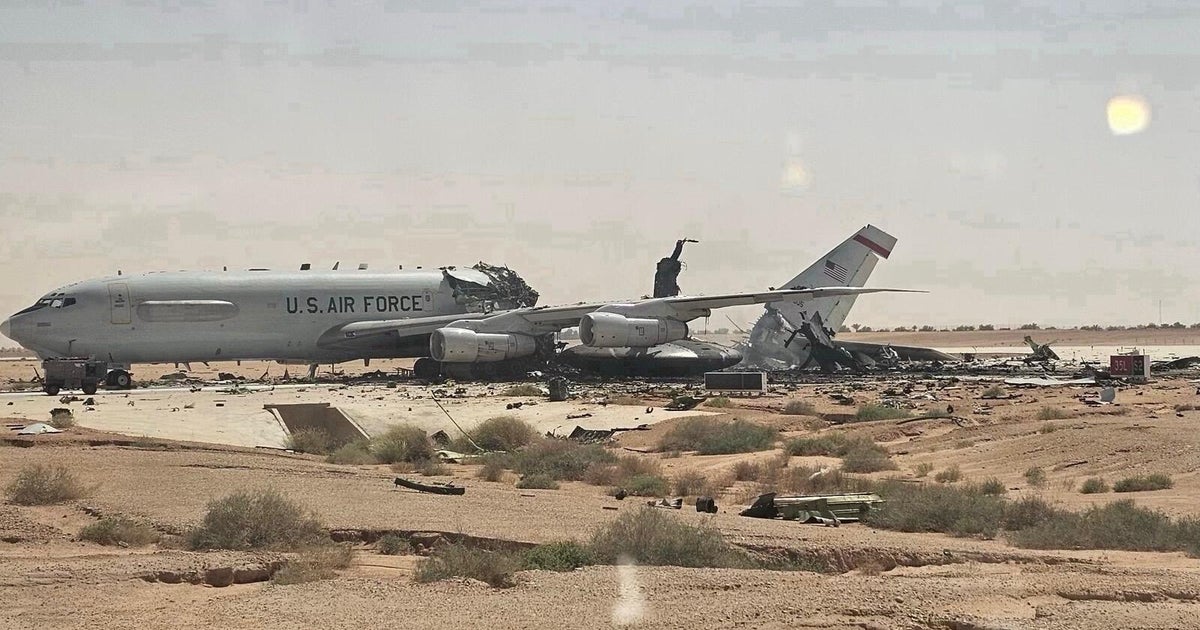
The newly obtained photographs offer an unvarnished look at the physical toll exacted by coordinated long-range strikes launched by Iran and its regional proxies. Among the most striking pieces of visual evidence is a photograph originating from Prince Sultan Air Base in the Kingdom of Saudi Arabia. The image captures a Boeing E-3 Sentry airborne early warning and control aircraft—commonly known as an AWACS—that suffered a catastrophic direct hit on its aft section. The tail assembly is visibly severed from a charred fuselage, destroying the specialized rotating radar dome that serves as a cornerstone for theater-wide tactical intelligence, surveillance, and reconnaissance (ISR).
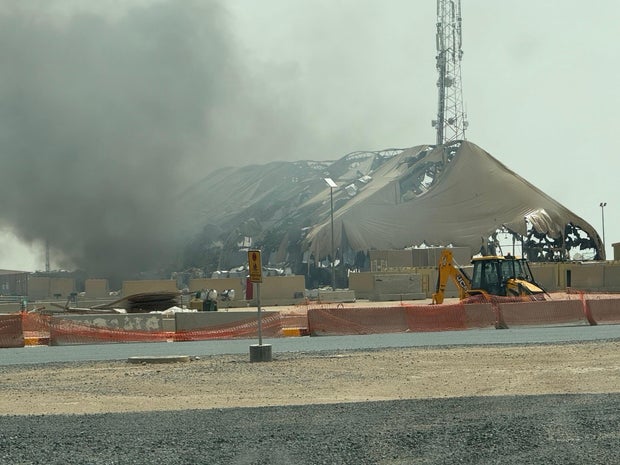
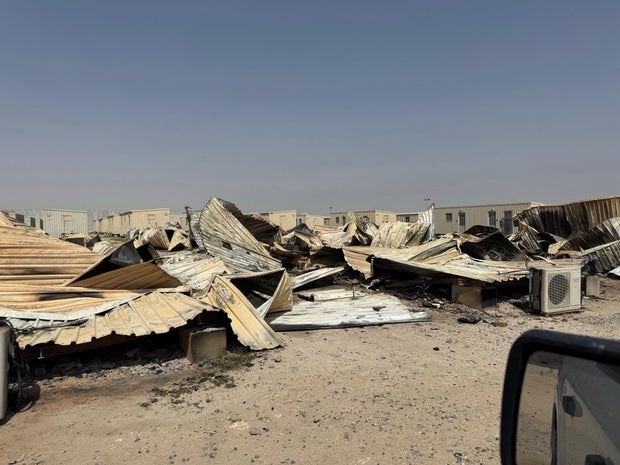
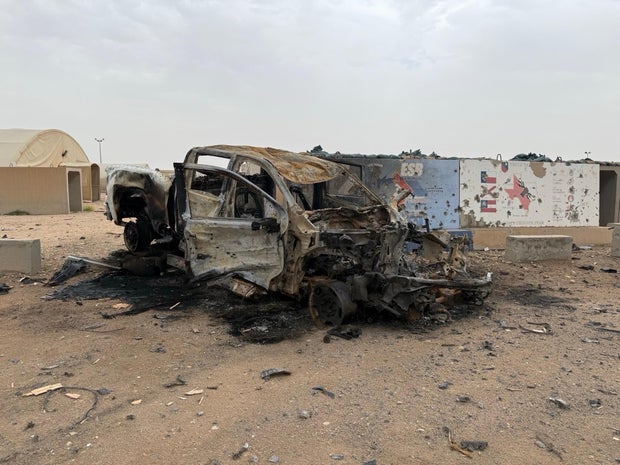
Additional images taken at Prince Sultan Air Base reveal a landscape of hollowed-out administrative buildings and residential barracks standing in stark juxtaposition to cement "T-walls." While these modular concrete barriers have historically provided adequate protection against ground-based mortar fire, rocket-propelled grenades, and localized insurgent attacks, the photos demonstrate their absolute futility against precision-guided ballistic missiles and loitering munitions.
The destruction is not limited to the Saudi theater. Visual records from Camp Buehring in Kuwait—a critical logistical hub and staging ground for U.S. Army ground forces, armored columns, and supporting aviation units situated in the remote northern desert—depict similar devastation. Administrative trailers have been reduced to twisted metal frameworks, and tactical and support vehicles parked within the perimeter have been burned to their chassis.

Further compounding the scope of the destruction, imagery obtained from Camp Arifjan, another major logistics base in Kuwait, reveals significant structural damage to command facilities and maintenance bays. Service members stationed at these beleaguered outposts have voiced deep frustration over the chasm between the reality on the ground and the information delivered to the American public.
"This is major damage to our bases that hasn’t been communicated to the American public," one deployed service member told reporters. "We’re standing there with our eyes closed getting punched in the face."
The Inspector General Report and Scope of Losses
The visual documentation arrives on the heels of a mandatory report released by the Department of Defense Inspector General to the United States Congress. The document provides a sobering accounting of the human and material toll of the hostilities involving Iran, confirming that the operational footprint of U.S. Central Command (CENTCOM) has been heavily targeted.
According to the inspector general’s findings, CENTCOM has documented successful Iranian kinetic strikes across a staggering geographic spread. U.S. positions in Kuwait, Bahrain, Qatar, the United Arab Emirates, Saudi Arabia, Iraq, Oman, and Jordan have all sustained direct hits from ballistic missiles, cruise missiles, and one-way attack drones. The financial cost of these engagements is staggering, with equipment write-offs scaling up to $3.7 billion. Most alarmingly, the report confirms the loss of nearly 60 aircraft across various regional operating locations, representing a severe blow to the theater’s power-projection capabilities.
These figures underscore a persistent strategic dilemma for military planners: the high cost asymmetry of modern air defense. Interceptor missiles utilized by Patriot battery systems and naval Aegis combatants—such as the PAC-3 or SM-3—frequently cost millions of dollars per unit, while the offensive drones and rudimentary missiles deployed by adversaries can often be manufactured for a fraction of that expense. When air defense networks are overwhelmed by massed salvos, even sophisticated hardening measures can fail to prevent catastrophic leakage.
Official Posture and Political Fallout
The Pentagon has thus far declined multiple requests for comment regarding the newly surfaced photographs and the broader implications of the inspector general’s assessment. The silence from military leadership contrasts sharply with previous public messaging surrounding enemy engagements.
The disparity between public assurances and ground realities has drawn sharp criticism from the rank and file. Service members have explicitly pushed back against minimizing language utilized by senior civilian defense leadership. Observers have noted references to incoming enemy munitions as mere "squirters"—a term used by Defense Secretary Pete Hegseth following a high-casualty March 1 attack on the Port of Shuaiba in Kuwait, an incident that claimed the lives of six U.S. service members.
"These are not ‘squirters’ getting through," another frontline service member remarked, reacting to the terminology. "We’re not defending these bases. We’re just watching them get destroyed."
The terminology debate highlights ongoing friction between operational commanders tasked with force protection and policymakers managing the political optics of regional escalation. Lawmakers on Capitol Hill are reportedly demanding closed-door briefings from CENTCOM leadership to ascertain how adversary munitions bypassed layered air and missile defense architectures to inflict billions of dollars in damage.
Chronology of Escalation
The lineage of these strikes traces back through a tense chronology of escalating tit-for-tat violence between Washington, Tehran, and various aligned militias across the Levant and the Persian Gulf.
- Early 2026: Regional tensions reach a boiling point following a series of maritime incidents in the Strait of Hormuz and intensified proxy drone operations against logistics hubs in Iraq and Syria.
- March 1, 2026: A coordinated missile and drone assault strikes the Port of Shuaiba in Kuwait, resulting in the deaths of six U.S. troops and prompting initial inquiries into regional force-protection protocols.
- Mid-2026: Iranian forces launch expanded saturation attacks utilizing deep-magazine ballistic missile arsenals, testing the depth and responsiveness of Gulf state air defense grids.
- September 2026: The Department of Defense Inspector General releases its landmark report detailing $3.7 billion in equipment losses and confirming strikes across eight nations in the CENTCOM area of operations. Shortly thereafter, leaked photographic evidence exposes the extensive structural damage to key aircraft and installations at Prince Sultan Air Base and Camp Buehring.
Strategic and Tactical Implications
The exposure of these vulnerabilities carries profound implications for U.S. force posture in the Middle East. For decades, American strategy in the region relied heavily on fixed, large-scale airbases and logistics nodes—such as Al Udeid Air Base in Qatar, Ali Al Salem Air Base in Kuwait, and Prince Sultan Air Base in Saudi Arabia—to project power across Southwest Asia and maintain freedom of navigation.
However, the proliferation of cheap, long-range precision strike capabilities has effectively transformed these sprawling installations from secure sanctuaries into vulnerable static targets. Military analysts suggest that the imagery and the inspector general’s report will accelerate a long-overdue doctrinal shift toward distributed operations.
Rather than concentrating high-value assets like AWACS aircraft and heavy armor at centralized hubs where a single missile barrage can yield catastrophic losses, future force deployments may rely on Agile Combat Employment (ACE) principles. This doctrine emphasizes dispersing aircraft, personnel, and supplies across a wider network of austere, non-traditional locations to complicate adversary targeting calculations and enhance overall survivability.
Furthermore, the disclosures are expected to force a rigorous congressional review of defense spending priorities, with heightened calls for accelerated investment in directed-energy weapons, electronic warfare jamming systems, and lower-cost kinetic interceptors capable of neutralizing massed drone threats without depleting strategic stockpiles.
As the geopolitical standoff with Iran persists, the images from Saudi Arabia and Kuwait serve as an enduring testament to the changing character of modern warfare, where traditional concrete fortifications offer little sanctuary against the precision and scale of contemporary aerial bombardment.