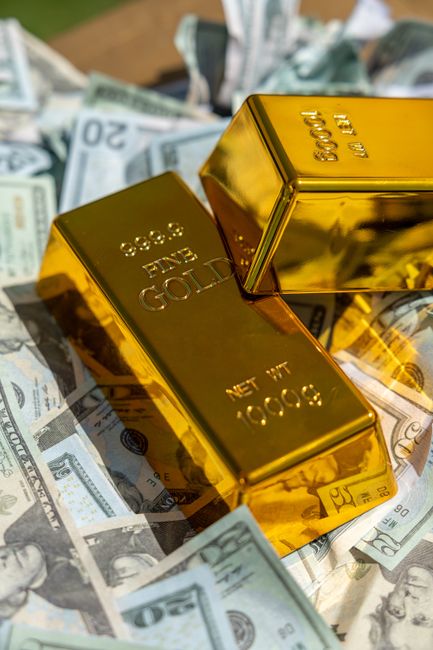
Gold Slips, Dollar Ticks Higher as US Inflation Report Focus Intensifies
The precious metal, gold, experienced a noticeable decline in its value as the US dollar concurrently firmed its position. This market movement is predominantly attributed to the escalating anticipation and subsequent analysis of the latest US inflation report. Investors and traders are meticulously scrutinizing these figures for insights into the Federal Reserve’s future monetary policy decisions, particularly concerning interest rate adjustments. A higher-than-expected inflation reading typically signals the potential for more aggressive rate hikes, which tend to boost the dollar by increasing its attractiveness to yield-seeking investors and simultaneously dampening demand for non-yielding assets like gold. Conversely, a cooler inflation print could lead to a dovish shift in Fed sentiment, potentially strengthening gold and weakening the dollar. The current market dynamic reflects a delicate balancing act as participants attempt to forecast the immediate and long-term implications of inflation data on global financial markets.
The US Bureau of Labor Statistics (BLS) released its highly anticipated Consumer Price Index (CPI) report, providing a comprehensive snapshot of inflationary pressures across the American economy. This report is a critical economic indicator, closely watched by policymakers, central bankers, and market participants worldwide. The CPI measures the average change over time in the prices paid by urban consumers for a market basket of consumer goods and services. It encompasses a wide range of items, including food, housing, apparel, transportation, medical care, recreation, and education. The headline CPI figure provides a broad overview of inflation, while core CPI, which excludes volatile food and energy prices, offers a clearer picture of underlying inflationary trends. A sustained rise in CPI suggests that the purchasing power of money is eroding, necessitating a response from monetary authorities to maintain price stability.
The Federal Reserve, in its dual mandate, is tasked with promoting maximum employment and price stability. Inflation that significantly deviates from its target of 2% poses a challenge to this mandate. When inflation is elevated, the Fed often employs contractionary monetary policy tools, primarily by raising the federal funds rate. This benchmark interest rate influences borrowing costs throughout the economy, making it more expensive for businesses and consumers to take on debt. Consequently, higher interest rates can lead to reduced consumer spending and business investment, thereby cooling demand and easing inflationary pressures. Conversely, if inflation is persistently below the target, the Fed might implement expansionary policies, such as lowering interest rates or engaging in quantitative easing, to stimulate economic activity. The current economic environment, marked by persistent supply chain disruptions, strong consumer demand, and geopolitical tensions, has fueled concerns about sustained inflation, making the latest CPI report exceptionally significant.
The implications of the inflation report for the US dollar are profound. The dollar’s strength or weakness is intrinsically linked to interest rate differentials and the perceived attractiveness of US assets. When US interest rates are expected to rise or remain elevated relative to those in other major economies, foreign capital tends to flow into the US in pursuit of higher yields. This increased demand for dollar-denominated assets, such as US Treasury bonds, translates into a stronger dollar. Furthermore, the dollar’s role as the world’s primary reserve currency means that global demand for dollars is often influenced by global economic stability and risk sentiment. During periods of uncertainty or turmoil, investors often flock to the perceived safety and liquidity of the dollar, further bolstering its value. Conversely, a weakening dollar can make US exports cheaper and imports more expensive, potentially impacting the trade balance.
Gold, often referred to as a safe-haven asset, typically exhibits an inverse relationship with the US dollar and interest rates. In times of economic uncertainty, geopolitical instability, or high inflation, investors tend to move their capital into gold, seeking to preserve their wealth. Gold’s intrinsic value, its scarcity, and its historical role as a store of value make it an attractive alternative to traditional financial assets. However, when interest rates rise, holding gold becomes less appealing. Gold does not generate any yield or income, meaning investors forgo the opportunity to earn interest by holding gold instead of interest-bearing assets like bonds or even cash in a high-interest-rate environment. This opportunity cost is a significant factor in gold’s price movements, especially in response to inflation data that might signal future interest rate hikes.
The recent market reaction, with gold slipping and the dollar ticking higher, suggests that the inflation report, or at least initial interpretations of it, has leaned towards the hawkish side. This could manifest in several ways: a higher-than-expected headline CPI, a persistent and elevated core CPI, or strong upward revisions to previous months’ inflation data. Such outcomes would reinforce market expectations for continued monetary tightening by the Federal Reserve. The Fed’s forward guidance and communication are crucial in shaping these expectations. Traders and analysts closely monitor the minutes of Federal Open Market Committee (FOMC) meetings, speeches by Fed officials, and economic forecasts released by the central bank for clues about the future trajectory of interest rates and quantitative policy.
The interplay between inflation, interest rates, and currency values creates a complex and dynamic market environment. For gold investors, understanding these relationships is paramount. A rising inflation rate, if not met with commensurate interest rate hikes, can erode the real value of existing gold holdings. However, if inflation is perceived as being out of control and the central bank is slow to react, gold can benefit from its safe-haven status as a hedge against hyperinflation. The current scenario, however, appears to be one where the market is pricing in a robust Fed response to inflation, thereby diminishing gold’s appeal in the short to medium term.
Geopolitical events also play a significant role in influencing both gold and the dollar. Conflicts, trade disputes, and political instability can increase demand for safe-haven assets like gold, while simultaneously creating uncertainty that might lead investors to seek the relative stability of the US dollar. The ongoing geopolitical landscape adds another layer of complexity to the analysis of inflation data and its impact on these key markets. For instance, disruptions to energy supplies due to geopolitical tensions can directly impact inflation figures, as energy costs are a significant component of the CPI.
From a technical analysis perspective, traders will be observing key price levels for both gold and the US dollar index (DXY). Support and resistance levels can provide insights into potential turning points and the strength of prevailing trends. The DXY, which measures the dollar’s value against a basket of six major currencies, is a crucial benchmark for dollar sentiment. A sustained move above key resistance levels for the DXY would further confirm the dollar’s upward momentum, while a break below support could signal a reversal. Similarly, for gold, a breach of critical support levels could indicate further downside, while a move above resistance might suggest a potential recovery.
The economic backdrop against which this inflation report is being released is also important. Factors such as the labor market’s health, consumer confidence, and global economic growth prospects all contribute to the broader economic narrative. A strong labor market, characterized by low unemployment and rising wages, can fuel consumer spending and potentially contribute to inflationary pressures. Conversely, a weakening labor market could temper demand and ease inflation. The Fed’s assessment of these broader economic conditions will heavily influence its policy decisions.
The market’s reaction to the inflation report is not a static event but rather an ongoing process of reassessment and adjustment. As more data becomes available and analysts refine their interpretations, the price dynamics of gold and the dollar will continue to evolve. Investors are likely to remain highly sensitive to any pronouncements from the Federal Reserve regarding its commitment to combating inflation. The credibility of the Fed’s inflation-fighting stance is a crucial factor in shaping market expectations and, consequently, the performance of both the dollar and gold. The current focus on the inflation report underscores the critical juncture at which global monetary policy and asset valuations find themselves. The ability of central banks to navigate the current inflationary environment without triggering a significant economic downturn remains a key concern for investors worldwide, and the latest CPI figures provide a vital piece of the puzzle in assessing this delicate balancing act. The subsequent reaction of the dollar and gold will offer crucial insights into how effectively this balance is perceived to be maintained.
