Deep within the dense canopy of southeastern Liberia’s Grand Gedeh County, a silent transformation is unfolding that threatens the last significant remnants of the Upper Guinean rainforest. For over a century, the vast green belt that once stretched across West Africa has been systematically dismantled by commercial logging, infrastructure expansion, and large-scale agriculture. Today, more than half of the remaining forest resides within Liberia’s borders, but this ecological stronghold is facing an unprecedented adversary: the global appetite for chocolate. As the "cocoa rush" intensifies, the region is witnessing a rapid conversion of primary rainforest into cacao plantations, sparking a complex conflict between immediate economic survival and long-term environmental preservation.
The Upper Guinean forest is recognized globally as a biodiversity hotspot, home to thousands of species, many of which are found nowhere else on Earth. However, recent satellite data has revealed a startling trend of massive forest loss in Liberia’s southeastern corridor. This destruction is driven by the lucrative prospects of cacao—locally dubbed "brown gold"—as farmers and brokers seek to capitalize on a commodity that has already decimated the forests of neighboring Côte d’Ivoire and Ghana. As the industry expands, it brings with it a wave of migration, corruption, and a supply chain that remains largely opaque to those at its very origin.
The Epicenter of the Cacao Rush
Grand Gedeh has become the focal point of this agricultural expansion. The drive to plant cocoa is not limited to smallholder farmers; it involves a cross-section of society, including local community members, government officials, and outside investors. The motivation is purely economic. In a region where poverty is endemic and infrastructure is crumbling, cocoa offers a rare path toward financial stability. For many, the transformation of the landscape is seen as progress. Where there were once mud huts, there are now sturdier houses, a change local residents attribute directly to the influx of cocoa revenue.
However, this prosperity comes at a steep environmental price. Conservationists, such as those working with the Wild Chimpanzee Foundation, are struggling to stem the tide of illegal farming. The pressure is particularly acute in proposed national parks and protected reserves. These areas are critical habitats for the Western chimpanzee, forest elephants, and the rare pygmy hippopotamus. George, a forest ranger with the foundation, notes that while his team patrols daily to sensitize the population and remove illegal settlers, the sheer scale of the encroachment is overwhelming. In many instances, farms exceeding 100 hectares have been discovered deep within "protected" zones, some of them less than a year old, signaling a rapid and ongoing escalation of land clearing.
A Transnational Labor Force and Social Implications
The expansion of the cocoa industry in Liberia is heavily reliant on a migrant workforce, primarily from Burkina Faso. Attracted by the promise of "greener pastures," these workers are often invited by Liberian landowners to clear the forest and establish plantations. This arrangement has created a complex social dynamic. While the migrants provide the necessary labor to fuel the economic boom, they are also the most vulnerable to legal repercussions. When forest rangers conduct raids on illegal farms, it is often the migrant workers who face arrest or displacement, while the landowners and financiers remain largely insulated.
The human cost of this industry is also visible in the presence of children working on these remote farms. During investigative visits to the region, observers have documented minors engaged in arduous labor when they should be in school. This highlights a broader issue within the global cocoa supply chain: the persistence of child labor in regions where poverty and lack of oversight intersect. The communities involved often defend the practice as a necessity for survival, posing a difficult question for international regulators: how can conservation and labor standards be enforced in a way that does not further marginalize the world’s poorest populations?
The Broker System and the Opaque Supply Chain
While the farmers and laborers bear the physical burden of production, the true profits of the Liberian cocoa trade are often concentrated among middlemen and brokers. In Zleh Town and other regional hubs, the Brokers Association runs the show. These intermediaries purchase raw beans from local farmers, often at a fraction of the eventual market price, and navigate the logistics of transporting the goods to the capital, Monrovia.
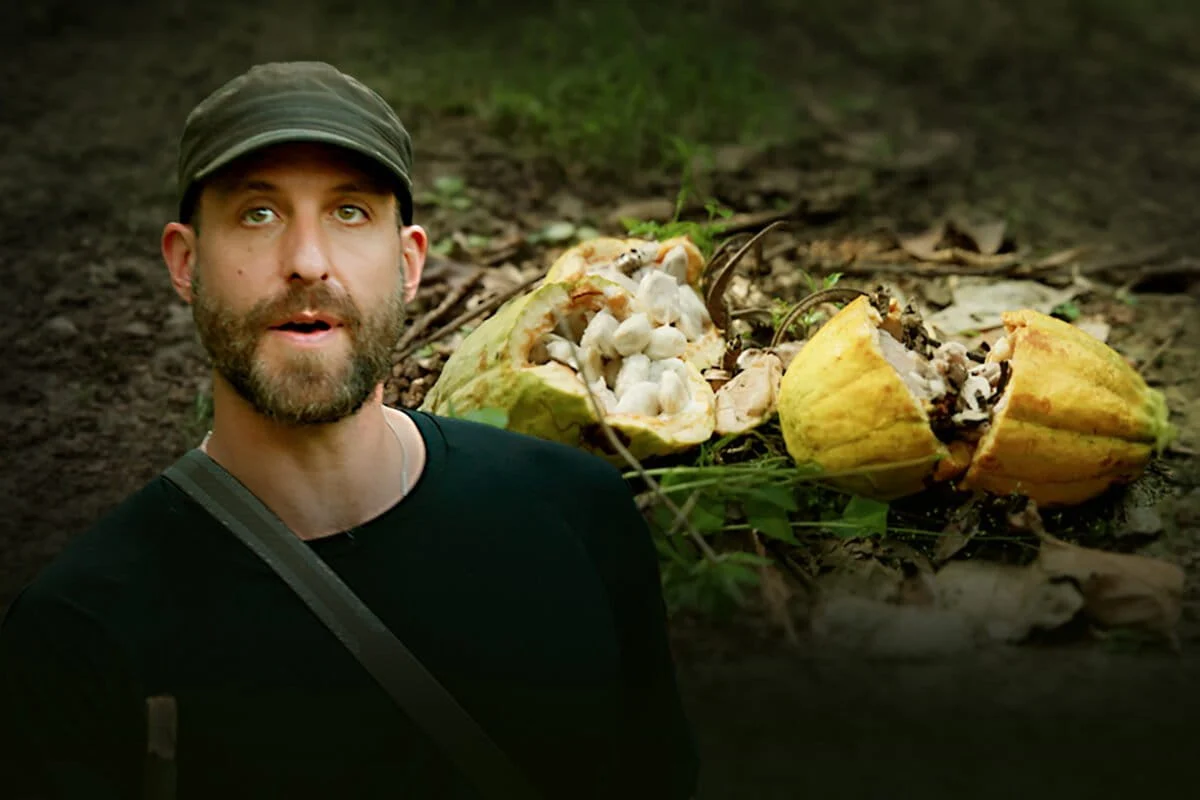
As the cocoa moves up the supply chain, its value increases at every step. Yet, there is a profound disconnect between the producers and the end consumers. Local distributors like Lincoln, a prominent broker in the region, admit to being "blind" to the final destination of their product. They are unaware of which multinational corporations purchase their beans or whether the chocolate bars sold in European or American supermarkets are linked to the deforestation of their own backyards. This lack of traceability has historically allowed the global chocolate industry to distance itself from the environmental destruction occurring at the source.
European Regulation and the Threat to Trade
The European Union, Liberia’s largest customer for cocoa, is attempting to change this dynamic through the European Union Deforestation Regulation (EUDR). This landmark legislation aims to ensure that products sold on the European market—including cocoa, soy, palm oil, and timber—are not linked to deforestation or forest degradation. Under the EUDR, companies would be required to provide precise geographical coordinates for the land where their products were produced, proving that no forest was cleared after December 31, 2020.
For Liberia, the EUDR presents both a challenge and an opportunity. If implemented strictly, much of the cocoa currently being produced in Grand Gedeh would be barred from the European market because it is grown on recently deforested land or within protected reserves. EU legislators argue that these standards are necessary to stop "one-sided exploitation" and to encourage sustainable agricultural practices. They maintain that the regulation is not meant to exclude small farmers but to force a shift toward a trade relationship that values environmental integrity.
However, the EUDR has faced significant pushback. Originally slated to go into effect in late 2024, the implementation has been delayed following intense pressure from member states and global trading partners who cite technical difficulties and the potential for economic disruption. Critics of the delay argue that it is a political decision rather than a technical one, reflecting the power of industrial lobbies over environmental commitments. For the forests of Liberia, every year of delay represents thousands of additional hectares lost to the chainsaw.
Chronology of the Crisis
The current situation is the result of a decades-long trend in West African agriculture:
- 1990s – 2000s: Massive deforestation in Côte d’Ivoire and Ghana reduces their primary forest cover by over 80%, driven largely by cocoa.
- 2010 – 2018: As land becomes scarce in neighboring countries, investors and migrant workers begin looking toward Liberia’s intact forests as the next agricultural frontier.
- 2019 – 2022: Satellite monitoring begins to show "hotspots" of forest loss in southeastern Liberia. The "cocoa rush" begins in earnest in Grand Gedeh.
- 2023: The EU passes the Deforestation Regulation (EUDR), sending shockwaves through the global commodity markets.
- 2024: Investigative reports and conservation groups highlight the scale of illegal cocoa farming in Liberia’s proposed national parks. The EU announces a delay in EUDR implementation amid global economic concerns.
Analysis of Implications
The trajectory of Liberia’s cocoa industry suggests a repeat of the "Ivorian model," where short-term economic gains are prioritized over ecological stability. If the current rate of clearing continues, Liberia risks losing its status as the primary guardian of the Upper Guinean forest. This would not only be a loss for biodiversity but would also undermine the region’s climate resilience. The rainforest plays a crucial role in regulating local rainfall patterns, which are essential for the very agriculture that is currently replacing the trees.
Furthermore, the potential exclusion of Liberian cocoa from the EU market could lead to a "two-tier" market system. Sustainable, traceable cocoa might go to Europe at a premium, while "dirty" cocoa from deforested land is diverted to markets with less stringent environmental regulations, such as China or domestic processors. This would effectively bypass the intent of the EUDR and continue the cycle of deforestation.
To prevent this outcome, experts suggest that Liberia needs more than just international regulations; it requires robust domestic enforcement and alternative livelihood programs. If farmers are to stop encroaching on the forest, they must be provided with the tools and land titles necessary to increase yields on existing plots rather than clearing new ones. Without a comprehensive approach that addresses the root cause of the rush—poverty—the "brown gold" of Grand Gedeh will continue to be mined at the expense of the planet’s future.
As the world watches the political maneuvering in Brussels and the expansion of farms in Grand Gedeh, the fate of the Western chimpanzee and the ancient trees of the Upper Guinean forest hangs in the balance. Liberia stands at a crossroads: it can either become the next casualty of the global chocolate industry or a pioneer in a new era of sustainable, forest-positive trade. For now, the sound of the chainsaw remains the dominant melody in the forests of the southeast.