Liberia is currently grappling with a rapid and accelerating loss of its primary rainforests, a development that threatens one of West Africa’s last remaining ecological strongholds. According to recent satellite data and field investigations, the primary driver of this environmental degradation is the expansion of illegal cocoa plantations. These agricultural encroachments are being fueled by a surging global demand for chocolate and a complex migration of labor from neighboring countries, mirroring a historical pattern that previously decimated the forests of Côte d’Ivoire. As the international community implements stricter regulations on deforestation-linked commodities, Liberia finds itself at a critical crossroads between economic necessity and the preservation of its natural heritage.
The Current State of Liberia’s Forest Cover
Liberia contains more than half of the remaining Upper Guinean Forest, a biodiversity hotspot that once stretched across West Africa. Unlike its neighbors, Liberia managed to retain significant portions of its canopy through decades of political instability, which inadvertently slowed industrial-scale agricultural expansion. However, the tide has turned. Data from Global Forest Watch and satellite monitoring services indicate that forest loss in southeastern Liberia has spiked significantly over the last five years.
In 2023 alone, the region saw thousands of hectares of primary forest cleared. These are not merely secondary growths being repurposed; they are high-canopy, carbon-dense forests that serve as essential habitats for endangered species. The clearing process typically begins with "slash-and-burn" techniques, where undergrowth is removed and large trees are girdled or burned to make way for cocoa seedlings. This method is inexpensive for migrant farmers but devastating for the ecosystem, leading to immediate loss of biodiversity and the release of stored carbon dioxide into the atmosphere.
A Historical Echo: The Ivorian Precedent
To understand the gravity of the situation in Liberia, one must look at the history of Côte d’Ivoire. In the mid-20th century, Côte d’Ivoire became the world’s leading cocoa producer, a feat achieved through the massive conversion of rainforests into agricultural land. While this brought short-term economic growth, it resulted in the loss of over 90% of the country’s primary forest cover.
Today, as land in Côte d’Ivoire becomes exhausted and environmental regulations there tighten, thousands of migrant cocoa workers are crossing the border into Liberia. These workers bring with them decades of expertise in cocoa cultivation but also the same land-clearing practices that left Côte d’Ivoire ecologically barren. Interviews with migrant workers in the Liberian interior reveal a consistent narrative: they are moving westward because the "forest is finished" in their home regions, and Liberia represents the last frontier for cheap, fertile land.
The Role of Global Cocoa Markets
The expansion of illegal cocoa in Liberia is inextricably linked to the global market. Cocoa prices reached historic highs in 2024, driven by supply shortages in traditional hubs like Ghana and Côte d’Ivoire due to aging trees and crop diseases. These high prices provide a massive incentive for farmers to push deeper into protected territories.
While much of this cocoa is grown on "illegal" plots—land that is either protected by the state or held in communal trust without authorization for commercial farming—it often finds its way into the global supply chain. Through a process known as "leakage," cocoa grown in deforested areas is mixed with legally produced beans at local buying stations, making it difficult for international chocolate manufacturers to guarantee that their products are "deforestation-free."
Biodiversity and Protected Habitats Under Siege
The environmental cost of this agricultural expansion is most visible in the destruction of specialized habitats. Southeastern Liberia is home to the Western Chimpanzee (Pan troglodytes verus), a critically endangered subspecies. These primates rely on large, contiguous stretches of forest for survival. The fragmentation caused by cocoa patches creates "islands" of forest, cutting off migration routes and making the animals more vulnerable to poaching and human-wildlife conflict.
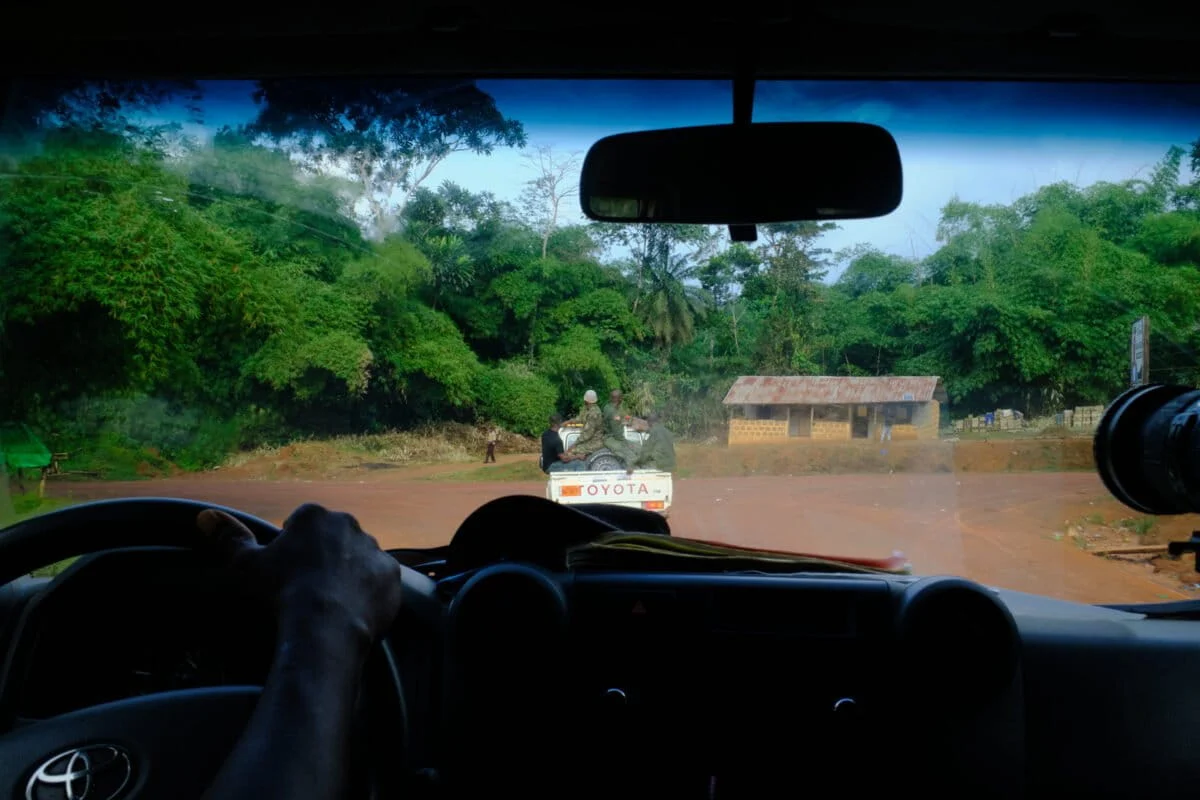
Forest rangers operating in areas like Sapo National Park and the surrounding buffer zones report a constant battle against encroachment. "We are outnumbered and under-resourced," stated one ranger who requested anonymity. "By the time we identify a clearing via satellite, the trees are already down, and the cocoa is planted. Once a community establishes a farm, it becomes a sensitive political and social issue to remove them."
Land Tenure and Community Dynamics
The crisis is further complicated by Liberia’s land tenure system. Under the Land Rights Act of 2018, many communities have gained legal recognition of their ancestral lands. However, the lack of economic opportunities in rural areas often leads local landowners to enter into informal agreements with migrant farmers.

In these arrangements, migrant workers provide the labor and expertise to plant cocoa, while the community provides the land. The profits are shared, or the land is eventually divided. While this provides a small, immediate income for impoverished villagers, it permanently alters the landscape and strips the community of the long-term benefits provided by a standing forest, such as clean water, non-timber forest products, and potential carbon credit revenue.
The EU Deforestation Regulation (EUDR) and Its Implications
The timing of Liberia’s deforestation surge is particularly problematic given new international trade laws. The European Union’s Deforestation Regulation (EUDR), which is set to be fully implemented in the coming years, requires companies to prove that products like cocoa, coffee, and timber imported into the EU were not grown on land deforested after December 31, 2020.
For Liberia, the EUDR represents both a threat and an opportunity. If the country cannot establish a robust traceability system—utilizing GPS coordinates and polygon mapping for every farm—it risks being shut out of the lucrative European market. Conversely, if the government can curb illegal clearing and support sustainable agroforestry, Liberia could position itself as a premium source of ethical cocoa.
Members of the European Parliament have expressed concern that without significant intervention, West African cocoa will continue to drive "imported deforestation." Recent delegations have emphasized that the burden of proof lies with the producing nations to demonstrate that their exports are not contributing to the climate crisis.
Challenges for the Forestry Development Authority (FDA)
The Forestry Development Authority (FDA) of Liberia is the primary body tasked with managing the nation’s forests. However, the agency faces significant hurdles, including a lack of funding, limited personnel, and allegations of corruption at various levels of local government.
Monitoring millions of hectares of dense forest requires advanced technology and a mobile, well-equipped workforce. Currently, the FDA relies heavily on international NGOs for satellite monitoring and logistical support. Critics argue that the government has historically prioritized the short-term gains from logging and agricultural concessions over long-term conservation goals, creating a culture of permissiveness that illegal cocoa farmers have been quick to exploit.
Chronology of the Crisis
- 2003: End of the Liberian Civil War. Large tracts of forest remain intact due to a lack of industrial activity.
- 2010–2015: Côte d’Ivoire experiences a cocoa boom that nears its ecological limits, prompting the first wave of migrant farmers to scout land in eastern Liberia.
- 2018: Liberia passes the Land Rights Act, empowering local communities but also creating opportunities for informal land deals.
- 2020: The EU announces the framework for the Deforestation Regulation (EUDR), setting a cutoff date for forest conversion.
- 2022–2024: Global cocoa prices surge; satellite data shows a 20% increase in forest disturbance alerts in southeastern Liberia compared to the previous decade.
- Late 2024: International environmental groups call for urgent intervention as "cocoa frontiers" move into previously untouched primary forests.
Analysis of Broader Implications
The loss of Liberia’s rainforests is not merely a local environmental issue; it is a global climate concern. These forests act as massive carbon sinks, absorbing millions of tons of CO2. Their destruction accelerates global warming and alters regional weather patterns, potentially leading to less predictable rainfall for the very farmers who are currently clearing the land.
Furthermore, the "Ivorian Model" of development has proven to be unsustainable. When the forest is gone, the soil quality eventually degrades, and the microclimate changes, leading to lower crop yields and increased vulnerability to pests. By following this path, Liberia risks destroying its natural capital for a temporary agricultural windfall that may leave the next generation with neither forests nor viable farmland.
The situation in Liberia serves as a litmus test for the global chocolate industry’s commitment to sustainability. If major corporations continue to purchase cocoa from regions with high deforestation rates without investing in rigorous traceability and farmer support, the destruction will continue.
Conclusion and Outlook
The rapid deforestation of Liberia’s rainforests is a multifaceted crisis involving international market forces, regional migration, and local governance challenges. While cocoa provides a vital livelihood for thousands, the current "frontier" style of expansion is ecologically catastrophic.
To save what remains of the Upper Guinean Forest, a coordinated effort is required. This must include the strict enforcement of protected area boundaries by the FDA, the implementation of national cocoa traceability systems to satisfy EUDR requirements, and the provision of alternative economic incentives for forest communities, such as carbon payments or sustainable agroforestry support. Without immediate action, the story of Liberia’s forests will likely end the same way it did in Côte d’Ivoire: with the silence of a vanished canopy and the bitter realization that some losses are permanent.