The summer of 2026 has etched itself into the history books of the motion picture industry, posting a record-breaking $4.765 billion in North American box office revenue between May 1 and Labor Day. Yet, beneath the veneer of this fiscal triumph lies a complex structural shift: while the industry is generating more revenue than at any point in history, it is doing so with a significantly smaller volume of attendees. According to data provided to Fortune by box-office analytics firm Rentrak, the current season surpassed the previous 2013 record by $9.3 million, but this achievement is inextricably linked to a model that relies on aggressive premium pricing rather than a return to pre-pandemic attendance levels.
When adjusting for inflation, the current summer box office remains 17% below the 2019 baseline, as reported by The New York Times. The disparity is even more pronounced when analyzing raw ticket sales; North American cinemas saw nearly 249 million fewer tickets sold through mid-August compared to the same period seven years ago. This divergence underscores a fundamental evolution in how Hollywood captures value in a landscape saturated with streaming options, shifting from a business model built on mass-market volume to one predicated on high-margin, event-driven theatrical experiences.
A Chronology of the Shift
The transformation of the cinema experience did not occur in isolation. Following the near-total collapse of theatrical attendance in 2020, the industry spent years attempting to recapture the public’s attention. By 2023 and 2024, the focus shifted from simple survival to the optimization of the "event" film. The 2026 season represents the maturation of this strategy.
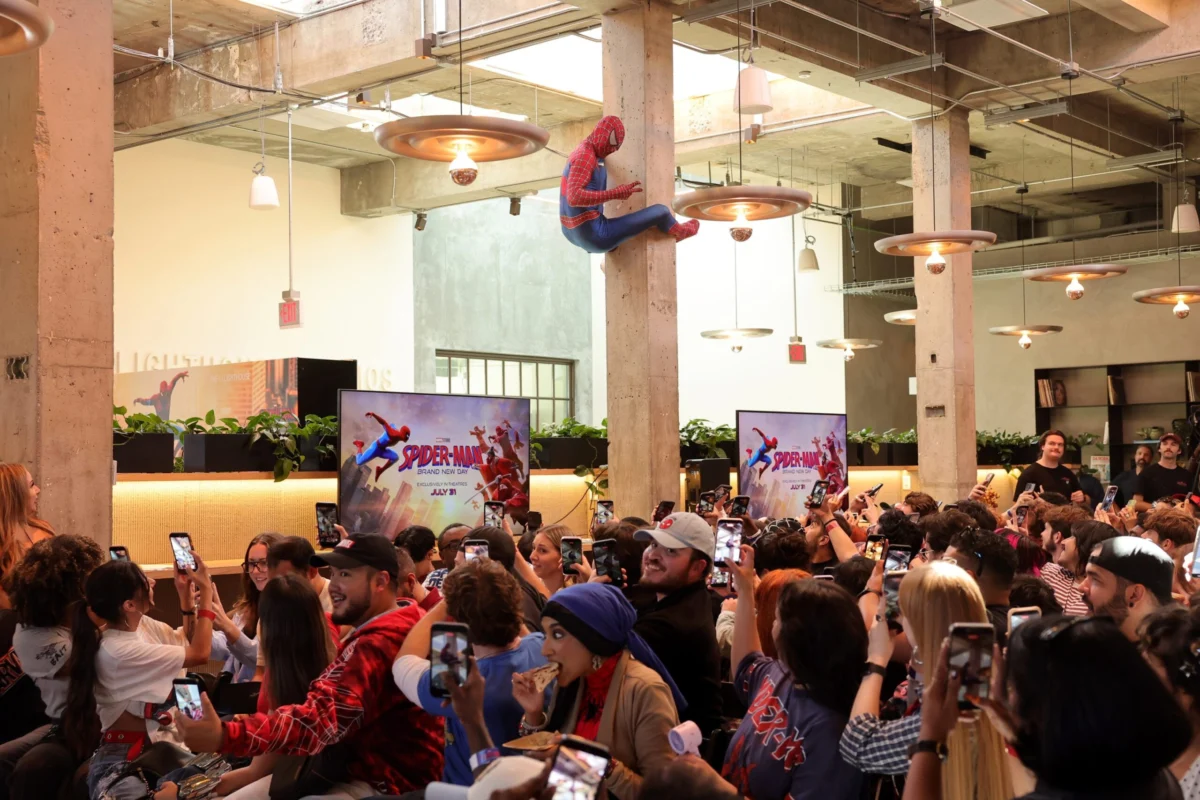
Throughout the spring of 2026, major studios began consolidating their release calendars to prioritize massive, multi-format experiences. The summer season, spanning 130 days—a week longer than the 2013 benchmark—saw the emergence of high-budget spectacles such as the latest Spider-Man iteration and the highbrow, critically acclaimed Odyssey. These two films alone accounted for nearly one-third of the total summer box office, each grossing over $1 billion worldwide.
The strategy proved effective: while the overall number of patrons remained below 2019 levels, the revenue per visit surged. As reported by S&P Global Market Intelligence, while the summer haul was 9% higher than the 2019 total of $4.35 billion, the number of tickets sold was approximately 547.1 million through mid-August, compared to 795.9 million in 2019. This gap is the defining feature of the post-pandemic era of film exhibition.
The Economics of Premium Exhibition
Theater operators have become adept at maximizing revenue from a shrinking pool of customers. Cinemark, in its recent financial filings, provided a clear blueprint for this success. During the second quarter of 2026, the company reported that premium large-format (PLF) screenings generated nearly 15% of its total worldwide box office, despite these auditoriums accounting for only 6% of its physical footprint. Furthermore, revenue from D-BOX motion-seat technology increased by more than 50% year-over-year.
Strategic pricing has also played a pivotal role. Cinemark increased its average U.S. ticket price by 4.2% to $10.83, citing a mix of "strategic pricing actions" and an increased reliance on premium formats. Simultaneously, the concession stand has transitioned into a significant profit center. Revenue per patron at concession stands rose by 4.3% to $8.70. When combined, the average moviegoer now spends approximately $19.53 per visit, a figure that highlights the consumer’s willingness to pay a premium for the out-of-home experience.
AMC Entertainment has mirrored this trajectory. The company finished 2025 with record-breaking figures for admissions and food and beverage spending. In the second quarter of 2026, AMC’s attendance climbed 17.9%, contributing to a record $1.6 billion in quarterly revenue. This trend suggests that while the casual moviegoer may have transitioned to home streaming, the "committed" moviegoer is spending more than ever before.
Market Analysis and Expert Perspectives
Paul Dergarabedian, the lead marketplace analyst at Rentrak, views these developments not as a sign of decline, but as a maturation of the medium. He suggests that using 2019 as a yardstick for success is increasingly obsolete. Instead, he proposes that the industry must be measured against the backdrop of the current, streaming-saturated landscape.
"The audience is telling you they want a mix of that cinematic fast food and cinematic fine dining," Dergarabedian noted. He compared the current evolution of Hollywood to the rise of vegetarianism in the culinary world: while the volume of hamburgers sold may have plateaued, the diversity of offerings and the premium nature of the products have fundamentally altered the market.
Eric Wold, an equity analyst at Texas Capital Securities, concurs with this assessment. In a research note released in September 2026, Wold highlighted that theaters are effectively navigating a period of fewer theatrical releases by focusing on higher profitability per ticket. Wold projects that the third-quarter domestic box office could reach $2.85 billion, surpassing the $2.813 billion generated in the same quarter of 2019. Under this projection, major chains like AMC and Cinemark could see significant boosts to their adjusted EBITDA, potentially reaching $256 million and $259 million, respectively.
Wold emphasizes that this model does not necessarily alienate price-sensitive demographics, as chains continue to utilize matinees and weekday discount programs. However, the core of the business remains the "experience" that cannot be replicated in a home environment. The unprecedented success of The Odyssey—which sold out 3 a.m. screenings in 70mm IMAX—serves as the primary case study for this "event-first" philosophy.
Broader Implications for the Industry
The shift toward premiumization raises questions about the long-term sustainability of a business model built on $20-per-ticket price points and a handful of blockbuster events. As Hollywood looks toward the end of 2026, the stakes are rising. The scheduled release of Avengers: Doomsday and Dune: Part Three on December 18 represents the next major stress test for this model.
Both films are being positioned as definitive theatrical events. Disney is utilizing the release of Avengers: Doomsday to debut "Infinity Vision," a new certification for auditoriums that meet strict standards for screen size, laser projection, and immersive audio. Similarly, Dune: Part Three is being marketed specifically for its 70mm IMAX format, with pre-sales already indicating high demand for the premium experience.
However, industry observers warn that the momentum of 2026 may be difficult to replicate. Dergarabedian cautioned that 2027 will be a "very tough opening act to follow," noting that while the industry is currently bolstered by generational attendance—with Gen Z increasingly viewing the cinema as a social, wholesome alternative to traditional nightlife—the reliance on massive, high-cost tentpoles carries inherent risks.
The intersection of changing consumer habits, the rise of "wholesome" entertainment for younger demographics, and the technological advancements in exhibition suggests that the theater is not dying, but rather undergoing a profound transformation. The theater of 2026 is an experience-driven venue, and for the studios and exhibitors that successfully cater to this demand, the financial outlook remains robust. Whether this model can scale to encompass a broader array of films beyond the "event" blockbusters remains the industry’s most significant, and as yet unanswered, question.
As the calendar turns toward the end of the year, the focus remains on whether these record-breaking revenues represent a stable new foundation or a temporary high driven by a specific cycle of massive cultural releases. For now, Hollywood’s pivot to premiumization has secured its financial health, effectively masking the decline in raw attendance with the increased spending of a dedicated, experience-seeking audience. The "Doomsday" season will serve as the final indicator of whether this strategy remains the definitive path forward for the global cinema industry.