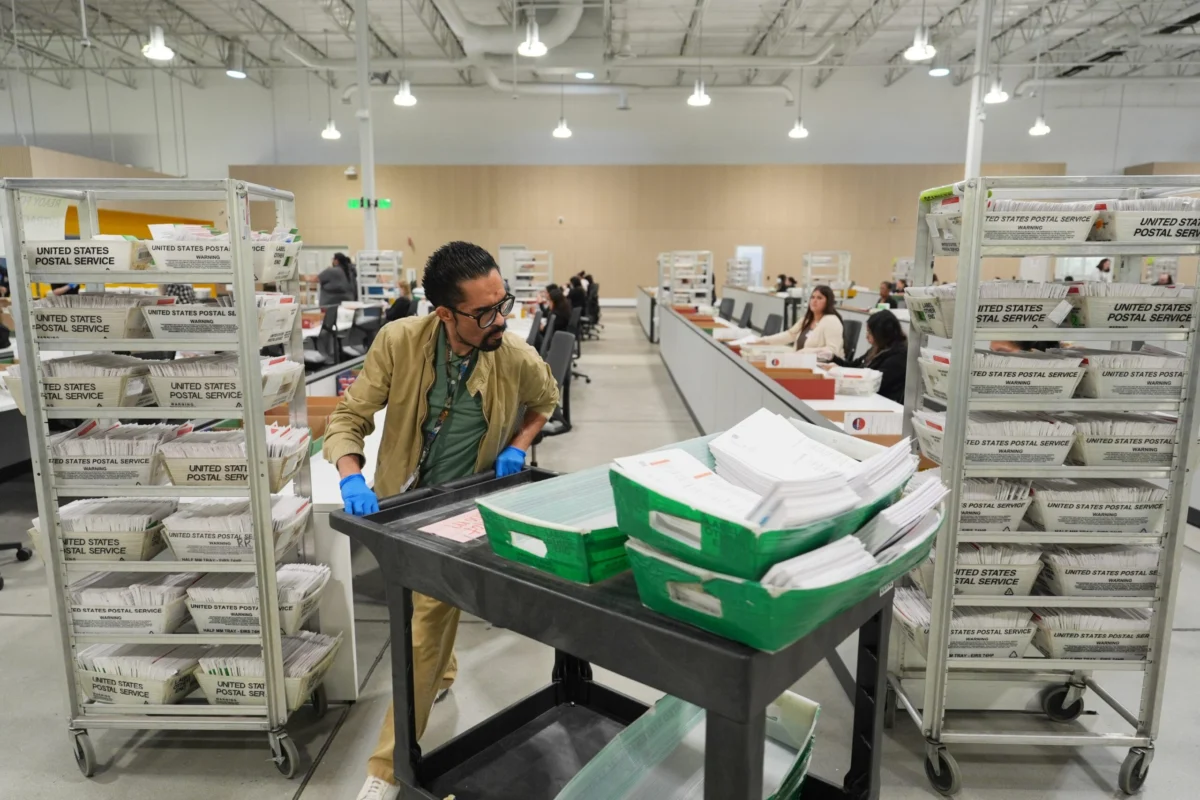
California’s ambition to simplify voting and boost democratic participation has hit a significant snag, with nearly 150,000 mail-in ballots rejected during the state’s June 2026 primary election. This substantial figure, representing a notable increase from recent election cycles, underscores persistent challenges in a state that has championed universal vote-by-mail and extended ballot counting periods. The overwhelming majority of these rejections stemmed from ballots arriving too late or, more critically, being postmarked after Election Day, raising serious questions about the efficiency of mail delivery and the clarity of voting instructions in an increasingly complex electoral landscape.
The June Primary’s Stark Reality: Soaring Rejection Rates
Data compiled by the California Secretary of State’s office reveals that precisely 148,241 mail ballots were disqualified in the June 2026 primary, translating to a rejection rate of 1.73% of all mail ballots cast. This marks a concerning uptick compared to previous primaries. In the 2024 primary, 108,982 mail ballots were rejected, a rate of 1.56%. The 2022 primary saw 105,818 ballots voided, with a similar rate to 2024. While raw numbers can fluctuate with voter turnout, the consistent rise in the rate of rejection suggests systemic issues that warrant closer examination. The sheer volume of nearly 150,000 uncounted votes represents a significant segment of the electorate whose voices, despite efforts to cast them, ultimately went unheard.
California’s progressive voting laws allow for a generous seven-day window post-Election Day for mail ballots to arrive at election offices, provided they are postmarked by Election Day itself. This measure was specifically designed to accommodate mail delays and ensure more ballots are counted. However, the data indicates that even this flexibility is proving insufficient, with lateness being the dominant factor in disqualifications.
Delving Deeper: The Late Ballot Conundrum
The primary driver behind the surge in rejected ballots was lateness, accounting for an astonishing 93,479 disqualifications in June 2026. This figure is significantly higher than the approximately 70,000 late rejections in the 2022 primary and 76,000 in the 2024 primary. Voting experts and advocates point to a critical distinction: it’s not merely arrival after the seven-day grace period, but rather the postmark date that is the crucial determinant. Kim Alexander, president of the nonpartisan California Voter Foundation, emphasized this point, stating, "Ballots rejected due to lateness are caused primarily to being postmarked too late to count, not because they arrived too late to count."
This distinction shifts scrutiny from voter procrastination to the mechanisms of mail processing. While a late surge in ballot returns, particularly in a hotly contested gubernatorial race as seen in June 2026, could contribute to delays, the focus is increasingly turning to the U.S. Postal Service (USPS) and its recent operational changes. Mindy Romero, director of the Center for Inclusive Democracy, a nonpartisan research group, noted that the growing number of late rejections "does really demand the question why this is happening."
The Shadow of USPS Policy Shifts and Congressional Concerns
The timing of these increased rejections coincides with ongoing concerns about changes within the U.S. Postal Service that potentially impact the application of postmarks. In January 2026, a bipartisan group of U.S. senators, predominantly Democrats, expressed alarm in a letter to the USPS regarding mail-processing changes. Their worry was that these alterations could adversely affect postmark dates for mail-in ballots, especially in a critical election year determining congressional control.
The updated agency policy states that a postmark might not reflect the day the Postal Service initially received the mail, but rather the day it was handled in one of its processing centers. Compounding this issue, recent consolidations within the Postal Service have led to processing centers being further removed from some communities, potentially exacerbating delays in postmark application. This means a ballot deposited in a mailbox on Election Day might not receive an Election Day postmark if it doesn’t reach a processing center until the following day or later.
This concern is not isolated to California. In the spring of 2026, two prominent Wisconsin Democrats, U.S. Senator Tammy Baldwin and Governor Tony Evers, publicly urged the Postal Service to address delays that resulted in hundreds of ballots arriving after Election Day in their state’s April elections. These incidents highlight a broader national pattern of concern regarding the USPS’s capacity to handle election mail efficiently under its revised operational procedures. California election officials, anticipating these issues, had proactively urged voters to submit their mail ballots early, explicitly warning that Postal Service changes could lead to slower mail service.
California’s Proactive but Challenged Approach to Voting Access
California has been at the forefront of expanding voting access, aiming to boost participation and ensure every eligible vote is counted. The state’s journey towards universal mail-in voting began in earnest following the COVID-19 pandemic, when it became one of several states to mail a ballot to every registered voter. This temporary measure was made permanent in 2021 with the passage of Assembly Bill 37, which mandated that all active registered voters receive a mail-in ballot for every election. This commitment to vote-by-mail is a cornerstone of the state’s electoral strategy, intended to remove barriers to participation.
Beyond universal mail ballots, California has implemented other significant reforms:
- Extended Ballot Return Window: As noted, ballots postmarked by Election Day can be counted if received within seven days.
- Ballot Curing Process: Voters whose ballots are rejected for signature issues (mismatched or missing) are notified and given an opportunity to "cure" or correct their ballot, typically up to eight days after Election Day. This is a crucial safeguard against disenfranchisement.
- Same-Day Voter Registration: Allows eligible individuals to register and vote on Election Day at any vote center.
- Vote Centers and Drop Boxes: Provides multiple options for in-person voting, ballot drop-off, and assistance.
Despite these comprehensive efforts, California has garnered a reputation for its "ponderously slow vote counts," which can extend for weeks. This phenomenon is largely a byproduct of its voter-friendly laws, particularly the extended period for mail ballot reception and the subsequent processing of these ballots. While these measures are designed to increase turnout, their effectiveness in significantly boosting participation has been modest, and they introduce complexities in the counting process that states like Florida and Texas, which have stricter deadlines, do not face.
Beyond Lateness: Other Rejection Categories
While lateness was the primary culprit, other factors contributed to the nearly 150,000 rejected ballots:
- Mismatched Signatures: Nearly 44,000 ballots were set aside because the voter’s signature on the return envelope did not match the one on record with county officials. This remains a significant issue, despite the ballot curing process designed to mitigate it.
- No Signature: Over 8,300 ballots were rejected for lacking any signature on the return envelope. This is often due to voter oversight or misunderstanding of instructions.
- Voter Already Cast a Ballot: In 743 instances, the mail ballot was voided because the voter had already cast a ballot, likely in person or via an earlier mail submission. This prevents duplicate voting.
- Missing Ballot/Multiple Ballots: Other, less frequent reasons included the ballot being missing from the return envelope, or multiple ballots being sent back in a single envelope.
The data released by the Secretary of State’s office did not provide a breakdown of uncounted ballots by party registration, preventing an immediate analysis of any partisan disparities in rejection rates.
Geographic Disparities in Rejection Rates
The impact of these rejection issues was not evenly distributed across California’s diverse counties. The highest mail ballot rejection rate in June 2026 was observed in Tulare County, located in the agriculture-heavy Central Valley, at 3.52%. This figure is significantly higher than the statewide average and points to potential localized issues. Following Tulare were Alpine County, a sparsely populated area south of Lake Tahoe, and Merced County, also in the Central Valley, both registering a 3.36% rejection rate. These regional disparities could be attributed to various factors, including demographics, voter education efforts, access to postal services, or local election administration practices. Understanding these localized trends is crucial for targeted interventions to reduce future rejections.
The Broader Context of California’s Elections and Political Scrutiny
California’s reputation as a "national slowpoke" in vote counting has attracted significant political scrutiny. Following the June primary, former President Donald Trump capitalized on this perception to reiterate his long-standing criticisms of the state’s election integrity. His administration’s Department of Justice also launched an investigation into Los Angeles County’s elections in a previous cycle, signaling a federal interest in California’s electoral processes. In June 2026, a federal judge notably halted a previous executive order by President Trump that aimed to create a federal voter list and restrict who could receive a mail ballot, highlighting the ongoing legal and political battles surrounding mail-in voting.
Despite these criticisms, extensive research, including a 2025 report by the Brookings Institution, consistently demonstrates that instances of mail voting fraud are minuscule – estimated at approximately four cases per 10 million mail ballots. This underscores that while operational challenges exist, the integrity of mail voting itself is robust. Mail voting has, in fact, gained widespread acceptance across the political spectrum, proving popular among both Democrats and Republicans for its convenience and accessibility.
Looking Ahead: Recommendations and Reforms
The significant number of rejected ballots in the June 2026 primary serves as a critical call to action for California election officials, lawmakers, and the U.S. Postal Service. Addressing the core issue of late postmarks and ensuring timely delivery and processing of election mail must be a top priority.
Potential recommendations and areas for reform include:
- Enhanced Voter Education: More robust public awareness campaigns are needed to educate voters on the importance of mailing ballots well in advance of Election Day, emphasizing the postmark deadline, and encouraging the use of official drop boxes which bypass the postal service entirely.
- USPS Accountability and Collaboration: State and federal election officials must continue to engage with the USPS to understand and mitigate the impact of processing changes on election mail. This could involve dedicated election mail protocols, clearer guidance on postmark application, and prioritizing election mail.
- Technological Solutions: Exploring advanced ballot tracking systems that provide voters with real-time updates on their ballot’s status, from mailing to acceptance, could empower voters and provide transparency.
- Review of Ballot Curing: While California has a curing process for signature issues, its effectiveness could be reviewed. Are voters receiving notifications in a timely manner? Are the instructions clear? Are there sufficient resources for voters to correct their ballots?
- Expansion of Drop Boxes and In-Person Options: Further expansion of secure ballot drop boxes and accessible vote centers could provide reliable alternatives to postal mail, especially for last-minute voters.
- Legislative Review: California lawmakers might need to revisit aspects of the election code to address unforeseen consequences of the current system, potentially exploring options like pre-paid postage on return envelopes or even earlier mailing deadlines for counties to ensure ballots are in voters’ hands with ample time.
The goal of counting every eligible vote is central to democratic principles. While California has made commendable strides in expanding voter access, the persistent challenge of rejected ballots, particularly due to issues beyond the voter’s immediate control like postmark timing, highlights an ongoing need for vigilance, adaptation, and sustained collaboration between electoral bodies and mail service providers to ensure the integrity and accessibility of the democratic process. The June 2026 primary serves as a potent reminder that the pursuit of a perfectly inclusive and efficient electoral system is a continuous endeavor.