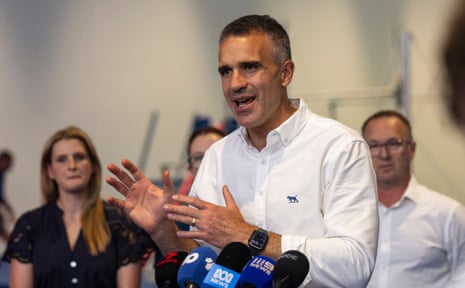
South Australian Premier Peter Malinauskas has issued an uncompromising warning to the federal government, strongly advising Canberra against participating in what he described as the "madness" of slashing migration targets merely to appease One Nation and other populist factions. Delivering a keynote address in Sydney, the premier argued that the rising tide of anti-immigration sentiment and populist rhetoric has firmly embedded itself in the Australian political landscape, requiring mainstream leaders to mount a robust defense of the nation’s traditional migration policies rather than capitulating to political expediency.
Drawing upon his personal history as the grandson of post-Second World War migrants, Malinauskas emphasized that a well-calibrated immigration program remains fundamental to Australia’s ongoing economic stability and social fabric. His remarks underscore a growing friction within the broader Australian political sphere regarding how major parties should address public anxieties over infrastructure pressures, housing affordability, and population growth without resorting to restrictive policies that could ultimately undermine long-term national prosperity.

The Rising Tide of Populism and Political Appeasement
Malinauskas used his platform in Sydney to caution both major federal parties against entering into a "race to the bottom" regarding immigration cutbacks. In an era marked by shifting global political currents and heightened economic pressures domestically, populist entities like One Nation have increasingly utilized anti-immigration rhetoric to capture voter dissatisfaction. However, the South Australian premier maintained that attempting to neutralize this political threat by adopting watered-down versions of populist policies is a strategic error.
"Above all else, preserve our strong migration program," Malinauskas stated during his address. "The correct political response to anti-immigration politics and populists is not appeasement. More troubling is the prospect of mainstream politics entering a political race to the bottom for who can cut migration numbers the most. This is not unfortunate – this is madness. There could be no greater act of national economic self-harm at this time than to slash migration numbers for political purposes."
The premier’s comments arrive at a delicate juncture for the federal Labor government, which has faced sustained scrutiny from both the conservative Coalition and minor parties over net overseas migration figures following the post-pandemic economic reopening. Critics of the current migration levels frequently link population growth directly to soaring housing costs and strained public infrastructure, creating a potent narrative that resonates with voters grappling with cost-of-living hardships.
Reframing the Debate: A Housing Crisis, Not a Migration Crisis
Expanding on his critique during a subsequent appearance on the Australian Broadcasting Corporation’s AM program, Malinauskas sought to decouple the public conversation surrounding immigration from the acute structural challenges facing the housing market. He contended that political leaders have a fundamental duty to articulate the distinct nature of these domestic issues rather than allowing migration to serve as a convenient scapegoat.
"We need to explain that Australia doesn’t really have a migration crisis so much as a housing crisis," Malinauskas explained. "If we have a housing crisis, we would do well to focus our skills policy on making sure that we’re bringing in the very workers that we require in the housing construction industry. Australia’s got a massive shortage of almost every trade."
The premier highlighted demographic realities that make continued migration an economic imperative. With Australia’s population rapidly aging—projected shortly to feature more citizens aged over 65 than under 15—sustained migration is widely viewed by economists as vital to replenishing the shrinking domestic workforce, maintaining tax bases, and supporting essential public services, health care, and aged-care sectors.

Despite pressing questioning from media interviewers, Malinauskas declined to nominate a specific, arbitrary numerical target for a balanced migration program. Instead, he advocated for a bottom-up methodology driven by concrete data regarding regional economic growth requirements, infrastructure capacities, and targeted industrial skill shortages, rather than top-down political quotas designed to appease short-term electoral cycles.
International Students and Economic Self-Harm
In addition to his warnings regarding permanent migration, Malinauskas launched a passionate defense of the international education sector, condemning any policy proposals aimed at arbitrarily reducing the number of foreign students entering the country as "crazy." Higher education remains one of Australia’s most lucrative export industries, contributing billions of dollars annually to the national economy while supporting urban and regional labor markets.
To illustrate the absurdity of undermining a foundational economic pillar for political optics, Malinauskas drew a direct comparison to Australia’s powerful resources sector. "Imagine if we did this to the mining industry," he remarked. "There would be an ad on every television station and mobile phone about how we’re killing the goose that lays the golden egg. It is crazy."

His defense of international students comes as the federal government weighs various mechanisms to manage international enrollments and ease pressures on rental vacancies in major metropolitan centers like Sydney, Melbourne, and Brisbane. University administrators and sector representatives have similarly warned that heavy-handed caps risk permanently damaging Australia’s global competitiveness as an educational destination of choice.
Broader Political and Economic Implications
Malinauskas’s intervention highlights deep-seated strategic disagreements within the Australian political ecosystem regarding how to manage the nation’s post-pandemic growth trajectory. While populist movements argue that rapid population growth exacerbates housing shortages and degrades living standards, business groups, economists, and state leaders frequently warn that abrupt contractions in the labor supply will stifle productivity, exacerbate inflation through severe labor bottlenecks, and impede critical infrastructure delivery.
The debate over migration also intersects with wider discussions in Canberra concerning foreign policy, trade, and national resilience. Concurrent commentary from diplomatic figures, such as former prime minister and ambassador to Washington Kevin Rudd, has emphasized the importance of middle powers maintaining active multilateral engagement amidst shifting global alliances and domestic political debates in the United States. Rudd’s advocacy for robust international cooperation through institutions like the United Nations, the IMF, and regional forums mirrors the sentiment that Australia must project confidence and stability on the world stage rather than turning inward.
As the federal parliamentary sitting fortnight concludes, the Albanese government faces mounting pressure to balance constituent anxieties over cost-of-living pressures and housing accessibility with the stark economic imperatives outlined by state leaders like Malinauskas. Whether Canberra will heed the call to resist populist posturing on migration remains to be seen, but the debate has firmly established migration policy as a central fault line in contemporary Australian political discourse.