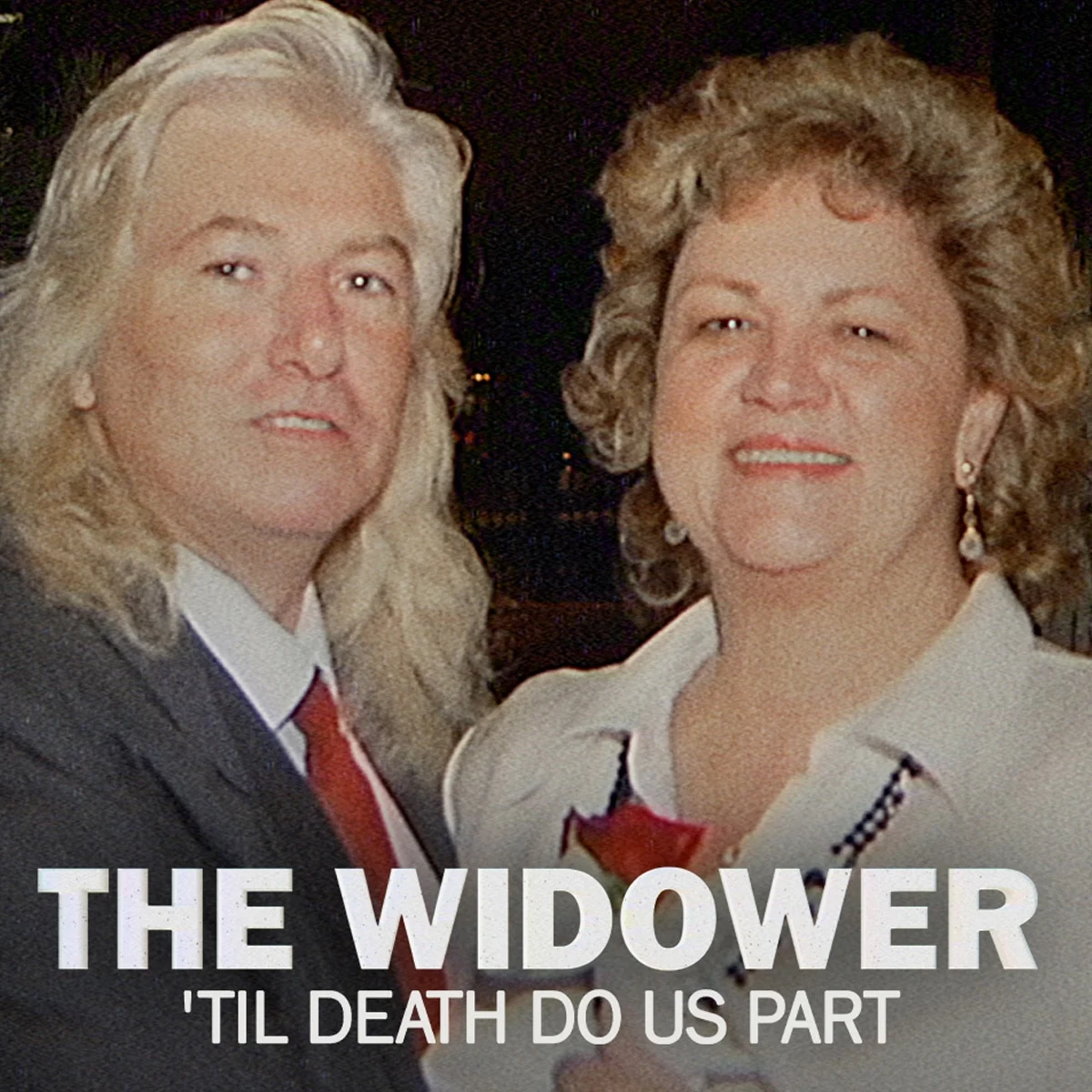
When veteran Dateline producer Dan Slepian first received an anonymous tip concerning a bizarre and unfolding homicide case in Las Vegas, he possessed little indication that the inquiry would consume nearly twenty years of his professional life. The subject of that initial tip was Thomas Randolph, a man whose domestic history spanned six marriages, multiple suspicious deaths, and an uncanny ability to evade legal accountability for decades. The meticulous unravelling of Randolph’s criminal enterprise forms the foundation of the Netflix documentary series The Widower: ‘Til Death Do Us Part, offering a disturbing window into the psychology of a modern predator who weaponized matrimony for financial gain.
The Night That Shattered a Las Vegas Home
On the evening of May 8, 2008, emergency dispatchers in Las Vegas received a frantic 911 call from Thomas Randolph. Reporting from the residence he shared with his sixth wife, 57-year-old Sharon Causse, Randolph claimed that his wife had been shot and that he had subsequently gunned down an intruder inside the home. Responding officers arrived at the crime scene to find Sharon fatally wounded. Lying nearby in the garage was the body of 38-year-old Michael Miller, draped alongside a ski mask and a bag of stolen jewelry.
From the outset, however, lead investigator Dean O’Kelley of the Las Vegas Metropolitan Police Department noted glaring discrepancies between physical evidence and Randolph’s narrative. Randolph maintained that he pulled into the garage with Sharon, lingered in his vehicle to listen to a song, and subsequently discovered his wife slain in the hallway before shooting an unknown assailant. Yet, ballistics and spatial analysis revealed that the vast majority of shell casings were recovered in the garage where Miller’s body lay, contradicting Randolph’s sequence of events. Furthermore, investigators questioned why an alleged intruder would enter through a rear entrance only to remain trapped in a garage facing a front-facing motorized door.
Despite mounting red flags, insufficient forensic proof initially restricted law enforcement from executing an immediate arrest. Behind the scenes, however, a complex web of deceit began to unravel as detectives dove deeper into Randolph’s matrimonial past.
A Disturbing Chronology of Matrimony and Suspicion
The investigation into Thomas Randolph quickly broadened as authorities mapped his extensive history of relationships, revealing a recurring pattern of rapid courtships, financial entanglements, and untimely fatalities.
- August 1975: Randolph marries his first wife, Kathy Thomas, at age 20. Thomas later described him to investigators as outwardly charming yet psychologically menacing. The marriage ended in divorce in April 1983.
- April 1983: Shortly following his first divorce, Randolph marries Beckie Gault in Utah.
- July 1986: Randolph is arrested for erratic driving and possession of alcohol, spending the night in police custody. The following morning, he reports finding Gault dead in bed from an apparent suicide involving a firearm.
- 1988: Eric Tarantino, an acquaintance of Randolph, approaches law enforcement, alleging that Randolph previously attempted to hire him to murder Gault for life insurance proceeds. Tarantino claims he went into hiding out of fear.
- April 1989: Following a high-profile trial, a Utah jury acquits Randolph of capital murder in connection to Gault’s death.
- March 1994: Randolph marries his third wife, Leona Randolph, and subsequently relocates to Indiana. Leona later dies of cancer.
- October 1995: Randolph weds his fourth wife, Gayna Allmon, during his time in the Midwest.
- August 1997: Randolph marries his fifth wife, Francis Randolph. Francis undergoes heart surgery; while initial medical updates indicate recovery, her condition suddenly deteriorates, leading to her death.
- Summer 2005: Randolph meets Sharon Causse on Match.com. Following a Mexican cruise, Causse informs her daughter, Colleen Beyer, that they have secretly married, followed by a formal ceremony in Las Vegas in March 2007.
- May 8, 2008: Sharon Causse and Michael Miller are shot and killed inside the Randolph residence in Las Vegas.
- January 2009: Clark County prosecutors issue a warrant, arresting Randolph at his mother’s home in Utah for the double homicide.
- June 2017: Following years of delays, Randolph’s capital murder trial commences in Las Vegas. He is convicted of first-degree murder and sentenced to death.
- December 2020: The Nevada Supreme Court unanimously overturns Randolph’s conviction and death sentence, ruling that prosecutors improperly introduced prejudicial evidence from the 1986 Utah case.
- 2023: A retried case commences under strict evidentiary limits, omitting references to the death of Beckie Gault. A jury nonetheless finds Randolph guilty of two counts of first-degree murder and one count of conspiracy.
- April 2024: District Court Judge Tierra Jones sentences Randolph to 60 years to life in prison.
- September 2024: The Nevada Supreme Court upholds the conviction, denying requests for a third trial.
Uncovering the Hitman Connection
As detectives pursued the conspiracy angle behind Sharon Causse’s murder, statements from Michael Miller’s family members provided critical breakthroughs. Miller’s brothers, Rufus and Reco, alongside a close friend named Judy Archie, informed police that Miller had relocated to Las Vegas seeking financial stability and was reportedly earning $600 a week as a handyman for Randolph.
According to witness testimonies presented to the grand jury, Miller had explicitly told associates that his employer offered him financial compensation to murder his wife. Investigators ultimately deduced a chilling motive: Randolph allegedly contracted Miller to eliminate Sharon so that he could collect substantial payouts from four separate life insurance policies. In a final, merciless twist of self-preservation, prosecutors argued that Randolph turned his own weapon on the hitman, eliminating his accomplice to seal the conspiracy permanently.
The Legal Battlegrounds and Judicial Reckoning
The path to justice was marked by significant procedural hurdles. During the initial 2017 trial, prosecutors heavily relied on the similarities between the 2008 Las Vegas killings and the decades-old 1986 death of Beckie Gault in Utah to paint a portrait of a calculated serial predator. While this strategy successfully secured a death sentence, it ultimately served as the basis for a successful appeal.
In December 2020, the Nevada Supreme Court ruled that the state had unfairly prejudiced the jury by introducing extensive evidence of uncharged prior acts that lacked direct relevance to the immediate charges. The reversal necessitated a complete retrial, forcing prosecutors to build an airtight case based strictly on the forensic realities of the 2008 crime scene, the financial trails of the life insurance policies, and the testimonies of Miller’s associates.
Despite the omission of the historical Utah allegations during the 2023 proceedings, the secondary jury reached the same definitive conclusion. Randolph was found guilty of two counts of first-degree murder utilizing a deadly weapon and one count of conspiracy to commit murder.
In April 2024, Clark County District Court Judge Tierra Jones formally sentenced the then-70-year-old defendant to 60 years to life in prison. In handing down the sentence, Judge Jones emphasized the weight of community consensus, noting that two separate juries over the span of two decades had evaluated the evidence and arrived at the same verdict.
Broader Implications and the True Crime Phenomenon
The case of Thomas Randolph transcends a standard homicide investigation, serving as a masterclass in the systemic challenges of prosecuting sophisticated, manipulative offenders. The longevity of Randolph’s criminal timeline highlights vulnerabilities in jurisdictional information sharing across state lines during the late 20th century, which previously allowed suspicious deaths surrounding a single individual to go unchecked for years.
Furthermore, the public fascination surrounding Randolph—fueled by investigative journalism from outlets like Dateline and multi-part documentary projects—highlights society’s enduring obsession with true crime narratives. Unlike impulsive crimes of passion, Randolph’s calculated exploitation of marital trust exposes a darker reality: that danger can masquerade as romance, and serial predators can operate in plain sight by manipulating legal systems and exploiting the presumption of innocence.
Today, Thomas Randolph resides at the Lovelock Correctional Center in Nevada, serving a sentence that effectively ensures he will spend the remainder of his life behind bars. Refusing to express remorse or concede guilt, Randolph has continued to lean into his theatrical persona in media interviews, famously describing himself as a "true romantic" addicted to love rather than a cold-blooded killer. Yet, as two decades of rigorous investigation, grand jury testimonies, and unanimous jury verdicts have established, the romantic facade concealed one of the most calculating multi-state murder conspiracies in recent American legal history.