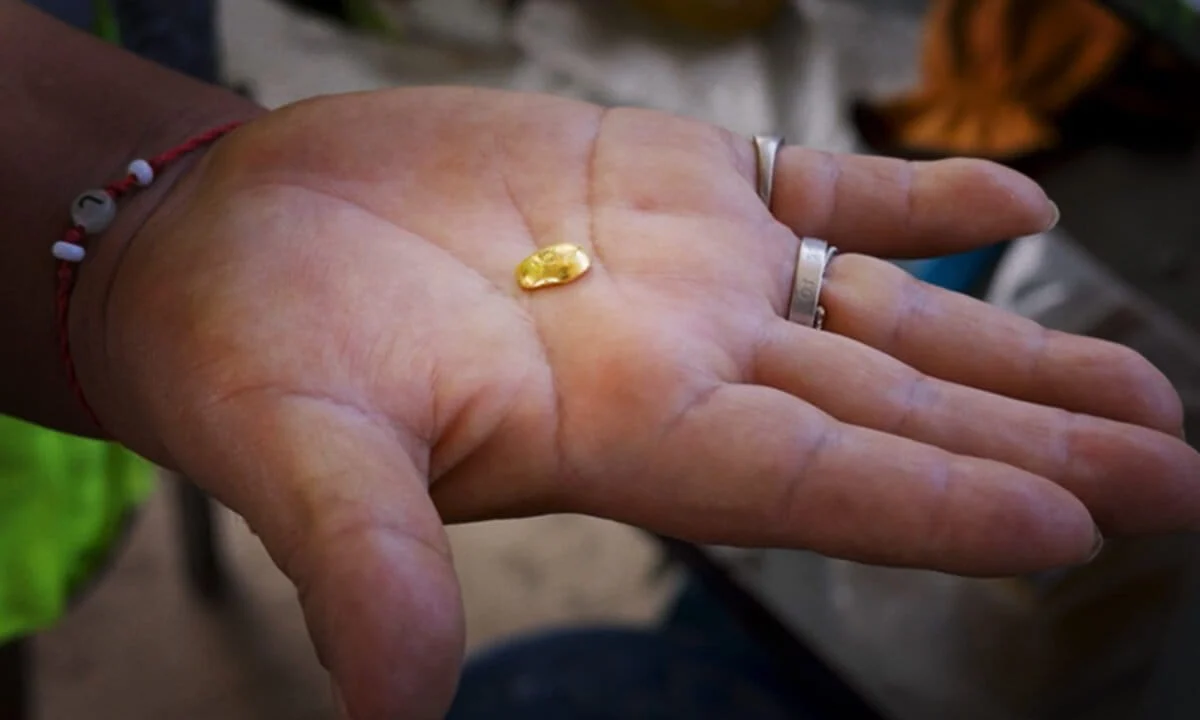
Deep within the heart of the Peruvian Amazon, the Madre de Dios region stands as a paradox of natural wealth and human desperation. Known as one of the most biodiverse tropical forests on the planet, the region is simultaneously the epicenter of Peru’s artisanal and small-scale gold mining (ASGM) industry. For decades, the landscape has been scarred by the relentless pursuit of precious metals, a process that has introduced toxic mercury into the food chain and caused widespread deforestation. However, amidst the chaos of informal economies and violent territorial clashes, a nascent movement is emerging: a push for "clean gold" that attempts to reconcile traditional livelihoods with environmental stewardship.
The Anatomy of an Extraction Crisis
The mining operations in La Pampa, a notorious hub within Madre de Dios, operate under a complex, often volatile, socioeconomic framework. Traditional extraction methods involve high-pressure water cannons that strip away topsoil, creating massive sediment loads that choke local river systems. This slurry is funneled into sluice boxes—often lined with carpets—where gold particles are trapped. The subsequent processing is where the environmental catastrophe compounds; miners historically use mercury to create an amalgam with gold. Once the gold is extracted, the mercury is often burned off in open air or washed into the environment, where it enters the aquatic ecosystem, bioaccumulating in fish and, eventually, in the humans who consume them.
The human cost is as significant as the ecological one. The region has become a flashpoint for social unrest, where government crackdowns often collide with the desperate needs of miners who view the trade as their only viable path to economic survival. In La Pampa, the sight of burning vehicles and police confrontations serves as a grim reminder of the vacuum of state authority. When the state does intervene, it is frequently through punitive measures that fail to address the root causes of the informality: a lack of legal pathways and the absence of sustainable infrastructure.
A Chronology of Conflict and Policy
The crisis in Madre de Dios is not a recent phenomenon, but rather the result of a decades-long policy vacuum and economic shifts.
- 1980s-1990s: The construction of the Interoceanic Highway opened previously inaccessible swaths of the Amazon to human migration, triggering a gold rush.
- 2010s: The surge in global gold prices incentivized a massive expansion of artisanal mining, leading to the rapid deforestation of thousands of hectares in the Tambopata buffer zone.
- 2019: The Peruvian government launched "Operation Mercury," a high-profile military and police intervention aimed at dismantling illegal mining camps in La Pampa. While the operation successfully cleared specific sites, it displaced mining activity into more remote areas, creating a "whack-a-mole" effect rather than a permanent solution.
- 2020-2024: The post-pandemic era has seen a rise in "formalization" efforts, where miners seek to transition into legal frameworks. However, the bureaucratic hurdles remain immense, leaving many in a legal gray zone.
The Economics of Informality and the Quest for "Clean Gold"
The current struggle of the formalized miner is one of navigating a system designed for large-scale corporate entities, not artisanal laborers. The primary barrier to entry for formalization is the complex legal and administrative burden. To be truly formal, a miner requires mining titles, environmental impact assessments, and a transparent supply chain—all of which are prohibitively expensive for small-scale operators.
As observed in the accounts of those operating in the region, the lack of an invoice system creates a perverse incentive structure. Suppliers often charge higher prices for parts and equipment when formal documentation is requested, essentially penalizing those who try to operate within the law. This creates a cycle where the cost of being legal is higher than the cost of remaining underground.
Despite these challenges, some mining collectives are adopting mercury-free technologies. By using gravimetric tables—which rely on physical separation methods rather than chemical amalgamation—miners can recover gold with a higher degree of purity and zero mercury discharge. These tables, often powered by off-grid solar energy, represent a technological shift that could, if scaled, significantly mitigate the environmental footprint of the region.

Data and Environmental Impact
The environmental data surrounding Madre de Dios is sobering. According to recent reports from the Monitoring of the Andean Amazon Project (MAAP), deforestation in the region continues at an alarming rate, directly correlated to mining expansion. Mercury contamination levels in the hair and blood of Indigenous communities in the region have been found to exceed World Health Organization (WHO) limits by significant margins, particularly among the Harakbut and Ese Eja peoples.
Economically, the informal gold trade is a multi-billion dollar sector. Peru remains one of the world’s largest gold producers, yet a significant portion of that gold enters the international market through opaque channels. The inability of the state to track the origin of this gold allows "dirty" gold to be laundered into the legitimate supply chain, effectively masking the environmental and human rights abuses that facilitated its extraction.
Official Responses and Institutional Challenges
The Peruvian government’s stance has historically been bifurcated. On one hand, the Ministry of Environment (MINAM) and the Ministry of Energy and Mines (MINEM) have promoted the "Formalization Process." On the other, the lack of ground-level enforcement and the absence of social programs leave the sector vulnerable to organized crime, which often exploits the miners’ lack of legal status to control territories and charge "taxes" for protection.
Critics of current policies argue that the government has focused too heavily on interdiction—police raids and the destruction of machinery—while ignoring the economic reality of the people involved. Without providing viable alternatives, such as alternative livelihoods in agriculture or sustainable forestry, interdiction only drives the mining population further into the shadows, where they become more susceptible to exploitation by illicit syndicates.
The Path Forward: Implications for the Amazon
The implications for the future of the Amazon are profound. If the current trends of deforestation and toxic contamination continue unabated, the long-term viability of the Madre de Dios ecosystem will reach a tipping point. The loss of forest cover not only destroys habitat for endangered species but also disrupts the hydrological cycles that sustain the Amazonian climate.
However, the existence of miners willing to pursue "ecological gold" suggests that there is a pathway to transformation. For this to succeed, three things must happen:
- Streamlining Formalization: The state must simplify the administrative requirements for artisanal miners, making it financially viable to operate legally.
- Infrastructure Support: Financial and technical support must be provided to help miners implement mercury-free technology, such as gravimetric processing units.
- Traceability and Transparency: International markets must demand higher standards of transparency for gold imports, ensuring that small-scale miners who do follow the rules are rewarded with a premium price for their product.
The situation in Madre de Dios is not merely a local issue; it is a global one. The gold extracted from these soils often ends up in global financial markets, jewelry, and electronics. The responsibility for the health of the Amazon and its people, therefore, lies not just with the miners and the Peruvian state, but with the global consumers and corporations that create the demand for gold.
As the miners in La Pampa continue to risk their lives and livelihoods, they represent a microcosm of the global struggle for sustainable development. Whether this region becomes a model for responsible small-scale extraction or remains a cautionary tale of environmental collapse depends on whether the international community can move beyond simple condemnation and toward active, meaningful support for those on the ground who are trying to forge a different path. The miners are waiting for the state to take them into account; in the meantime, the forest remains in the balance.