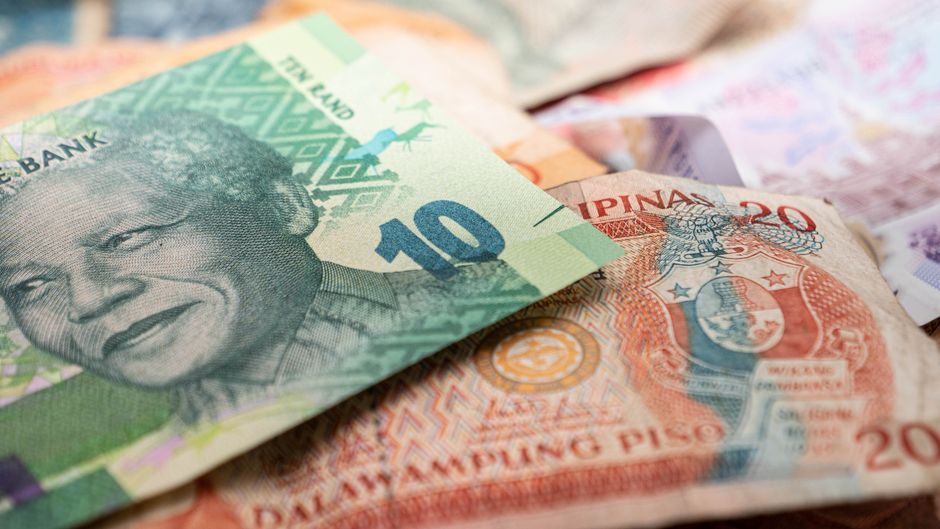
South African Rand Stable Ahead of Crucial US-China Trade Talks
The South African rand has demonstrated remarkable resilience in the immediate lead-up to pivotal trade negotiations between the United States and China. This stability, often characterized by muted volatility and a tendency to trade within narrow ranges, is a significant development given the historically sensitive nature of global trade discussions. Investors and market analysts are closely scrutinizing the rand’s performance as a barometer of emerging market sentiment, with its current steadiness suggesting a cautious optimism or at least a temporary decoupling from the immediate geopolitical uncertainties. Several underlying economic factors and strategic positioning are contributing to this robust stance, defying the typical speculative jitters that often accompany such high-stakes international dialogues. The rand’s ability to absorb potential shocks, at least in the short term, is a testament to a combination of domestic economic management, improved commodity prices, and a perceived de-escalation in rhetoric surrounding the trade dispute. While the long-term implications remain contingent on the outcome of the talks, the current stability provides a crucial window for South Africa to leverage its own economic narratives and potentially attract investment irrespective of the broader global trade climate.
The core driver behind the rand’s current stability is a confluence of improving domestic economic indicators and a strategic shift in market sentiment towards emerging markets. Recent data releases in South Africa have painted a more positive picture than anticipated. For instance, inflation figures have remained within the South African Reserve Bank’s (SARB) target range, providing monetary policymakers with ample room to maintain a relatively stable interest rate environment. This predictability in monetary policy is a significant draw for foreign investors seeking consistent returns. Furthermore, a slight uptick in manufacturing and mining production, albeit from a low base, has signaled a nascent recovery in key sectors of the South African economy. These sectors are directly linked to commodity prices, and a more favorable global commodity market, driven by factors such as increased demand from China (even amidst trade tensions) and supply constraints in other regions, has provided a tangible boost to export revenues. The rand, as a commodity-linked currency, benefits directly from such positive commodity price movements. This economic underpinning allows the rand to weather external storms with greater fortitude.
Beyond domestic fundamentals, the rand’s stability can also be attributed to a perceived reduction in the immediate threat of a catastrophic trade war escalation. While US-China trade tensions remain a significant concern, the rhetoric surrounding the upcoming talks has, at times, suggested a willingness from both sides to engage in constructive dialogue rather than outright confrontation. This shift, however subtle, has reassured markets that a complete breakdown in negotiations, which would undoubtedly have negative ramifications for global growth and emerging market currencies, might be less likely. Investors are therefore adopting a more measured approach, weighing the potential downsides against the possibility of a partial de-escalation or a phased resolution. This cautious optimism translates into a reduced appetite for risk-off sentiment, which typically sees investors flee emerging market assets. The rand, as a proxy for emerging market risk, therefore benefits from this broader market sentiment.
The specific focus on US-China trade talks and their potential impact on the rand necessitates a deeper dive into the mechanisms of this relationship. China is a significant trading partner for South Africa, both as a source of imports and a destination for exports, particularly commodities like iron ore, coal, and platinum group metals. Any disruption to Chinese industrial activity or its demand for raw materials due to trade tariffs or retaliatory measures would directly impact South Africa’s export earnings and, consequently, the rand. Conversely, a more stable or improved trade relationship between the US and China could lead to increased global economic activity, boosting demand for commodities and thereby strengthening the rand. Therefore, the anticipation of these talks is not merely about general market sentiment; it involves a direct assessment of how US-China trade dynamics will influence South Africa’s primary economic drivers. The current stability suggests that the market is either pricing in a less severe outcome than initially feared or believing that other factors are mitigating these risks for South Africa.
Furthermore, the South African rand has also benefited from a broader global shift in investor focus towards yield-seeking behavior. In an environment where developed economies continue to grapple with low-interest rate regimes, emerging market currencies, including the rand, offer potentially higher yields. This attractiveness, coupled with a more stable risk perception, encourages capital inflows. Foreign portfolio investment, which is a crucial component of South Africa’s balance of payments, plays a significant role in supporting the rand. The current stability of the rand suggests that these inflows are either being maintained or are not being significantly withdrawn in anticipation of the trade talks, indicating a confidence in the underlying economic conditions or a belief that the risks are manageable. This is a crucial differentiator from previous periods of heightened global uncertainty, where emerging market currencies would have been significantly more vulnerable.
The role of the South African Reserve Bank (SARB) in managing this stability cannot be overstated. The SARB has maintained a hawkish stance on inflation, and its credible commitment to price stability has instilled confidence in the currency. By keeping interest rates at levels that are attractive to investors while also signaling a readiness to act against inflationary pressures, the SARB has created a predictable monetary policy environment. This predictability reduces the perceived risk associated with holding rand-denominated assets. Any significant deviation from this policy, such as a premature interest rate cut or a hawkish pivot driven by external shocks, would likely destabilize the rand. However, the current data supports the SARB’s existing policy, contributing to the rand’s measured resilience.
Moreover, the composition of South Africa’s export basket plays a crucial role. While commodities are a significant component, the rand’s relative stability in the face of potential trade disruptions also hints at a diversified export base, though this diversification is often overlooked. Sectors such as automotive manufacturing, tourism, and business services, while smaller than mining, contribute to export earnings and can provide a buffer against commodity price volatility or specific trade disruptions impacting raw materials. The stability, therefore, reflects a more nuanced economic picture than just commodity price dependence, suggesting that the market is pricing in a broader resilience within the South African economy.
The geopolitical landscape surrounding the US-China trade talks is multifaceted, and the market’s interpretation of these negotiations can be dynamic. While the rand is currently stable, it is essential to acknowledge the inherent volatility associated with such high-stakes events. Any unexpected pronouncements, aggressive tariff threats, or retaliatory measures could quickly shift market sentiment and lead to a rapid depreciation of the rand. The current stability, therefore, should be viewed as a snapshot in time, contingent on the perceived trajectory of the negotiations. It is a period where the market is absorbing information and adjusting expectations, rather than a declaration of permanent immunity to external shocks. The absence of panic selling is the key observation, not the absence of potential risk.
Looking ahead, the outcome of the US-China trade talks will have a direct and significant impact on the rand, irrespective of its current stability. A positive resolution, characterized by de-escalation and a return to more predictable trade relations, would likely lead to a strengthening of the rand as global risk appetite increases and commodity demand strengthens. Conversely, a breakdown in talks, leading to an escalation of trade barriers and increased global uncertainty, would almost certainly result in a sharp depreciation of the rand, as emerging market currencies are typically the first to suffer during periods of heightened risk aversion. The current stability, therefore, provides a more favorable starting point for the rand, but it does not negate the potential for significant downside risk depending on the negotiation outcomes.
The strategic importance of these talks for South Africa extends beyond immediate currency fluctuations. A protracted trade war could disrupt global supply chains, impacting South African businesses that rely on imported components or export to countries affected by trade disputes. Furthermore, a global economic slowdown triggered by trade tensions could reduce foreign direct investment into South Africa, hindering long-term economic growth and development. Therefore, while the rand’s current stability is a welcome development, it underscores the critical need for South Africa to closely monitor the progress of these negotiations and to have contingency plans in place to mitigate potential negative impacts. The stability itself is a signal that markets are not anticipating an immediate, catastrophic global economic shock directly stemming from these specific talks, but rather a nuanced and potentially drawn-out process of negotiation and adjustment.
In conclusion, the South African rand’s current stability ahead of the US-China trade talks is a complex phenomenon driven by a combination of improving domestic economic fundamentals, a cautious global market sentiment, and the South African Reserve Bank’s credible monetary policy. While this resilience is noteworthy, it is crucial to recognize that the rand remains susceptible to the eventual outcome of these critical negotiations. The current calm provides a crucial window, but the true test of the rand’s strength will lie in its ability to withstand any potential volatility that may arise from the trade talks’ conclusion. The market’s assessment is that, for now, the immediate downside risks are not overwhelming the mitigating factors.
