The landscape of American politics in late 2025 is defined by a volatile mix of legislative gridlock, electoral maneuvering, and an increasingly restive Republican caucus. As the United States navigates the consequences of one of the longest government shutdowns in its history, key figures in the House of Representatives are openly questioning the efficacy of their leadership, while the broader political apparatus prepares for the looming 2026 midterm elections. Under the guidance of CNN Political Director David Chalian, the recent discourse surrounding the "CNN Political Briefing" podcast has highlighted a critical transition point for the GOP and the Democratic Party alike, as both sides attempt to position themselves for a post-Trump era and a changing demographic map.
The Fragility of House Leadership and the GOP Divide
A significant development in recent weeks has been the mounting internal dissent within the Republican Party. Representative Kevin Kiley, a California Republican, recently vocalized a sentiment that has been quietly circulating among members of the House conference: that Speaker Mike Johnson has "failed to lead." This critique, delivered in a candid assessment of the current state of House affairs, points to a broader systemic issue within the caucus.
For many Republicans, the dissatisfaction stems from the inability to consolidate power effectively during the ongoing government shutdown. Rep. Kiley’s concerns are compounded by personal political shifts in his home state, where new district lines, championed by Governor Gavin Newsom, have fundamentally altered the landscape for California’s congressional delegation. This "vibe shift," as described in the political briefing, suggests that the Republican conference is struggling to reconcile its legislative strategy with the realities of a changing electorate. As the party looks toward 2026, the necessity for a cohesive vision—one that transcends the current reliance on former President Donald Trump—has become the central challenge for House leadership.
The Shutdown Chronology: A Crisis of Governance
The current government shutdown, which has now entered its third week, serves as the primary theater for these political tensions. The conflict began in late September 2025, when negotiations over the federal budget reached an impasse. By early October, the rhetoric between the two parties had reached a fever pitch, with both the Democratic Congressional Campaign Committee, led by Representative Suzan DelBene, and various House Republican factions trading blame for the disruption of essential services.
Throughout October and into November, the strategy for both parties has been one of high-stakes positioning. Democrats have utilized the shutdown as a tool to highlight the limitations of the current GOP majority, while Republicans—such as Representative Mike Lawler, who represents a district won by Kamala Harris in the previous election cycle—have argued that the Democratic strategy is a miscalculation that will ultimately alienate moderate voters. By mid-November, the discourse shifted from immediate fiscal concerns to the long-term electoral implications, with veterans like former Virginia Governor Terry McAuliffe appearing on the national stage to assert that the current political environment remains heavily influenced by the presence of Donald Trump, whom many Democrats view as their most potent political weapon for the upcoming midterms.
Assessing the MAGA Base and Trump’s Influence
The podcast series has also provided a platform for evaluating the durability of the Trump-era MAGA coalition. Political observers, including Jonathan Martin of POLITICO, have raised questions regarding whether the former president is beginning to lose his grip on the ideological base that propelled him to power.

A notable point of contention has been the reversal of the former president’s position on the Epstein files—a rare instance of friction between Trump and his most loyal supporters. Furthermore, critics within the movement have expressed frustration over the lack of focus on bread-and-butter economic issues, such as rising prices and the general cost of living, which have been overshadowed by Trump’s continued emphasis on foreign affairs. This drift, if it continues, could mark the beginning of a "lame duck" period for the former president, creating a power vacuum that other Republican figures are already moving to fill.
The New York City Laboratory: A Bellwether for National Politics
Perhaps no region better encapsulates the current political volatility than New York City. The mayoral race has become a focal point for national interest, particularly following the rise of Zohran Mamdani. Once a relatively obscure state assemblyman, Mamdani’s emergence as a formidable political force—rewriting the established playbook in Gotham—has garnered attention from national analysts like Errol Louis.
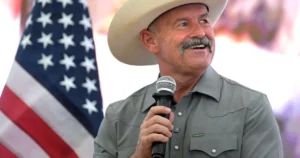
Conversely, the struggles of the Republican Party in New York are exemplified by the campaign of Curtis Sliwa. As the GOP standard-bearer in a city where Democratic voters outnumber Republicans six to one, Sliwa faces a daunting path. His candidacy, which has been challenged by the entry of former Governor Andrew Cuomo—who exited office under a cloud of controversy—highlights the chaotic nature of local elections in a post-shutdown environment. The pressure on Sliwa to drop out, coupled with the success of progressive challengers like Mamdani, suggests that the ideological battle lines for 2026 are being drawn in urban centers with significant intensity.
Broader Implications and Data-Driven Realities
The cumulative effect of these events is a political climate characterized by deep uncertainty. Data regarding the 2025 election cycle, specifically in states like New Jersey and Virginia, indicate that the national party brands are becoming increasingly tied to the resolution of local legislative standoffs. For the Republicans, the challenge is clear: they must demonstrate that they can govern effectively in the House, or risk losing the momentum they gained in previous election cycles. For the Democrats, the challenge is to turn the current fiscal standoff into a net positive for their 2026 midterm prospects.
The historical context provided by experts like Elie Honig, particularly regarding the prosecution of high-profile figures such as former FBI Director James Comey, reminds us that the current political era is not without precedent. Much like the historical inquiries into executive conduct, the current scrutiny of Congressional leadership and the judiciary reflects a society grappling with the integrity of its institutions. As the nation moves closer to the 2026 midterms, the "CNN Political Briefing" highlights that the decisions made in the halls of Congress today will have profound consequences for the trajectory of American governance for years to come.
Conclusion: The Path to 2026
The coming months will be critical for both parties as they attempt to define their identity for the next election cycle. The Republican Party faces a fundamental reckoning: to move beyond the orbit of Donald Trump and establish a legislative record that appeals to a broader base of voters. The Democratic Party, meanwhile, must navigate its own internal divisions to present a unified front.
With voices ranging from progressive assemblymen like Zohran Mamdani to institutional stalwarts like Terry McAuliffe, the American political landscape is a mosaic of conflicting interests. As David Chalian continues to document these developments, one thing remains certain: the stability of the American system depends on the capacity of its political leaders to reconcile these tensions. Whether the current government shutdown is resolved through compromise or further escalation will serve as the first major indicator of which party is better prepared to lead in the uncertain landscape of 2026. As the electorate observes these developments, the pressure on representatives to deliver tangible results—rather than just political posturing—continues to mount, setting the stage for a highly competitive and consequential midterm season.