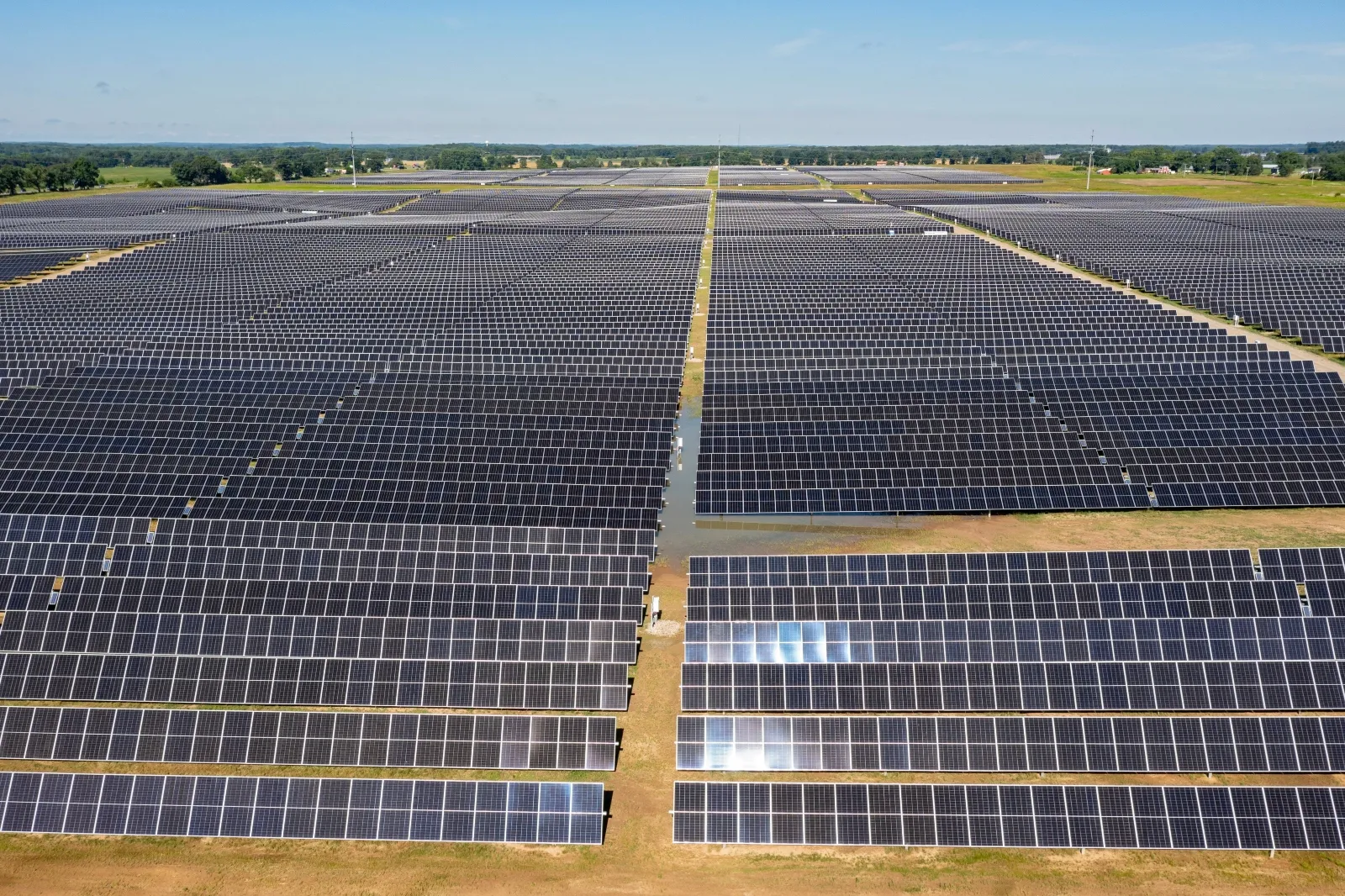
The political landscape of Michigan’s 7th Congressional District is being reshaped by an unlikely convergence of grassroots skepticism and green-energy politics. At the center of this electoral crucible is Marjorie Steele, a political independent and founder of the Michigan-based Economic Development Responsibility Alliance. Steele has spent years fighting against large-scale industrial projects across the state, from a proposed Chinese electric vehicle battery plant near Big Rapids to solar farms, battery storage systems, and high-voltage transmission lines. Her tireless opposition has frequently put her at odds with both progressive climate advocates and mainstream political figures.
Yet, during a lobbying trip to Lansing earlier this year to advocate for a statewide data center ban, Steele crossed paths with William Lawrence, a Democratic candidate for the U.S. House of Representatives in the 7th District. Knowing that Lawrence was a co-founder of the Sunrise Movement—one of the nation’s most prominent youth-led climate organizations—Steele anticipated a hostile reception. Instead, over a casual meal of Jimmy John’s, she delivered an unsparing critique of the negative externalities associated with clean energy development, including severe noise pollution, the industrialization of rural spaces, and the rapid destruction of prime agricultural land.
To her surprise, Lawrence listened intently and asked probing questions. Weeks later, Steele observed Lawrence echoing many of her specific talking points on the campaign trail. This interaction ultimately culminated in an endorsement from the Economic Development Responsibility Alliance—a rare move for an organization that historically avoids backing major-party candidates. This dynamic highlights a broader political realignment taking place across Michigan and the broader Midwest, where frustration with corporate-led infrastructure projects is crossing traditional partisan boundaries.
The Data Center Boom and Local Backlash
The friction in the Lansing area is part of a statewide uproar against the explosive growth of data centers. Across Michigan, communities are grappling with the sudden arrival of hyperscale computing facilities designed to power artificial intelligence and cloud computing. Most notably, a $16 billion Oracle-OpenAI campus is currently under construction in Saline Township near Ann Arbor.
These massive developments have triggered fierce resistance. More than a dozen local governments throughout the state have attempted to institute outright bans on data centers, citing intense concerns over their astronomical consumption of water and electricity, as well as light and noise pollution. Local backlash successfully tanked a smaller proposal in downtown Lansing known as Deep Green, despite developers offering to recycle waste heat and minimize water usage.
This wave of opposition has blurred partisan lines. The resistance coalition brings together MAGA-aligned conservatives, progressives, and property owners like Steele who reject large-scale renewable energy installations in their neighborhoods. For candidates running in competitive districts, navigating this anti-development sentiment has become a critical electoral test.

A Progressive Co-Founder Adapts to the Rust Belt
On paper, 36-year-old William Lawrence should be a political mismatch for the 7th District, which encompasses Lansing and its surrounding suburban swing territory. Formerly a safe seat held by moderate Democrat Elissa Slotkin, the district flipped to Republican Tom Barrett by a razor-thin margin when Slotkin vacated it to successfully run for the U.S. Senate in 2024. Barrett is currently defending the seat in one of the most expensive House races in the country.
Lawrence projects the cerebral demeanor of a graduate student rather than a traditional Rust Belt politician. In 2015, he co-founded the Sunrise Movement, championing disruptive activism and sweeping federal intervention to combat global climate change. In November 2018, Lawrence and fellow activists staged a high-profile sit-in at then-House Democratic Leader Nancy Pelosi’s office, demanding a Green New Deal fueled by massive public investments in clean energy infrastructure. Once a member of the Democratic Socialists of America—though he no longer identifies as a socialist—Lawrence also faced scrutiny over since-deleted 2020 social media posts advocating for open migration and police abolition.
Despite this left-wing pedigree, Lawrence captured 40 percent of the vote in the August Democratic primary, defeating two centrist opponents who split the moderate vote. Although national Democratic congressional leaders initially attempted to clear the field against him, they have since coalesced around his campaign, providing crucial institutional backing as he fundraises on par with Barrett. Barrett, meanwhile, has relied on substantial financial support from prominent Republican political action committees and the American Israel Public Affairs Committee.
Lawrence’s strategy has relied heavily on old-school community organizing. His campaign has knocked on more than 100,000 doors and hosted dozens of unscripted town halls. He has also directly intervened in local municipal fights, appearing at a city council meeting in Mason, Michigan, last month to stand alongside local residents—many wearing red baseball caps—in opposition to a prospective data center.
Infrastructure Fatigue and Renewable Siting Battles
The public resistance in Michigan extends far beyond data centers to include solar farms, battery storage facilities, and transmission lines necessary for the clean energy transition. While these technologies are widely considered essential for displacing fossil fuels, their massive land footprints have intensified rural pushback.
“We’ve definitely seen some bleed over from data center opposition to all types of infrastructure development,” notes Ed Rivet, executive director of the Michigan Conservative Energy Forum, a right-leaning clean energy advocacy group. Rivet describes this phenomenon as “infrastructure fatigue,” warning that it jeopardizes projects capable of delivering tangible benefits in energy cost, grid reliability, and emissions reductions.
Solar energy has proven particularly contentious in Michigan, which has mandated a full transition to a clean energy grid by 2040. In response to local zoning boards enacting bans on solar installations, the Michigan state legislature passed a law in 2023 granting state regulators direct siting authority when local permits are denied.
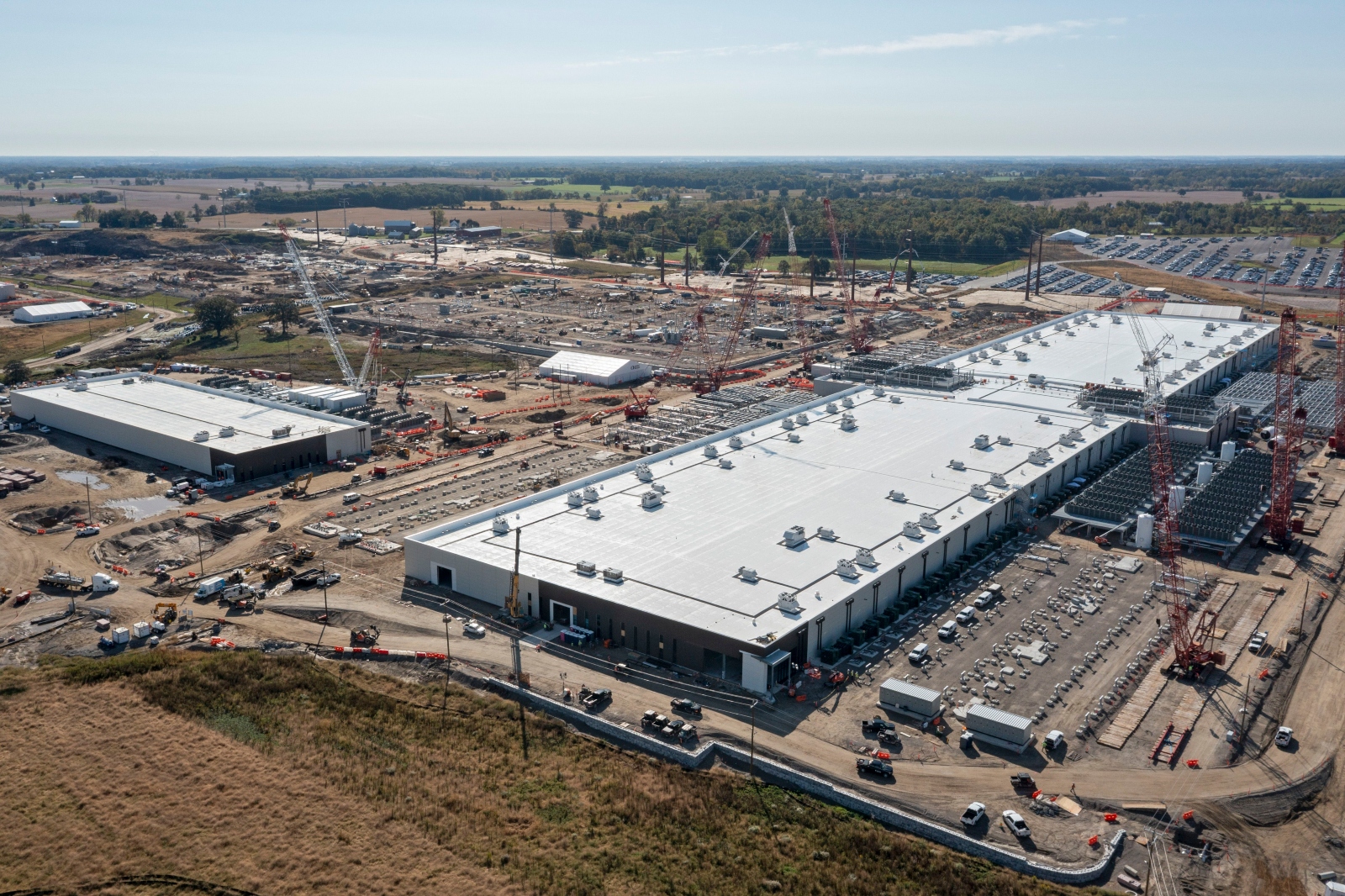
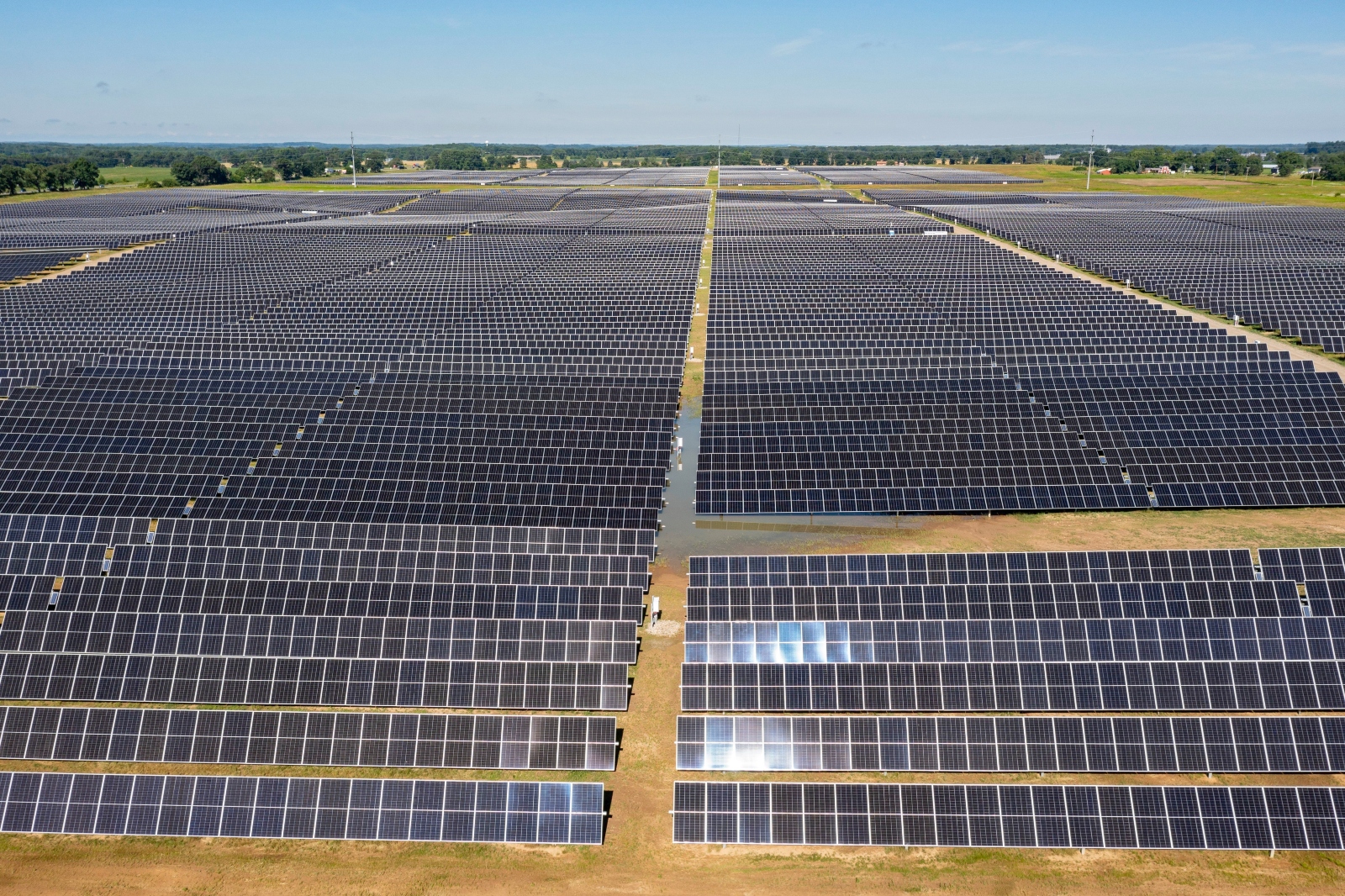
This preemption law has drawn sharp criticism. The first project approved under the state framework, the Assembly Solar facility, recently completed construction on the eastern edge of Lawrence’s district, generating significant local outrage. Lawrence has capitalized on this discontent, arguing that state-level mandates allow utility companies to construct mega-projects without securing genuine community buy-in.
Re-Engineering the Economic Development Model
Lawrence attributes the pervasive skepticism toward clean energy to a fundamentally broken model of economic development in the United States. He argues that host communities bear the immediate burdens of construction noise and environmental disruption while reaping few long-term economic benefits, as tax revenues and profits flow elsewhere.
“What’s clear is that people just don’t believe that investments that are directed from outside of the district… are going to benefit them,” Lawrence remarks. He contends that concerns regarding state preemption laws must be taken seriously by policymakers.
To bridge the gap, Lawrence suggests alternative frameworks, such as establishing public banks to finance infrastructure without demanding exorbitant profit margins, or leveraging congressional influence to force developers into transparent negotiations with community members. Suggested concessions from developers could include revenue-sharing agreements, enhanced water conservation commitments, or investments in local open spaces. In the interim, he advocates for a national moratorium on new data center construction.
This pragmatic shift marks a distinct evolution from Lawrence’s early days with the Sunrise Movement, whose Green New Deal implied top-down federal decision-making regarding energy siting. “In that era, we were thinking about the necessity of the outcome, and now I’m thinking more about what is necessary in the process,” Lawrence reflects. “And I’m reckoning with just how little trust we all have.”
The Policy Dilemma: Scale Versus Community Control
Energy experts caution that localized, small-scale alternatives pose significant logistical challenges for decarbonization. Doug Bessette, a professor of energy development at Michigan State University, points out that while community groups often favor localized solutions like "community solar" or agrivoltaics—farming beneath elevated solar panels—their energy output pales in comparison to industrial needs. Michigan currently relies on approximately 14,000 megawatts of natural gas capacity, whereas a typical community solar project generates between 1 and 5 megawatts.
“In order to fully transition our economy to clean energy, you have to build huge solar and huge wind and huge batteries and you have to do it fast,” Bessette explains. He warns that a strictly decentralized approach would be financially prohibitive and fail to mitigate carbon emissions at the necessary pace.
Nevertheless, Lawrence stands apart from mainstream climate activists who routinely dismiss anti-renewable sentiment as partisan astroturfing. By engaging directly with skeptics, he attempts to forge a viable political bridge between climate action and localized self-determination.
Whether this cross-partisan strategy can translate into a definitive electoral victory remains an open question among political analysts. Jean Hardy, an MSU researcher specializing in local government infrastructure decisions, suggests that data center and development opposition is already so uniformly bipartisan that it may not serve as a decisive wedge issue to sway undecided or independent voters.
Yet, for Lawrence, the broader imperative transcends a single election cycle. He maintains that unless the American economic development model is reformed to ensure that local populations feel respected and materially benefited by infrastructure projects, nationwide efforts to scale up clean energy will continue to encounter insurmountable political roadblocks.
“The question is who can effectively connect the big ‘no’ that we’re all saying to data centers into an affirmative ‘yes’ about what we want to build,” Lawrence concludes.