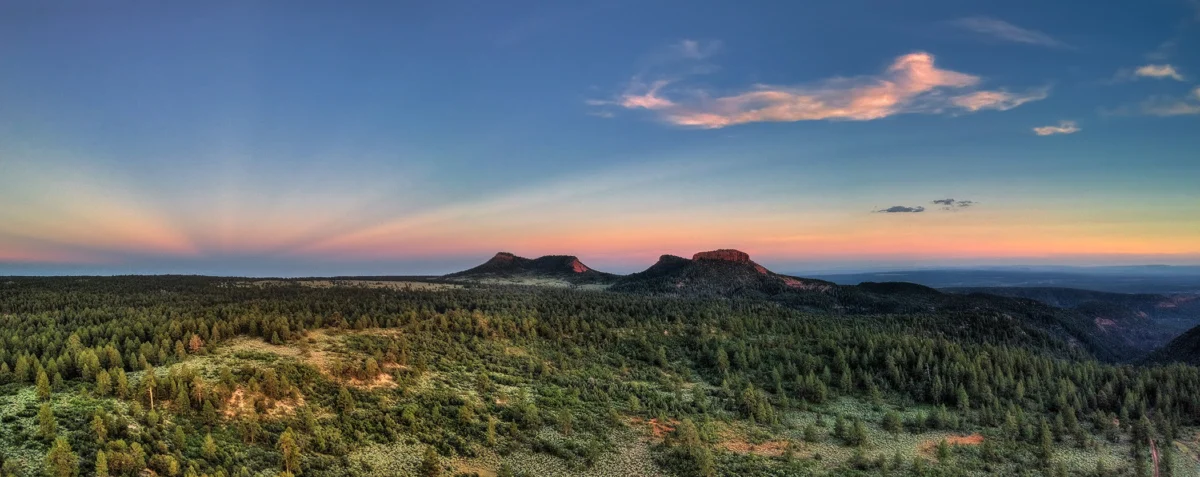
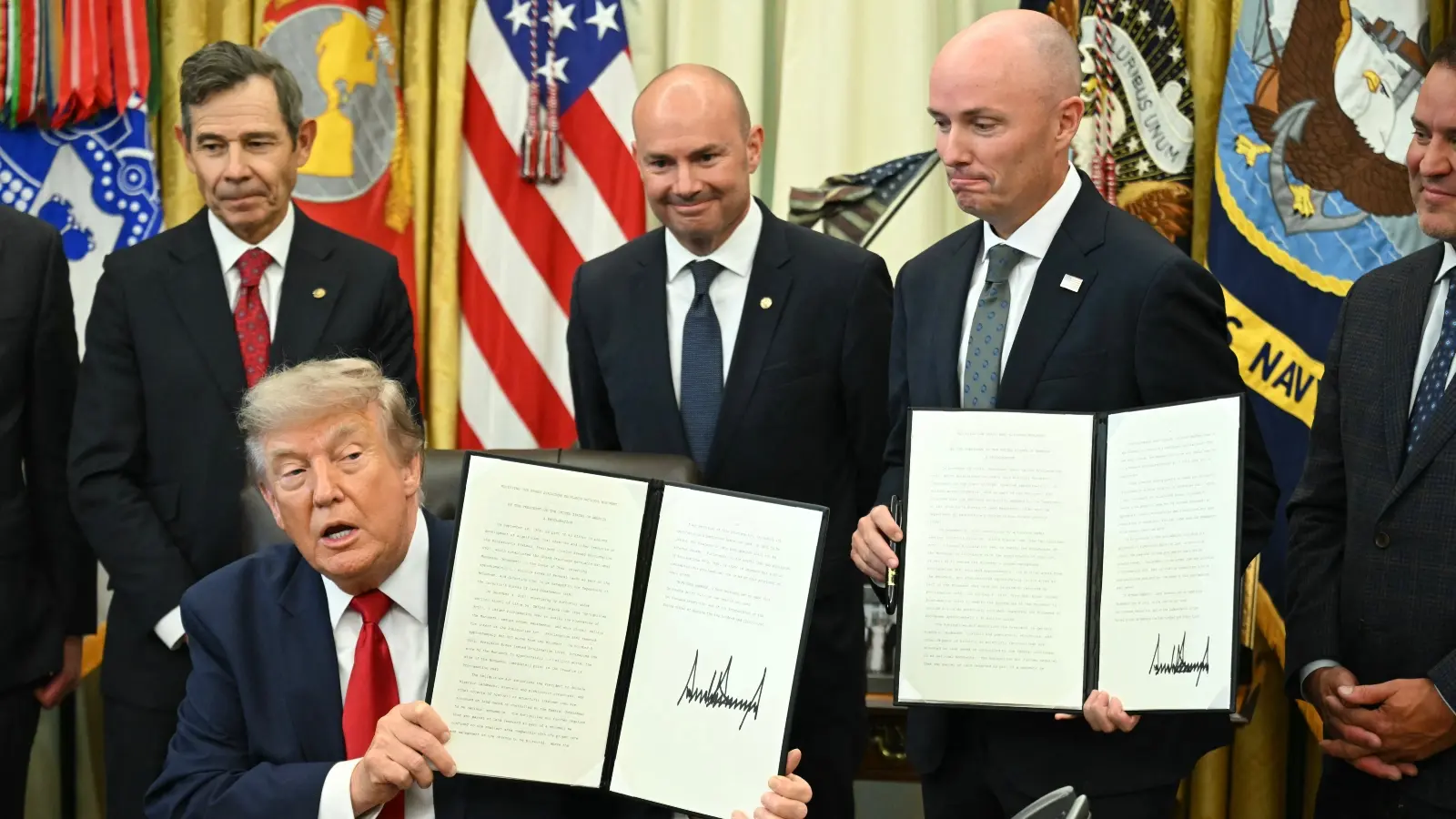
In a move that marks one of the most significant shifts in federal land management policy in American history, President Donald Trump signed two executive orders on Monday that drastically reduced the boundaries of Bears Ears and Grand Staircase-Escalante National Monuments in southern Utah. The orders effectively strip protections from approximately 2.7 million acres of public land, leaving the two monuments at a combined size of just 302,600 acres. This action represents an escalation of the administration’s efforts to prioritize resource extraction over conservation and tribal sovereignty, surpassing the previous reductions made during the first Trump administration.
By Monday morning, the two monuments covered a vast expanse of over 3 million acres, protecting rugged desert landscapes, rare biodiversity, and thousands of archaeological sites. By Monday evening, following the signing ceremony flanked by Utah’s Republican leadership, the protected footprint had been reduced by nearly 90 percent. The decision has immediately reignited a fierce legal and political battle over the scope of the Antiquities Act of 1906 and the future of the American West’s most iconic landscapes.
The Magnitude of the Reductions
The scale of Monday’s executive orders is unprecedented. While President Trump previously targeted these same monuments in December 2017, the 2026 reductions are far more aggressive. In the 2017 action, Bears Ears was reduced by 85 percent (from 1.35 million acres to roughly 228,000) and Grand Staircase-Escalante was cut nearly in half (from 1.9 million acres to about 1 million). Following President Joe Biden’s 2021 restoration of the original boundaries, the current administration has now cut the monuments to less than a quarter of the size they were even after the first round of shrinking.
President Trump justified the move by claiming that federal "overreach" had harmed local economies and restricted public access. During the signing, he asserted that existing protections made it "virtually impossible" for citizens to hunt, fish, or enjoy the land. However, land management records from the Bureau of Land Management (BLM) and the U.S. Forest Service consistently show that national monument status generally allows for continued hunting and fishing under state regulations, as well as hiking and traditional recreation. The primary activities prohibited by monument status are new mining claims, oil and gas leasing, and large-scale commercial development.
A Chronology of Conflict: 1906 to 2026
The conflict over Utah’s monuments is rooted in the Antiquities Act of 1906, a law signed by President Theodore Roosevelt that grants presidents the authority to designate federal lands as national monuments to protect "historic landmarks, historic and prehistoric structures, and other objects of historic or scientific interest."
- 1906: The Antiquities Act is established, primarily to stop the looting of Indigenous artifacts.
- 1996: President Bill Clinton establishes Grand Staircase-Escalante National Monument (1.9 million acres), citing its unique "staircase" of geological strata and paleontological wealth.
- 2016: President Barack Obama establishes Bears Ears National Monument (1.35 million acres) following a formal proposal from a coalition of five Tribal Nations.
- 2017: President Donald Trump issues proclamations to significantly shrink both monuments.
- 2021: On his first day in office, President Joe Biden launches a review, eventually restoring the monuments to their full original size.
- 2025–2026: Legal challenges from the State of Utah move through the courts, while the Trump administration prepares a more permanent dismantling of the designations.
- June 2026: The 10th Circuit Court of Appeals reverses a lower court’s dismissal of Utah’s lawsuit, breathing new life into the state’s challenge against the Antiquities Act.
- Monday: President Trump signs the new executive orders, reducing the monuments to historic lows.
Tribal Sovereignty and the End of Co-Stewardship
Perhaps the most contentious aspect of the new orders is the termination of the Inter-Tribal Coalition’s formal role in managing Bears Ears. The monument was the first of its kind to be managed through a co-stewardship agreement between the federal government and the Hopi Tribe, Navajo Nation, Ute Indian Tribe, Ute Mountain Ute Tribe, and Zuni Tribe.
Tribal leaders expressed profound betrayal, noting that they were not consulted prior to Monday’s announcement. Davina Smith-Idjesa, a member of the Navajo Nation and a representative of the inter-tribal coalitions, described the move as an act that renders Indigenous history "expendable."
"Bears Ears is at my back door," Smith-Idjesa said during a press conference on Tuesday. "This is not a political talking point for me. This is home. My ancestors knew this land. I know where our people go to pray, to gather medicines, to gather food and to heal. This is our grocery store, our medicine cabinet, our classroom, our church."
The administration’s decision to disband the inter-tribal working group effectively removes the Indigenous voice from the management of lands that contain over 100,000 cultural and archaeological sites, including ancient cliff dwellings and petroglyphs.
Economic and Legal Implications
The administration’s stated goal is to open these lands to "multiple use," a term that includes cattle grazing, industrial mining, and energy development. Southern Utah is known to contain deposits of coal, oil, and gas, as well as uranium. In the Four Corners region, uranium mining has a long and troubled history, particularly for the Navajo Nation, where legacy contamination continues to cause health crises.
John Ruple, a law professor and program director at the University of Utah’s Wallace Stegner Center, noted that the legal basis for the President’s action remains on shaky ground. "The Antiquities Act makes clear that presidents have the power to create monuments, but not rescind them," Ruple said. "That power rests with Congress."
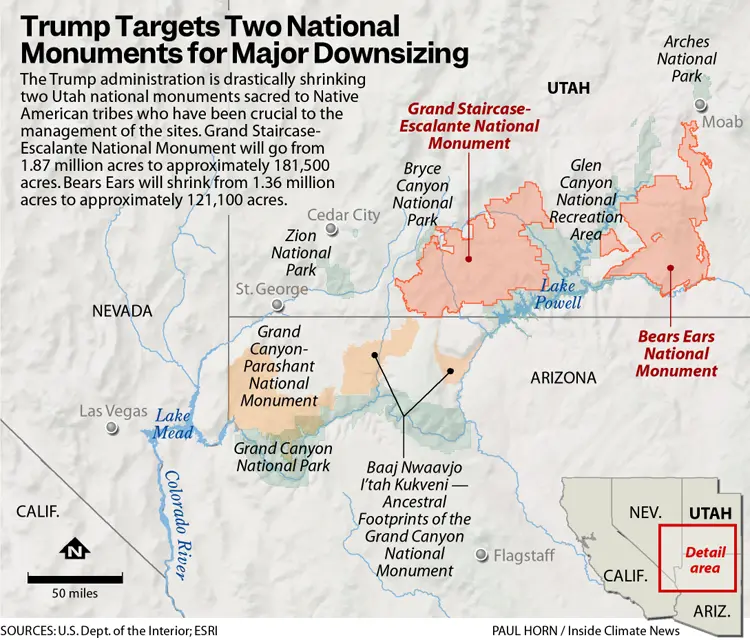
The legal battle is expected to center on whether "shrinking" a monument by 90 percent is functionally equivalent to "rescinding" it. If the courts view this as a rescission, the executive orders could be overturned. However, the current makeup of the federal judiciary, including the Supreme Court, may be more inclined to limit the scope of the Antiquities Act than previous courts.
Furthermore, Ruple suggested that the timing of these orders might be a tactical move to influence ongoing litigation. By shrinking the monuments now, the Department of Justice can argue in court that previous lawsuits—such as Utah’s challenge against the Biden-era restorations—are now "moot" because the boundaries they were contesting no longer exist.
Public Opinion and Political Fallout
The administration’s move appears to diverge from broad public sentiment regarding public lands. Data from the 2024 "Conservation in the West" poll conducted by Colorado College indicates that a significant majority of voters in Western states, including Utah, support the protection of national monuments. Across the West, 85 percent of respondents supported the creation of new national monuments, and 82 percent supported the goal of protecting 30 percent of U.S. lands and waters by 2030.
Democratic members of Congress have vowed to fight the orders. Senator Ben Ray Luján of New Mexico emphasized that while the monuments are located in Utah, they are a national heritage. "While these monuments are in Utah, they belong to all of us across the United States," Luján said.
The policy shift is also seen as a fulfillment of "Project 2025," a comprehensive policy roadmap developed by the Heritage Foundation. The document specifically calls for the reduction of national monuments and the repeal of the Antiquities Act to facilitate a "return to state and local control," which critics argue is a euphemism for industrial privatization.
Environmental Impact and Biodiversity
Environmental organizations, including Earthjustice and the Wilderness Society, have raised alarms about the ecological integrity of the regions being removed from protection. Grand Staircase-Escalante is a world-renowned site for paleontology; in the last two decades, dozens of new dinosaur species have been discovered within its borders. Without monument-level protection, these fossil beds could be damaged by mining or off-road vehicle use.

Tracy Stone-Manning, president of the Wilderness Society and former director of the Bureau of Land Management, stated that the administration is "on the wrong side of history." She noted that as the United States approaches its 250th anniversary, the focus should be on preserving a legacy for future generations rather than liquidating assets for short-term industrial gain.
The Path Forward
The executive orders are set to take effect in 60 days. During this window, a flurry of legal filings is expected. Earthjustice has already announced its intent to sue on behalf of a coalition of environmental groups and Tribal Nations.
As the 2026 mid-term elections approach, the fate of Utah’s red rock country will likely become a central theme in the national debate over climate change, energy independence, and the rights of Indigenous peoples. For now, the "grocery store" and "church" described by tribal members remain in a state of legal and geographical limbo, caught between a century-old conservation law and a modern-day drive for industrial expansion.