The healthcare landscape of the Middle East has faced unprecedented challenges over the past decade, driven by regional conflict, mass displacement, and systemic economic pressures. Against this backdrop, the World Health Organization (WHO) has continuously emphasized the critical role of resilient national health systems. On the first day of a pivotal two-day State visit to the Hashemite Kingdom of Jordan, WHO Director-General Dr. Tedros Adhanom Ghebreyesus met with senior government officials, international partners, and high-profile philanthropists to evaluate ongoing humanitarian interventions, universal health coverage (UHC) milestones, and specialized medical evacuation corridors operating out of the country.
The visit, which underscored the deep-seated strategic partnership between the WHO and the Jordanian government, placed considerable focus on Jordan’s remarkable capacity to absorb and care for more than three million refugees. Primarily comprising individuals displaced from neighboring Syria and, more recently, patients evacuated from conflict-torn Gaza, Jordan’s healthcare infrastructure has served as an essential regional lifeline.
High-Level Bilateral Engagements and Strategic Discussions with King Abdullah II
The cornerstone of the Director-General’s itinerary on the opening day was an audience with His Majesty King Abdullah II. The high-level talks centered on fortifying national health systems, expanding equitable access to specialized medical care, and sustaining international donor support for emergency medical responses across the Eastern Mediterranean region.
Discussions specifically addressed the logistics surrounding patients evacuated from Gaza for specialized oncology, trauma, and pediatric care inside Jordanian facilities. Dr. Tedros expressed profound gratitude to the Jordanian monarch for his steadfast commitment to advancing universal health coverage. He commended the nation for its humanitarian generosity, noting that hosting millions of refugees while maintaining high standards of public health delivery demonstrates exemplary global leadership.
A focal point of the royal audience was the recognition of His Majesty’s Medical Corridor initiative. This vital humanitarian mechanism has successfully facilitated the transport and treatment of critically ill and injured children from Gaza who would otherwise be unable to receive life-saving interventions due to the collapse of local medical infrastructure. By prioritizing humanity amidst geopolitical volatility, Jordan has consistently demonstrated that public health and human dignity must remain paramount during times of acute crisis.
On-the-Ground Inspections of Pediatric Care and Medical Evacuations
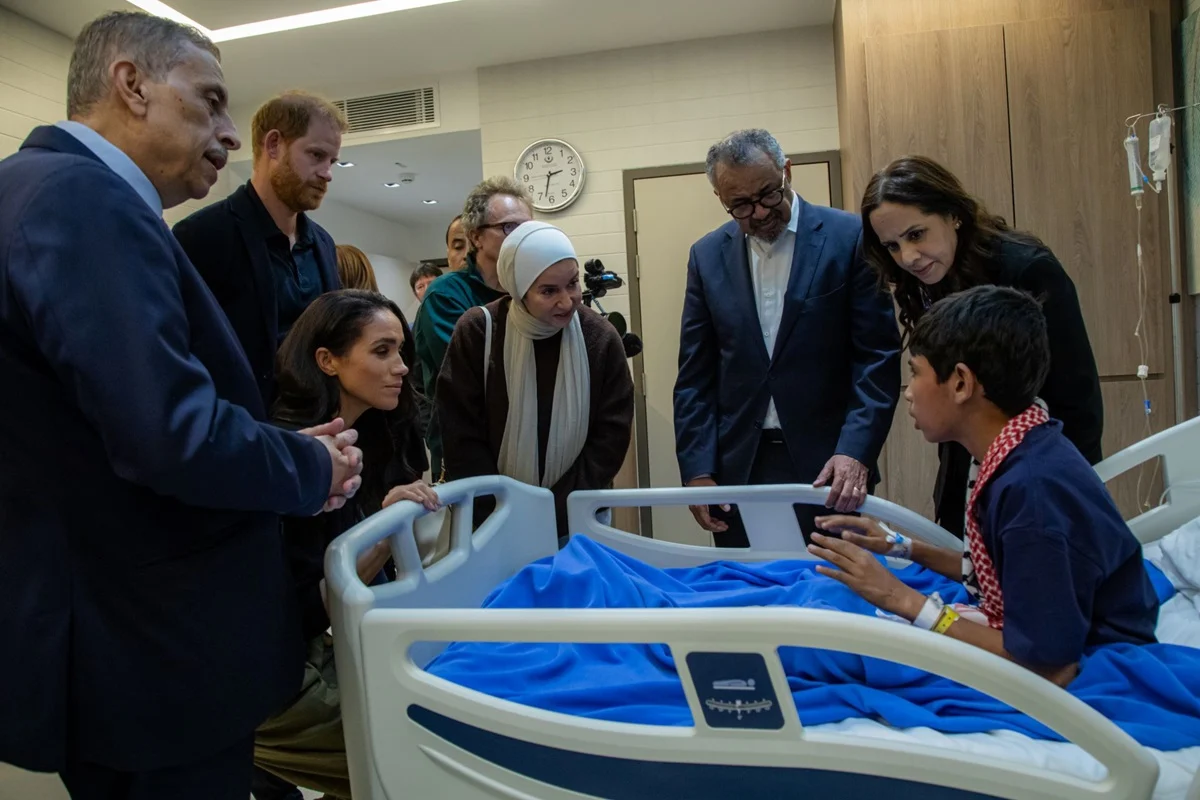
Following his discussions with state leadership, Dr. Tedros traveled to a specialized, WHO-supported hospital facility tasked with providing advanced medical care to children evacuated from Gaza. During the hospital tour, the WHO Director-General engaged directly with young patients, their families, and the frontline healthcare professionals who work tirelessly to deliver complex treatments for severe trauma, oncological diagnoses, and other life-threatening conditions.
This visit served to emphasize the indispensable nature of the medical evacuation corridor traversing Jordan. Public health experts have repeatedly noted that without such operational pipelines, vulnerable patient populations face insurmountable barriers to survival. Dr. Tedros stressed the urgent necessity for sustained international financial support and diplomatic coordination to ensure that these pathways remain open, fully funded, and capable of scaling up to meet escalating humanitarian demands.
Mobilizing International Resources: The Partner and Donor Roundtable
Recognizing that national governments cannot shoulder the immense financial burdens of protracted regional crises alone, Dr. Tedros convened a high-level strategic meeting later in the day. The gathering brought together key health partners, donor governments, United Nations agencies, and philanthropic organizations to strategize on sustainable financing models for Jordan’s health sector.
The roundtable deliberations focused on two core priorities: securing robust financial backing for health system strengthening within Jordan, and bolstering humanitarian health action across the wider region. Particular attention was directed toward scaling up integrated mental health services—a traditionally underfunded sector in emergency settings—and ensuring predictable, long-term resource allocation for host countries managing massive refugee populations. Participants welcomed the opportunity to align donor strategies and reaffirmed their collective commitment to investing in the resilience of Jordan’s health architecture.
Advancing Universal Health Coverage and Mental Health Integration
Earlier in the day, Dr. Tedros held bilateral talks with Jordan’s Minister of Health. The conversation explored technical pathways for deepening reforms aimed at achieving universal health coverage, with a specific emphasis on primary healthcare delivery.
Jordan has earned international acclaim for its progressive primary healthcare model, which systematically integrates mental health services into routine clinical care. Rather than treating psychological support as a secondary or specialized luxury, the Jordanian health system has embedded mental health screening and treatment directly into community-level clinics. This integration is actively supported by the WHO Director-General’s Special Initiative for Mental Health, which seeks to expand access to quality, affordable psychological care in underserved and crisis-affected regions worldwide.
The Role of Philanthropic Partnerships: Prince Harry and Meghan Join the Delegation
A notable dimension of the first day’s engagements was the participation of Prince Harry, Duke of Sussex, and Meghan, Duchess of Sussex. Accompanying the WHO Director-General in their capacities as co-founders of Archewell Philanthropies and long-standing advocates for global health equity, the couple underscored the vital intersection of philanthropy, mental health advocacy, and humanitarian response.
Archewell Philanthropies has previously partnered with the WHO on numerous high-impact campaigns, ranging from advocating for equitable distribution of COVID-19 vaccines to supporting emergency medical evacuations and psychological trauma programs. During the visit, Prince Harry participated as a prominent ally of the WHO’s mental health initiatives. He emphasized the imperative of investing in psychological resilience across communities and emergency settings, highlighting the acute vulnerabilities faced by men, young people, and children caught in the crossfire of conflict.
Expressing appreciation for their visit, Dr. Tedros remarked that the dedication shown by the Duke and Duchess of Sussex has played a transformative role in bringing visibility, essential resources, and psychological hope to some of the world’s most marginalized and traumatized populations.
Reflecting on the mission, Prince Harry shared his perspective on the ground:
"It is an honour to join the Director-General of the World Health Organization in Jordan, a country that is leading by example in compassion, resilience and innovation. Through our work with Archewell Philanthropies, my wife and I have seen first-hand the impact of WHO’s efforts to support mental health and deliver life-saving care in emergencies. We remain deeply committed to advancing awareness, reducing stigma and expanding access to mental health support for all those affected by conflict and crisis. Mental health is fundamental to recovery, dignity and long-term peace, and we are proud to stand with WHO and partners around the world to make it a global priority."
Previewing Day Two: Rehabilitation, Community Engagement, and Specialized Oncology
As the first day of the State visit drew to a close, organizers outlined an equally intensive itinerary for the second day. Dr. Tedros is scheduled to visit the National Center for Rehabilitation of Addicts in Jordan. Supported extensively by the WHO, this institution delivers comprehensive, integrated medical, psychological, and social rehabilitation services, serving as a regional model for evidence-based substance use treatment.
The Director-General will also meet with prominent community leaders and grassroots women’s organizations, including representatives from the Jordanian Hashemite Fund for Human Development (JOHUD), to discuss community-led resilience initiatives and empowerment programs. The day will culminate with a tour of the renowned King Hussein Cancer Center, where Dr. Tedros will review cutting-edge advancements in oncology care and explore opportunities for expanded regional collaboration in cancer research and treatment protocols.
Broader Implications and Regional Strategic Context
The high-level visit by the WHO leadership serves as a timely reminder of the fragility of healthcare systems in the Middle East and the extraordinary measures required to sustain them. Jordan’s positioning as a stable, humanitarian anchor in a volatile geopolitical landscape makes its partnership with international bodies like the WHO indispensable.
Public health analysts indicate that the outcomes of this State visit will likely catalyze increased international donor commitments, particularly concerning mental health funding and emergency logistical support. By reinforcing Jordan’s capacity as a primary medical evacuation hub and a sanctuary for millions displaced by violence, the international community reaffirms its dedication to upholding humanitarian law, protecting healthcare workers, and ensuring that the fundamental right to health remains protected—even in the darkest hours of regional crisis.