The healthcare landscape of the Middle East has faced unprecedented challenges over recent years, driven by regional conflicts, massive refugee influxes, and systemic economic pressures. Against this complex geopolitical and humanitarian backdrop, World Health Organization (WHO) Director-General Dr. Tedros Adhanom Ghebreyesus embarked on a high-profile, two-day State visit to the Hashemite Kingdom of Jordan. The visit served to underscore the critical, enduring partnership between the global health agency and the Jordanian government, shining a spotlight on Jordan’s outsized role in championing universal health coverage (UHC), advancing pioneering mental health integration, and serving as an indispensable humanitarian medical hub for the wider region.
The core of the diplomatic and technical mission centered on a high-level audience with His Majesty King Abdullah II. This pivotal meeting emphasized Jordan’s sustained leadership in positioning health as both a paramount national interest and a global imperative. High-level discussions between the WHO leadership and the Jordanian monarch tackled multifaceted challenges, ranging from the fortification of domestic health systems and the expansion of primary care access to the intricate logistics of sustaining emergency responses across conflict zones. Particular emphasis was placed on Jordan’s ongoing, tireless efforts to absorb and treat vulnerable populations, most notably Palestinian patients evacuated from war-torn Gaza alongside the millions of refugees long hosted within the kingdom’s borders.
Dr. Tedros voiced profound admiration for the kingdom’s leadership during his engagements, noting the country’s remarkable moral clarity. "I wish to express my appreciation to His Majesty King Abdullah II for his commitment to advancing universal health coverage," Dr. Tedros stated. "I also extend my thanks to His Majesty and the people of Jordan for their solidarity and generosity in providing health services to more than three million refugees, primarily from Gaza and Syria, who are living in the country."
Furthermore, the WHO chief lauded Jordan’s broader logistical and humanitarian footprint, explicitly highlighting His Majesty’s Medical Corridor initiative. This vital pipeline has consistently delivered critical, specialized medical care to severely ill and injured children evacuated from Gaza, showcasing a practical model of putting humanity ahead of political divides.
Day One: Field Inspections, High-Level Partnerships, and High-Profile Advocacy
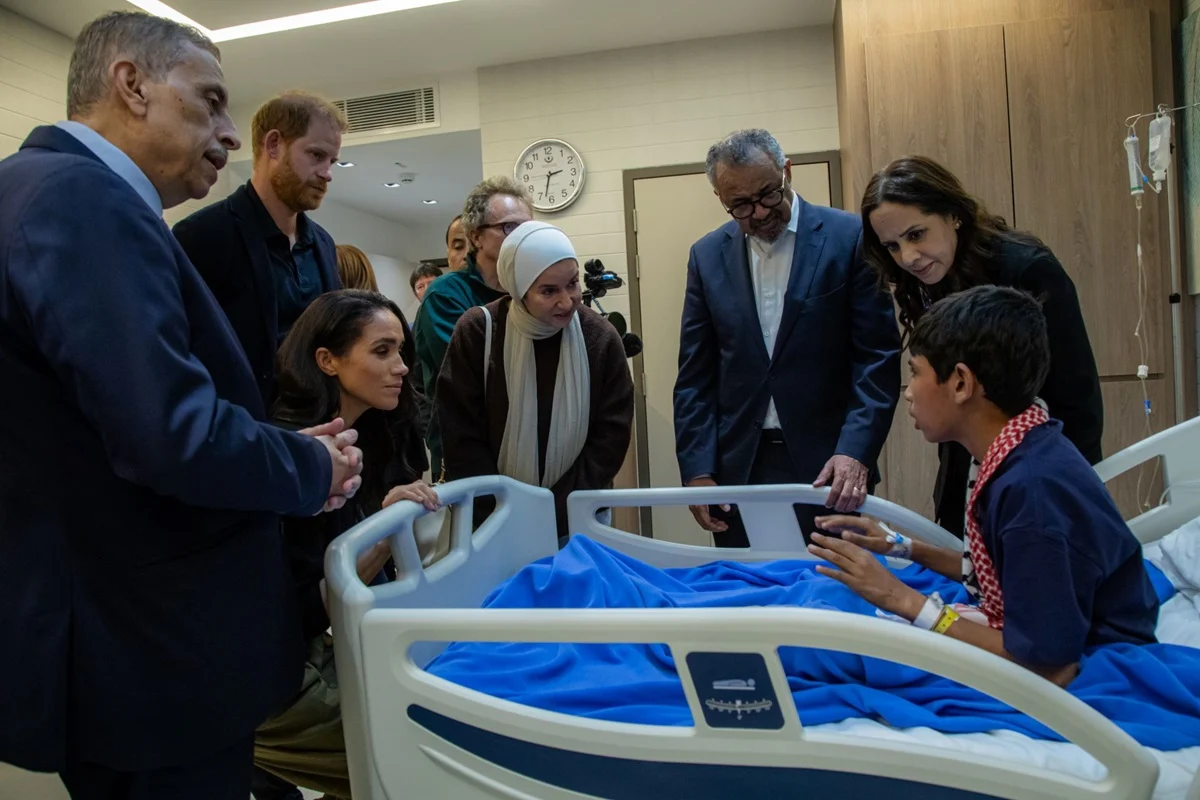
The opening day of the State visit was characterized by a rigorous itinerary bridging grassroots humanitarian observation with high-level multilateral diplomacy. Dr. Tedros traveled to a specialized, WHO-supported hospital facility dedicated to treating children evacuated directly from the Gaza Strip. During the visit, the Director-General interacted personally with young patients, their families, and the frontline medical professionals working under immense pressure to deliver life-saving treatments for severe traumatic injuries, advanced oncological conditions, and other catastrophic health emergencies.
This hospital visit underscored the irreplaceable value of the medical evacuation corridor established through Jordan. Public health experts note that without such specialized pathways, thousands of patients trapped in besieged or collapsed health infrastructures would face near-certain mortality. The WHO leadership used this platform to reiterate the urgent need for predictable, sustained international financial and logistical support to keep these lifelines open.
Following the hospital inspection, Dr. Tedros convened a strategic, high-level roundtable meeting with key international stakeholders. The gathering brought together health partners, donor nations, various United Nations agencies, and prominent philanthropic organizations. The primary agenda item was mobilizing and prioritizing financing mechanisms for two parallel tracks: reinforcing Jordan’s national health infrastructure and sustaining immediate humanitarian health interventions. Discussions homed in on scaling up specialized mental health services—an area where Jordan has made considerable domestic strides—and ensuring equitable burden-sharing for nations bearing the heavy socio-economic costs of hosting large refugee communities.
In parallel, Dr. Tedros held critical bilateral consultations with Jordan’s Minister of Health. These talks focused heavily on institutionalizing primary health care as the bedrock for achieving universal health coverage. Notably, Jordan has emerged as a global frontrunner in mainstreaming mental health services directly into routine primary care clinics, a systemic transformation supported actively by the Director-General’s Special Initiative for Mental Health.
A Star-Studded Coalition for Global Mental Health
Adding an unprecedented dimension of high-profile advocacy to the diplomatic mission, Dr. Tedros was accompanied throughout several key engagements by Prince Harry, Duke of Sussex, and Meghan, Duchess of Sussex. Participating in their capacities as the founders of Archewell Philanthropies, the royal couple joined the WHO delegation as long-standing advocates for global health equity, vaccine access, and psychological trauma recovery.
Archewell Philanthropies has previously collaborated with the WHO on numerous fronts, ranging from equitable vaccine distribution initiatives during the height of the COVID-19 pandemic to targeted medical evacuation and mental health support programs. During the Jordan visit, Prince Harry actively participated as a champion of the WHO’s mental health portfolio, emphasizing the imperative of investing in psychological resilience within conflict-affected communities, with a distinct focus on the mental wellbeing of men, adolescents, and children.
Dr. Tedros acknowledged the profound impact of this partnership, noting that public-private advocacy bridges critical resource gaps. "I want to thank our partners, including Prince Harry, Duke of Sussex and Meghan, Duchess of Sussex, whose commitment to mental health and humanitarian action has helped bring visibility, resources and hope to some of the world’s most vulnerable communities," Dr. Tedros remarked. "Their collaboration is helping to advance WHO’s mission to ensure health for all."
Echoing these sentiments, Prince Harry underscored the unique position Jordan holds in the region and the fundamental role that mental health plays in post-crisis recovery. "It is an honour to join the Director-General of the World Health Organization in Jordan, a country that is leading by example in compassion, resilience and innovation," said Prince Harry. "Through our work with Archewell Philanthropies, my wife and I have seen first-hand the impact of WHO’s efforts to support mental health and deliver life-saving care in emergencies. We remain deeply committed to advancing awareness, reducing stigma and expanding access to mental health support for all those affected by conflict and crisis. Mental health is fundamental to recovery, dignity and long-term peace, and we are proud to stand with WHO and partners around the world to make it a global priority."
Day Two Itinerary: Specialized Rehabilitation, Cancer Care, and Community Resilience
Building upon the foundational meetings of the first day, the second and concluding day of Dr. Tedros’s State visit shifts focus toward specialized institutional care, national addiction recovery models, and localized community empowerment initiatives.
The schedule includes a formal visit to Jordan’s National Center for Rehabilitation of Addicts, an advanced institution supported by the WHO that provides comprehensive, integrated medical, psychological, and social support services. By observing this facility, the WHO delegation aims to highlight integrated care models that treat substance dependency through a public health and human rights lens rather than a purely punitive one.
Additionally, the Director-General is scheduled to engage with community leaders and civil society organizations, including the Jordanian Hashemite Fund for Human Development (JOHUD), which plays a pivotal role in grassroots empowerment, women’s rights, and sustainable local development across the kingdom. The itinerary also features a high-level visit to the renowned King Hussein Cancer Center. Discussions at the center will center on regional medical collaboration, cutting-edge advancements in oncology, and the challenges of maintaining specialized cancer treatments amidst regional instability.
The State visit will officially conclude with final consultations involving international humanitarian partners and operational coordinators. These closing sessions are designed to reinforce Jordan’s irreplaceable strategic status as a secure regional hub for medical evacuations, rapid emergency health responses, and structural health system resilience.
Background Context: Jordan’s Burden and Resilience as a Regional Health Anchor
To fully comprehend the significance of Dr. Tedros’s visit, one must analyze the unique socioeconomic and structural pressures facing Jordan’s healthcare ecosystem. Despite limited natural resources and severe economic constraints, Jordan has historically maintained health standards that rank among the highest in the Middle East. However, this capacity has been severely tested over the past decade and a half.
Since the outbreak of the Syrian civil war in 2011, Jordan has absorbed hundreds of thousands of registered Syrian refugees, placing an immense strain on public water, education, electricity, and, most notably, healthcare infrastructure. Public hospitals and primary care clinics have had to expand their service delivery exponentially without a commensurate scaling of international financial assistance.
Compounding these protracted pressures, the ongoing conflict in Gaza has placed Jordan at the literal and figurative crossroads of an acute humanitarian emergency. As one of the few stable diplomatic actors in the immediate vicinity, Jordan has acted as an essential conduit for emergency medical supplies entering the region and a sanctuary for critically ill patients evacuated from active combat zones. The strain on tertiary facilities—such as pediatric units and trauma centers—has required extraordinary resource mobilization, innovative administrative adaptability, and unwavering political will from the Jordanian leadership.
Fact-Based Analysis of Implications and Future Outlook
Public health analysts and international relations experts tracking the WHO Director-General’s visit point to several key implications for the region and the global multilateral health architecture:
-
Burden-Sharing and Multilateral Solidary: The visit serves as a stark reminder to the international donor community that refugee-hosting nations like Jordan cannot shoulder protracted regional crises indefinitely without robust, predictable, and long-term multilateral funding. The high-level roundtable organized during the visit is a direct attempt to convert diplomatic appreciation into tangible financial commitments.
-
Mainstreaming Mental Health in Crises: By spotlighting Jordan’s integration of mental health into primary care—and pairing this with high-visibility advocacy from figures like Prince Harry and Meghan Markle—the WHO is signaling a strategic shift. Traditional humanitarian responses have historically prioritized physical trauma (surgery, infectious disease control, food security) while neglecting psychological first aid. The Jordan visit codifies mental health as an indispensable component of emergency medical response.
-
The Geopolitical Value of Medical Corridors: Jordan’s successful maintenance of medical evacuation pathways demonstrates how humanitarian corridors can function even amid intense geopolitical hostility. This model provides a vital blueprint for future conflicts, proving that specialized care can transcend political divides if backed by trusted neutral intermediaries like the WHO and sovereign political will.
-
Resilience of National Health Systems: As global health security becomes increasingly intertwined with regional stability, supporting countries like Jordan is no longer viewed purely as an act of charity, but as a strategic investment in global health security. A resilient Jordanian health system acts as a stabilizing bulwark against cross-border epidemiological threats and humanitarian destabilization.
As Dr. Tedros concludes his landmark visit, the international health community faces a clear mandate: to translate the resilience demonstrated by Jordan and the WHO into sustained political backing and robust financial support. In an era defined by compounding global crises, the partnership between the WHO and the Hashemite Kingdom of Jordan stands out as a testament to what can be achieved when nations prioritize humanity, universal coverage, and unyielding solidarity above all else.
Media Contacts and Institutional Inquiries:
For further information regarding WHO operations in Jordan and regional humanitarian health updates, media representatives may contact official agency channels:
- Paul Garwood, Communications Officer, WHO
- WHO Media Team, World Health Organization