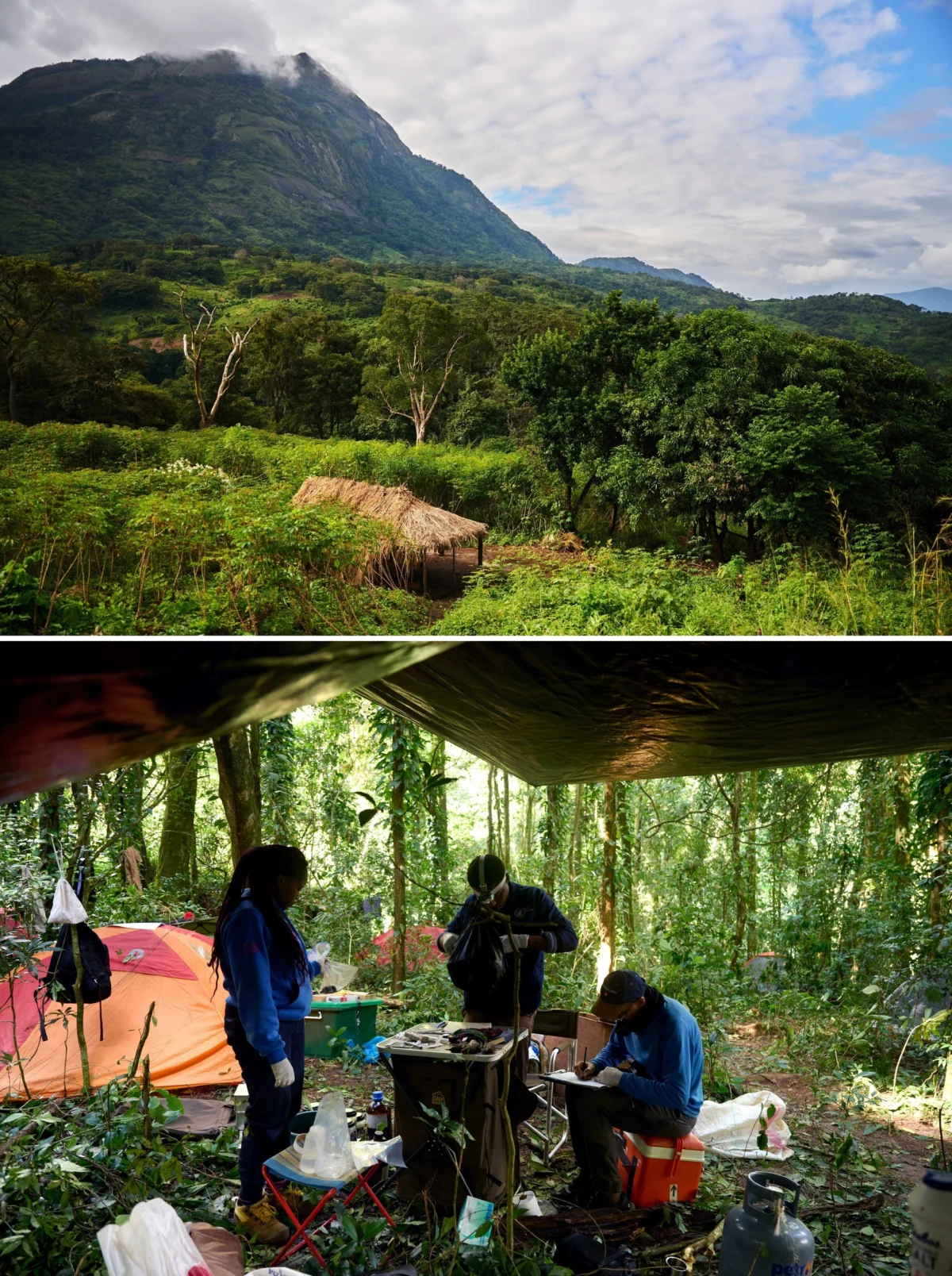
The government of Mozambique has taken a decisive step toward preserving one of Southern Africa’s most ecologically significant landscapes by formally declaring Mount Mabu a protected community conservation area. Published on August 24, the official decree from the Ministry of Agriculture, Environment and Fisheries designates 9,341 hectares (approximately 23,082 acres) in the Lugela district of northern Mozambique as a site of critical conservation priority. This landmark decision marks the culmination of two decades of scientific research, advocacy, and a long-standing commitment by local communities to act as stewards of the mountain’s unique, high-altitude rainforest.
The designation is not merely a bureaucratic milestone; it represents a fundamental shift in how Mozambique approaches the management of its natural capital. By placing the stewardship of the forest in the hands of the local population, the government has recognized that indigenous land-use practices have been the primary defense against the encroachment of deforestation that has claimed much of the region’s original forest cover.

A Chronology of Discovery and Advocacy
The formal protection of Mount Mabu follows a timeline that highlights the interplay between scientific exploration and grassroots conservation. For decades, the forest remained largely unknown to the international scientific community, shielded by its rugged, inaccessible terrain.
- 2005: The scientific community begins to recognize the biological significance of Mount Mabu, leading to the first organized expeditions led by ecologist Julian Bayliss.
- 2008: Researchers conduct intensive biodiversity surveys, resulting in the discovery of new species, including the elusive cobalt-blue butterfly, Iolaus mabuensis.
- 2009: The scientific community formally describes the Mount Mabu forest viper (Atheris mabuensis), an endemic species discovered during these surveys.
- 2013: Naturalist David Attenborough visits the mountain, documenting the rare phenomenon of "hilltopping," where hundreds of butterfly species congregate at the 1,700-meter summit. This publicity brings the forest to global attention, earning it the moniker "the butterfly forest."
- 2024: After years of lobbying and the development of a conservation proposal that centers local community rights, the Mozambican government officially reviews and adopts the decree, securing the legal status of the land.
Ecological Significance and Biodiversity Hotspots
Mount Mabu represents the largest continuous block of medium-altitude rainforest in Southern Africa. Its geography is defined by steep, mist-shrouded ridges and deep, isolated valleys that have functioned as evolutionary islands for millions of years. These varied microclimates have fostered an extraordinary level of endemism, meaning many of the species found here exist nowhere else on Earth.
Current records indicate that the forest is home to more than 200 butterfly taxa, though experts, including those involved in the original surveys, suggest that more comprehensive research could push this number toward 250. Since 2005, scientists have cataloged over 30 new species within the Mabu forest, including amphibians, reptiles, and specialized bats.

The discovery of Iolaus mabuensis serves as a stark reminder of how much remains to be cataloged. With only a single specimen collected to date, the species remains an object of intense study. Similarly, the Mount Mabu forest viper, which was famously first encountered when a researcher accidentally stepped on it, exemplifies the unique and often cryptic nature of the mountain’s wildlife.
The Role of Community-Led Conservation
The legal framework for the new conservation area is built upon the principle of community-based natural resource management. The Ministry’s decree specifies that the land is dedicated to the protection and sustainable use of resources by the local people. This model acknowledges that the local communities of the Lugela district have, for generations, treated the forest as a sacred space, effectively preserving the ecosystem while practicing small-scale, traditional agriculture.
Organizations such as ReGeCom have played a vital role in bridging the gap between local communities and the central government. José Monteiro, executive director of ReGeCom, emphasized that the decree is a form of institutional recognition for the community’s historical role. "This effort is a recognition of the community that protected the forest," Monteiro stated. "The community, over a long time, kept the forest standing when other areas were being cleared."

The current status of the conservation area is now moving toward the development of a formal community management plan. This document will eventually outline specific restrictions on hunting, logging, and agricultural expansion, ensuring that the livelihood needs of the local population remain aligned with the preservation of the forest’s delicate biological balance.
Threats and Future Challenges
Despite the recent legal victory, Mount Mabu faces persistent threats. The primary pressures on the forest include the gradual encroachment of small-scale agricultural plots and the illicit extraction of timber. While these activities have been relatively limited compared to other regions in Mozambique, the formal protection now provides a legal mechanism for enforcement and conflict resolution.
Ecologist Julian Bayliss, who has spent twenty years championing the site, expressed a sense of relief regarding the decree. "These forests are very important because they have got high levels of endemism," Bayliss noted. However, the task ahead remains complex. The transition from informal, traditional protection to a regulated, government-sanctioned conservation area requires sustained funding and continued collaboration between scientists, government agencies, and the residents of the Lugela district.

Broader Implications for Southern Africa
The protection of Mount Mabu is a significant development for the broader Southern African region, which has seen a steady decline in primary forest cover over the last half-century. By securing this area, Mozambique is participating in a global movement to protect "climate refugia"—areas that, due to their unique topography and climate, provide stable habitats for species during periods of environmental change.
The implications of this decree extend beyond ecology. By prioritizing a community-based approach, Mozambique is positioning itself as a leader in the movement toward inclusive conservation. This model could serve as a blueprint for other protected areas in the region, demonstrating that top-down environmental policy is most effective when it is underpinned by local legitimacy.
As the government moves to finalize the community management plan, the international scientific community is expected to maintain its presence in the region, conducting further surveys to map the full extent of the mountain’s biodiversity. The formalization of Mount Mabu is not just a triumph for conservationists; it is a vital step toward ensuring that the biological heritage of Mozambique is preserved for future generations. The challenge moving forward will be to balance the socio-economic aspirations of the local community with the rigorous conservation requirements needed to ensure that the "butterfly forest" continues to thrive in an increasingly fragmented world.