Beneath the rolling, sun-dappled surface of the ocean surrounding California’s Channel Islands lies an underwater ecosystem of staggering complexity and beauty. Towering kelp forests sway with the ocean currents, patrolled by vibrant pink-and-black sheephead fish with protruding teeth and massive, refrigerator-sized giant sea bass. Agile seals and sea lions dart through colorful labyrinths of sponges and sea stars. Doug McCauley, a professor of marine science at the University of California, Santa Barbara, aptly describes the region as California’s own Galápagos Islands.
Yet, this thriving marine biodiversity was not always guaranteed. Historical documentary footage from decades prior to modern conservation efforts reveals a starkly different reality—an era when intensive commercial fishing and industrial pressures had thoroughly decimated kelp forests and depleted keystone species. Violet Sage Walker, chair of the Northern Chumash Tribal Council, vividly recalls watching archival footage of the Channel Islands before comprehensive marine protections were established. "It looked like Mars, like a dead planet," she stated, reflecting on the devastation wrought on the underwater landscape.
The turning point arrived in 2003, when the state of California designated crucial ocean zones around the Channel Islands as Marine Protected Areas (MPAs). Functioning much like underwater state parks, this conservation network currently encompasses roughly 150 square miles of protected waters. These zones serve as vital sanctuaries and nurseries for marine flora and fauna, safeguarding dozens of iconic species, including kelp bass, rockfish, and leopard sharks.
Now, for the first time in 15 years, California wildlife officials are evaluating sweeping proposals to establish new protected areas and expand existing ones. This initiative marks the state’s inaugural comprehensive review of its MPA network since its inception. "This is a historic opportunity that we don’t want to miss," McCauley emphasized, highlighting the gravity of the upcoming regulatory decisions.
Understanding California’s Marine Protected Areas
Marine Protected Areas are legally designated ocean zones where targeted restrictions on human activities—such as commercial and recreational fishing, oil and gas drilling, and other seafloor-disturbing operations—are implemented to preserve marine ecosystems. By removing these stressors, MPAs provide degraded habitats the necessary space and time to recover.
While protection levels vary depending on the specific site designation, the ecological results are consistently transformative. Sandy Aylesworth, director of the Pacific Initiative for Nature at the Natural Resources Defense Council (NRDC), notes that in zones where commercial and industrial disturbances are mitigated, observers consistently find larger fish populations, more abundant wildlife, and significantly healthier overall habitats.
The ongoing 2026 evaluation cycle features prominent proposals for two new conservation areas along the state’s Central Coast: the Point Sal and Mishopshno State Marine Conservation Area proposals. Notably, each of these sites has been co-sponsored by California Native American Tribes in close collaboration with the NRDC. In the case of the Mishopshno proposal, the Environmental Defense Center, a Santa Barbara-based non-profit, is also a co-sponsor. This marks a historic milestone for California’s MPA network, formally recognizing the millennia-old stewardship of California Tribes and honoring the state’s formal commitments to Indigenous marine management.
A Rare Convergence of Habitats at Point Sal
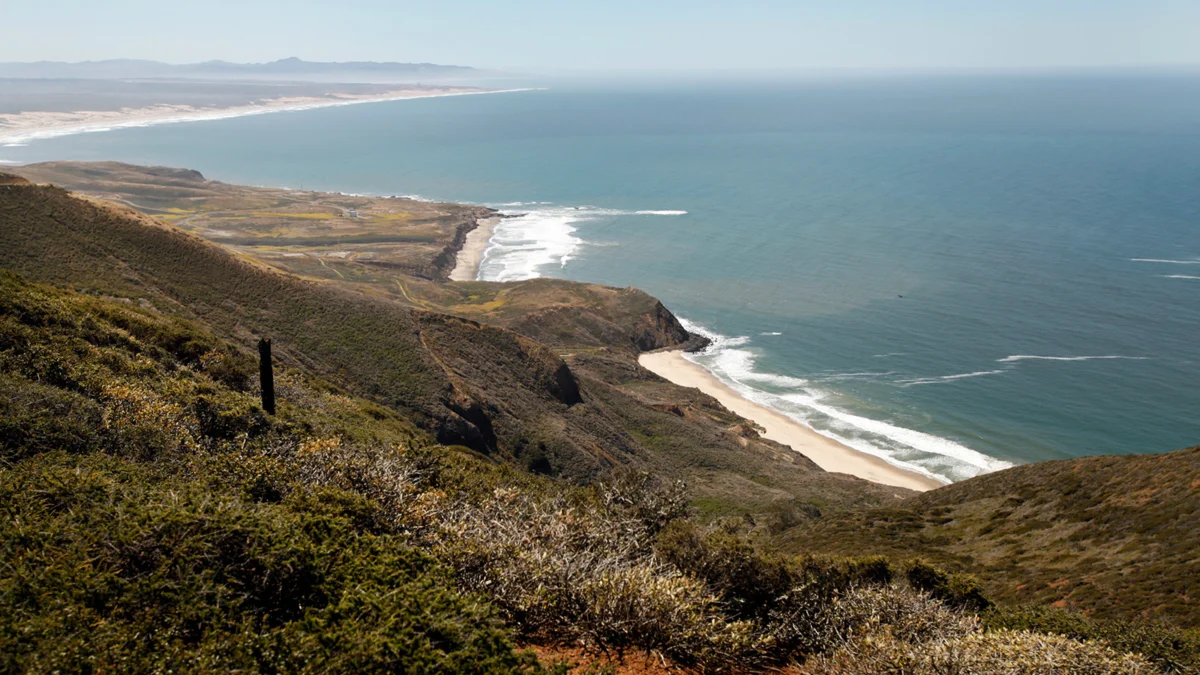
The proposed Point Sal State Marine Conservation Area encompasses approximately nine square miles off the rugged coast of Santa Barbara County. The geography of the area features a prominent headland that naturally shelters southern waters from harsh winds, generating unusually calm microclimates where vulnerable fish larvae can linger and mature safely.
Adjacent geological features, such as Lion Rock, serve as critical rookeries and hauling-out sites for hundreds of seals and sea lions, as well as roosting habitats for numerous seabird species. Submerged rocky reefs and kelp forests provide refuge for an array of marine life, including sharks, sea otters, and various finfish. Marine scientists have documented upward of 880 sea lions gathered at the site in a single day. "It’s a little tiny paradise," Walker remarked.
For the Northern Chumash Tribal Council, Point Sal holds profound cultural and historical significance. Walker noted that ancestral village sites trace the coastline, representing a continuous relationship with the marine environment that spans millennia. "Our people lived and thrived there for thousands of years," she said, underscoring the deep-rooted human connection to the landscape.
Integrating Indigenous Stewardship into Conservation
The inclusion of tribal co-sponsorship addresses a historical gap in California’s marine conservation framework. While California’s existing MPAs have successfully restored ecosystems, they historically lacked formal tribal co-management systems, despite Indigenous peoples acting as stewards of Central Coast lands and waters for over 10,000 years.
Walker advocates for the establishment of formalized pathways enabling coastal tribes to actively participate in ongoing ocean stewardship, including guaranteed access for cultural practices and direct authority in management decisions. "Being able to reconnect and offer our vision and our help with dealing with climate resiliency and coastal stewardship is critical," she explained.
Further down the coast near Carpinteria, the proposed Mishopshno State Marine Conservation Area exemplifies this modern model of Indigenous-led conservation. Named after a historic Chumash village in the region, the site features a unique 1.6-mile offshore rocky reef sustaining one of the Central Coast’s most resilient kelp forests. Adjacent sandy-bottom habitats, sandy beaches, and protected salt marshes form an interconnected nursery and feeding complex that supports large populations of bat rays, diverse finfish, and juvenile white sharks. The Santa Ynez Band of Chumash Indians, alongside the NRDC and the Environmental Defense Center, formally co-sponsored this conservation bid.
A Critical Refuge for Marine Wildlife
Carlos Gauna, a renowned shark filmmaker, documentarian, and researcher, has spent thousands of hours documenting the marine ecosystem slated for protection under the Mishopshno MPA proposal. "I live and breathe sharks daily, and this is one of the most amazing spots in the world to see a great white shark. There is literally nothing like it anywhere else on the California coast," Gauna stated.
During his years of fieldwork in the area, Gauna has documented various anthropogenic threats, including illegal fishing, harassment by watercraft, and accidental or deliberate boat strikes on marine wildlife. He argues that formal MPA designation will serve as a crucial deterrent by officially signaling to the public that the waters are a designated safe haven.
Drawing comparisons to international conservation efforts, Gauna points to the Cabo Pulmo National Park in Baja California, Mexico, where the ecological boundary between protected and unprotected waters is stark. Inside the marine reserve, a thriving, highly abundant ecosystem persists as one of the most stable marine environments globally. Conversely, adjacent waters subject to intensive commercial fishing often resemble marine deserts.
Public Sentiment, Economic Impacts, and Scientific Findings
Public support for expanding California’s marine protections remains exceptionally strong. Recent polling data indicates that roughly 70 percent of California voters favor the expansion of MPA protections at both Point Sal and Mishopshno.
While a small coalition of commercial and recreational fishing interests has raised opposition to the proposed network changes, extensive peer-reviewed scientific literature indicates that well-managed MPAs do not cause long-term financial harm to local fisheries. In fact, empirical studies often demonstrate a spillover effect that benefits surrounding commercial operations. For instance, a 2021 scientific evaluation of two Southern California MPAs established in 2012 revealed that commercial lobster catch rates in adjacent non-protected waters increased by approximately 225 percent over a six-year period.
Timeline and Broader Implications
The final administrative decisions regarding the proposed expansions rest with the California Fish and Game Commission, with formal votes scheduled for October 14 through October 16, 2026.
Environmental advocates view this regulatory window as particularly crucial given broader geopolitical and federal shifts. "We have an opportunity now to protect the areas where California has jurisdiction, at a time when the federal government is undoing protections more broadly," McCauley noted. Because the state’s comprehensive MPA network reviews occur only once every decade, failure to adopt these proposals during the current cycle could delay further protective measures for many years.
As the California Fish and Game Commission prepares to vote, the outcome of the October 2026 proceedings will establish a precedent for the next chapter of state-level marine conservation. For leaders like Violet Sage Walker, the broader imperative transcends bureaucratic timelines. "The ocean, given the opportunity, will thrive," she concluded. "लेकिन we have to give it the space and the time to heal itself."