The future of America’s renewable energy infrastructure faces an unprecedented bottleneck in the American South, where Louisiana’s burgeoning offshore wind sector has found itself caught in the crosshairs of federal policy shifts. For marine engineers, shipbuilders, and energy developers along the Gulf Coast, a singular date dominates industry planning discussions: January 21, 2029—the first day following the conclusion of President Donald Trump’s current term in office.
While the second Trump administration has effectively brought nationwide offshore wind development to a near standstill through executive orders, regulatory hurdles, and lucrative federal buyouts, local leaders are pursuing a defensive strategy. Rather than abandoning the sector entirely, Louisiana’s maritime and energy supply chains are actively working to preserve their institutional knowledge, retain specialized talent, and safeguard infrastructure investments. The overarching goal is simple, albeit frustrating for industry advocates: wait out the clock until a potentially more favorable political landscape takes shape in Washington.
The Strategic Pause and the 2029 Horizon
During a panel discussion at Tulane University’s Future of Energy Forum, state and industry leaders laid bare the stark reality confronting the Gulf Coast renewable energy market.
“Come January 21st, 2029, we all get to wave goodbye,” remarked state Representative Joe Orgeron, a Republican from southeastern Louisiana who previously worked in the offshore wind sector. Describing the federal posture as a “one-man stopping show,” Orgeron expressed confidence that the political climate will eventually shift. When asked about the near-term strategic playbook for local companies, Orgeron offered a blunt summary: “Just wait for the clock to run out.”
This sentiment was reinforced by energy experts monitoring regional development. Madelyn Smith, a program manager with the Southeastern Wind Coalition—a nonprofit supporting wind power expansion across 11 states—pointed out the administration’s clear opposition to the sector.
“The Trump administration has been pretty openly hostile to seeing the advancement of the offshore wind industry,” Smith said during the Tulane forum.
Evolution of the Federal Crackdown
The federal pushback against offshore wind commenced immediately upon President Trump’s return to office. On his first day in January, the administration issued executive orders withdrawing vast swaths of federal waters from new offshore wind leasing and immediately halting the federal permitting process for pending projects.
Subsequent stop-work orders targeted projects already under construction. When those directives triggered immediate pushback and complex legal battles in federal courts, the administration shifted toward a financial strategy: offering developers substantial federal payouts to relinquish their leases and walk away from projects entirely.
According to industry analysts, the strategy has proved effective from a policy standpoint for the administration, albeit costly to the federal treasury. Roughly $4 billion in taxpayer funds has been utilized to compensate developers for surrendering 12 major offshore wind leases nationwide.
Among the casualties of this buyout strategy is a massive 2-gigawatt wind farm proposed for the Gulf of Mexico, situated south of Lake Charles, Louisiana. Developed by the German energy giant RWE, the project was intended to tap into the regional workforce and supply chain, with an ambitious target online date of 2035. RWE had already secured a commercial agreement with Entergy to deliver emissions-free electricity to an estimated 350,000 homes across Louisiana and Texas.
The financial incentives offered by the federal government to terminate such projects have been difficult for developers to ignore, particularly given the hostile regulatory environment. “For many reasons, it’s very compelling,” Smith noted, referencing the buyout offers. “And there’s no real pathway for progress in the next two to three years, and some of these leases are quite expensive.”
In total, the canceled leases represent approximately 21 gigawatts of potential renewable energy generation capacity—enough to power more than 5 million American homes.
Historical Ties: From Gulf Oil to East Coast Wind
The friction between the federal administration and Louisiana’s wind sector is particularly acute because the state’s economy had successfully diversified to support renewable energy projects along the Atlantic Seaboard. For decades, Louisiana companies mastered the complex logistics of offshore oil and gas extraction. As the East Coast wind market began to take shape, these firms found that their specialized vessels, fabrication yards, and engineering talent were uniquely suited for offshore turbine installation.
The relationship dates back nearly a decade. In 2016, Louisiana-based marine enterprises—including family-owned supply boat businesses like Orgeron’s, alongside regional engineers and metal fabricators—played a critical role in constructing the United States’ very first commercial offshore wind farm near Block Island, Rhode Island.
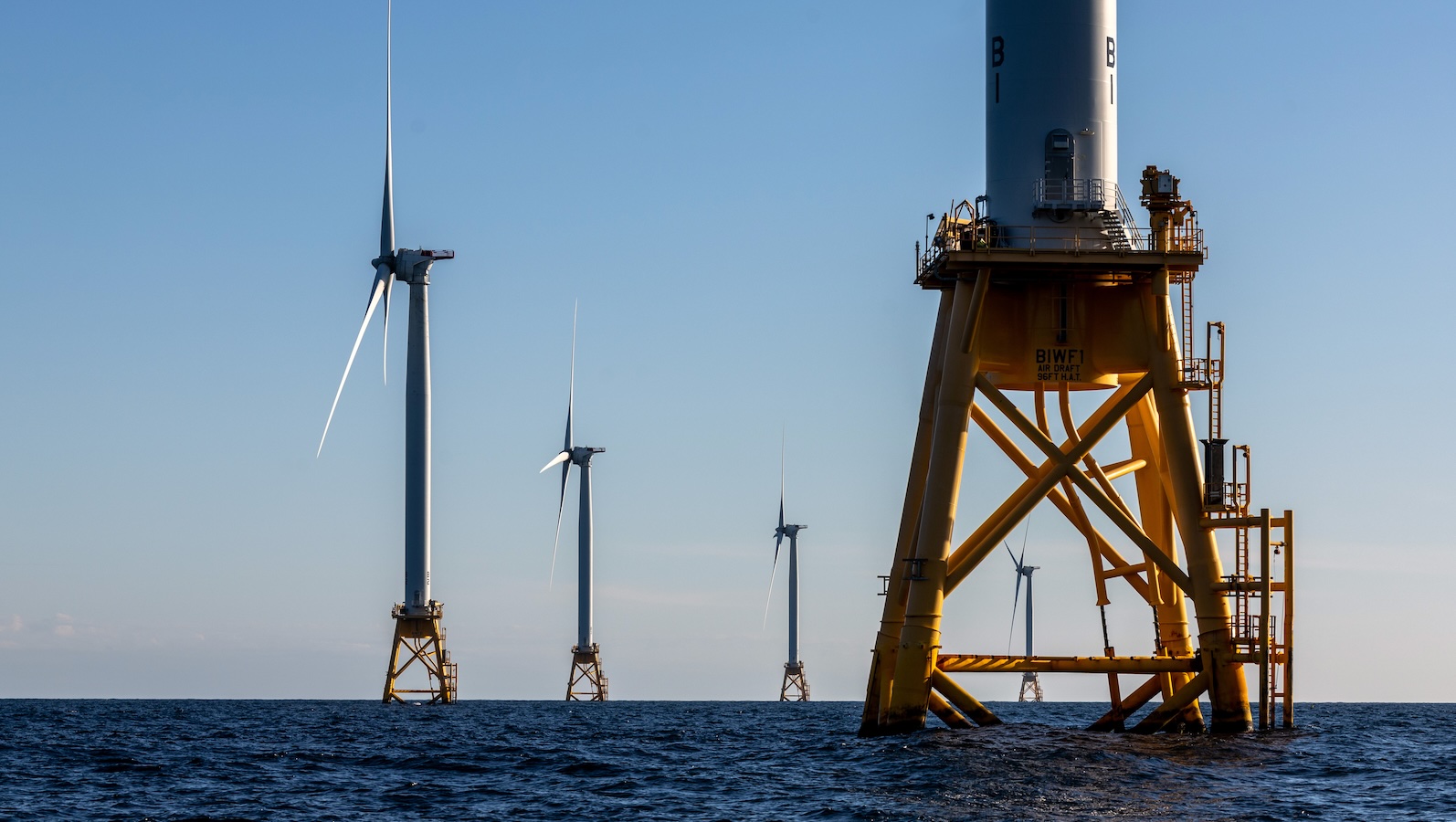
Over the ensuing years, this economic bridge expanded significantly. By 2024, nearly a quarter of all offshore wind procurement and construction contracts in the United States had been awarded to Gulf-based firms. According to the Oceantic Network, an industry trade group, roughly $1 billion in capital investments had flowed directly into Louisiana shipyards and manufacturing hubs to support this transition.
In response to the booming market, local educational institutions rapidly adapted their curricula. Nunez Community College in Chalmette established a specialized two-year turbine technician training program, while the University of New Orleans launched its Wind Energy Hub, offering dedicated engineering scholarships and coordinated internships with major offshore wind developers.
A Decades-Long Opposition
President Trump’s skepticism toward wind energy is well-documented and predates his entry into national politics by many years. His opposition famously crystallized in 2006, when he initiated a decade-long legal and public relations battle against the Scottish government over an offshore wind farm constructed near one of his premier golf properties in Aberdeenshire, Scotland, which he argued would ruin the coastal views.
Since that time, Trump has consistently criticized wind energy across multiple campaign trails and public forums. He has frequently asserted that utility-scale wind turbines diminish surrounding property values, pose severe hazards to local wildlife populations, and contribute to economic instability. On various occasions, he has also made scientifically unverified claims linking wind turbine infrastructure to food price fluctuations, public health hazards, and psychological stress.
These long-standing viewpoints have now translated into concrete federal policy, effectively sidelining an industrial pivot that many Louisiana business leaders viewed as a vital economic lifeline for the state’s maritime future.
Impact on Regional Innovation and Labor Markets
The sudden halt in federal leasing and project approvals has reverberated across Louisiana’s manufacturing and engineering sectors, forcing companies to abruptly alter their business models to survive the multi-year hiatus.
James Martin, CEO of Gulf Wind Technology—an Avondale-based enterprise specializing in the design, construction, and rigorous testing of advanced wind turbine blades—expressed deep frustration at the current state of affairs. Speaking at the Tulane forum, Martin described the federal policy shift as a devastating blow to a high-potential market.
“It is a shame,” Martin said. “It’s been a big pause button on what was a sleeping giant of an industry.”
To stay afloat during the regulatory freeze, Gulf Wind Technology and similar regional firms have been forced to pivot their specialized engineering talent toward adjacent sectors, such as aerospace, defense, and conventional maritime manufacturing. However, not all companies possess the operational flexibility to pivot away from renewable energy investments so quickly.
Smaller subcontractors, marine logistics providers, and component fabricators have been forced to implement severe budget cuts and widespread layoffs. The human cost of the policy shift, Martin warns, extends far beyond corporate balance sheets, threatening to permanently scatter a highly specialized workforce.
“There’s huge layoffs in the wind space, and some of the best engineers on the planet—they’re giving up,” Martin stated.
Broader Economic and Geopolitical Implications
The systematic dismantling of the U.S. offshore wind pipeline carries significant long-term implications for American energy independence, regional economic diversification, and global competitiveness in renewable technology manufacturing.
Proponents of offshore wind argue that sidelining the industry cedes technological leadership to international competitors, particularly in Europe and Asia, where offshore wind installations continue to scale rapidly. Furthermore, the loss of federally supported projects deprives industrial hubs like the Gulf Coast of a multi-billion-dollar economic engine that capitalized on existing fossil fuel infrastructure and workforce expertise.
Conversely, supporters of the administration’s policies contend that halting federal support for offshore wind protects taxpayers from subsidizing intermittent energy sources and prioritizes the expansion of traditional fossil fuel production—coal, oil, and natural gas—which they view as more reliable and cost-effective drivers of American energy security.
As the industry navigates this federal plateau, Louisiana’s offshore wind advocates find themselves in a holding pattern. With major supply chain assets idled, specialized educational programs adjusting their enrollment pipelines, and venture capital temporarily retreating from the space, the local sector’s survival hinges entirely on its ability to endure until the calendar turns to 2029. Until then, the state’s maritime pioneers will continue waiting for the political tide to turn.