Niku Argane’s farm sits on a steep hillside in central Ethiopia’s semi-mountainous Gurage Zone, a landscape where years of unmitigated flooding have carved deep, jagged gullies into the earth. The soil that once produced enough barley and potatoes to comfortably feed his wife and four children—while yielding a lucrative surplus for local markets—has steadily eroded. Compounded by worsening droughts, the land that remains has become increasingly hostile to traditional cultivation methods.
"We have never stopped farming, but our production declined because of land degradation," the 32-year-old said from his homestead in Ambele Kebele.
Across East Africa, Argane’s struggle reflects a broader, systemic crisis. Over the past century, Ethiopia nearly eradicated its native forests as generations cleared trees for expanding agriculture, livestock grazing, and domestic fuel. The systematic loss of tree cover and stabilizing root systems left the region defenseless against wind and rain, which steadily washed away fertile topsoil and triggered a severe, long-term decline in agricultural productivity. Today, that historical vulnerability is being supercharged by global climate change. Ethiopia is widely recognized as one of the nations most vulnerable to climatic shifts, facing a punishing dual threat: heavier, erratic downpours that sluice away depleted soils and provoke deadly landslides, contrasted with intense droughts that, in the absence of tree shade, rapidly bake and dry out the landscape.
The Economic and Human Toll of Soil Erosion
The cost of this environmental unraveling is staggering. Land degradation drains an estimated $4.3 billion annually from Ethiopia’s economy through diminished harvests, stunted agricultural productivity, and lost income for smallholder farmers. Because more than 100 million Ethiopians depend directly on agriculture for their livelihoods, the implications extend far beyond conservation metrics.
Climate shocks and compounding crop losses have emerged as primary drivers of acute hunger nationwide. In 2024 alone, an estimated 15.8 million Ethiopians—roughly 12 percent of the national population—required emergency food assistance. For a low-income nation anchored by agrarian stability, reversing this ecological trajectory is not merely an environmental preference; it is an absolute economic and humanitarian necessity.
A Century of Deforestation and the Road to Crisis
To understand Ethiopia’s modern restoration drive, analysts must look back at the radical transformation of its geography. In the early 20th century, dense forests covered an estimated 35 to 40 percent of the country. The highlands were characterized by lush, verdant canopies spanning cool, fertile uplands. However, as population growth accelerated and settlements expanded, widespread clearing for agriculture, pastures, and timber reduced this natural buffer.
By 1989, national forest cover had plummeted to less than 3 percent. Ethiopia’s fragile highlands were losing an astonishing one billion metric tons of topsoil every year, washing vital nutrients into downstream rivers and reservoirs. The ecological tipping point culminated in the devastating droughts and famines of the 1970s and 1980s, which galvanized both the Ethiopian government and international donor organizations to initiate early, albeit piecemeal, soil and water conservation projects. These early interventions included fencing off degraded land from livestock, building rudimentary stone terraces, and constructing check dams—small barriers of rocks and logs placed across gullies—to slow the destructive velocity of seasonal rainwater runoff.
Scaling Up: The Green Legacy Initiative
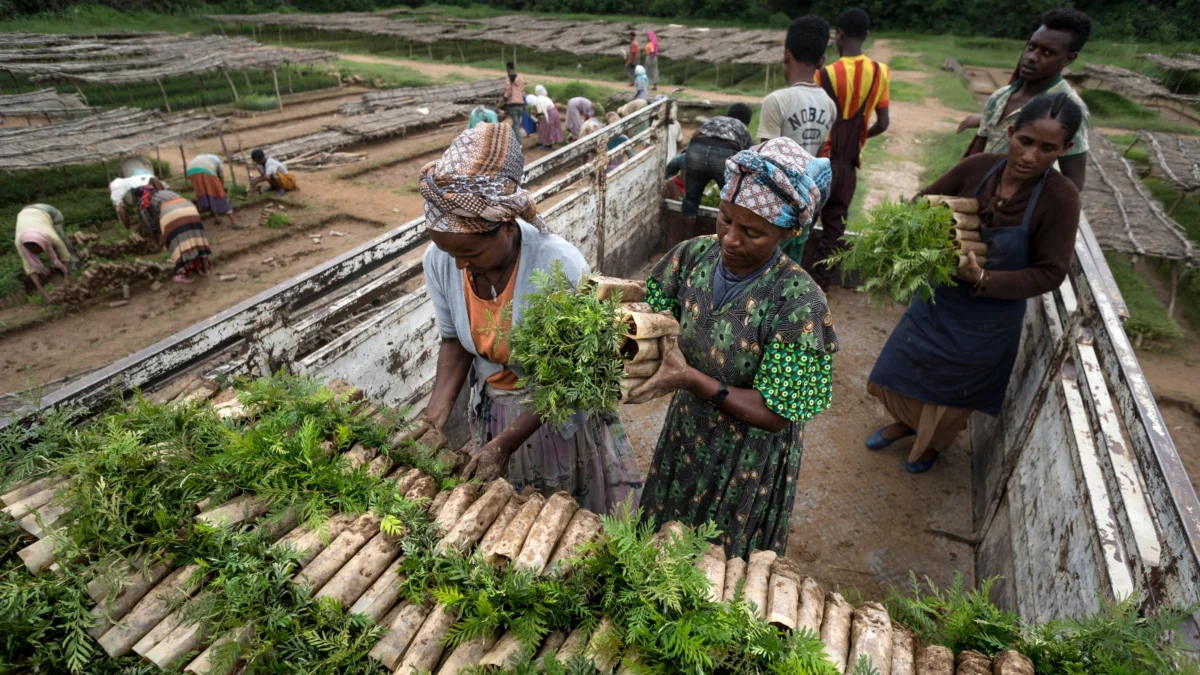
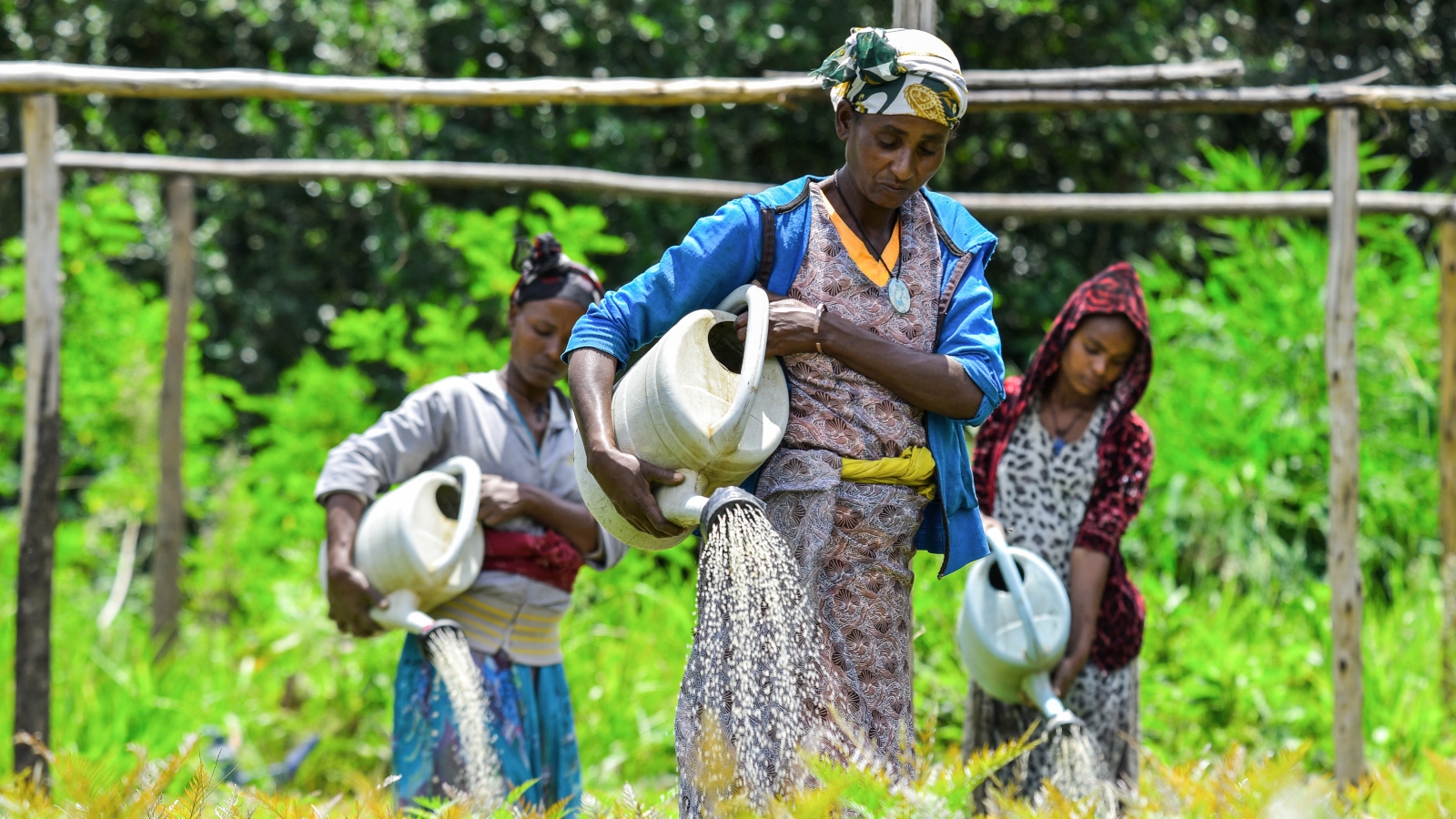
In 2019, the Ethiopian government dramatically supercharged these disparate conservation efforts by launching the Green Legacy Initiative, a sweeping national campaign designed to mobilize citizens, public servants, schools, and religious institutions. The state committed to distributing free tree seedlings nationwide, transforming environmental restoration into a massive public mobilization effort.
The ambition of the program is historic. The government initially set a target of planting 50 billion seedlings by 2030. In just the last seven years, tens of millions of citizens have planted more than 47 billion seedlings, aiming to rebuild native forests, stabilize hillsides, and integrate trees directly into agricultural farmlands to sequester carbon and buffer against extreme weather.
Financial backing has matched this political rhetoric. In 2024, the government established the Green Legacy and Landscape Restoration Special Fund, dedicating between 0.5 percent and 1 percent of the annual federal budget—roughly $73 million to $145 million—specifically to landscape restoration. For a developing nation, this scale of domestic investment is highly unusual and has earned widespread international recognition. Development experts credit the tangible success and sheer scope of the campaign as a major factor in Ethiopia’s selection to host the upcoming United Nations climate conference, offering a high-profile platform to showcase its achievements.
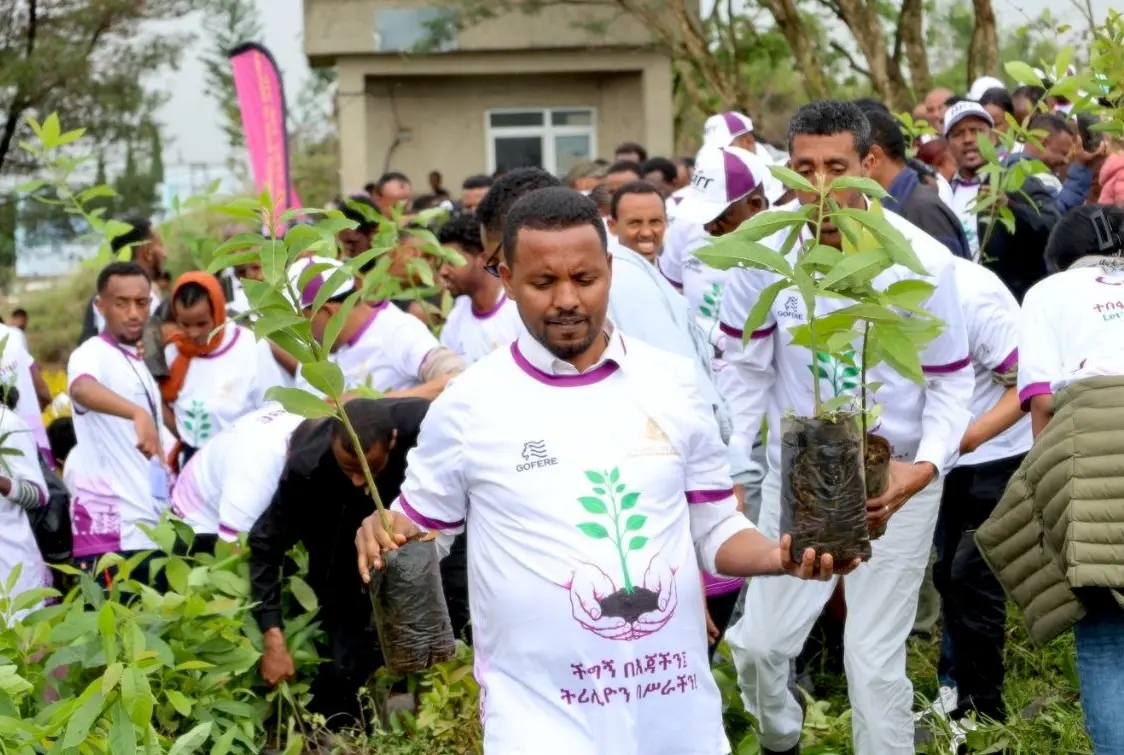
The public response has been equally unprecedented. In August, government figures reported that 26.6 million Ethiopians planted 800 million tree seedlings in a single day, eclipsing the previous year’s tally of 714.7 million. Among the participants was Yeshihareg Teferi, who traveled at sunrise from Addis Ababa to Tulu Dimtu, braving cold rain to dig holes in the mud. Marking her fifth year participating in the national drive, Teferi chose to plant juniper seedlings, moving past indigenous choices like African wild olive and African fern pine that she had favored in prior years.
"We have a responsibility to ensure future generations inherit a green and fertile environment, rather than barren land," Teferi said.
Early Signs of Ecological Recovery
Data compiled by the Ethiopian government suggests these monumental efforts are yielding measurable results. National forest cover rose from 17.2 percent in 2019 to 23.6 percent in 2023, while the annual deforestation rate dropped from more than 350 square miles to approximately 100 square miles over the decade leading up to 2023.
The benefits extend beyond forestry into wildlife conservation and hydrology. In Abijata-Shalla National Park within the highlands, conservation workers combined tree replanting with the construction of terraces and contour bunds—small earthen ridges designed to slow runoff and enhance groundwater infiltration. According to Kumera Wakjira, director-general of the Ethiopian Wildlife Conservation Authority, rising water tables led to noticeable increases in lake levels within the park. This hydrological revival spurred the return of fish populations, which in turn attracted aquatic birds such as cormorants and African darters. Terrestrial species, including Grant’s gazelles and wild dogs, have also begun expanding back into ranges where they were previously scarce.
The Debate Over Quality Versus Quantity
Despite these successes, international experts and ecologists caution that massive planting numbers do not automatically equate to long-term ecological restoration. A landmark 2022 study of 176 reforestation projects across Asia revealed that roughly half of all planted trees fail to survive past five years.
Endalkachew Wolde-Meskel, a soil scientist and senior researcher at the Center for International Forestry Research, emphasizes that trees alone do not constitute a functioning forest. True restoration requires the natural regeneration of native grasses and undergrowth, coupled with enduring soil and water management practices overseen by local communities.
"The objective is not really ‘plant trees,’" Wolde-Meskel noted. "It is to restore the functioning of the entire landscape."
Emiru Birhane Hizikias, an Ethiopian restoration ecologist at Norway’s Nord University, described strong political backing from the prime minister as a "blessing," but warned that the sheer velocity of the Green Legacy Initiative has occasionally outpaced the logistical systems required to ensure survival on the ground.
"You can’t expect a baby to grow if you don’t care for it," Hizikias said, criticizing a prevailing mindset that prioritizes planting metrics over post-planting maintenance.
Conversely, proponents point to localized improvements in training and extension services as proof of a maturing strategy. Abreham Berta Aneseyee, an environmental scientist at Wolkite University and an advisor to the Ministry of Agriculture, notes that government forestry and farming experts now conduct farm-to-farm visits, instructing smallholders on optimal planting depths, moisture conservation techniques, and long-term forest stewardship.
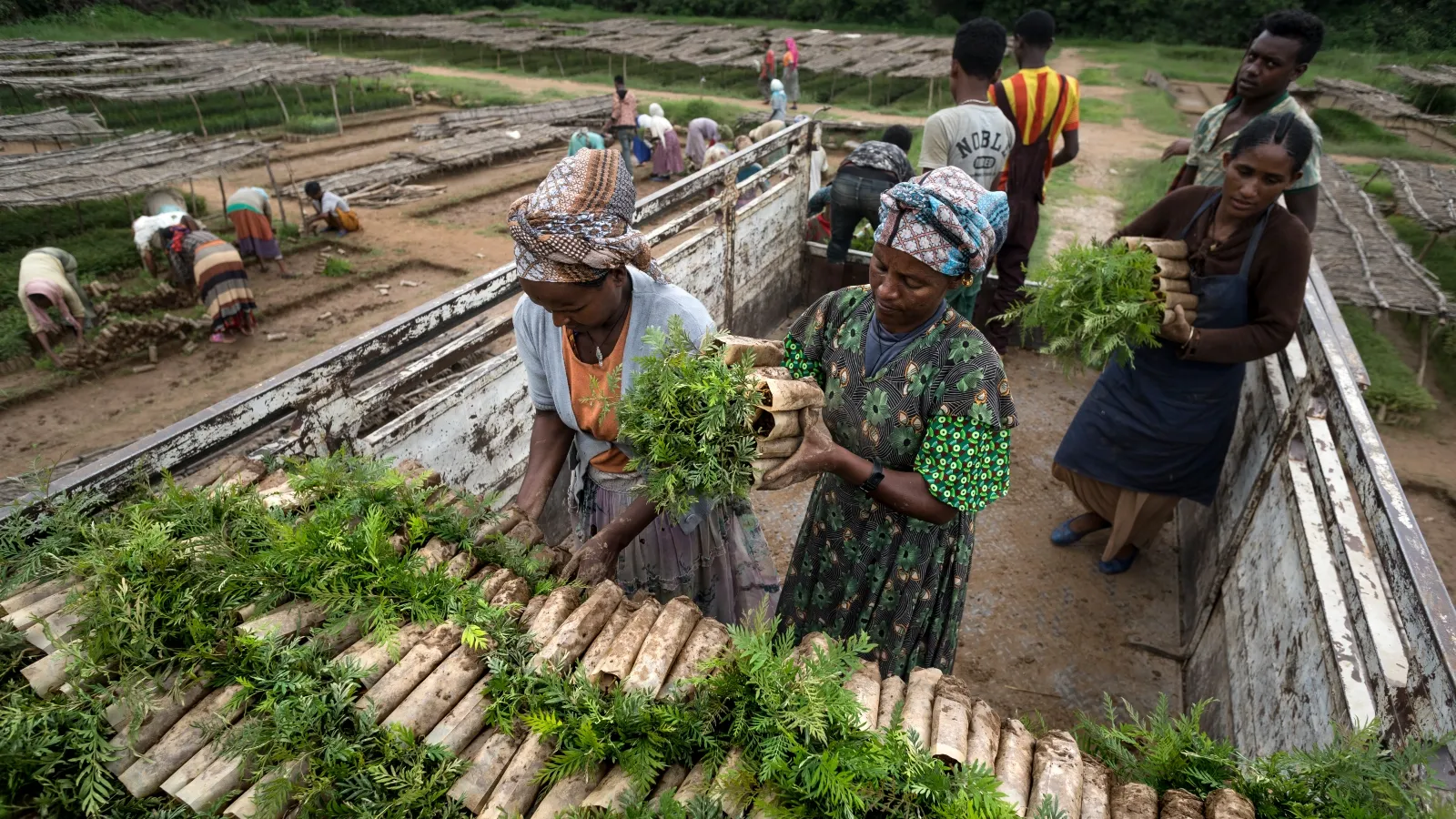
A 2026 study tracking more than 44,500 seedlings planted in southern Ethiopia in 2023 found an impressive 80 percent survival rate. Survival metrics were markedly higher for older seedlings, plantings executed during the wet season, and instances where planters received formal training in best plantation practices. In regions like the Wolaita Zone, the Green Legacy Initiative has been successfully integrated with community-led watershed management, pairing tree planting with check dams and half-moon water-trapping ditches.
International Parallels and Comparisons
Aad Kessler, a researcher at Wageningen University in the Netherlands, notes that Ethiopia’s approach has few direct parallels in Africa regarding its unique fusion of top-down political will, domestic financing, and massive public mobilization. He likens the strategy to China’s historic restoration of the Loess Plateau, where decades of state-backed watershed rehabilitation and the "Grain for Green" program successfully converted degraded rain-fed croplands into dense forests and grasslands, increasing overall vegetative cover by 25 percent over ten years.
While China achieved this by paying farmers to take marginal slopes out of agricultural production, millions of Ethiopian smallholders continue to rely directly on fragile plots for daily sustenance. Nonetheless, Kessler identifies a shared underlying philosophy: "Do it massively, and then see where you end up."
The Escalating Threat of Climate Change
Even as Ethiopia invests heavily in healing its landscapes, the baseline conditions are shifting beneath its feet. Climate change is rendering historical weather patterns increasingly unpredictable. In the arid pastoral regions of Afar and Somali, the Green Legacy Initiative has pivoted toward drought-tolerant species, though long-term survival projections remain uncertain amid rising global temperatures.
The Intergovernmental Panel on Climate Change projects more frequent and intense rainfall events across East Africa. The devastating human cost of this volatility was underscored in July 2024, when torrential downpours in the southern highlands’ Geze Gofa district triggered twin landslides that claimed at least 257 lives. Concurrently, emerging scientific analyses link intensified El Niño cycles to severe meteorological anomalies in the region. The Famine Early Warning Systems Network reported that El Niño drove "historically poor" summer rains across parts of Ethiopia, resulting in some areas recording their driest June and July on record.
For aging farmers like 65-year-old Belayneh Mamo in the drought-prone Amhara region, these climatic shifts complicate the foundational mechanics of farming. Relying on seasonal rains for staples such as teff, sorghum, and maize, Mamo found his planting schedule delayed until August due to late rains.
"In previous years, September was a period when crops were already developing and food… was becoming available for consumption," Mamo said. "The delays affected the seedlings we plant, our crops, and the availability of animal feed."
A Glimmer of Hope in the Gurage Zone
Back on Niku Argane’s hillside farm in the Gurage Zone, however, the tangible dividends of ecological restoration are already taking root. Since 2019, Argane has integrated grasses, fodder crops, fenugreek, and fruit trees along the edges of his terraced fields. These vegetative barriers effectively anchor the soil against erosive downpours while providing essential feed for his four cows, six goats, and three sheep.
Through these interventions, Argane’s barley yields have surged from roughly 1,800 pounds per acre to approximately 3,200 pounds. The newly established root systems and contour structures have visibly slowed surface water runoff during heavy storms, preserving moisture and preventing further gully formation.
"Restoring degraded land isn’t just about protecting the environment," Argane reflected, surveying his greener hillside. "It’s also about making life better for my family and community."