
The Earth’s vital life-support systems are flashing red, according to the seventh annual State of the Climate report, published in the journal BioScience. Analyzing more than a dozen planetary health metrics, the international team of researchers paints a deeply concerning picture of a destabilizing global climate. The study moves past conventional warnings of a distant, hypothetical future, defining current climatic shifts as a critical, present-day diagnosis of a planet under severe stress. With nearly half of all analyzed planetary indicators hitting record extremes, the scientific community is intensifying calls for immediate systemic reform—highlighting, in particular, the hidden atmospheric toll of global agriculture and meat consumption.
A Comprehensive Medical Diagnosis for Planet Earth
For years, climate scientists have tracked gradual increases in global temperatures and atmospheric gases, often framing these trends as precursors to future environmental crises. However, the authors of the latest BioScience report argue that such language no longer captures the reality on the ground. Instead, the accumulation of extreme data points constitutes a physical diagnosis of the Earth’s current state of health.
Out of the 16 primary climate indicators evaluated in the study, an alarming 44 percent—seven distinct metrics—have reached unprecedented extremes. Concentrations of the three primary greenhouse gases driving anthropogenic global warming: carbon dioxide, methane, and nitrous oxide—have shattered previous records. These spikes are driven overwhelmingly by the continued burning of fossil fuels, alongside industrial agricultural practices and land-use changes.
Simultaneously, polar metrics are deteriorating at an accelerated rate. Glacier thickness across major mountain ranges and the ice mass of the Greenland ice sheet have dropped to historic lows. Compounding these physical transformations is the Earth’s growing energy imbalance—a scientific measurement tracking the net difference between the solar radiation absorbed by the planet and the thermal energy radiating back out into space. As this imbalance widens, the Earth is effectively retaining more heat than it can dissipate, driving systemic ocean warming, intensifying hydrological cycles, and supercharging extreme weather events worldwide.
Dangerous Feedback Loops and Accelerating Vulnerabilities
The BioScience report places significant emphasis on the role of feedback loops—self-reinforcing mechanisms wherein initial warming triggers secondary environmental responses that further accelerate climate change. Phenomena such as catastrophic wildfires, the widespread melting of Arctic permafrost, and the large-scale dieback of critical carbon sinks are no longer isolated incidents. Instead, they are increasingly interconnected symptoms of a warming world.
When permafrost thaws, it releases vast quantities of trapped carbon dioxide and methane into the atmosphere. Similarly, mega-fires consume millions of acres of forest, instantly converting living carbon storage into atmospheric greenhouse gases. Because these feedback loops are amplified by climate change itself, they create a compounding cycle that threatens to push the Earth past critical ecological tipping points—thresholds beyond which regional and global climate systems could shift abruptly and irreversibly.
The Evolution of the State of the Climate Initiative
To understand the weight of the latest findings, it is necessary to examine the lineage of the State of the Climate reporting. The initiative evolved from landmark scientific warnings issued over the past three decades, beginning with the 1992 "World Scientists’ Warning to Humanity," spearheaded by the Union of Concerned Scientists, followed by the updated 2017 "Second Warning" signed by more than 15,000 scientists worldwide.
Over the subsequent years, a dedicated collective of ecologists, climatologists, and Earth system scientists established an annual accounting mechanism. This ongoing project was designed to bypass political rhetoric and provide policymakers, civil society, and academic institutions with a transparent, data-driven scorecard of humanity’s trajectory. Year after year, these reports have documented a widening chasm between international climate pledges, such as those outlined in the Paris Agreement, and the physical reality of rising global emissions. While global renewable energy capacity has expanded rapidly, it has thus far failed to outpace the sheer scale of absolute energy demand growth and persistent fossil fuel infrastructure expansion.
The Food System Imperative: Methane and Livestock Pressures
While the energy and transportation sectors frequently dominate public discourse surrounding climate mitigation, the BioScience report underscores an equally urgent, yet often overlooked, driver of global warming: the modern global food system. Specifically, the authors focus on the explosive growth of ruminant livestock populations—including cattle, sheep, and goats—which produce substantial quantities of methane as an inherent byproduct of their digestive processes, known as enteric fermentation.
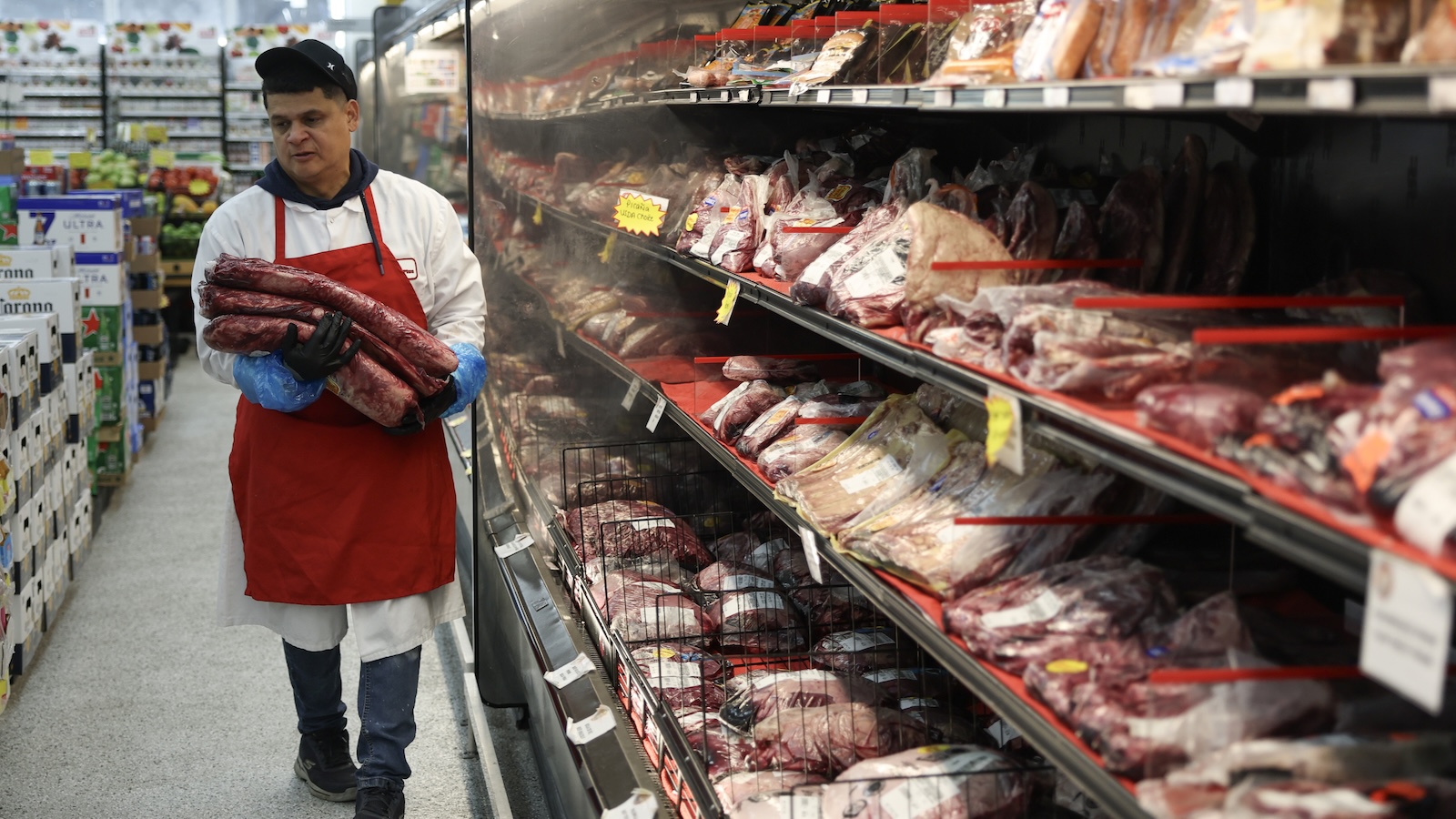
Data compiled in the 2024 study reveal that the global population of ruminant livestock has reached its highest level since the 1960s. Concurrently, per capita meat production hit a historic peak. Dr. William Ripple, a professor of ecology at Oregon State University and one of the report’s lead authors, emphasizes that these metrics reflect profound systemic pressures on global ecosystems.
"These numbers point to meat’s growing role in our global diet, as well as the steep environmental cost of that shift," Ripple explains. "We looked closely at ruminant livestock populations because methane is a remarkably potent greenhouse gas. While it has a relatively short atmospheric lifespan of roughly a decade compared to carbon dioxide, it is approximately 28 times more effective at trapping heat over a 100-year timescale."
This physical characteristic of methane presents both an acute danger and a unique strategic opportunity. Because methane decays relatively quickly in the atmosphere, achieving rapid reductions in agricultural methane emissions can yield tangible cooling benefits within years, offering a vital mechanism to help prevent the planet from breaching critical near-term temperature thresholds.
Deforestation, Land Inefficiency, and the Call for Dietary Shifts
Beyond direct digestive emissions, the livestock sector drives climate change through intensive land use and widespread deforestation. Raising cattle and growing feed crops like corn and soy requires vast expanses of land. In regions like the Amazon basin and parts of Southeast Asia, this agricultural expansion is a primary catalyst for the clearing of carbon-rich tropical forests—critical natural sinks that absorb and store millions of tons of carbon.
Timothy Searchinger, a senior research scholar at Princeton University specializing in agricultural and climate systems, who was not involved in the BioScience report, stresses that global climate goals cannot be met without halting this large-scale habitat destruction.
"We simply cannot solve climate change unless we stop the clearing of carbon-rich habitats," Searchinger states. "And we probably cannot stop that unless the world’s wealthy nations eat less meat, and particularly less beef."
Searchinger offers a pragmatic, quantifiable benchmark for individual action in developed nations: reducing average American beef consumption from roughly three servings a week to one and a half. Such a dietary shift, he argues, would instantly alleviate immense ecological strain without requiring draconian lifestyle overhauls.
Furthermore, the authors of the report point out the fundamental inefficiency of dedicating vast tracts of fertile agricultural land to feed livestock rather than feeding human populations directly. At a time when climate change is progressively destabilizing global food security through droughts, floods, and unseasonal heatwaves, maintaining an agricultural model that squanders productive land capacity is increasingly untenable.
"At a moment when climate change is actively threatening food security, we can hardly afford a food system that utilizes so much of its productive capacity inefficiently," Ripple warns. "Our growing demand for meat is placing enormous, compounding pressure on the climate, land, and water systems at a time when all three are already operating under severe stress."
Broader Implications and the Path Forward
The publication of the seventh annual State of the Climate report arrives at a critical juncture for global environmental policy. As international climate negotiations continue to navigate geopolitical divides and economic friction, scientific syntheses of this nature serve as an unyielding reality check.
The report’s overarching message is clear: addressing global warming is no longer a challenge that can be compartmentalized into single-sector solutions. Transitioning away from fossil fuels remains the absolute cornerstone of climate stabilization, but it must be paired with aggressive transformations in how humanity manages land, protects natural ecosystems, and produces food.
Without holistic reforms that encompass dietary habits, agricultural efficiencies, and industrial emissions controls, the Earth’s life-support systems will continue on their current trajectory toward unprecedented instability. The authors conclude that humanity still holds the agency to alter this course, but the window for effective, preventive action is narrowing rapidly.