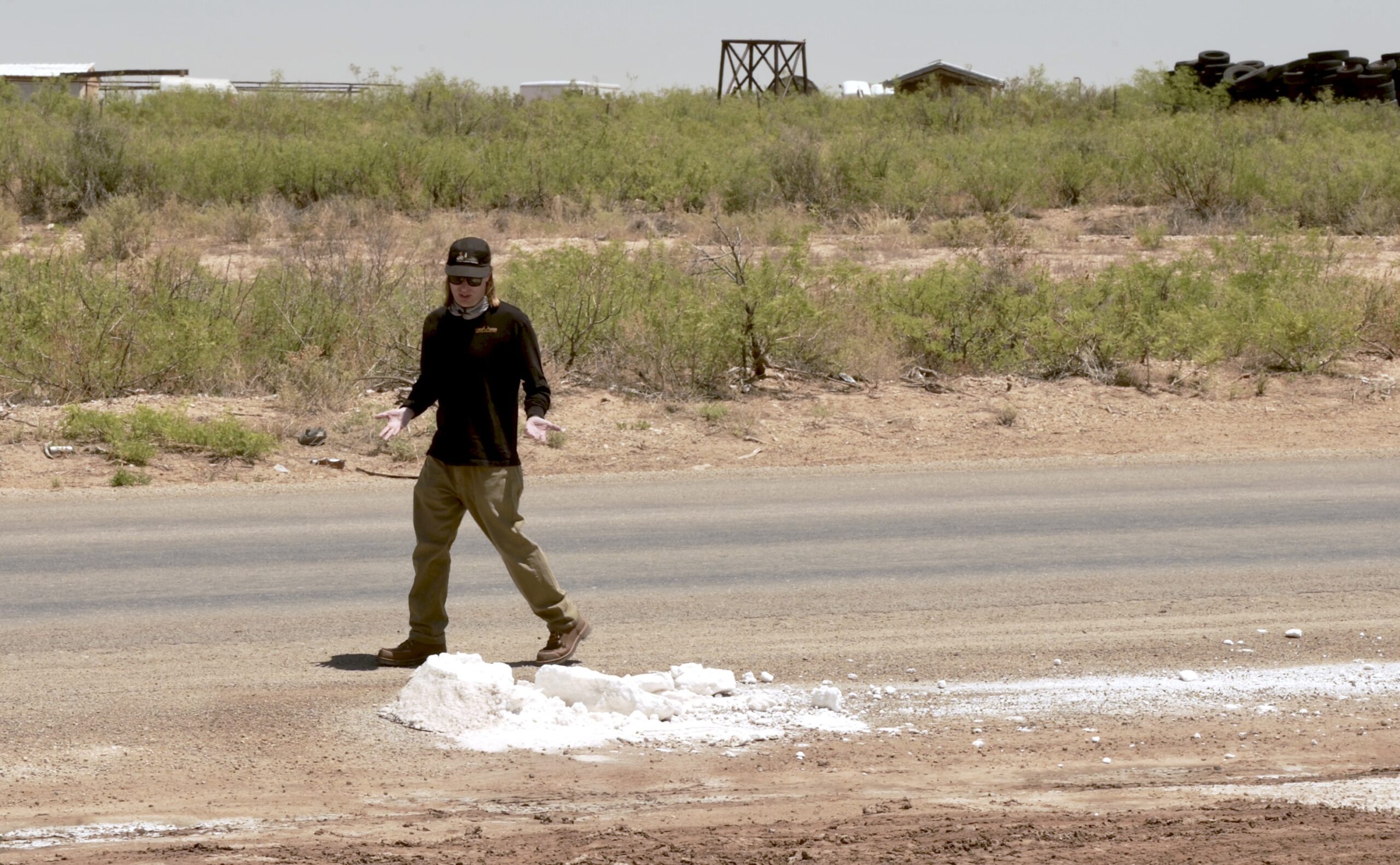
The afternoon sun beats down mercilessly on a muddy pullout along a county road in southern New Mexico, barely a mile from where the Black River spills its final currents into the Pecos River. It is early May, a period when the landscape should feel merely dry, yet the ground here is scarred by an anomaly that has become grimly routine. Charlie Barrett, a thermographer with the industry watchdog group Oilfield Witness, steps out of his pickup truck. His boots immediately sink into a slick, chemical-laced muck dotted with shimmering, snow-white salt crystals. Nearby, a gray chunk of crystalline salt the size of a medicine ball sits discarded near the edge of the road.
"Unfortunately, this is pretty common," Barrett remarks, gazing down at the toxic residue. "It’s also quite dangerous."
The evidence points squarely to the illegal dumping of oilfield wastewater—a notoriously hazardous byproduct of the petroleum industry known technically as "produced water." Laden with a complex cocktail of heavy mineral salts, dissolved petroleum compounds, localized industrial chemicals, and sometimes radioactive elements, this fluid poses an invisible yet severe threat. Barrett notes the constant danger of motorists unwittingly driving through the sludge or unwary travelers stepping out of their vehicles into a matrix of industrial toxins.
A few feet away, a steady procession of heavy semi-trucks rumbles down the asphalt under a brilliant, cloudless sky. Day in and day out, hundreds of these vehicles haul millions of gallons of produced water from extraction sites to disposal and reinjection stations across the sprawling expanse of the Permian Basin.
The Mounting Tide of Produced Water
The crisis playing out along the banks of the Pecos River is fundamentally a math problem of staggering proportions. On average, New Mexico’s oil and gas operations yield more than three barrels of wastewater for every single barrel of crude oil pulled from the earth. As fossil fuel extraction rates have surged to record-breaking highs across the Permian Basin—a massive geologic formation spanning 75,000 square miles across 55 counties in Texas and New Mexico—the volume of accompanying wastewater has risen in tandem.
Compounding this dynamic is a natural geologic phenomenon known as "watering out." As individual wells and entire oilfields age, the ratio of water to oil shifts dramatically upward, meaning older fields produce increasingly massive volumes of unwanted fluid. Because New Mexico state regulations strictly prohibit the use of untreated produced water for anything outside of direct oilfield operations, the industry relies on a massive parallel infrastructure. This network is dedicated to gathering, hauling, and eventually pumping the wastewater deep underground through specialized disposal wells.
However, this high-pressure subterranean disposal has introduced severe secondary consequences. Geologists and regulators have linked the massive influx of injected wastewater to a sharp spike in regional seismic activity, shaking parts of New Mexico that historically experienced very few earthquakes. Furthermore, when injection wells suffer mechanical failures or structural integrity issues, the results can be catastrophic. High-profile incidents—such as towering, 70-foot wastewater geysers erupting from failed wells—have underscored the volatile risks of managing billions of gallons of toxic fluid in a fragile desert ecosystem.
Invisible Emissions and Regulatory Defiance
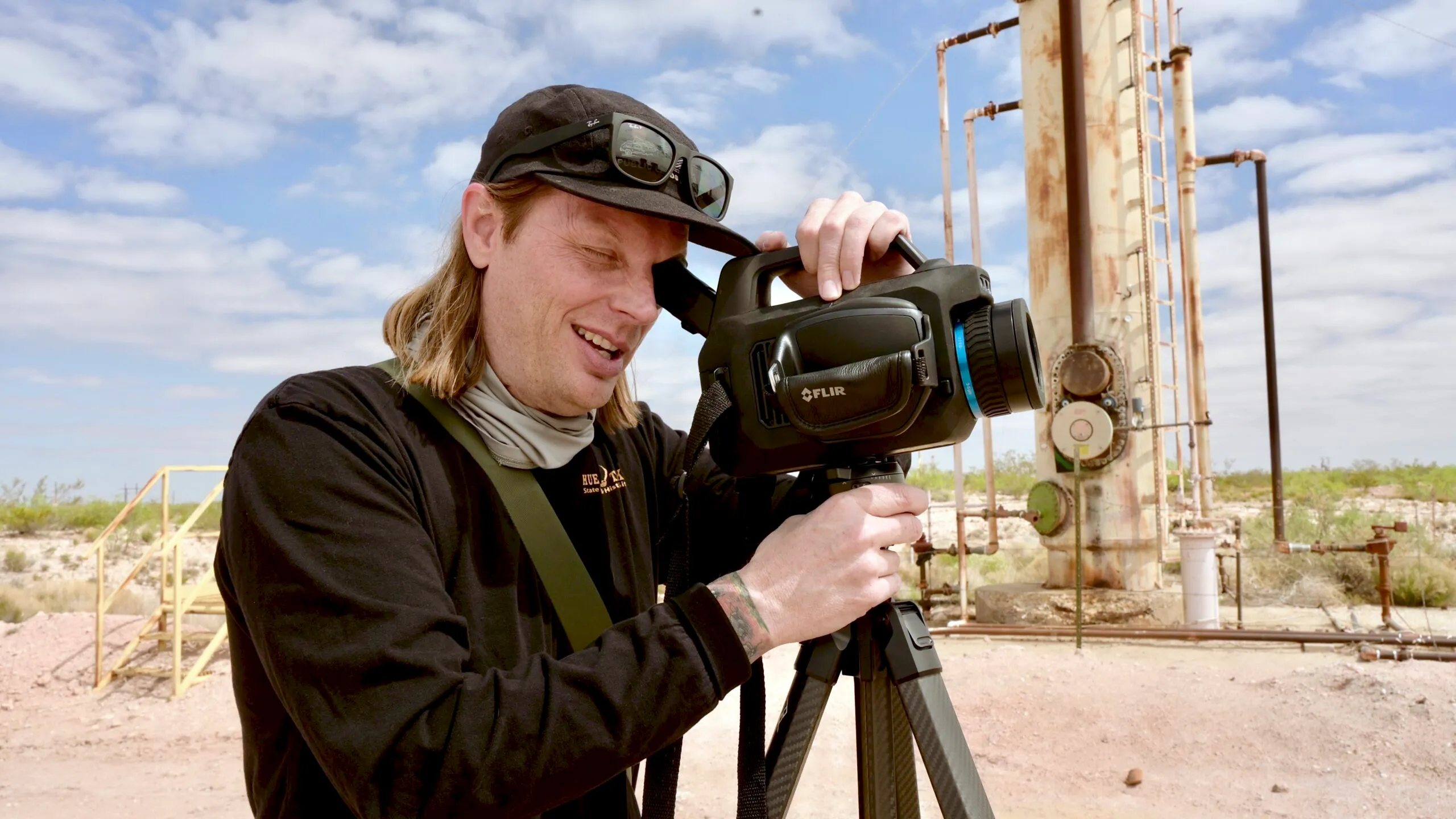
Working in his capacity as a thermographer, Barrett unpacks specialized video equipment designed to detect heat signatures and invisible gas emissions emanating from oilfield infrastructure. Setting his camera near a residential area in Loving, New Mexico, he begins recording. Through the viewfinder, the small screen illuminates a chaotic, candy-colored thermal landscape.
"Oh, man, that’s fucking terrible," Barrett mutters, focusing on the equipment.
The thermal imaging reveals three active flare stacks operating mere yards from a civilian family home. The heat signatures clearly demonstrate massive plumes of carbon dioxide, methane, and volatile organic compounds drifting directly toward residential properties. When Barrett reviews the footage later on a larger monitor, a fourth lit flare materializes in the frame, bringing the total to four active flares in a single view.
This pervasive flaring occurs despite New Mexico enacting a stringent ban on nearly all routine flaring in 2022. Oil and gas companies traditionally burn off natural gas for several operational reasons: when the recovered gas fails to meet pipeline quality specifications, when pipeline pressures spike dangerously, or when facilities undergo routine maintenance. While flaring is technically favored over venting unburned methane directly into the atmosphere—due to methane’s devastating short-term warming potential—the practice continues to spew millions of tons of carbon dioxide and hazardous air pollutants into the regional airshed, directly impacting local communities and ecosystems.
A River Running Low in a Fossil Fuel Landscape
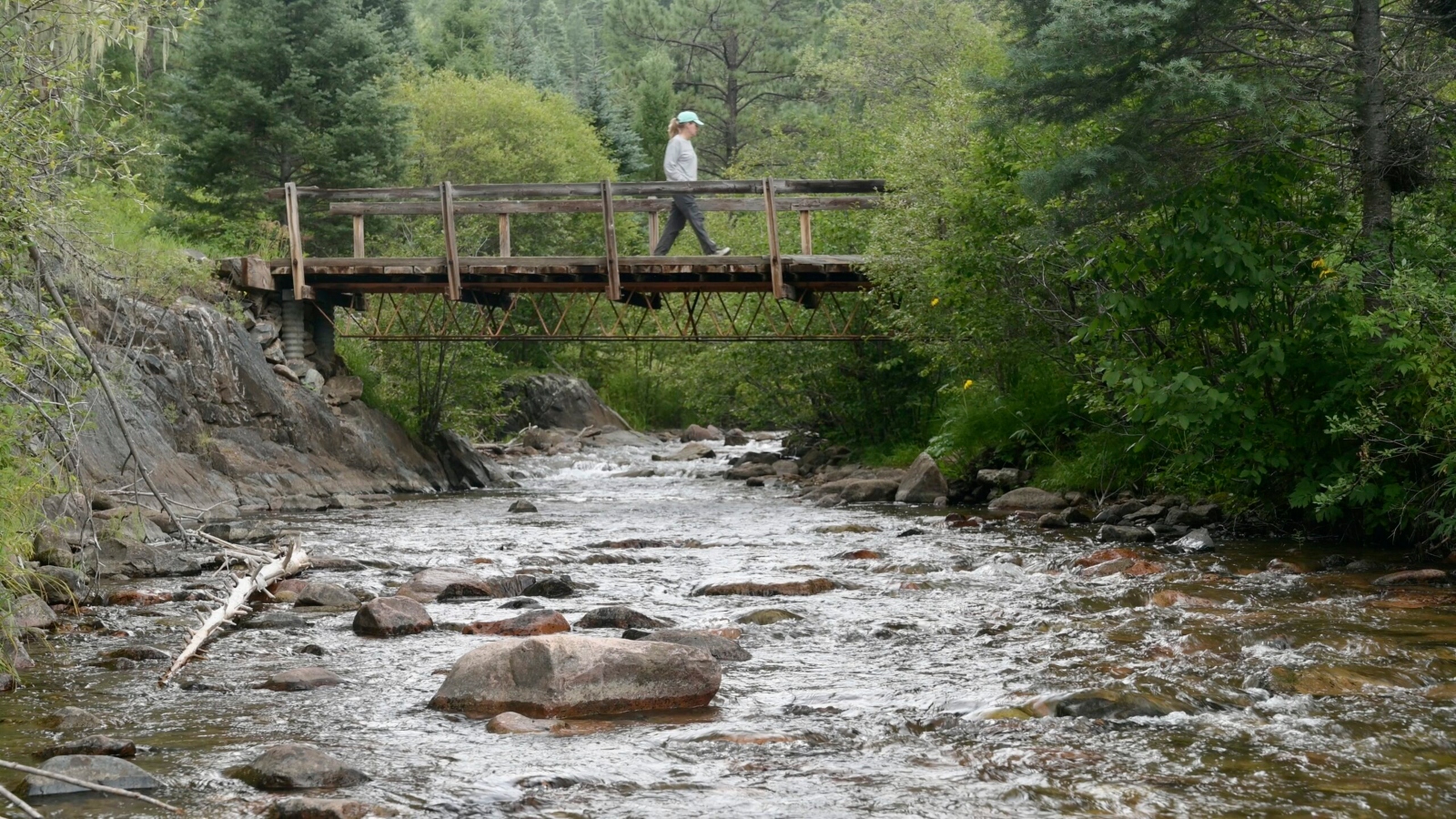
The Pecos River itself is a geographic and cultural icon of the American West. Beginning its journey in the high, pine-covered mountain ranges east of Santa Fe, the upper river rushes wildly through steep canyons, earning a coveted National Wild and Scenic River designation. For centuries, its waters have sustained indigenous communities, historic ranches, and vital agricultural economies across central New Mexico.
Yet, by the time the river reaches the southern border of the state and flows into Texas, its character has transformed entirely. Stripped of its wild abandon, the Pecos resembles a tightly managed, artificial conveyance system, carefully measured and doled out through the heart of the Permian Basin.
The environmental group American Rivers has repeatedly sounded alarms over the deteriorating health of the waterway, naming the Pecos to its list of America’s Most Endangered Rivers in both 2021 and 2024. This perilous decline is driven by a collision between historical human extraction and modern climate change. According to decades of data from the U.S. Geological Survey, the annual snowpack in the mountains feeding the Pecos headwaters has steadily and systematically declined.
Hannah Riseley-White, director of the New Mexico Interstate Stream Commission, oversees the monumental task of balancing water obligations among competing stakeholders. Her spring briefings to local water boards have become exercises in grim reality checks.
"Everyone this spring got tired of me at the beginning of every meeting screen-sharing the snowpack figures for all of the basins that we manage," Riseley-White says. "It fell off the cliff. It wasn’t just record-breaking. It was beyond anything that we could have imagined in terms of snowpack."
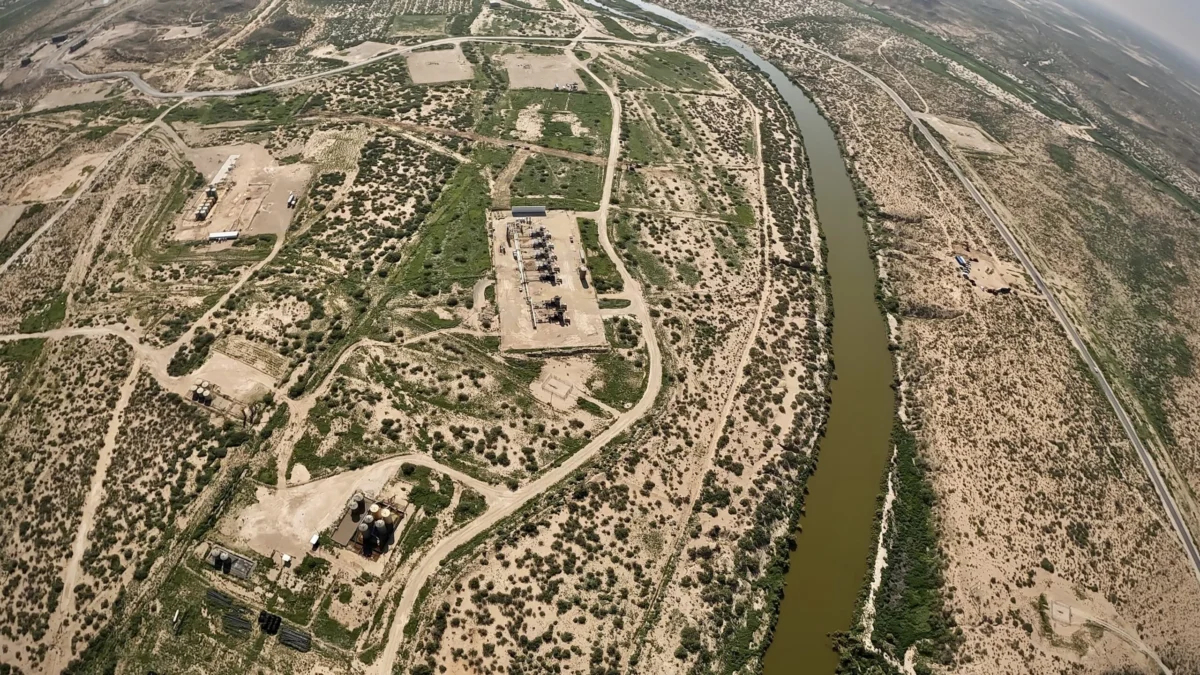
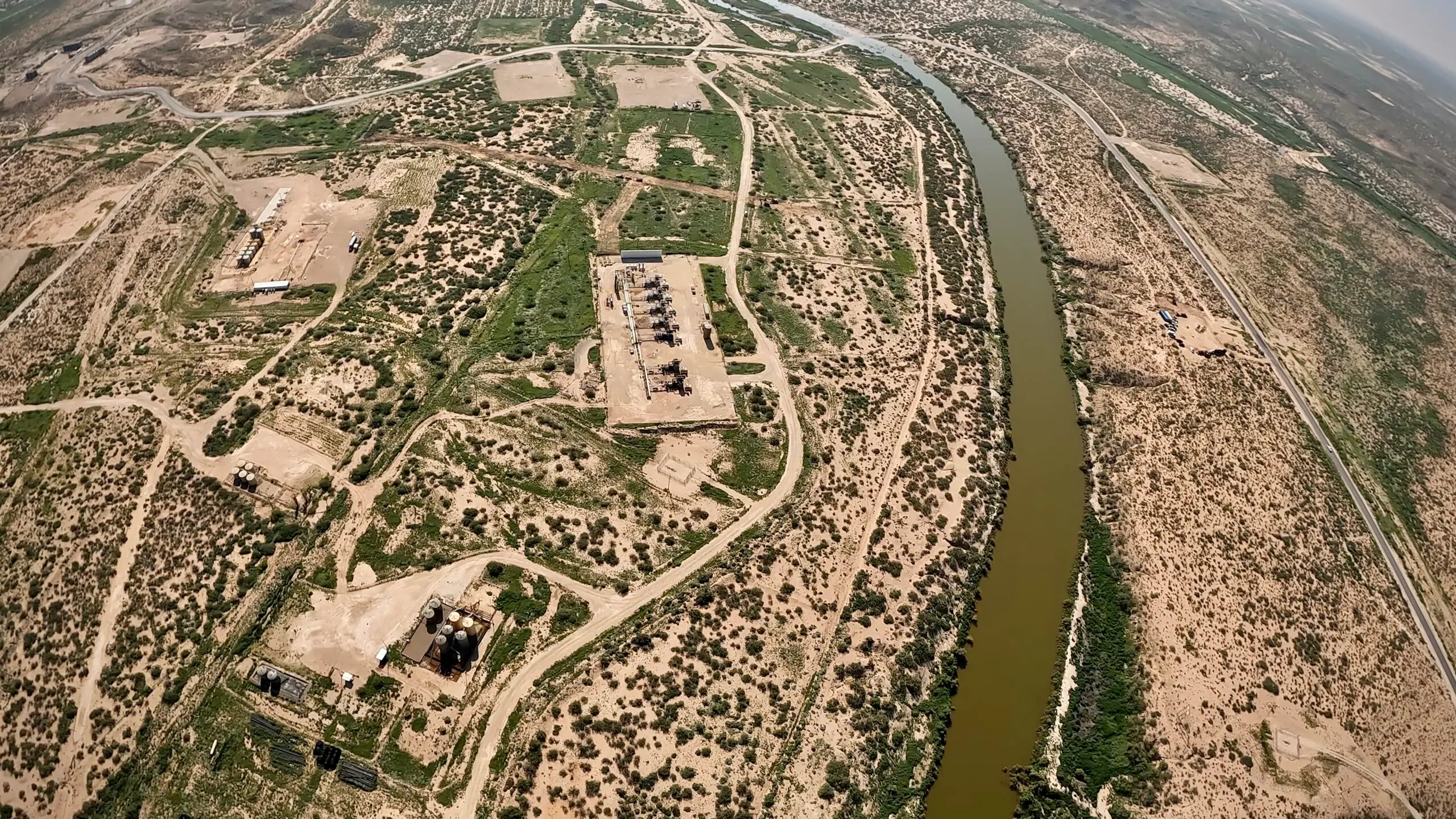
With consecutive dry winters compounding the crisis, long-term projections under Governor Michelle Lujan Grisham’s 50-Year Water Action Plan forecast a staggering 25% to 30% reduction in river flows by the year 2070. The primary driver of this aridification is global climate change—accelerated heavily by the very fossil fuel extraction taking place directly on the riverbanks. Within a half-mile stretch of the Pecos River in New Mexico alone, there are currently 380 active oil and gas wells, alongside 11 high-pressure wastewater injection wells.
The Produced Water Recycling Debate
As freshwater supplies dwindle and state planners search for innovative ways to bridge the supply-demand gap, a controversial proposed solution has taken center stage: treating oilfield produced water to industrial purity standards and repurposing it for uses outside the oil patch.
State officials, including those contributing to the 50-Year Water Action Plan, view advanced water treatment as a necessary tool in an increasingly dry future. Riseley-White frames it as an unavoidable option among many.
"Do I think [treated] produced water will solve all of our problems in the Pecos? No," she notes. "But thinking about it as one of the many sort of tools in the toolbox I think makes sense. Part of coming up with creative solutions is going to necessarily require looking at all of the options, and that’s certainly one of one of them. And I think technology is there to clean water to various standards. It’s just a question of whether financially the incentives are there."
However, the proposal has ignited fierce opposition. Environmental organizations and local conservation groups are strongly united against the idea, arguing that current filtration technologies cannot guarantee the 100% removal of complex, mutagenic, and radioactive oilfield chemicals. Any residual contamination could spell absolute disaster for the fragile aquatic life and agricultural users downstream.
While a recent push to alter New Mexico’s state rules to permit broad industrial reuse of treated wastewater stalled following controversy over executive branch interference, industry lobbyists continue to press for regulatory changes. Across the state line in Texas, the Lone Chapter of the Sierra Club has documented at least five formal proposals to discharge treated produced water directly into the Texas portion of the Pecos River watershed, though none have secured final approval to date.
Eroding Protections for Desert Ecosystems
The escalating industrial footprint along the Pecos River is placing mounting pressure on native, threatened, and endangered species. Wildlife inhabiting the riparian corridors and surrounding sagebrush seas—such as the dunes sagebrush lizard and the Texas hornshell mussel—face compounding threats from habitat fragmentation, chemical runoff, and acute water scarcity. The lesser prairie chicken, long a symbol of the fragile grassland ecosystems, was stripped of its protections under the federal Endangered Species Act in early 2026 by the U.S. Fish and Wildlife Service amid declining population numbers.
These conservation setbacks have been compounded by sweeping policy shifts in Washington. In July of 2026, the Department of the Interior rolled back the regulatory definition of "harm" under the Endangered Species Act, restricting its legal application exclusively to direct physical injury or mortality. Under the revised guidelines, indirect pressures such as chronic noise pollution, habitat degradation, and light pollution no longer qualify as legally actionable threats to endangered species. Shortly thereafter, the department rescinded the foundational "blanket rule" that previously extended uniform protections to threatened species, while mandating that federal regulators explicitly weigh the economic costs of environmental conservation—specifically evaluating financial burdens on the oil and gas sector.
For wildlife experts like Charlie Barrett, who studied ecology and previously worked as a staff ecologist for the Texas Parks and Wildlife Department and the Texas A&M Forest Service, the cumulative impacts of industrial encroachment are impossible to ignore.
"The sound pollution and light pollution also affect this river ecosystem," Barrett explains, sitting quietly beside a peaceful bend in the Pecos where dragonflies hover over the reeds. "It drives a lot of species away from this ecosystem, which can lead to extirpation, which is regional extinction."
Looking out over the winding waterway sandwiched between massive drilling operations, Barrett offers a succinct summary of the modern paradox defining America’s energy frontier: "It sucks. It’s a beautiful river in the middle of a hellscape."
Despite the daunting convergence of climate change, regulatory rollbacks, and industrial pressures, state water managers maintain that collaborative solutions remain within reach.
"My hope in the Pecos is that as we face these challenges, we can get all of the different interests at the table and find solutions that make sense to everybody," Riseley-White concludes. "I think it’s challenging, but I think it’s definitely possible."