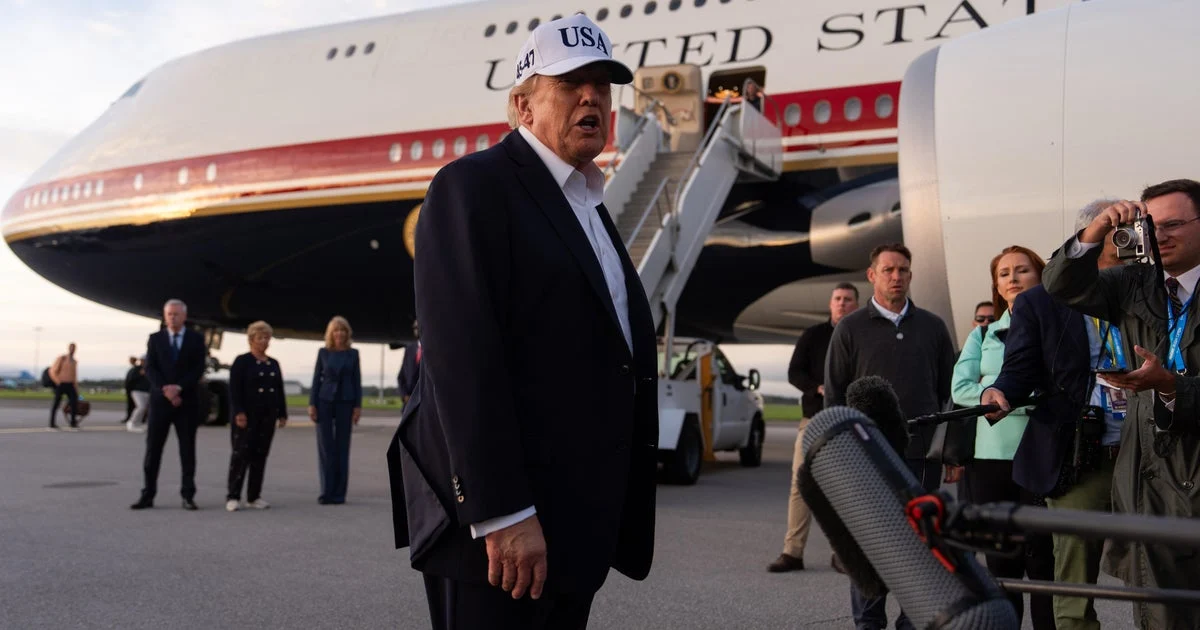
President Donald Trump on Monday forcefully rejected growing calls from tech industry leaders for stricter regulatory guardrails and a coordinated slowdown in advanced artificial intelligence development. Dismissing existential concerns about artificial intelligence as a "hoax," the president insisted that the technology requires no additional federal interventions beyond executive leadership, while arguing that a restrictive regulatory approach would ultimately hand a strategic advantage to foreign competitors like China.
The president’s remarks, disseminated through a flurry of posts on Truth Social, come amid an intensifying national and international debate over the trajectory of artificial intelligence. Prominent figures within the technology sector—including Anthropic co-founder and CEO Dario Amodei, OpenAI CEO Sam Altman, and SpaceX and Tesla CEO Elon Musk—have increasingly warned of the profound risks associated with rapid advancements in large language models. However, the Trump administration has signaled a sharply contrasting philosophy, emphasizing technological supremacy and deregulation over precautionary curbs.
Executive Resistance to AI Guardrails
In his social media statements, President Trump argued that the federal government already possesses sufficient legal and regulatory authority to monitor and police technology firms. He specifically targeted Dario Amodei, the chief executive of Anthropic and developer of the Claude AI assistant, who has publicly advocated for deliberate pauses in model training and enhanced safety protocols.
"The only control or ‘guardrails’ that AI needs is a STRONG AND SMART (High IQ!) PRESIDENT, and the U.S.A. has that, in spades!" Mr. Trump wrote on Truth Social, before criticizing Amodei. "The Trump Administration has stopped AI ‘people’ from doing bad, or potentially bad, ‘things,’ like Dario (Anthropic!), who is now pretending to be a ‘perfect little angel’ — and we will continue to do so!"
The president further characterized warnings of catastrophic AI outcomes as baseless exaggerations designed to undermine American technological progress. "AI taking over the World, destroying Humanity, and all other things bad, is a HOAX," he wrote, placing apocalyptic forecasts on par with what he termed prior national panics and political controversies. "I am the Hoax Buster, and I’m right now breaking another Hoax — That AI is going to take over, consume, and destroy the World, and that Robots will be marching into our Cities, and getting rid of us all! This is even wider than the RUSSIA, RUSSIA, RUSSIA HOAX, or the Global Warming Scam."
Furthermore, the administration framed aggressive regulatory proposals as a geopolitical vulnerability. Asserting that global dominance in artificial intelligence is a zero-sum game, the president claimed that Chinese leadership intends to pursue artificial intelligence development without self-imposed operational restrictions. "President Xi, of China, just announced that China will be doing absolutely nothing to stand in the way of AI, or its future," Mr. Trump stated. "WHOEVER WINS AI, WINS!"
Administration Skepticism and the "Trojan Horse" Argument
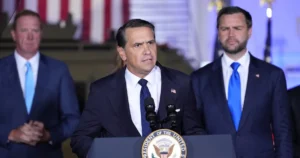
The White House’s skepticism regarding industry-led calls for regulation was echoed by Vice President JD Vance. Speaking to reporters on Monday, Vance expressed deep reservations about why commercial entities would actively lobby the federal government to impose constraints on their own market sector. He likened these appeals to a "Trojan horse" strategy potentially designed to erect regulatory moats that protect incumbent firms while stifling smaller competitors and open-source innovation.
"So there are obviously risks to AI," Vance acknowledged to reporters. "There are some benefits to AI. I have to say, just personally, I feel a little bit weird about the fact that you have so many frontier AI tech companies, kind of coming to the government and begging the government to regulate them, it feels a little bit to me like a bit of a Trojan horse. So I think we just have to be careful about this."
This perspective aligns with actions taken by the administration late last year. In December, President Trump signed an executive order specifically aimed at dismantling state-level laws and regulatory frameworks that the White House deemed obstructive to a cohesive national artificial intelligence policy. The administration’s core economic and national security thesis posits that excessive administrative friction will cause the United States to cede its leadership in computing infrastructure, energy-intensive data centers, and advanced algorithmic research to international adversaries.
The Tech Industry Divide: Safety Versus Acceleration
The public friction between the White House and top artificial intelligence executives highlights a deep ideological schism within the technology sector itself. On one side are companies like Anthropic, whose leadership maintains that frontier models pose unprecedented, unquantified risks to societal stability, national security, and public safety if scaled without rigorous, empirically validated safety thresholds.
In an interview with CBS News prior to the president’s remarks, Dario Amodei addressed the inherent dangers associated with frontier systems. "I won’t lie to you — there are real dangers" about the development of artificial intelligence, Amodei said. "And I think for too long the industry lied to people about the fact that this technology had risks."
Anthropic and other safety-focused organizations have argued for mandatory third-party audits, government oversight of massive compute clusters, and legal accountability for catastrophic model failures. Conversely, other industry leaders and venture capitalists argue that artificial intelligence is the ultimate general-purpose technology—comparable to electricity or the internet—and that any attempt to deliberately slow its progression will merely shift research and deployment to jurisdictions with lower safety standards and less transparent legal systems.
A Fragmented Political Landscape and Bipartisan Convergence
Despite the administration’s deregulatory stance, anxiety over the societal impacts of artificial intelligence continues to forge unusual political coalitions in Washington, D.C.
On Tuesday, the Pro-Human Assembly brought together an ideologically diverse array of public figures, including populist political commentator Steve Bannon and progressive U.S. Senator Bernie Sanders, alongside a bipartisan assortment of federal lawmakers. The gathering focused on establishing frameworks to ensure that emerging technologies serve human welfare, labor stability, and democratic institutions rather than marginalizing the workforce or concentrating disproportionate economic power in the hands of a few technology monopolies.
However, translating these concerns into concrete legislative action remains a formidable challenge. The United States Congress has struggled to pass significant, comprehensive technology legislation amid hyper-partisan divisions and intense lobbying from corporate stakeholders. Congressional observers note that any immediate, binding federal oversight of artificial intelligence remains unlikely, leaving the regulation of the sector largely dependent on executive branch actions, agency guidance, and the voluntary commitments of private corporations.
As the debate intensifies, the fundamental tension between rapid technological acceleration and precautionary risk management continues to define the domestic and international policy landscape, with high stakes for the global economy, national security, and the future of human labor.