Attorney General Todd Blanche has reaffirmed the federal government’s commitment to releasing remaining classified documents concerning the September 11, 2001, terrorist attacks. Speaking in an exclusive interview with CBS News in Kansas City, Missouri, Blanche forcefully rejected assertions that the Department of Justice and other national security agencies are withholding information to shield Saudi Arabia or any other foreign government from accountability.
The remarks follow intense, highly emotional appeals from victims’ families during the 25th-anniversary commemorations marking a quarter-century since the devastating attacks on the World Trade Center, the Pentagon, and United Airlines Flight 93. While the Central Intelligence Agency recently declassified a massive trove of historical presidential briefings, families maintain that crucial evidence regarding potential logistical support provided to the hijackers remains hidden. Blanche’s comments signal a potential thaw in the government’s long-standing classification stance, though federal authorities have yet to provide a definitive timeline for the release of unredacted files.
The Ongoing Battle for Transparency
For nearly twenty-five years, thousands of survivors and family members of 9/11 victims have waged an exhausting legal and public relations campaign to uncover the full narrative of how the terrorist plot was executed. Fifteen of the nineteen hijackers were citizens of Saudi Arabia, prompting intense scrutiny regarding whether elements within the Saudi government, or state-sponsored charities, knowingly assisted the operatives after they arrived in the United States.
While official government investigations—most notably the landmark 2004 report by the National Commission on Terrorist Attacks Upon the United States (known as the 9/11 Commission)—found no evidence that the Saudi government as an institution or senior officials individually funded al-Qaeda, the commission’s findings left critical gaps. Specifically, investigators noted that Saudi-backed charities may have inadvertently or intentionally diverted funds to extremist networks.
These unresolved questions catalyzed a massive, long-running federal lawsuit brought by victims’ families against the Kingdom of Saudi Arabia. The litigation has served as a primary catalyst for the gradual unsealing of government documents that might otherwise have remained buried in federal archives.
Key Discoveries and Investigative Revelations
The legal pressure applied by the families has periodically forced the declassification of intelligence files that shed new light on the movements of the hijackers. Last year, an investigative report brought renewed attention to Omar al-Bayoumi, a Saudi national living in California who crossed paths with two of the primary hijackers, Nawaf al-Hazmi and Khalid al-Mihdhar, shortly after their arrival in San Diego in January 2000.
While al-Bayoumi maintained that his interactions with the operatives were coincidental and benign, newly surfaced evidence paints a more complex picture. Court filings and investigative reports revealed that al-Bayoumi had filmed the entrances of the U.S. Capitol building and documented its proximity to the Washington Monument, making explicit references to a "plan."
Further complicating the investigative record, British authorities seized a notebook from al-Bayoumi’s U.K. apartment in late 2001 containing a crude airplane sketch and a mathematical formula. This critical piece of evidence languished for years before being brought to the attention of aviation experts, who confirmed that the formula could be utilized by a pilot to calculate a precise rate of descent to strike a target on the horizon. Aviation analysts and investigators have long theorized that the U.S. Capitol building was the intended target of United Flight 93, which ultimately crashed into a Somerset County, Pennsylvania field after heroic passengers revolted against the hijackers.
Despite these revelations, families have frequently expressed frustration that vital investigative clues were siloed, overlooked, or unnecessarily classified by successive presidential administrations.
Confrontation at Ground Zero
The simmering tensions between the federal government and the victim community boiled over during the solemn 25th-anniversary commemorations at Ground Zero. Terry Strada, chair of Families United, used her platform at the annual reading of the victims’ names to deliver a blistering critique of past executive administrations. Strada, whose husband Tom perished in the North Tower, accused generations of American political leaders of prioritizing geopolitical alliances over justice for the victims.
"For 25 years, administration after administration, including leaders in front of us here today, chose to protect the Saudis instead of standing with the 9/11 families," Strada told the gathered crowd.
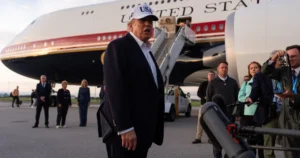
Strada directly confronted Vice President JD Vance during the New York City ceremony, urging the administration to carry the families’ grievances back to Washington and demand full transparency from Riyadh. Other family members made direct emotional appeals to President Donald Trump, who told reporters en route from Ireland that he would review the matter upon his return to the capital.
The Government Response and National Security Balances
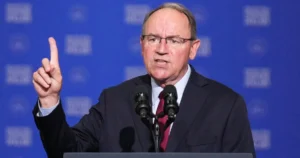
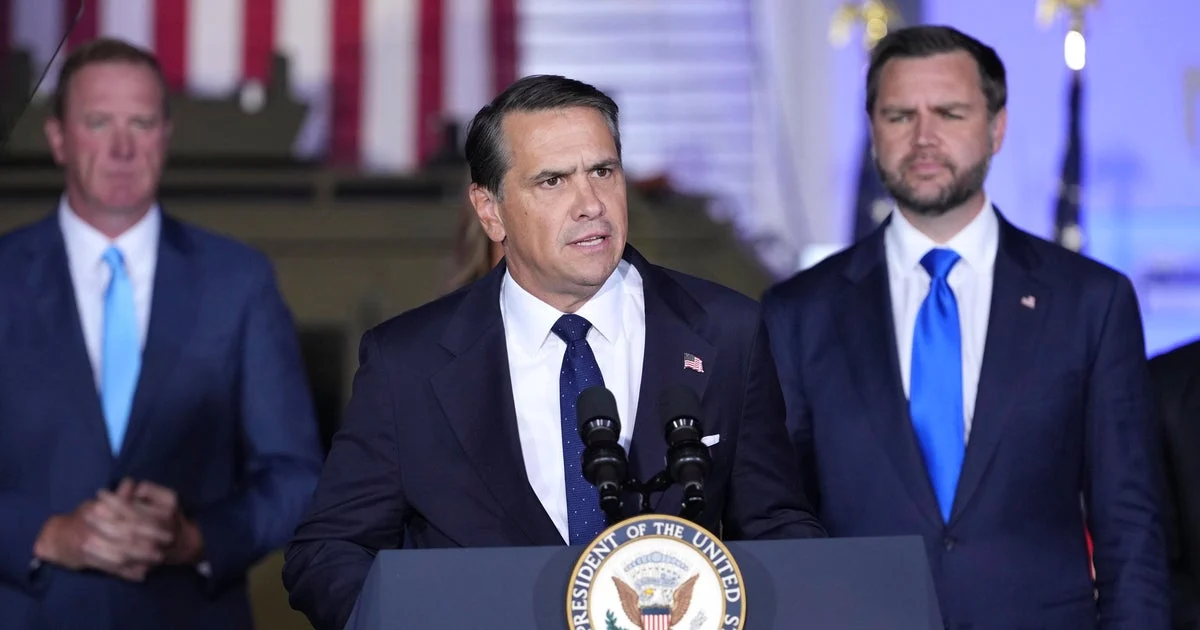
Addressing the public outcry during his CBS News interview, Attorney General Blanche sought to assure families that the Department of Justice shares their overarching goal of uncovering the complete truth of the tragedy.
"The one thing that we are not doing, we’re not protecting people," Blanche stated. "The reason that we’re not releasing documents has nothing to do with protecting any government or any entity. It’s just to protect genuine classified [information]."
Blanche acknowledged that historical classification protocols have occasionally overreached, keeping documents secret that no longer pose a threat to national security. "Sometimes there’s documents that are classified and they shouldn’t be," he noted. "And so those are the ones that we’re going to release."
Directly addressing those who have spent decades seeking definitive answers, Blanche promised continued disclosures. "There’ll be more records coming out. And so, to the families that are still looking for answers, we are, too. And that’s what we’re going to deliver to them."
Recent Declassifications and Judicial Developments
The statements from the Attorney General arrive on the heels of significant archival releases. In August 2025, the Central Intelligence Agency executed its largest single release of declassified presidential briefing material tied to the terrorist attacks, making public 71 President’s Daily Brief products spanning the pre- and post-9/11 eras. While praised by historians for offering a granular look at the intelligence community’s evolving assessments of Osama bin Laden and al-Qaeda, these CIA documents did not directly address the specific evidentiary demands raised by the families concerning Saudi liaisons.
Concurrently, the legal landscape shifted significantly in federal court. U.S. District Judge George B. Daniels denied a motion by the Kingdom of Saudi Arabia to dismiss the multi-billion-dollar lawsuit. Judge Daniels ruled that the plaintiffs had successfully amassed sufficient circumstantial and direct evidence—particularly regarding the activities of al-Bayoumi, Fahad al-Thumairy, and the support network in Southern California—to allow the litigation to proceed toward trial.
Broader Implications and Future Outlook
The ongoing standoff between the federal government, foreign allies, and victims’ families underscores the perennial tension between national security secrecy and public accountability. As the events of September 11 recede further into history—now marking a full quarter-century—the demand for historical closure remains as urgent as ever for those directly impacted by the tragedy.
While Attorney General Blanche’s pledge signals a willingness to unseal additional files, the practical boundaries of what the executive branch can release without compromising intelligence-gathering methods and sources remain strict. Whether future document drops will satisfy the legal and moral demands of the 9/11 families—or whether the courts will ultimately force deeper disclosures through the ongoing litigation—will likely remain a defining chapter in the post-9/11 legacy for years to come.