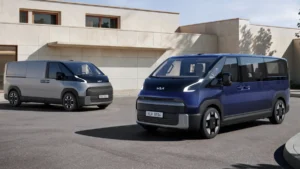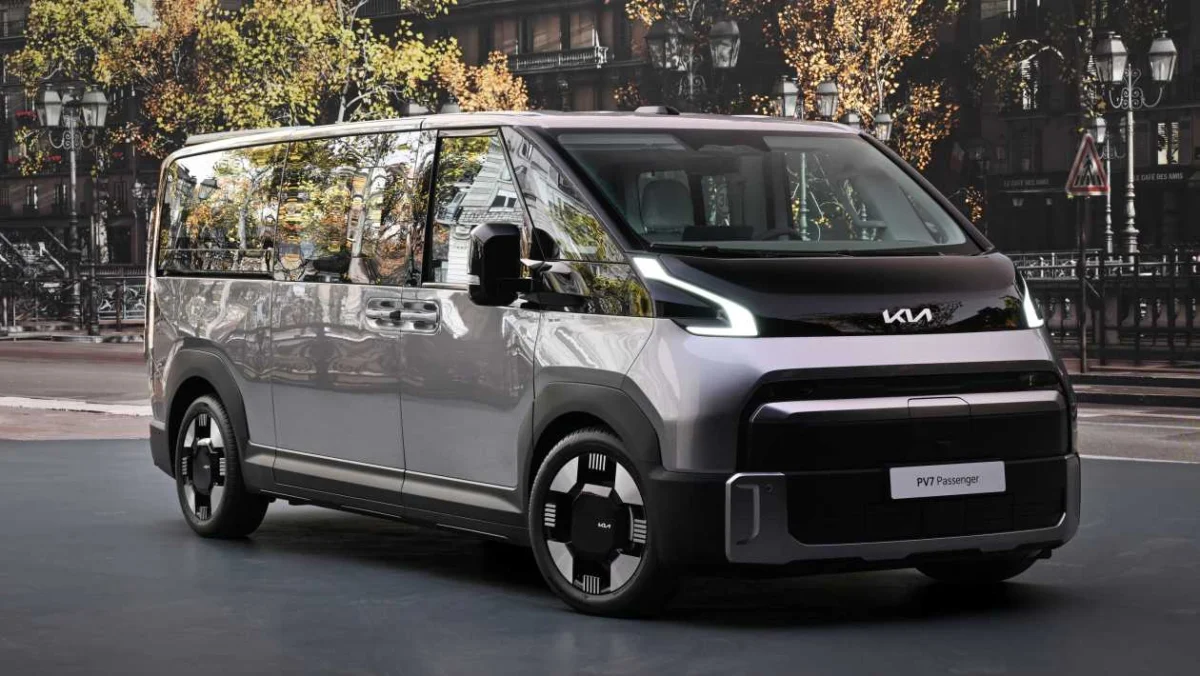
Kia is poised to significantly expand its footprint in the global commercial vehicle market with the introduction of the PV7, a sophisticated, large-scale electric van designed to serve as the flagship of the brand’s "Platform Beyond Vehicle" (PBV) initiative. Following the critical and commercial success of the smaller PV5, which secured multiple accolades including "Family Car of the Year" and "Electric Van of the Year" in 2026, the PV7 arrives as a more capable, high-capacity sibling engineered to tackle the most demanding logistics and passenger transport requirements. Set for a full market release in the second half of 2027, the vehicle represents a strategic pivot for the Korean manufacturer, signaling a transition from a traditional automaker to a comprehensive provider of modular mobility solutions.
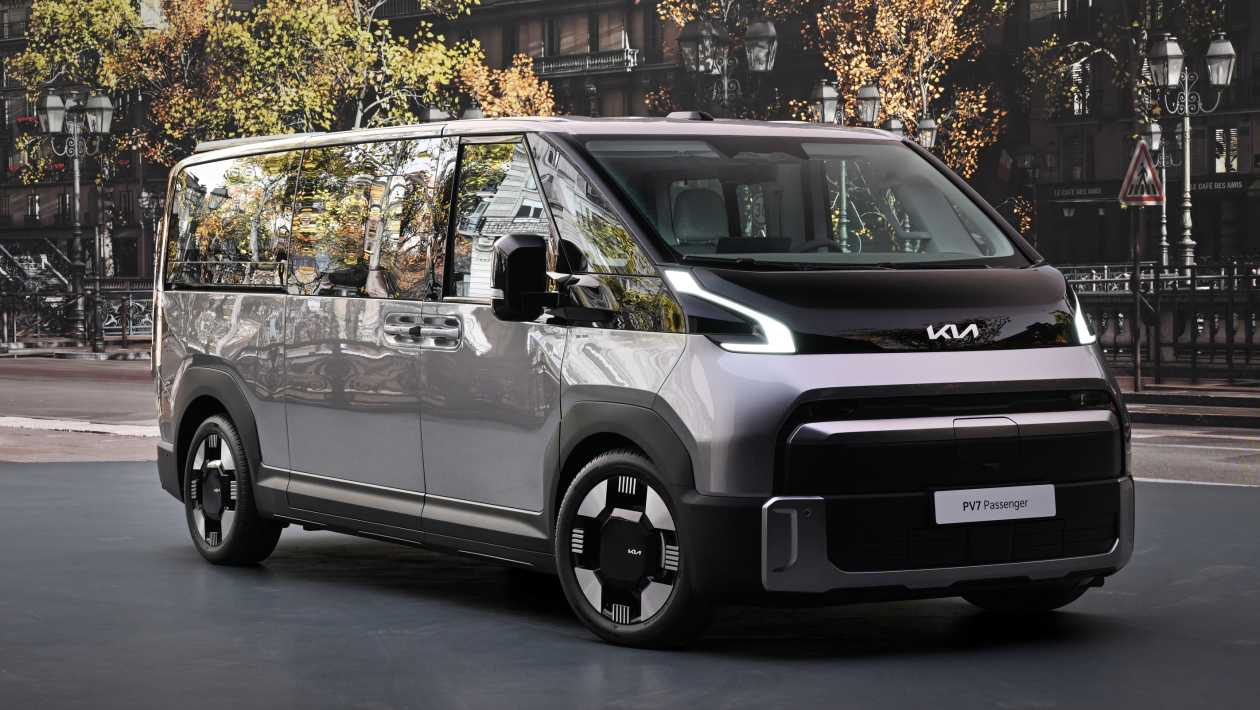
The development of the PV7 is a cornerstone of Kia’s ambitious electrification roadmap. By leveraging the modular e-GMP.S platform—an evolution of the standard electric global modular platform optimized for commercial versatility—Kia has created a vehicle that balances a massive internal footprint with the efficiency of high-voltage battery architecture.
Dimensional Superiority and Modular Design
The most immediate differentiator between the existing PV5 and the new PV7 is sheer scale. Measuring 5,350mm in length, the PV7 comfortably eclipses the PV5, which tops out at approximately 4.7 meters. This dimension places the PV7 in a competitive "mid-to-large" van segment, bridging the gap between standard short-wheelbase and long-wheelbase iterations of the Ford Transit Custom, while extending roughly 300mm beyond the current long-wheelbase Volkswagen ID.Buzz.

This increased length is not merely for aesthetic presence; it is fundamental to the vehicle’s utility. In its passenger configuration, the PV7 accommodates up to nine occupants across four rows in global markets, with specific provisions for an 11-seat layout in its home market of South Korea. The interior flexibility is facilitated by a modular rail system, allowing for the sliding or complete removal of second and third-row seating. For fleet operators, this ensures the vehicle can pivot between a high-capacity shuttle and a utilitarian cargo transporter with minimal downtime.
The Cargo variant underscores this versatility. With a front cabin layout available in either two or three-seat configurations, the rear load area provides 6.0 square meters of floor space. For businesses requiring vertical volume, a forthcoming high-roof derivative will expand this to 8.1 square meters. With a rated payload of 1,165kg, the PV7 outperforms key electric competitors, including the current iterations of the Ford Transit Custom and the VW ID.Buzz, positioning it as a primary contender for heavy-duty last-mile delivery and utility operations.

Technical Specifications and Charging Infrastructure
At the heart of the PV7’s appeal is its powertrain and electrical architecture. Kia has opted for two nickel manganese cobalt (NMC) battery options: a standard-range 71.5kWh pack and a long-range 96.2kWh unit. While the entry-level range figures remain under final validation, the long-range variant is estimated to deliver a range of up to 285 miles. While this figure trails slightly behind the longest-range ID.Buzz models, it represents a substantial improvement over current electric Transit benchmarks, which hover around the 201-mile mark.
Crucially, the PV7 features an 800V electrical architecture, a hallmark of Kia’s high-end EV engineering. This enables the vehicle to support DC fast charging at rates of up to 350kW. In real-world conditions, this means the larger 96.2kWh battery can be replenished from 10% to 80% in approximately 25 minutes. For commercial fleets, this "downtime reduction" is a critical economic factor, allowing for more efficient shift rotations and minimized charging bottlenecks during peak hours.

Power delivery is managed by a front-mounted electric motor producing 262bhp and 420Nm of torque. While current technical documents do not indicate an all-wheel-drive (AWD) dual-motor variant, the performance metrics suggest sufficient output for the expected load profiles of a medium-duty commercial van.
Interior Technology and Ergonomic Innovation
Inside the cabin, the PV7 adopts the "Pleos Connect" infotainment system, which serves as the digital nerve center for the vehicle. Drivers interact with the system via a choice of 12.9-inch or 14.6-inch touchscreens. Recognizing that commercial vehicles are often used as mobile offices, Kia has prioritized interior refinement, incorporating an upholstered dashboard and advanced ambient lighting.
Despite the focus on premium aesthetics, the design remains rooted in industrial practicality. By relocating the passenger-side airbag to the roof and utilizing advanced packaging for the HVAC (heating, ventilation, and air conditioning) components, engineers have unlocked additional storage cubbies across the dashboard. This design philosophy—maximizing utility without compromising on the modern digital experience—is intended to help the PV7 capture market share from more traditional, less tech-forward rivals.
Chronology and Future Expansion
The announcement of the PV7 follows a carefully managed timeline of development and testing:
- Early 2026: Kia records significant success with the PV5, which wins major awards, establishing the brand’s credibility in the electric commercial sector.
- September 2026: Initial teasers for the PV7 are released, sparking industry interest ahead of the IAA Transportation show in Germany.
- Late 2026 to Mid-2027: Final validation testing, focusing on cold-weather performance and high-payload durability.
- Second Half of 2027: Scheduled commercial launch and arrival in showrooms.
Kia has already confirmed that the PV7 is the start of a broader rollout. Future variants in the pipeline include a slightly shortened version to bridge the gap to the PV5, a dedicated cab-chassis model designed for bespoke steel bed installations, and high-roof conversion kits. These conversions are being explicitly marketed toward the growing campervan and mobile-workshop sectors, where the large battery capacity could theoretically power auxiliary equipment or living quarters.
Industry Implications and Market Impact
The introduction of the PV7 is set to disrupt the European and global van markets, which are currently undergoing a rapid, albeit cautious, transition to electric power. By offering a vehicle that exceeds the payload capacity of the Ford Transit Custom and the modularity of the Volkswagen ID.Buzz, Kia is positioning itself as a "first-choice" provider for fleet managers.

The strategic importance of the 800V architecture cannot be overstated. As urban centers continue to implement stricter low-emission zones, logistics firms are under increasing pressure to electrify their fleets. However, the viability of these fleets depends heavily on charging speed. By enabling 350kW charging, Kia is directly addressing the primary pain point of fleet electrification: the time-cost of charging.
Furthermore, the integration of the PV7 into the broader Kia ecosystem—which includes plans for smaller urban delivery vehicles like the rumored EV1—suggests that Kia is building a holistic mobility portfolio. This "one-stop-shop" approach for commercial buyers, combined with the proven software architecture of the Pleos system, creates a compelling value proposition that traditional commercial manufacturers may find difficult to match in the short term.
As the industry approaches the 2027 launch window, the success of the PV7 will likely hinge on the scalability of the e-GMP.S platform and the pricing strategy adopted by Kia. If the vehicle is priced competitively against its diesel-powered counterparts while maintaining the low total cost of ownership associated with EVs, it is poised to become a dominant force in the light commercial vehicle segment. The market, now awaiting the full specifications and final pricing, is looking at a vehicle that is not just a larger van, but a fundamental rethinking of how commercial cargo and passenger transport will function in the coming decade.