The modern corporate landscape has long been characterized by a decline in traditional long-term employment incentives. For decades, the quintessential retirement package involved a gold watch and a guaranteed pension, a relic of the mid-20th-century labor market that has largely vanished in the wake of 401(k) dominance and corporate restructuring. However, in a significant departure from these austerity-driven trends, Las Vegas-based Station Casinos has chosen to mark its 50th anniversary by fundamentally altering its relationship with its workforce. By distributing over $70 million in Red Rock Resorts Class A stock to nearly 10,000 employees, the company is attempting to pivot from a traditional employer-employee dynamic to a model of shared ownership.
A Milestone Celebration in Las Vegas
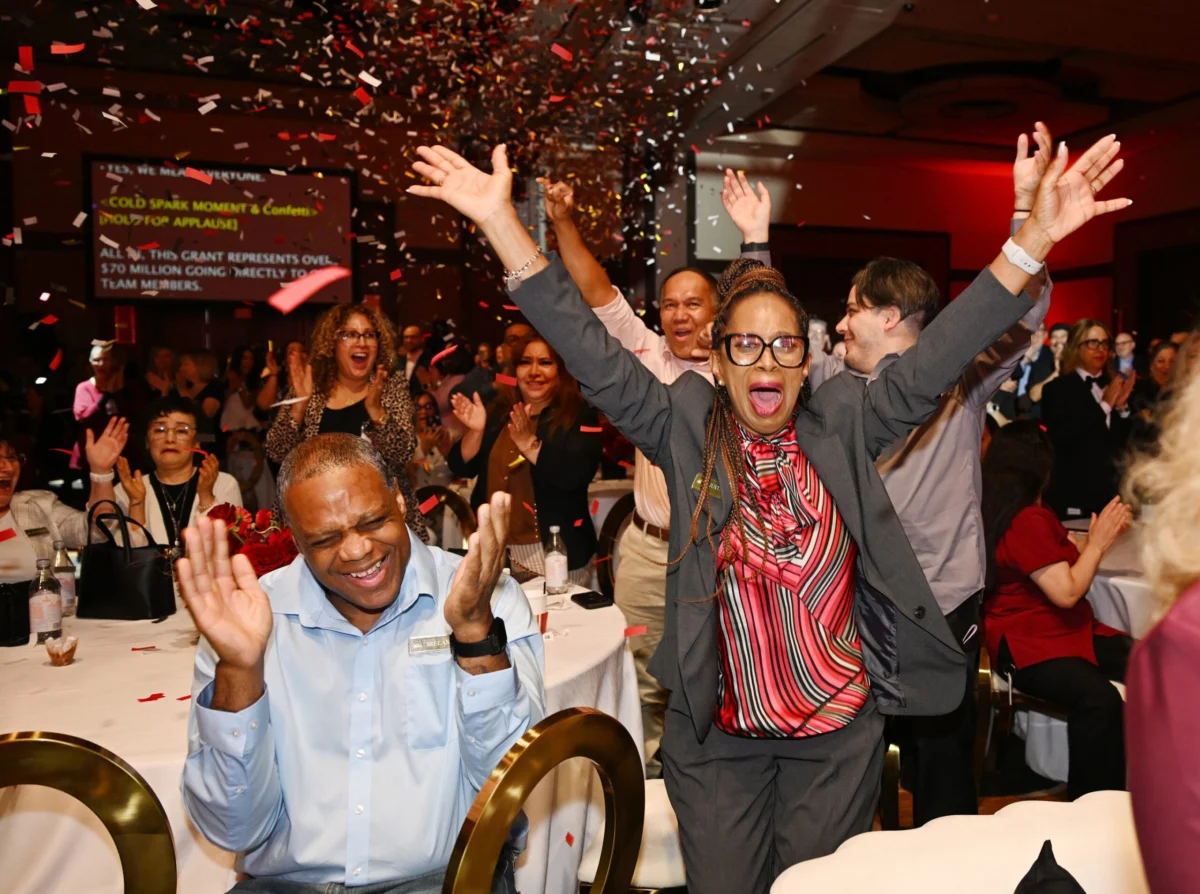
The surprise announcement took place last Wednesday in a bustling ballroom at a Station Casinos property, where employees—ranging from front-line hospitality staff to long-term operations personnel—gathered for what they initially expected to be a standard corporate commemoration. Instead, they were greeted by Frank Fertitta III, chairman and CEO of Red Rock Resorts, and Vice Chairman Lorenzo Fertitta.
The mechanism of the reward is direct: every eligible employee, regardless of their status as full-time or part-time, received $1,000 in company stock for every year of service they have logged with the organization. For the company’s longest-tenured staff, this amounted to substantial sums. Ida Johnson, a fixture of the company since 1977, was awarded $49,000 in equity. Similarly, six other staff members who joined the organization during its infancy at the "Bingo Palace" era were each granted more than $45,000 in shares. The distribution began on the following Monday, effectively turning nearly 10,000 workers into shareholders overnight.
Historical Chronology: From Bingo Palace to Industry Titan
The roots of the current multi-billion-dollar enterprise date back to 1959, when founder Frank Fertitta Jr. migrated from Galveston, Texas, to the burgeoning desert oasis of Las Vegas. However, the true genesis of the Station Casinos brand occurred in 1976. Frank Fertitta Jr. opened "The Casino," a modest 5,000-square-foot facility equipped with only 100 slot machines, six table games, and a staff of 90 people.
The company’s growth trajectory over the subsequent five decades mirrors the evolution of the Las Vegas locals market:
- 1976: Opening of "The Casino," the foundation of the future empire.
- 1977: The property is rebranded as the "Bingo Palace," signaling a shift toward community-focused entertainment.
- 1984: The property is officially renamed Palace Station, establishing the naming convention that would define the brand for decades.
- 2000s–Present: The company expands into a regional powerhouse, currently operating 14 properties across the Las Vegas Valley, including the Red Rock Casino Resort & Spa, Green Valley Ranch, and the recently opened Durango Casino & Resort.
This evolution from a single, small-scale local venue to a massive regional hospitality conglomerate has consistently prioritized the "locals-first" strategy, a philosophy the Fertitta family credits for their sustained longevity in a notoriously competitive industry.
The Economic Philosophy of Employee Ownership
During the announcement, Lorenzo Fertitta emphasized that the stock award was intended to change the psychological contract between the worker and the company. "When you walk out of here today, we want you to walk out differently than you walked in—not just as someone who works at Station Casinos, but as someone who owns a piece of it," he stated.
This move is grounded in the economic theory of "employee ownership," which posits that when staff members have a direct financial stake in the success of the company, their productivity, retention rates, and customer service quality increase. By turning staff into shareholders, the company incentivizes long-term alignment between the individual’s financial future and the company’s stock performance.
Comparative Analysis: The Equity Trend in Modern Business
Station Casinos is not the first major corporation to experiment with broad-based equity compensation, though the scale of the distribution relative to the company’s size is notable. The trend of "democratizing equity" has been gaining traction as a tool for talent retention in a tight labor market:
- Bank of America: In 2022, the financial giant allocated a $1 billion restricted-stock pool to its global workforce, aiming to reward employees for their resilience during the pandemic.
- Apple: Following the 2017 U.S. tax overhaul, the technology giant distributed $2,500 in restricted stock units to the vast majority of its employees worldwide.
- Samsung: In late 2025, the electronics conglomerate initiated a program to award thousands of dollars in shares to staff outside the C-suite, signaling a shift in Korean corporate culture toward western-style equity incentives.
- Fibrebond Corp: The Louisiana-based manufacturer provided an extreme example of ownership transition when it sold last year, distributing a $240 million bonus pool that resulted in an average payout of $443,000 per employee.
These examples highlight a broader shift: companies are increasingly viewing equity not just as an executive perk, but as a mechanism to build institutional loyalty and distribute wealth during periods of corporate success or structural change.
Implications for the Hospitality Industry
The hospitality industry, characterized by high turnover rates and the ongoing challenge of maintaining service standards, faces unique pressures. Providing employees with a direct stake in the company’s valuation may serve as a powerful hedge against the "Great Resignation" phenomenon that has plagued the service sector since 2020.
From a financial perspective, the $70 million distribution acts as a form of non-cash compensation that aligns employee interests with those of public shareholders. By rewarding longevity, Station Casinos is also signaling a commitment to reducing turnover costs—the price of training and replacing staff—which remains one of the largest hidden expenses in the gaming and hospitality sectors.
Looking Toward the Future
As the ceremony concluded, Frank Fertitta III reflected on the core principles instilled by his father: serving the local community, delivering value, and prioritizing the team. While the gaming industry continues to face headwinds from technological disruption and changing consumer demographics, the decision to invest $70 million back into the human capital that drives the company’s daily operations serves as a strategic bet on the next 50 years.
The long-term impact of this move remains to be seen. If the program succeeds in fostering a culture of ownership, it could provide a roadmap for other mid-to-large-cap service firms struggling to retain experienced staff in an era where traditional pensions are all but obsolete. As the employees of Station Casinos begin their tenure as shareholders, the company faces the challenge of maintaining that morale through future market cycles. For now, however, the move represents a rare alignment of corporate milestone celebration and meaningful wealth distribution for the working class in the Las Vegas valley.
The success of this initiative will likely be measured by employee retention rates over the next five years and the extent to which the new shareholders feel empowered to influence the quality of service provided to the company’s local patrons. As the gaming industry evolves, the "Station Casinos model" may well be scrutinized by analysts and human resource departments globally as a potential template for modernizing the labor-capital relationship.