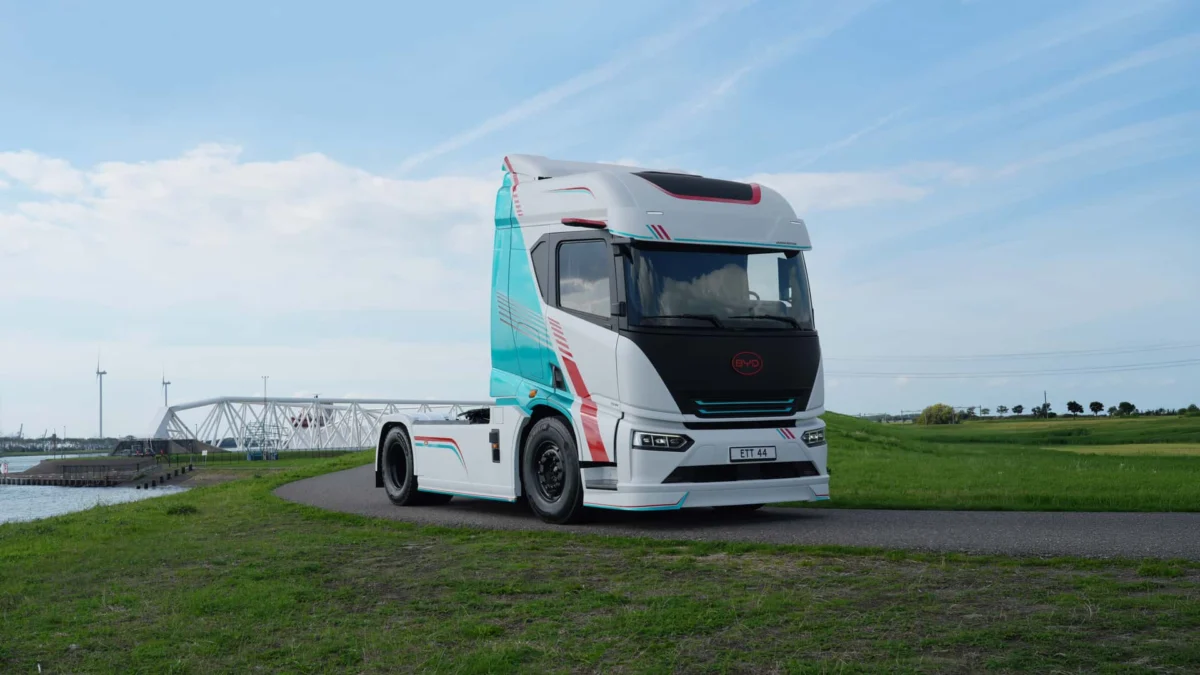
The landscape of heavy-duty logistics is undergoing a fundamental transformation, a shift clearly underscored by the proceedings at the IAA Transportation 2026 show in Hanover, Germany. As global manufacturers converge on this premier trade fair for mobility, logistics, and transport, the competition between legacy industrial giants and agile tech-focused entrants has reached a boiling point. While Tesla captured significant industry attention with the European debut of its Semi, Chinese automotive powerhouse BYD responded with its own strategic play: the ETT 44. This vehicle represents more than a mere alternative to Western electric trucks; it is a direct challenge to the established operational standards of long-haul logistics.
A New Contender in the Heavy-Duty Segment
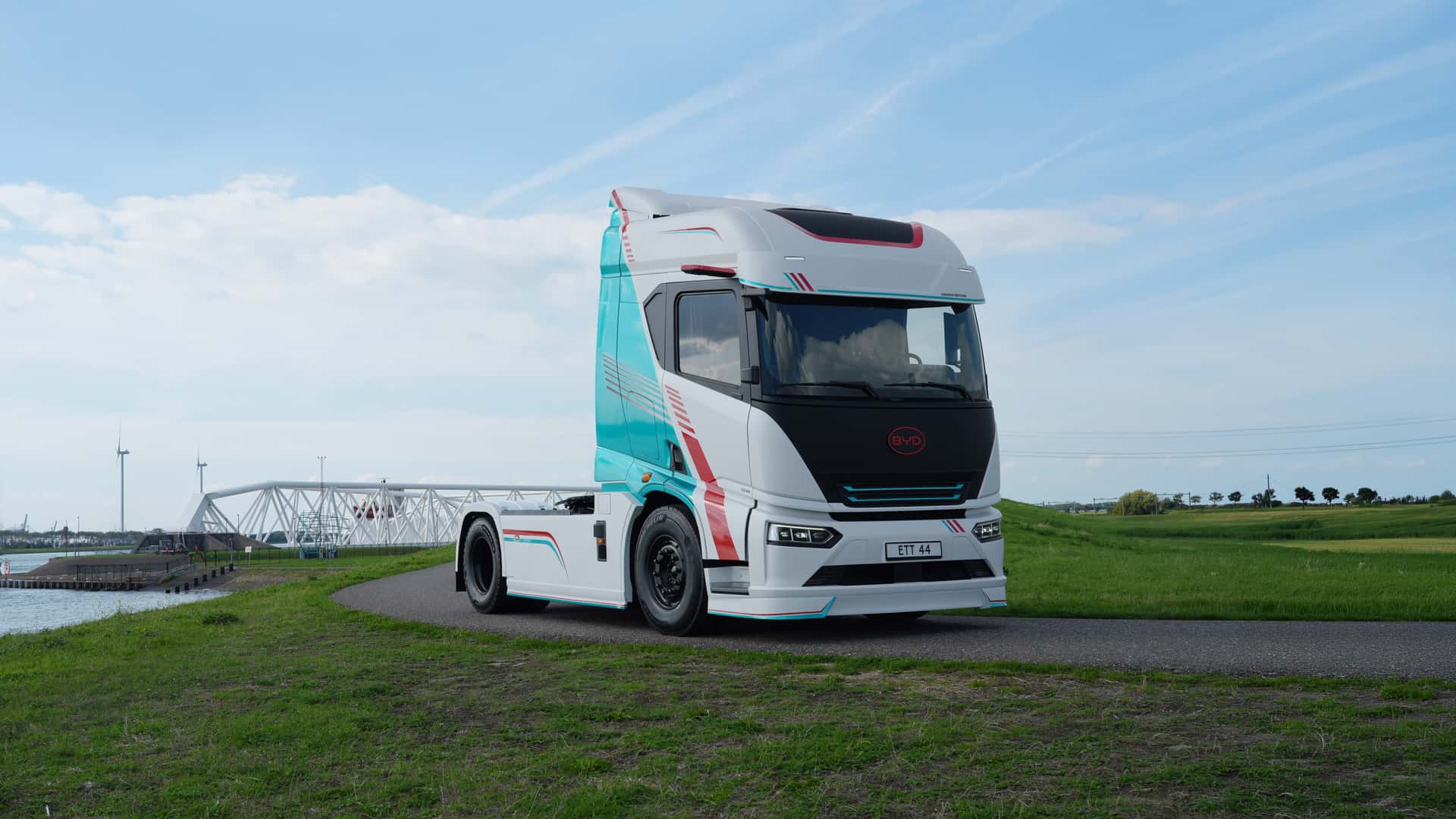
The BYD ETT 44 is designed to function as a 4×2 workhorse, a classification that belies its sophisticated engineering. While its exterior aesthetic remains firmly rooted in traditional trucking design—favoring aerodynamic efficiency and practical modularity over the polarizing, futuristic silhouette of the Tesla Semi—the powertrain and energy management systems are anything but conventional.
At the core of the ETT 44 is BYD’s proprietary "Ultra-safe Blade Battery" technology. Utilizing a Lithium Iron Phosphate (LFP) chemistry, the vehicle houses a massive 651 kWh battery pack. This high-capacity energy storage system is paired with an electric motor capable of delivering a continuous 732 horsepower, with the ability to reach a peak output of 1,000 horsepower. This performance profile is designed to ensure that the vehicle can maintain highway speeds while carrying substantial loads, a persistent hurdle for earlier generations of electric heavy-duty vehicles.
Technical Specifications and Charging Infrastructure
The transition to zero-emission trucking is contingent not only on vehicle range but on the efficacy of charging infrastructure. The ETT 44 is built to interface with Megawatt Charging System (MCS) stations, which are currently being deployed across key logistics corridors in Europe.
According to official data released by BYD at the Hanover exhibition, the ETT 44 is capable of high-speed "Flash Charging." When connected to an appropriately rated MCS terminal, the vehicle can replenish its state-of-charge from 20% to 80% in under 20 minutes. This interval is strategically designed to align with mandatory driver rest periods, effectively minimizing the impact of charging downtime on logistics schedules. Under these conditions, the system can provide approximately 248 miles of additional range in a single short stop.
With a fully charged battery, the ETT 44 claims a total range of 372 miles. While this figure may seem modest compared to diesel-powered counterparts, it is highly competitive within the current market segment for battery-electric vehicles (BEVs) of this size. Furthermore, the vehicle boasts a gross vehicle combination weight (GVCW) of 44 tonnes (approximately 97,000 pounds), a rating that gives it a payload capacity advantage of roughly 8,818 pounds over current iterations of the Tesla Semi.
Warranty and Long-Term Reliability
One of the most significant barriers to the widespread adoption of electric trucks has been the uncertainty surrounding the longevity of battery packs under the grueling demands of commercial use. BYD has attempted to address this skepticism by announcing a comprehensive warranty for the ETT 44’s Blade Battery: 10 years or 1.2 million kilometers (approximately 745,000 miles).
This warranty period significantly exceeds the typical 6-to-8-year terms offered by many incumbent European manufacturers. By offering such a robust guarantee, BYD is positioning its hardware as a reliable, long-term capital investment rather than a depreciating asset. This strategy is expected to appeal to fleet operators who prioritize total cost of ownership (TCO) and operational uptime over initial purchase price.
A Modular Ecosystem for Commercial Logistics
The ETT 44 is not an isolated product; it is the flagship of a broader commercial vehicle ecosystem. BYD has confirmed that the platform underpinning the ETT 44 is scalable and will be utilized across a range of commercial applications, including rigid trucks, urban distribution vehicles, and yard tractors. By standardizing the battery technology and modular chassis components across its fleet, BYD intends to streamline maintenance, parts availability, and operator training.
Inside the cabin, the focus shifts to the driver experience. The ETT 44 features a high-roof sleeper configuration designed for long-haul duty. In an acknowledgment of the digital expectations of modern logistics, the cockpit is equipped with a 12.8-inch centralized display that supports full integration with Apple CarPlay and Android Auto. This inclusion is designed to assist with navigation, communication, and fleet management software, ensuring that drivers remain connected and informed throughout their routes.
Market Context and Future Implications
The European heavy-duty truck market is currently characterized by a transition toward decarbonization, driven by stringent European Union emissions regulations and the growing demand for green supply chains. The market is already populated by established players, including Volvo Trucks, Scania, Mercedes-Benz, and DAF.
The arrival of the Tesla Semi and the BYD ETT 44 complicates this competitive environment. Recent developments, such as the Swedish logistics company Einride’s commitment to procure 500 Tesla Semis, illustrate that fleet operators are willing to commit to new technology if it promises long-term operational efficiency. However, the success of these new entrants will depend on their ability to establish reliable service networks—a critical requirement for the trucking industry, where vehicle downtime is directly correlated to financial loss.
For BYD, the IAA Transportation 2026 show represents a pivotal moment in its international expansion. Having already achieved significant market share in the passenger vehicle sector, the company is now demonstrating that it has the technological maturity to compete in the demanding world of heavy-duty transport.
Challenges Ahead
Despite the impressive technical specifications, the ETT 44 faces several headwinds. First, the European logistics sector is highly protective of its domestic manufacturers. Companies like Mercedes-Benz and Volvo have spent decades building extensive service and support networks that are deeply integrated into the continent’s infrastructure. A new manufacturer, regardless of the quality of its product, must overcome the inertia of established relationships and the logistical challenge of building a comparable service footprint.
Second, the standardization of charging hardware remains an ongoing process. While MCS is the emerging standard for heavy-duty charging, the actual availability of these high-power stations across Europe remains limited. Until the charging network reaches a density that supports nationwide operations, even the most capable electric trucks will be restricted to specific, well-serviced routes.
Finally, the macroeconomic environment for the logistics sector is increasingly sensitive to energy costs. While electric trucks offer lower fuel costs per kilometer compared to diesel, the volatility of electricity pricing and the capital expenditure required to install private depot charging infrastructure are significant variables for fleet operators to consider.
Conclusion
The unveiling of the BYD ETT 44 at IAA Transportation 2026 marks a turning point for the heavy-duty electric vehicle market. By combining a 44-tonne load capacity, rapid megawatt-class charging, and a segment-leading warranty, BYD has set a high bar for its competitors. As the industry moves toward 2030, the battle for the roads will be fought not just with horsepower and torque, but with battery longevity, charging speed, and the ability to integrate into the complex, interconnected global logistics chain. The ETT 44 is a clear signal that the Chinese manufacturer is prepared to compete on every front, ensuring that the next several years of the transition to electric trucking will be defined by intense innovation and aggressive market competition.