The modern relocation process involves a complex series of logistical choices, chief among them being the determination of how household belongings will be transported from one residence to another. Whether individuals are transitioning from a historic home in Richmond, Virginia, or vacating a high-rise apartment in Portland, Oregon, the ultimate decision typically boils down to a classic moving dilemma: choosing between a traditional moving truck rental and a portable moving container. While both methodologies achieve the fundamental objective of transferring possessions across distances, they cater to distinctly different preferences regarding schedule flexibility, financial budgeting, spatial control, and personal comfort levels with operating heavy commercial vehicles.
A moving truck generally emerges as the optimal choice when a household’s move-out and move-in dates occur seamlessly back-to-back, when direct, uninterrupted transit is required, and when the driver possesses the confidence and capability to navigate large, high-capacity vehicles over local or interstate roadways. Conversely, a moving container frequently proves superior for relocations that demand extended packing windows, temporary on-site or off-site storage solutions, ground-level loading convenience, or the outsourcing of driving logistics entirely. To arrive at an informed decision, consumers must conduct a comprehensive evaluation of total expenses, spatial capacities, scheduling timelines, and local property regulations before finalizing any logistical bookings.
Deconstructing the Core Differences: Mechanics of Moving Trucks and Containers
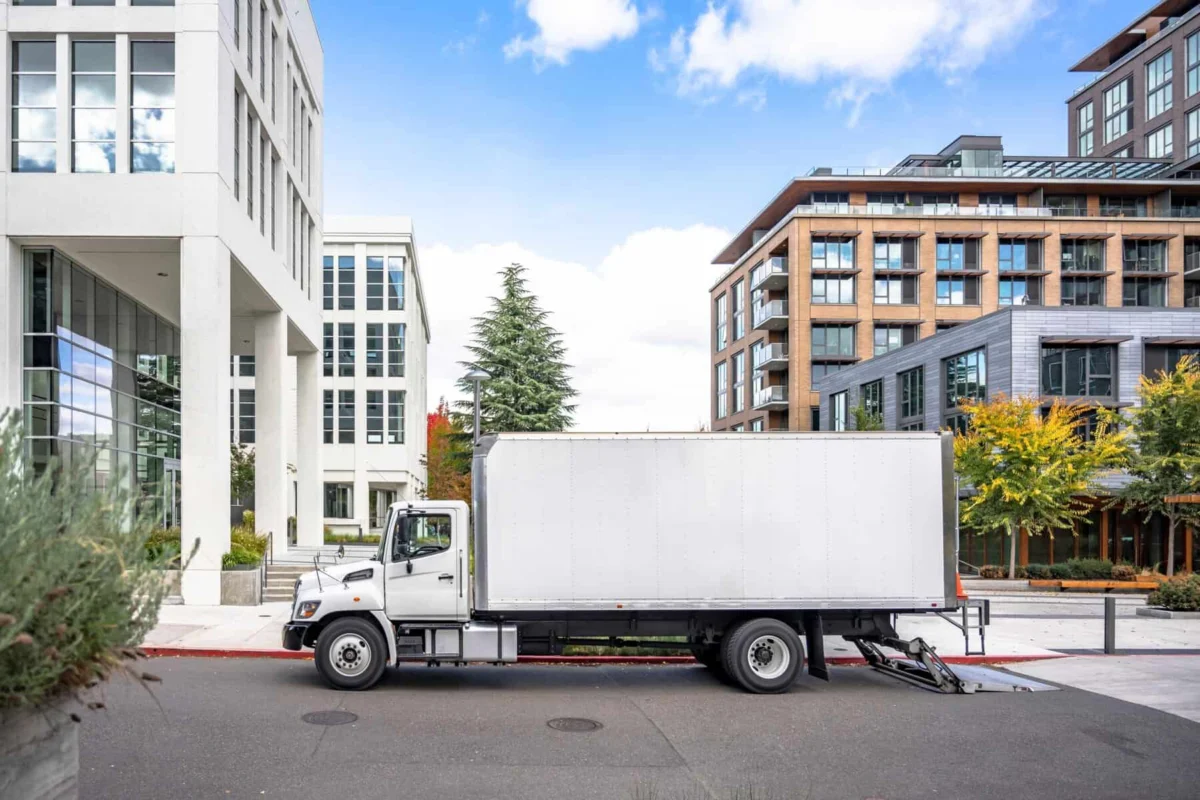
To fully understand the implications of each option, it is necessary to examine the mechanical and operational differences between truck rentals and portable containers. When an individual rents a moving truck, they typically enter into a short-term contract with a commercial provider. The customer is responsible for picking up the vehicle, loading all household goods into the cargo bay, securing the items, driving the truck to the final destination, unloading the contents, and returning the vehicle to a designated drop-off point within an established rental window. While this grants the consumer absolute control over the travel route, driving speed, and handling of fragile items, it simultaneously places the sole burden of operating a multi-ton vehicle on the amateur driver.
In contrast, a moving container relies on a decentralized, hub-and-spoke transportation model. A commercial container company delivers a weatherproof, steel or composite storage pod directly to the customer’s driveway or a pre-approved street location. The homeowner is given ample time to load the container at their own pace. Once loading is complete, the provider returns, lifts the container using specialized hydraulic machinery, and transports it either to a secure regional storage facility or directly to the consumer’s new residence.
Industry experts emphasize these operational divergences. Mark Rybikov, CEO of 904 Movers, notes that traditional moving trucks typically offer superior internal cargo-securement options, such as built-in tie-down rails and blanket wraps, while giving the driver direct supervision over speed, route planning, and transit handling. However, Rybikov points out that moving containers compensate for this by offering significantly easier ground-level loading and unmatched flexibility for homeowners who require multiple days of gradual packing or intermittent temporary storage. Ultimately, the foundational trade-off pits direct transport control and structured driving schedules against extended packing flexibility, integrated storage capabilities, and outsourced transit management.
Evaluating Moving Truck Rentals: When Direct Control and Rigid Schedules Prevail
Traditional truck rentals remain a cornerstone of the American moving industry, heavily favored for short-to-medium-distance relocations where timing is absolute. A moving truck is particularly advantageous when a homeowner’s lease end dates and closing schedules align perfectly, eliminating the need for intermediate warehousing or storage buffers.
According to logistics specialists at 1st Coast Express Movers, moving trucks represent the superior choice for customers who prioritize direct, point-to-point transit on a strict schedule. This direct-routing capability is especially valuable for large-scale household moves or long-distance transits where delays in property access must be avoided. Furthermore, commercial truck fleets offer a vast array of sizing tiers. While major container providers like PODS offer limited size variations—typically 8-, 12-, and 16-foot portable units, with the 12-foot option restricted exclusively to local moves and stationary storage—truck rental companies routinely provide vehicles ranging from compact 10-foot vans up to massive 26- to 29-foot commercial freight trucks.

When assessing truck size, however, careful analysis is required. Rybikov warns that nominal vehicle length can be deceiving. Homeowners must compare actual usable cargo dimensions, noting that two vehicles with identical advertised lengths can differ substantially in interior width, vertical clearance, and overall cubic capacity due to wheel wells and aerodynamic cab designs.
An additional logistical advantage of truck rentals is vehicle towing capability. Depending on the rental agency’s equipment specifications, larger trucks can often be paired with car dollies or full auto transport trailers, allowing families to tow a secondary personal vehicle behind the moving truck. For consumers who prefer not to handle the heavy physical labor of loading alone, truck rentals also integrate seamlessly with third-party labor services. David Bos, owner of Bos Enterprises, highlights that hiring professional loading crews for a rented truck can mitigate physical strain and significantly reduce the time required to complete the move-out phase.
Assessing Moving Containers: The Rise of Flexibility, Storage, and Ground-Level Loading
As the moving and storage industry has evolved, portable containers have captured a substantial market share by addressing the rigid constraints and high-stress environment associated with traditional truck rentals. Containers serve as an ideal solution for complex transitions where timelines are fragmented, home sales overlap awkwardly with new purchases, or homeowners require breathing room between packing and departure.
Jim Layton, owner of SpaceMaker Mobile Storage, underscores the primary psychological and physical benefits of portable storage systems. By utilizing mobile storage containers, companies grant customers the freedom to pack according to their own lives rather than a strict truck rental return deadline, while simultaneously eliminating the anxiety of piloting an oversized commercial vehicle on unfamiliar highways. Crucially, mobile storage units require handling only a single loading and unloading cycle, bypassing the double-handling trap of moving a truck’s contents into a self-storage facility and then reloading them later.
Containers also shine during real estate staging phases. Layton notes that when a property must be decluttered to maximize market value during a home sale, having a weather-resistant container parked right outside the front door offers an immediate, secure repository for excess furniture and personal belongings. David Bos echoes this sentiment, observing that shipping-style containers provide exceptional utility for long-distance relocations by remaining on-site during extended packing phases, thereby absorbing scheduling discrepancies between move-out and move-in dates.
Beyond scheduling flexibility, containers offer distinct ergonomic advantages. Unlike moving trucks, which invariably require navigating a steep, narrow loading ramp—presenting significant safety hazards when carrying heavy appliances or bulky sofas—many portable containers sit directly at ground level. This flush-to-the-ground access dramatically reduces the physical exertion required to wheel or walk items into the storage unit. Furthermore, avoiding the operation of massive commercial vehicles—such as a standard 26-foot moving truck weighing nearly 26,000 pounds when fully loaded—alleviates a major source of highway anxiety for inexperienced drivers.
Comprehensive Cost Analysis: Looking Past the Base Rental Rate
When evaluating the financial implications of moving containers versus truck rentals, consumers frequently fall into the trap of comparing baseline advertised quotes rather than total projected expenditures. The initial price tag rarely reflects the true cost of either option.
For a moving truck rental, the advertised rate typically represents a daily or weekly base fee, supplemented heavily by additional variable costs. Consumers must factor in:

- Mileage fees (frequently charged per mile on top of the base rate)
- Fuel consumption costs (commercial trucks notoriously yield low miles per gallon)
- Mandatory or optional collision and cargo insurance coverage
- Equipment rental surcharges for dollies, furniture pads, and towing hitches
- Hotel and meal expenditures incurred during prolonged, multi-day driving trips
In contrast, portable container pricing operates on a bundled service structure. A standard container quote generally accounts for initial drop-off delivery, long-distance or local transit between hubs, final pickup, and a baseline rental period that includes temporary storage. However, hidden variations exist across providers. Additional billing can be triggered by extending the storage duration, upgrading container dimensions, exceeding geographic delivery radiuses, or requiring specialized placement permits.
Financial analysts and relocation experts strongly advise consumers to collect comprehensive, all-inclusive estimates based on the specific parameters of their move—including exact mileage, anticipated fuel prices, labor requirements, and storage durations—rather than relying on initial promotional rates.
Logistical Realities: Property Restrictions, Permits, and Local Ordinances
Beyond financial budgets and temporal timelines, the physical geography of a move heavily dictates whether a truck or a container is legally and practically viable. Urban environments, suburban homeowners associations (HOAs), and dense apartment complexes impose stringent regulations regarding temporary street obstructions and large commercial vehicles.
Mark Rybikov advises consumers to thoroughly investigate property restrictions prior to securing any booking. Homeowners must evaluate precisely where the equipment will be staged and whether local municipal parking laws, homeowners association bylaws, narrow driveway configurations, or overhead utility lines will impede placement.
For instance, parking a large moving truck on a residential street overnight frequently requires securing a municipal parking permit, and violating such ordinances can result in heavy fines or vehicle towing. Similarly, portable containers face strict regulatory scrutiny. Many HOAs prohibit containers from remaining visible in driveways for more than a few consecutive days, while apartment complexes may lack the designated spatial clearance required for a hydraulic tilt-bed delivery truck to drop off a storage pod. Assessing driveway dimensions, turning radiuses for delivery trucks, and local municipal codes remains a non-negotiable step in the moving preparation checklist.
Strategic Decision-Making: Choosing the Ideal Path for Your Relocation
Ultimately, neither truck rentals nor moving containers serve as a universal panacea for every relocation challenge. As commercial specialists at 1st Coast Express Movers summarize, the optimal selection depends on a holistic weighting of multiple variables: the total volume of the household, the physical distance of the transit, the allocated financial budget, the availability of clear loading space on both properties, immediate or delayed storage requirements, and the consumer’s personal comfort threshold regarding vehicle operation and delivery timelines.
By systematically weighing these operational factors against individual logistical constraints, households can successfully navigate the complexities of modern relocation, ensuring that their possessions arrive safely, efficiently, and cost-effectively at their new destination.