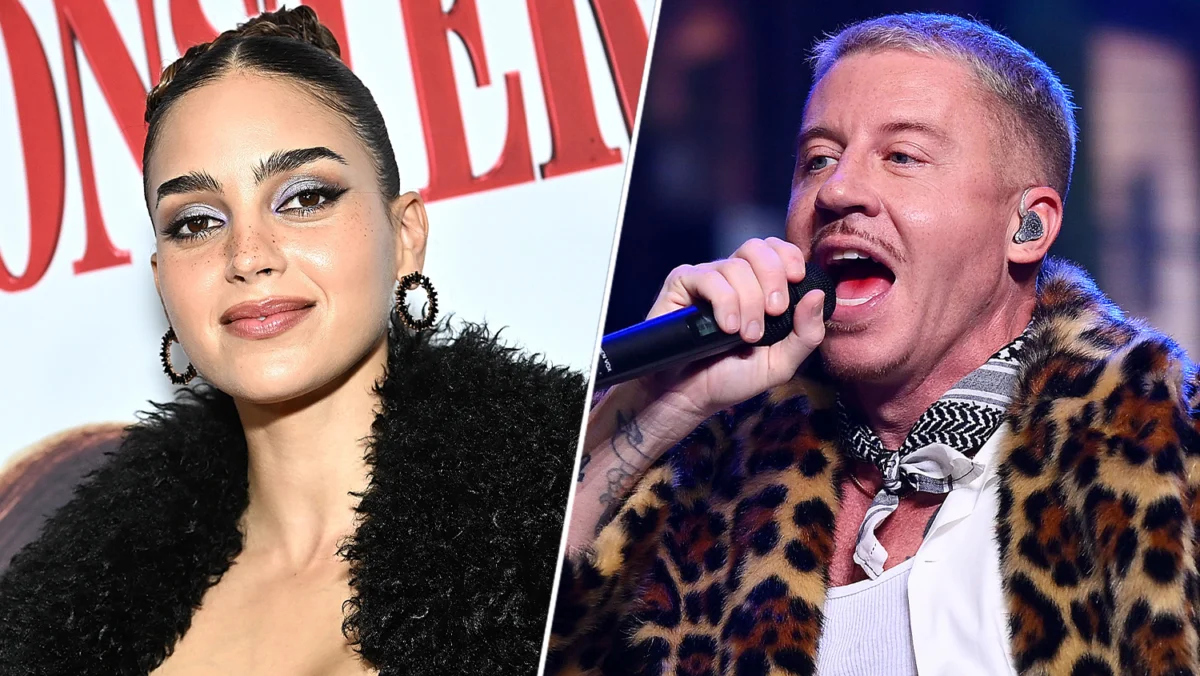
Nearly three years after her controversial dismissal from the globally successful Scream franchise over her public statements regarding the conflict in Gaza, actress Melissa Barrera is observing a distinct shift in how the entertainment industry responds to political expression and artist solidarity. Speaking recently with the Associated Press, Barrera reflected on the changing tide within Hollywood and the broader cultural landscape, noting that the climate of fear that once isolated her has begun to give way to collective action among artists.
The catalyst for Barrera’s recent reflections was a high-profile controversy involving musician Ed Sheeran’s Loop Tour. Earlier this month, rapper Macklemore was dropped from the tour following public remarks expressing support for a "Free Palestine." In an unprecedented display of solidarity, multiple opening acts—most notably Finneas, alongside other supporting musicians and bands—subsequently pulled out of the tour to protest Macklemore’s removal.
For Barrera, witnessing artists willingly sacrifice major touring opportunities in defense of a peer’s right to political speech evoked a powerful emotional response, serving as a stark contrast to her own professional isolation when she faced industry backlash in late 2023.
The Origins of the Industry Controversy: November 2023
To understand the weight of Barrera’s recent comments, it is necessary to examine the events of November 2023, a period of heightened geopolitical tension that triggered severe professional repercussions for multiple public figures across the arts, media, and entertainment sectors.
In November 2023, Spyglass Media Group, the production company behind the revived Scream franchise, made the sudden and decisive announcement that Melissa Barrera had been dropped from the upcoming Scream 7. At the time, Barrera was widely recognized as the anchoring star and new "final girl" of the slasher franchise, having successfully led both Scream (2022) and Scream VI (2023) in the role of Sam Carpenter alongside co-star Jenna Ortega.
The termination followed a series of social media posts shared by Barrera addressing the Israel-Hamas conflict. In her posts, the actress condemned the atrocities being committed against Palestinian civilians, utilized terms such as "genocide" and "ethnic cleansing," and called for international attention to the humanitarian crisis in Gaza.
In a strongly worded statement released at the time of her firing, Spyglass Media Group defended its decision, citing what the company characterized as a strict institutional policy. The studio stated that it maintained a "zero tolerance for antisemitism or the incitement of hate in any form, including false references to genocide, ethnic cleansing, Holocaust distortion or anything that flagrantly crosses the line into hate speech." The decision immediately ignited a fierce global debate regarding freedom of speech, political expression, and the responsibilities—and vulnerabilities—of public-facing artists navigating polarizing geopolitical conflicts.
A Domino Effect: Franchise Unraveling and Creative Exodus
Barrera’s sudden ousting did not occur in a vacuum; rather, it triggered a massive creative and institutional crisis for the Scream franchise, sending shockwaves through Paramount Pictures and Spyglass Media Group that would take years to stabilize.
Shortly after Barrera’s termination, co-star Jenna Ortega announced her departure from Scream 7. While official explanations pointed to scheduling conflicts regarding Ortega’s commitments to her hit Netflix series Wednesday, industry analysts and subsequent statements from Ortega herself heavily implied that the sudden removal of her on-screen sister and co-lead fundamentally fractured the creative foundation of the project. Reflecting on the period later, Ortega noted that the planned sequel "was all kind of falling apart" in the wake of the casting upheaval.
Compounding the crisis, the film’s appointed director, Christopher Landon, officially exited the project shortly thereafter. Landon’s departure revealed a darker side of the polarizing online discourse surrounding the film. The director cited an intensely hostile environment, describing the situation as "highly aggressive and really scary," and specifically pointed to severe death threats that had been directed toward his children by anonymous online actors.
With its lead actress, supporting lead, and director all gone, the production of Scream 7 was thrown into complete disarray, forcing studio executives to reevaluate their entire creative strategy for the multibillion-dollar horror property.
Studio Pivots and Franchise Reconstruction
Faced with the prospect of abandoning a lucrative intellectual property, Spyglass and Paramount initiated a high-stakes salvage operation in early 2024. In March 2024, studio executives successfully brokered a deal to bring back franchise icon Neve Campbell to reprise her historic role as the original "final girl," Sidney Prescott, for Scream 7. Campbell had previously made headlines in 2022 when she publicly sat out Scream VI due to a salary dispute, making her return a major coup for the studio.
Alongside Campbell’s return, the studio enlisted original Scream (1996) writer and franchise architect Kevin Williamson to direct the seventh installment, anchoring the production in nostalgic legacy appeal.
However, the production’s troubles were far from over. As the marketing campaign for Scream 7 rolled out—culminating in the release of the official trailer in October 2025 and the film’s eventual premiere at Paramount Studios in February 2026—the franchise continued to bear the heavy scars of the 2023 controversy.
Upon the release of the trailer, social media platforms were immediately flooded with backlash from fans and activist organizations calling for an organized boycott of the film in solidarity with Barrera. These tensions culminated on the night of the film’s premiere in February 2026, when a vocal coalition of pro-Palestine activists gathered outside the entrance of the Paramount lot, staging demonstrations, chanting slogans, and holding signs denouncing the studio’s handling of Barrera’s termination.
The Evolution of Industry Solidarity: Barrera’s Perspective
It is against this tumultuous backdrop that Melissa Barrera views the recent developments surrounding Ed Sheeran’s tour and the actions of Finneas and other opening acts.
Reflecting on the Associated Press interview, Barrera emphasized the emotional significance of witnessing collective action within the music industry. "It was so beautiful to see Finneas and the band and all the opening acts pulling out in support of Macklemore. It made me emotional," she told the outlet.
Drawing a direct comparison to her own experience three years prior, the actress highlighted how drastically the atmosphere among artists has shifted. "You know, I didn’t get that when it happened to me. I didn’t have any of that happen. It was too soon. People were too scared. But it’s good to see that almost three years later, at least things have changed."
Barrera’s observations point to a broader evolution in how cultural institutions and artists navigate political discourse. In late 2023, the entertainment industry was characterized by widespread caution, where public figures expressing pro-Palestinian sentiments frequently found themselves isolated, facing rapid professional repercussions with minimal public backing from major peers due to fears of industry blacklisting or professional retaliation.
Broader Implications for Hollywood and Public Discourse
The willingness of high-profile artists like Finneas to forfeit lucrative performance slots in defense of a peer over political stances suggests that the threshold for industry solidarity has shifted. Observers and cultural analysts note that public sentiment among younger artists and creators is increasingly leaning toward collective pushback against corporate mandates or studio decisions perceived as suppressing free speech or punishing political dissent.
While major studios and corporate entertainment conglomerates maintain stringent risk-management protocols regarding geopolitical controversies, the willingness of talent to organize, withdraw from high-profile projects, and publicly voice dissent demonstrates a growing counter-weight within the entertainment ecosystem.
As Melissa Barrera continues her career beyond the shadow of the Scream franchise, her remarks underscore a watershed moment for artistic freedom and peer solidarity. Whether this trend will lead to lasting structural changes in how Hollywood handles political expression remains to be seen, but the visible unity among musicians on the global stage indicates that the silence and fear of 2023 are increasingly being replaced by organized solidarity.