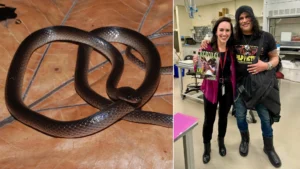
The world of heavy metal and the field of evolutionary biology have intersected in a unique scientific tribute, as researchers have formally identified a previously undocumented snake species in the forests of New Guinea and named it in honor of the iconic Guns N’ Roses guitarist, Slash. Known formally as Lielaphis slashi, or Slash’s groundsnake, the discovery marks a significant contribution to the herpetological catalog of the Asia-Pacific region. This naming serves as both a recognition of the musician’s lifelong dedication to reptilian conservation and a testament to the rigorous, often grueling, process of taxonomic classification in one of the world’s most biodiverse and least-explored regions.
A Convergence of Music and Science
Saul Hudson, globally recognized by his stage name Slash, has long been a fixture in both the music industry and the private reptile hobbyist community. While his influence on rock music is cemented by decades of chart-topping albums and legendary guitar solos, his impact on natural history is equally profound, if less publicized. Slash has frequently utilized his platform to advocate for zoos, museums, and the preservation of reptilian habitats, fostering a public image that defies the traditional "rock star" stereotype.
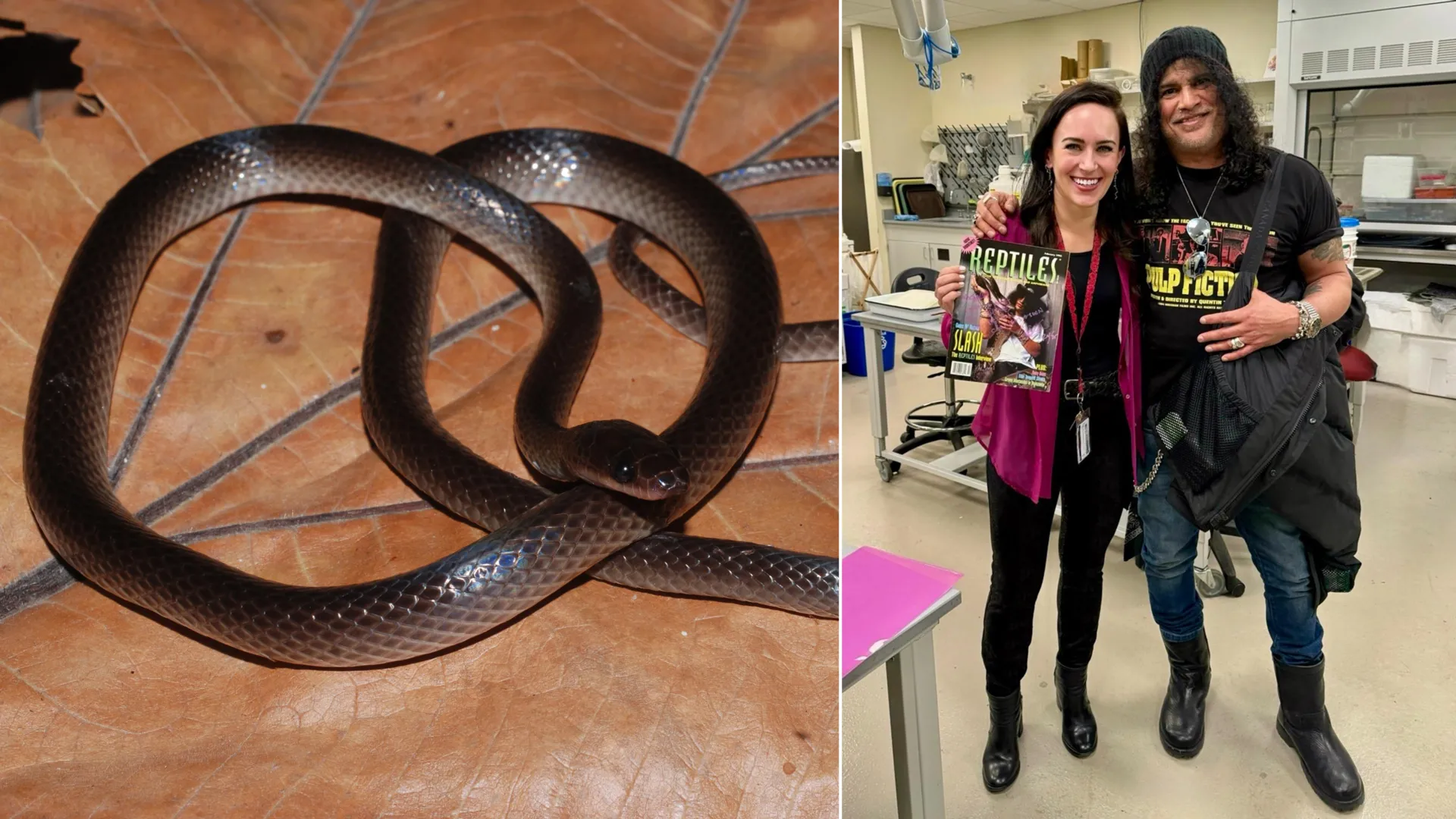
The decision to name the species Lielaphis slashi was spearheaded by Dr. Sara Ruane, the Field Museum’s Associate Curator of Herpetology. For Dr. Ruane, the naming is the culmination of a personal journey that began in her childhood. A lifelong fan of both Guns N’ Roses and herpetology, Ruane vividly recalls seeing an issue of Reptiles Magazine in her youth that featured the guitarist holding a reticulated python. That image served as a bridge between her musical interests and her professional aspirations, framing her perception of scientists as individuals who could be both unconventional and deeply intellectual. Years later, when the opportunity to classify the new species arose, Ruane revisited the guitarist’s past interviews regarding his passion for natural history, concluding that he was the ideal namesake for a creature that represents the hidden wonders of the New Guinea wilderness.
Chronology of a Discovery
The journey to the discovery of Lielaphis slashi spans nearly two decades of fieldwork and laboratory analysis. The primary specimen was initially collected in 2006 by Dr. Chris Austin, a professor and curator of herpetology at the Louisiana State University Museum of Natural Science. During a nocturnal expedition through the dense, tropical forests of New Guinea—the world’s second-largest island—Austin encountered a snake that defied standard identification keys.
The identification process remained dormant for years, existing as a collection of data points until 2016, when Dr. Ruane and Dr. Austin began a formal collaboration to categorize the poorly documented snake fauna of the region. This partnership utilized the vast resources of the LSU Museum of Natural Science and the Field Museum to synthesize field observations with modern genomic sequencing. The research, eventually published in the journal Zootaxa, represents the collaborative efforts of an international team, including contributors from the Papua New Guinea National Museum and Art Gallery, Rutgers University, and the Virginia Museum of Natural History.
Genetic and Morphological Differentiation
The identification of L. slashi as a distinct species was not a process of immediate visual recognition. In the field, many of New Guinea’s nocturnal groundsnakes appear superficially similar, requiring specialized expertise to distinguish. The research team employed a multi-faceted approach to verify the species’ status.
First, the team utilized cutting-edge genetic analyses, comparing the mitochondrial and nuclear DNA of the specimen against other known members of the genus Lielaphis. The results confirmed a clear genetic divergence. Subsequently, the researchers conducted a morphological assessment, counting individual scales and analyzing skeletal structure. The data revealed consistent physical variations that separated L. slashi from its closest relatives. Finally, the team applied ecological modeling, which demonstrated that the new species occupies a distinct ecological niche, favoring specific forest micro-habitats that differ from the habitats of other New Guinea groundsnakes. This holistic approach—combining genetic, morphological, and ecological data—is the gold standard in modern taxonomy, ensuring that the classification remains robust under scientific scrutiny.
Biological Profile: The Life of a Groundsnake
Lielaphis slashi is a slender, reddish-brown snake measuring approximately 28 inches in length. Its behavior, while still largely mysterious due to the difficulty of observing nocturnal species in the wild, suggests a specialized predatory role. Unlike constrictors, which subdue prey through pressure, or venomous species that rely on toxins to incapacitate, this groundsnake appears to be a specialized feeder.
Researchers noted that the snake possesses large, recurved teeth in the back of its mouth, an anatomical feature likely adapted for gripping slippery, smooth-scaled lizards and the eggs of other reptiles. Despite the "dangerous" reputation of the rock band from which it takes its name, the snake is not a threat to human populations. It does not possess venom capable of causing significant medical harm to humans, making it a relatively docile inhabitant of the forest floor.
Broader Implications: Conservation in the Anthropocene
The identification of L. slashi is more than a taxonomic exercise; it is a critical step in the ongoing effort to document the biodiversity of New Guinea. The island, divided between Indonesia and Papua New Guinea, remains one of the most biologically significant regions on Earth. However, it is also one of the most threatened.
Dr. Ruane highlights that the habitats currently occupied by L. slashi are increasingly encroached upon by industrial activities, including coffee farming and large-scale mining operations. The loss of habitat is a primary driver of biodiversity decline globally, and in New Guinea, many species face extinction before they are even documented by science. By formally identifying L. slashi, the scientific community can now advocate for the protection of its specific habitat. The logic is simple: one cannot conserve what one does not know exists. This discovery serves as a reminder of the urgent need for environmental policy that accounts for the cryptic species residing in remote ecosystems.
The Intersection of Science and Public Engagement
The naming of the species has also sparked a broader discussion about the role of pop culture in scientific outreach. By linking a new discovery to a recognizable cultural figure, the research team has successfully increased public engagement with herpetology. For many, the story of L. slashi provides an entry point into understanding the complexities of taxonomy, the importance of genetic research, and the fragility of tropical ecosystems.
In a statement following the announcement, Slash expressed his gratitude, noting his genuine surprise and humility regarding the honor. "As a long-time herpetophile, I am extremely honored and humbled to have Lielaphis slashi from New Guinea named after me," he said. "It is really exciting; I never would have imagined this moment would arrive."
This acknowledgment underscores a mutually beneficial relationship between the scientific community and public figures who champion environmental causes. By bridging the gap between the laboratory and the public, scientists like Dr. Ruane and Dr. Austin are ensuring that the study of natural history remains relevant and accessible in the 21st century. As the scientific community continues to map the remaining "blank spots" on the biological map of New Guinea, the story of L. slashi will serve as a foundational example of how curiosity, collaboration, and a touch of rock and roll can contribute to the permanent record of life on Earth.