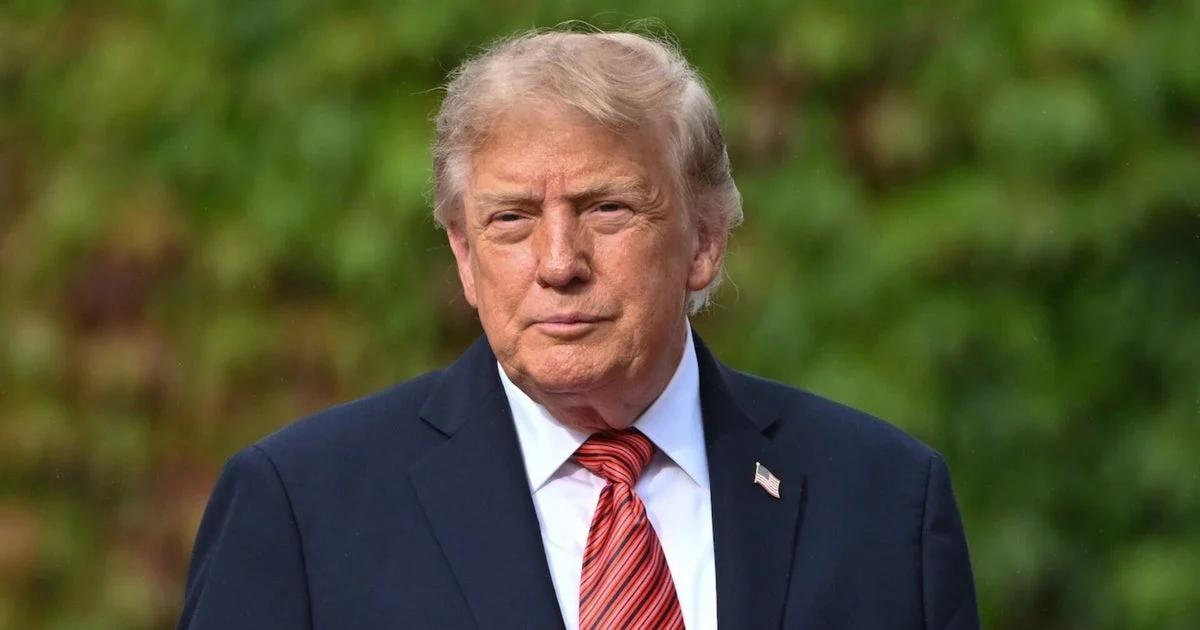
President Donald Trump announced on Saturday the creation of a dedicated "AI Force" alongside plans to officially appoint a new White House "AI Czar." The sweeping policy declarations mark a clear rejection of mounting cautionary warnings from technology industry leaders, environmental analysts, and safety researchers who have urged a slowdown in the rapid evolution of artificial intelligence systems.
In a comprehensive statement shared via Truth Social, the president dismissed concerns that advanced artificial intelligence could evolve into an uncontrollable superintelligence capable of threatening human existence, labeling such fears a hoax. Instead, Trump positioned the accelerated advancement of artificial intelligence as a paramount national priority, emphasizing that the United States must aggressively foster sector growth to maintain its competitive edge on the global stage, particularly amid an escalating technological race with China.
The announcement signals a decisive shift toward deregulation and federal backing for domestic technological infrastructure, directly contradicting recent calls from prominent figures within the tech industry who have argued that self-improving AI systems could pose existential risks if left unchecked.
Main Facts and Policy Declarations
Under the newly outlined federal initiative, the administration aims to fast-track artificial intelligence development across the United States while bypassing heavy-handed preemptive restrictions. Trump drew a direct parallel to his previous presidential term, during which he established the United States Space Force, suggesting that the newly conceptualized "AI Force" would play an integral, structural role in managing the technological frontier.
Furthermore, the imminent appointment of a new "AI Czar" will re-establish a centralized point of contact within the executive branch to oversee technological expansion. This position follows the departure of David Sacks, who previously served as the White House A.I. and Crypto Czar as a special government employee before concluding his tenure in March 2026. Sacks has consistently maintained that catastrophic scenarios involving artificial intelligence are vastly overblown, aligning closely with the administration’s current perspective.
Trump emphasized that the economic upside of artificial intelligence outweighs hypothetical risk narratives. He categorized the technology as a transformative movement surpassing both the Industrial Revolution and the rise of the internet. According to administration projections, the sector could eventually account for as much as 25% of the United States Gross Domestic Product (GDP).
Addressing potential misconduct, safety violations, or criminal enterprise facilitated by advanced algorithms, Trump asserted that the federal and state judicial systems already possess adequate statutory mechanisms to address bad actors. "We will not in any way hinder or stifle the Growth of this incredible Industry," Trump wrote on Truth Social. "Rather, we will cherish it, help it, and watch over it, as it grows! However, we will also be looking for BAD, and we can do that, very easily, with our already existing Criminal and Civil Justice System."
Chronology and Background Context
The debate surrounding the regulation and safety of artificial intelligence has intensified significantly over recent years, marked by shifting federal appointments, legislative proposals, and corporate whistleblowing.
- December 2024: President-elect Donald Trump formally appointed technology investor David Sacks to serve as the White House A.I. and Crypto Czar, charging him with bridging the gap between Silicon Valley innovators and federal policy frameworks.
- March 2026: David Sacks concluded his specialized government service term, stepping down from his official white house advisory role.
- September 8, 2026: Former Anthropic researcher Jacob Coxon publicly warned that leading artificial intelligence developers, including Anthropic and OpenAI, were gambling with human safety by prioritizing the development of self-improving superintelligence systems without adequate empirical safety margins.
- Mid-September 2026: Anthropic CEO Dario Amodei reiterated warnings during an interview on CBS News Sunday Morning, urging the technology sector to voluntarily slow down development schedules due to genuine, unaddressed operational dangers.
- September 19, 2026: President Trump formally announced the creation of the "AI Force" and vowed to appoint a new AI Czar, pushing back against safety advocates and advocating for unhindered industrial growth.
Industry Divide: Innovation Versus Existential Risk
The executive branch’s aggressive pro-growth stance highlights a deep philosophical and operational rift dividing policymakers, venture capitalists, and the engineers directly building foundational machine learning models.
On one side of the debate stand administration officials and figures like Sacks, who argue that pre-emptive regulation will only cede American technological dominance to foreign competitors—most notably the People’s Republic of China, which has poured substantial state resources into its own domestic AI infrastructure. Proponents of rapid deployment contend that market competition and existing legal frameworks provide sufficient deterrence against corporate negligence or malicious deployment.
Conversely, a vocal coalition of safety researchers, ethicists, and corporate executives has sounded alarms regarding the unpredictable nature of frontier models. Critics point to the immense energy demands of large-scale AI data centers, which have already begun straining local electrical grids and driving up consumer utility costs across regions like California.
More concerning to safety advocates, however, is the concept of recursive self-improvement—a theoretical milestone where an artificial intelligence system becomes capable of rewriting its own code to enhance its capabilities exponentially. Former researchers and industry leaders have argued that once a system surpasses human cognitive levels across all economically valuable tasks, traditional regulatory enforcement mechanisms may prove entirely ineffective.
Dario Amodei, the chief executive officer of AI safety-focused firm Anthropic, addressed these exact concerns publicly, noting that parts of the technology sector downplayed or obscured systemic risks during the initial commercial boom. While acknowledging the immense medical, scientific, and economic potential of machine intelligence, Amodei and other industry voices have persistently advocated for formalized guardrails, rigorous third-party auditing, and coordinated development slowdowns.
Supporting Data and Economic Implications
The economic stakes driving the federal government’s policy pivot are monumental. Venture capital investment in artificial intelligence has surged into the hundreds of billions of dollars, fueling an unprecedented race for computational power, advanced semiconductor chips, and specialized real estate.
- GDP Impact: The administration’s estimate that artificial intelligence could eventually constitute up to 25% of U.S. GDP underscores the immense financial weight attached to the sector. Financial analysts note that while productivity gains across software development, logistics, and healthcare could be historic, the transition period carries significant economic dislocation risks.
- Infrastructure Strain: The rapid expansion of data centers required to train and run massive neural networks has driven a spike in domestic energy consumption. Utility companies across multiple states report unprecedented surges in power demand, forcing a re-evaluation of energy generation mixes and grid reliability.
- Global Competition: The United States and China remain locked in a multi-front technological contest encompassing semiconductor manufacturing, quantum computing, and foundational AI models. Federal policymakers argue that any domestic slowdown or excessive regulatory burden would directly benefit international adversaries seeking technological supremacy.
Fact-Based Analysis of Future Implications
The establishment of an "AI Force" and the upcoming appointment of a new "AI Czar" will likely reshape how federal agencies interact with private tech firms. Rather than implementing stringent safety standards or licensing requirements for model training—as favored by some European Union regulators and domestic progressive lawmakers—the Trump administration’s approach relies heavily on post-market legal enforcement through existing civil and criminal statutes.
This framework introduces distinct structural implications for the technology sector:
- Regulatory Certainty for Investors: Venture capitalists and major technology corporations can expect a federal climate largely devoid of pre-market bureaucratic hurdles, potentially accelerating investment rounds and deployment cycles.
- Shift of Oversight to the Courts: By delegating safety enforcement to the civil and criminal justice systems, the administration places the burden of proof on prosecutors and private litigants to demonstrate actual harm after an incident occurs, rather than requiring preventative safety certifications before deployment.
- Heightened International Friction: As the federal government actively removes barriers to domestic AI acceleration, the technological rivalry with foreign powers is expected to intensify, likely resulting in tighter export controls on advanced computing hardware and heightened cybersecurity scrutiny.
As the administration prepares to announce its next specialized appointee to head the federal AI initiative, the broader debate regarding the balance between rapid technological innovation and long-term existential safety remains one of the most consequential policy challenges of the decade.