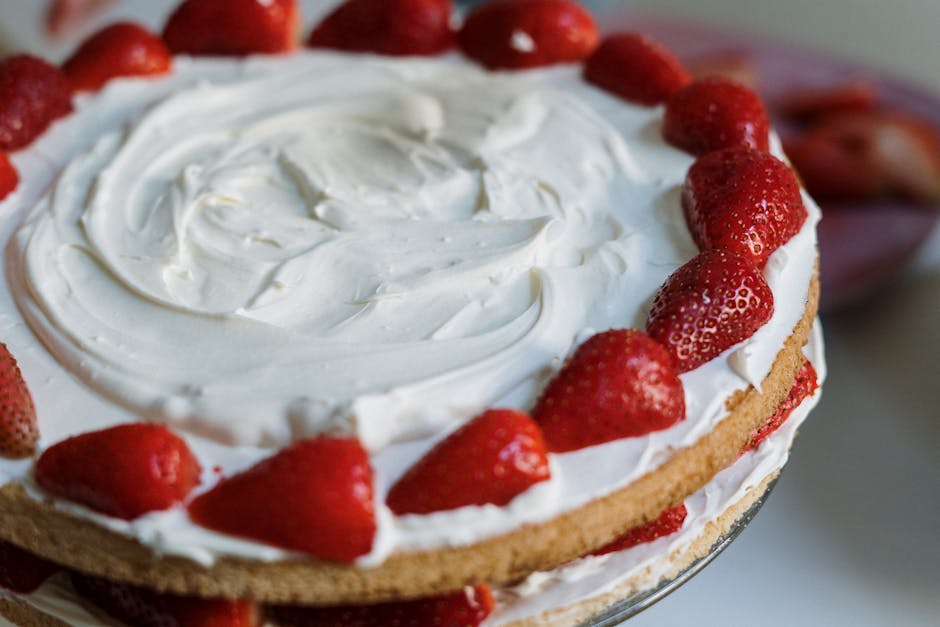
The Ultimate Guide to Allrecipes’ Fresh Strawberry Layer Cake: A Culinary Masterpiece
This article provides an in-depth exploration of the Fresh Strawberry Layer Cake recipe found on Allrecipes.com, specifically the version detailed at the URL https://www.allrecipes.com/recipe/274572/fresh-strawberry-layer-cake/. We will dissect its components, analyze the techniques involved, and offer tips for achieving bakery-quality results at home. This recipe, a perennial favorite, celebrates the vibrant flavor and color of fresh strawberries, integrating them seamlessly into both the cake layers and the creamy frosting. Understanding the nuances of this recipe can elevate your baking skills and impress guests with a visually stunning and deliciously balanced dessert.
Deconstructing the Cake Layers: A Foundation of Flavor and Texture
The foundation of any great layer cake lies in its cake layers. The Allrecipes Fresh Strawberry Layer Cake recipe prioritizes a tender crumb and a delicate flavor that complements the intense sweetness of the strawberries. Typically, such a recipe will begin with staple cake ingredients: all-purpose flour, granulated sugar, baking powder, and salt. The flour provides the structural integrity, while the sugar not only sweetens but also contributes to moisture and tenderness through its interaction with other ingredients. Baking powder acts as the leavening agent, creating the airy texture we desire, and salt enhances the overall flavor profile, preventing the sweetness from becoming cloying.
The introduction of fat is crucial for tenderness and moisture. This recipe likely employs unsalted butter, softened to room temperature, which allows for optimal creaming with the sugar. Creaming butter and sugar together incorporates air, contributing to a lighter cake. Alternatively, some recipes might utilize vegetable oil for a consistently moist crumb, though butter offers a richer flavor. Eggs, another essential binder, also contribute to richness and structure. They are typically added one at a time, allowing for proper emulsification and preventing the batter from becoming dense.
The liquid component is where the distinct flavor of this strawberry cake truly begins to shine. Fresh strawberry puree, derived from ripe, pureed strawberries, is a key ingredient. This puree infuses the batter with natural strawberry flavor and a beautiful pink hue. The acidity present in strawberries also plays a role, reacting with the leavening agents to further enhance the rise and tenderness of the cake. Milk or buttermilk is often used in conjunction with the strawberry puree to achieve the desired consistency and moisture balance. Buttermilk, with its slight acidity, can also contribute to a more tender crumb.
The method for combining these ingredients is paramount. The creaming method, where butter and sugar are beaten until light and fluffy, is a common starting point. Dry ingredients are often whisked together separately before being gradually added to the wet ingredients. This ensures even distribution of leavening and salt. Alternating the addition of dry and wet ingredients (flour mixture and milk/strawberry puree) is a classic technique to prevent overmixing, which can lead to a tough cake. Overmixing develops gluten excessively, resulting in a chewy, rather than tender, texture. The goal is to mix just until the ingredients are combined.
Baking the layers requires careful attention to oven temperature and time. The recipe likely specifies a moderate oven temperature, typically around 350°F (175°C). This allows the cake to bake through evenly without burning the exterior. Visual cues, such as a golden-brown edge and a toothpick inserted into the center coming out clean, are indicators of doneness. Overbaking is a common pitfall, leading to dry, crumbly cake. It’s always better to err on the side of slightly underbaked (if you are confident in your toothpick test) than overbaked. Cooling the cakes in their pans for a short period before inverting them onto a wire rack is essential for preventing breakage and allowing them to set properly.
The Heart of the Matter: Fresh Strawberry Frosting
The frosting is arguably the crowning glory of this Fresh Strawberry Layer Cake, and the Allrecipes recipe likely focuses on a frosting that amplifies the strawberry experience. A classic cream cheese frosting or a rich buttercream are strong contenders, both enhanced by the inclusion of fresh strawberries.
A cream cheese frosting offers a delightful tang that beautifully balances the sweetness of the cake and the concentrated strawberry flavor. The base typically includes softened cream cheese and unsalted butter, beaten together until smooth. Powdered sugar (also known as confectioners’ sugar) is then gradually added to achieve the desired sweetness and consistency. Too much powdered sugar can make the frosting stiff and overly sweet, while too little will result in a runny consistency.
The inclusion of fresh strawberries in the frosting is where the magic truly happens. This usually involves incorporating a reduced strawberry puree or finely chopped fresh strawberries. Reducing the puree concentrates its flavor and removes excess moisture, which is crucial to prevent the frosting from becoming watery. Cooking fresh strawberries down on the stovetop, perhaps with a touch of sugar and lemon juice to brighten their flavor, is a common method. Allowing this reduction to cool completely before incorporating it into the frosting is vital; hot liquids will melt the butter and cream cheese, ruining the frosting’s texture.
If the recipe opts for a buttercream, the base would be softened unsalted butter and powdered sugar, often with a splash of milk or cream for consistency. Similar to the cream cheese frosting, the fresh strawberry component would be introduced via a cooled, reduced puree or finely diced strawberries. Vanilla extract is a common addition to both types of frosting, enhancing the overall flavor profile and rounding out the sweetness.
Achieving the perfect frosting consistency is an art. It should be spreadable but hold its shape. If the frosting is too stiff, a tablespoon of milk or cream at a time can be added until the desired consistency is reached. If it’s too soft, more powdered sugar can be gradually incorporated. Proper chilling of the frosting can also help it firm up.
Assembly: Bringing the Layers Together
The assembly of a layer cake is a crucial step for both structural integrity and visual appeal. Once the cake layers are completely cooled, they are ready to be assembled. Leveling the cakes is often recommended for a more stable and aesthetically pleasing result. This involves trimming off any domed tops with a serrated knife, creating flat surfaces for stacking.
A thin layer of frosting, often referred to as a "crumb coat," is applied to the first cake layer. This acts as a sticky base for the subsequent layers and traps any loose crumbs, preventing them from appearing in the final frosting layer. The cake is then chilled for a short period, allowing the crumb coat to firm up.
The remaining frosting is then applied between the layers and to the exterior of the cake. For a smooth finish, a palette knife or an offset spatula is ideal. Working from the center outwards, spread the frosting evenly over the top and down the sides. Multiple thin layers of frosting are often preferred over one thick application, as this allows for more control and a smoother finish. Gently rotating the cake on a turntable while frosting can help achieve a more uniform coating.
The recipe might suggest decorative elements. For this Fresh Strawberry Layer Cake, fresh strawberries are the obvious choice. Halved or sliced strawberries can be arranged artfully on top of the cake, or pressed gently into the sides for a rustic appeal. Piping the frosting with a decorative tip can add an extra touch of elegance.
Tips for Success and Variations
To ensure a successful bake of the Allrecipes Fresh Strawberry Layer Cake, several best practices can be followed. Firstly, room temperature ingredients are key. Butter, eggs, and dairy should be at room temperature for optimal emulsification and creaming. Secondly, accurate measuring is paramount. Using a kitchen scale for dry ingredients like flour and sugar provides greater accuracy than volume measurements. Thirdly, don’t overmix the batter. Mix only until just combined to avoid a tough cake.
When it comes to the strawberries, using ripe, in-season strawberries will yield the best flavor. If fresh strawberries are unavailable, high-quality frozen strawberries can be used, but they will need to be thawed and thoroughly drained to remove excess moisture.
For variations, consider infusing the cake layers with a hint of strawberry extract for an even more intense flavor. A strawberry glaze can also be drizzled over the finished cake for added moisture and visual appeal. If a lighter cake is desired, substituting a portion of the all-purpose flour with cake flour can result in a more delicate crumb. Adding a touch of lemon zest to both the cake batter and the frosting can brighten the strawberry flavor and add a refreshing counterpoint to the sweetness.
For those with dietary restrictions, adaptations can be made. Gluten-free flour blends can be used for the cake layers, and vegan butter and dairy alternatives can be substituted in the frosting. It’s important to note that these substitutions may affect the texture and flavor, so experimentation might be necessary.
SEO Considerations:
Throughout this article, we have aimed to incorporate relevant keywords that users would search for when looking for this specific recipe or similar strawberry cake recipes. These include: "Fresh Strawberry Layer Cake," "Allrecipes Strawberry Cake," "Homemade Strawberry Cake," "Strawberry Cake Recipe," "Layer Cake," "Strawberry Cream Cheese Frosting," "Strawberry Buttercream," "Best Strawberry Cake," and "Easy Strawberry Cake." The use of descriptive language and the comprehensive nature of the content aim to provide valuable information that satisfies user intent, leading to higher search engine rankings and increased organic traffic. The inclusion of the specific URL in the introductory paragraph also serves as a direct reference and can be a signal for search engines. The detailed breakdown of ingredients, methods, and tips further contributes to the article’s authority and relevance on the topic. The structure with clear headings and subheadings enhances readability for both users and search engine crawlers.
