The United States Environmental Protection Agency announced on Monday that it is wiping away all federal regulations governing carbon dioxide emissions from the electricity sector. The sweeping regulatory rollback marks a definitive end to the Biden administration’s 2024 power plant rule, which had offered electric utilities a strict choice between retiring aging coal-fired facilities or retrofitting them with advanced carbon capture technology.
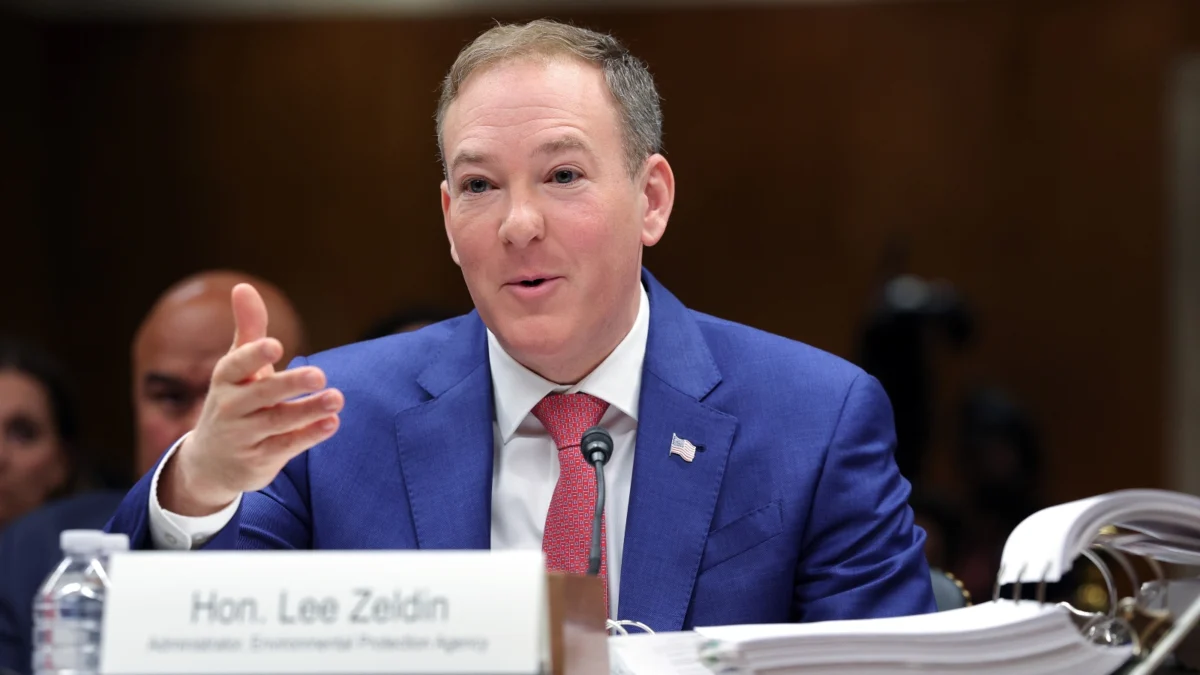
Under the leadership of EPA Administrator Lee Zeldin, the agency is adopting the same legal justification it utilized earlier this year to dismantle federal climate rules for motor vehicles. The administration argues that the scientific consensus surrounding climate change remains uncertain and contends that lifting these regulatory burdens will deliver substantial cost savings to American consumers. The latest policy shift dismantles decades of intermittent federal efforts to curb the nation’s reliance on coal, the most carbon-intensive of all major fossil fuels, and sets the stage for a contentious legal and economic battle over the future of the American electrical grid.
A Legacy of Regulatory Whiplash
The trajectory of federal oversight regarding coal-fired power generation over the past twenty years is defined by stark political oscillations between Democratic and Republican administrations. When the administration of Barack Obama failed to secure congressional approval for a comprehensive cap-and-trade system or a national carbon tax, the White House shifted its strategy to executive action. Through the EPA, the Obama administration drafted the Clean Power Plan, an ambitious regulatory framework designed to compel electric utilities to reduce greenhouse gas emissions by transitioning away from coal toward cleaner energy sources.
However, the Clean Power Plan faced immediate and fierce legal pushback from a coalition of fossil-fuel-dependent states and industry groups. Before the rule could be fully implemented, the Supreme Court issued an unprecedented stay halting its execution. Following the election of Donald Trump in 2016, his first-term EPA formally repealed the rule, a decision later reinforced by a landmark 2022 Supreme Court ruling in West Virginia v. EPA. The high court’s conservative majority established that the executive branch could not unilaterally force nationwide fuel-switching across the electrical sector without explicit congressional authorization.
Seeking to navigate these constitutional boundaries, the Biden administration crafted a revised rule in 2024. Rather than directly mandating fuel shifts, the regulation established stringent emission limits that could theoretically be met either by scheduling coal plant retirements for the 2030s or by installing unproven and expensive carbon capture and storage (CCS) systems. That rule has now met the same fate as its predecessors under the current Trump administration, underscoring the instability of American climate policy and reinforcing complaints from economists and industry leaders that regulatory volatility undermines long-term corporate planning.
The Economic and Environmental Calculus of Coal
Coal occupies a uniquely destructive position in the history of global energy consumption. According to climate scientists and energy data analysts, coal accounts for nearly half of all cumulative global carbon emissions since the dawn of the industrial era—a total impact roughly equal to that of oil and natural gas combined. Per unit of energy produced, coal generates significantly higher volumes of carbon dioxide than its fossil fuel counterparts, making its phaseout a central objective for international efforts to mitigate rapid global temperature increases.
Despite the back-and-forth nature of federal regulations, American coal consumption has experienced a steep, secular decline over the last two decades. This downward trend, however, was driven primarily by market forces rather than federal mandates. The domestic shale fracking boom of the late 2000s and 2010s flooded energy markets with abundant, low-cost natural gas. Because natural gas burns cleaner and with lower carbon intensity than coal, utilities rushed to retire or convert coal-fired units, cutting overall power sector emissions by nearly half.
The Biden administration’s 2024 rule sought to accelerate this natural retirement curve while mitigating the severe public health toll exacted by coal combustion. Coal-fired power plants do not merely emit greenhouse gases; they also release toxic pollutants such as mercury, sulfur dioxide, and fine particulate matter (PM2.5), which are linked to tens of thousands of premature deaths globally each year. The EPA estimated that the 2024 rule would have eliminated roughly $370 billion in cumulative health damages and climate-related costs by preventing hundreds of thousands of asthma attacks, emergency room visits, and more than 1,200 premature deaths annually by the year 2035.
By repealing these standards, the Trump administration has removed the regulatory pressure that compelled utilities to plan for orderly transitions, leaving public health advocates and environmental organizations to sound alarms over deteriorating air quality and unchecked warming.
The Artificial Intelligence Boom and the Resurgence of Coal
Compounding the policy shift away from emissions reductions is an unexpected macroeconomic trend: the explosive growth of artificial intelligence and the exponential rise in power demand from data centers. When the Biden administration formulated its 2024 rule, energy analysts projected a steady, uninterrupted decline in coal generation capacity driven by aging infrastructure and unfavorable operating economics.
Instead, the digital infrastructure boom has triggered an unprecedented surge in electricity demand across major grid regions, including the Midwest and the mid-Atlantic. High wholesale power prices have transformed legacy coal plants from financial liabilities into lucrative assets, prompting utilities to delay scheduled retirements.
A prominent example of this dynamic is Southern Company, a major electric utility serving millions of customers across Georgia, Mississippi, and surrounding states. Under regulatory frameworks established during the Biden administration, Southern Company had originally scheduled its major coal-fired facility in Mississippi for retirement by 2028. However, facing surging power requirements from newly constructed regional data centers, the utility announced an updated integrated resource plan extending the operational life of the facility well into the 2030s. Previous utility-backed initiatives to deploy carbon capture technology at similar sites, such as the troubled Kemper Project, suffered catastrophic financial and technical collapses, leaving extended reliance on raw coal combustion as the path of least resistance for meeting load growth.
Environmental groups have sharply criticized these extensions, arguing that projected energy demands for artificial intelligence are frequently inflated to justify fossil fuel investments and undermine corporate net-zero commitments. Simultaneously, the Trump administration has actively encouraged this pivot, going so far as to issue administrative directives ordering specific coal plants to remain online past their planned retirement dates—orders that federal courts recently found to be unlawful.
Official Responses and Industry Implications
The wholesale repeal of power sector emissions limits has drawn sharp dividing lines between industry defenders, political leaders, and environmental economists. At an international energy summit held in Texas on Monday, EPA Administrator Lee Zeldin framed the policy reversal as a historic correction.
"For over 15 years, the Obama and Biden administrations implemented a war on coal to destroy reliable and affordable energy," Zeldin told conference attendees. "We are working to go even further so that American energy can be fully unleashed. Realizing the full potential of American energy means more jobs, lower prices, and a more prosperous America."
Conversely, policy analysts argue that removing federal performance targets deprives corporate decision-makers of the long-term predictability necessary to invest efficiently in modern energy infrastructure. Kenneth Gillingham, a professor of environmental economics at Yale University and a former economic adviser to the Obama administration who helped draft the original Clean Power Plan, emphasized the importance of regulatory clarity.
"The reason to have a target is that it sends a clear signal to decision-makers in companies," Gillingham noted. "If you’re on the fence between choosing two things, you might as well choose the one that’s in line with the target. That’s been undermined. There has to be some teeth behind it."
Despite the immediate reprieve granted to coal operators by the EPA’s rollback and the data center electricity boom, many energy economists believe the structural decline of coal remains difficult to reverse over the long term. The nation’s existing coal fleet is aging rapidly, and the capital expenditures required to maintain plants built decades ago often exceed the cost of transitioning to natural gas or renewable energy portfolios paired with battery storage.
Looking ahead, future presidential administrations seeking to address climate change will confront a familiar strategic dilemma: how to accelerate the phaseout of an energy source that, while waning, continues to find temporary economic lifelines in shifting market conditions and localized energy crunches. Yet, as Gillingham and other market observers point out, regulatory intervention can shape the margin, but foundational economic and technological trends ultimately dictate the lifespan of the grid.
"We have more electricity demand than we did before, which is, on the margins, going to make it easier for a coal plant to stay on," Gillingham concluded. "लेकिन the trend is pretty clear, and you can only fight markets so much."